
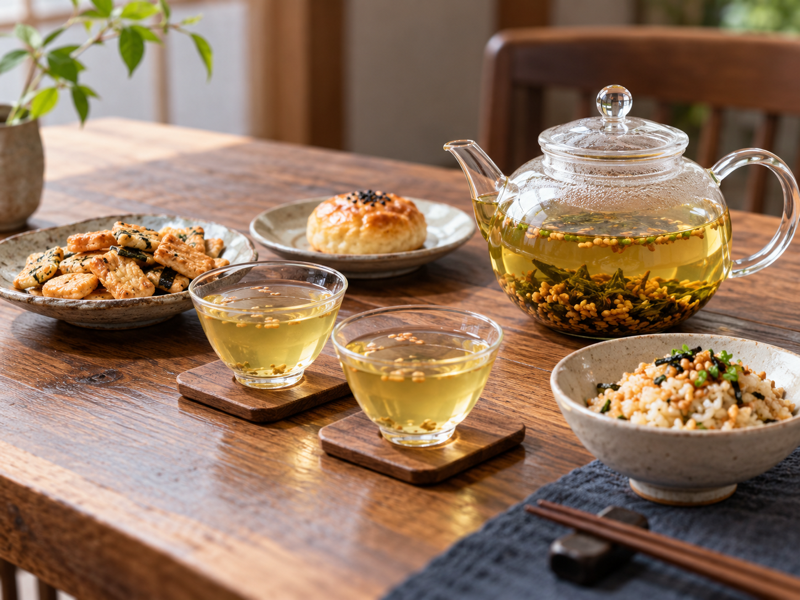
Genmaicha food pairing can work with savory dishes and dessert because the cup carries both green-tea freshness and toasted-rice warmth. That range is useful for a café menu, but it does not mean every rice cake or chocolate pastry will pair well. A pairing depends on the specific blend, brew strength, food seasoning, portion, and service temperature. This guide shows café and hospitality teams how to build a small, testable pairing program. It starts with tasting, then turns the best matches into menu language and service standards.
Contents
- 1. What flavor does genmaicha bring to food?
- 2. How should a pairing tasting be set up?
- 3. Which savory foods deserve a first trial?
- 4. How does genmaicha work with sweets?
- 5. What happens with spicy or acidic dishes?
- 6. Should the tea be hot or iced?
- 7. How can a café choose portion sizes?
- 8. Which pairings should be rejected?
- 9. How should staff describe a pairing?
- 10. How can the menu be tested commercially?
1. What flavor does genmaicha bring to food?
The blend combines green tea with roasted rice. A well-brewed cup may show fresh or vegetal leaf notes, a warm cereal aroma, mild astringency, and a clean finish. The exact profile changes with tea base, rice roast, ratio, and brew. A tea pairing example with popcorn and genmaicha illustrates the link between roasted cereal aromas, but a café should taste its own blend with its own food. Pairing names are hypotheses until the finished plate and cup are tried together.
Keep a reference brew for the program. If staff brew the tea stronger on busy days, the pairing can change. A sweet pastry may make the tea seem more bitter, while a salty snack may bring out its rounded rice note. Write the target brew before testing food. The existing genmaicha flavor article helps define basic tea notes; a food-pairing card should describe what happens when those notes meet a particular dish.
| Tea note | Possible food link | Risk |
|---|---|---|
| Toasted rice | Rice, cereal, pastry | Repetition without contrast |
| Green tea | Vegetables, fish | Hidden by heavy sauce |
| Astringency | Fatty food | Harsh with acid |
| Clean finish | Light desserts | Lost under sugar |
2. How should a pairing tasting be set up?
Use the same genmaicha lot, dose, water, steep time, cup, and serving temperature across the tasting. Serve small, normal bites of each food. Taste the tea alone, food alone, then food followed by tea. Ask panelists to score whether the combination improves, harms, or leaves unchanged the tea and food. Record specific observations, such as “rice aroma stronger after sesame cracker” or “tea tastes metallic after citrus glaze.” Vague “pairs nicely” notes are hard to turn into a menu.
Limit the first session to a manageable set of foods. A long table of sweets and snacks fatigues tasters and encourages invented preferences. Include a plain control food, such as a mild rice cracker or unseasoned pastry. Retest the strongest two or three pairings on another day and with another tea lot if supply allows. The café should select pairings that survive normal service, not only a quiet tasting with a fresh brew and a pastry chef explaining each plate.
3. Which savory foods deserve a first trial?
Start with foods that leave room for tea: lightly seasoned rice dishes, plain or sesame rice crackers, simple egg dishes, vegetables, and modestly seasoned fish. The roasted-rice aroma can echo grains without needing a sweetener. Test salt and oil levels because both can shift the cup. A very salty snack may make the tea taste sweeter for a moment but leave a dry finish. A heavily smoked food may overwhelm the rice roast entirely.
A bowl of genmaicha ochazuke is a culinary use rather than a drink pairing, but it can show how tea and rice interact. For a café pairing set, keep the tea separate so customers can notice it. Define portion size: a small savory bite beside a 150 ml tea cup is different from a full lunch plate. A pairing that works for one bite may become repetitive through an entire meal. Test the actual serving size before printing a menu recommendation.
| Savory candidate | Why test it | Watch point |
|---|---|---|
| Rice cracker | Shared roast | Too dry/salty |
| Light fish | Clean contrast | Oil or sauce |
| Egg | Soft body | Tea seems thin |
| Vegetables | Fresh notes | Bitter overlap |
4. How does genmaicha work with sweets?
A modest butter cookie, rice cake, or lightly sweet pastry can give the roasted-rice note a familiar bridge. Very sweet frosting may make the tea taste flat or bitter. Chocolate is possible, but cocoa intensity can hide green tea. Test a small bite and a whole portion. A pairing should make the customer want another sip of tea, not merely use tea to wash down sugar. The café may find that a less sweet dessert works better than changing the tea.
Choose the dessert’s dominant flavor carefully. Citrus can brighten the tea, yet a sharp yuzu glaze may make the roast seem dull. Sesame can deepen the toasted profile but raises allergen and menu-description needs. A genmaicha cookie is a direct flavor match, though it may be too repetitive if both drink and food are strongly tea-flavored. Pairing tests can reveal whether a plain pastry gives the tea more room to shine.
| Sweet candidate | Potential effect | Test |
|---|---|---|
| Plain butter cookie | Soft contrast | Sweetness |
| Rice cake | Shared grain note | Texture |
| White chocolate | Creamy bridge | Tea masking |
| Citrus pastry | Bright finish | Acid balance |
5. What happens with spicy or acidic dishes?
Spice and acid can make a delicate green tea taste thin or harsh. A darker roasted-rice note may hold up better, but the result depends on heat level and sauce. Do not assume genmaicha is a universal palate cleanser. Taste it with the actual dish at the restaurant’s normal spice setting. A small sip after mild chili may be pleasant; the same tea beside an intensely hot sauce may disappear. If the food changes seasonally, recheck the pairing.
Acidic pickles or citrus can lift the cup’s freshness but may also sharpen astringency. Test the sequence in which customers will eat and drink. A pairing may work when tea follows food and fail when the customer drinks first. If a dish is hard to pair, it is fine to offer another beverage. A menu recommendation should help customers choose, not force genmaicha into every category because the business wants to sell more tea.
6. Should the tea be hot or iced?
Hot genmaicha often releases more roasted-rice aroma, while iced service can feel cleaner with rich food. Cold brewing and hot brewing over ice produce different cups, so test both if the menu offers them. Do not write one pairing line that assumes both are identical. A light dessert may pair with a small hot cup; a savory lunch may work with an iced cup, but the result needs tasting at normal service temperature and dilution.
Check what happens as the cup sits beside the plate. Hot tea cools; ice melts. A pairing that succeeds only in the first minute is fragile. Keep the recipe and vessel consistent during testing. If a café recommends iced genmaicha with a food item, specify whether the tea is unsweetened. Added syrup can turn a savory pairing into a sweet drink decision, changing the whole experience.
| Tea service | Possible strength | Check |
|---|---|---|
| Hot | Roast aroma | Cooling |
| Iced hot-brew | Quick service | Dilution |
| Cold brew | Smooth cup | Tea strength |
| Sweetened | Dessert role | Food balance |
7. How can a café choose portion sizes?
A pairing flight can use a small cup and a few bites to teach customers a flavor connection. A meal bundle needs enough tea to last through the plate without becoming weak or stale. Decide the purpose before setting volume. A 100 ml tasting cup is not a substitute for a full drink if the menu price implies one. Cost the tea and food together, including preparation time and waste. A small flight may be more labor-intensive than two ordinary menu items.
Measure the actual finished cup and food portion during trials. Large sweet pastries can overwhelm a modest tea, while a huge tea may outlast a tiny snack. If the café wants customers to compare multiple tea bases, keep the food portion small and neutral. If it wants a lunch combo, test satisfaction and speed. A good pairing is also a good service product: staff can explain it, prepare it, and price it without slowing the line.
8. Which pairings should be rejected?
Reject combinations where the tea becomes bitter, metallic, flat, or invisible, or where the food tastes worse after a sip. A pairing need not be dramatic to work, but it should add something the separate items do not. Do not keep a combination because it sounds culturally neat or photographs well. A rice cracker beside genmaicha may be redundant; a heavily sweetened genmaicha cake beside genmaicha tea may make the cup taste weak. Taste without the sales story.
Use clear rejection notes. “Chocolate mousse masks the tea” points to a possible lighter chocolate or different drink; “fish sauce makes the tea metallic” may mean the pairing should be dropped. Record whether the problem is the food, brew, temperature, or portion. Retest only when a real variable changes. A disciplined rejection list keeps the café’s menu short and prevents staff from recommending combinations they do not enjoy themselves.
| Failure | Likely cause | Decision |
|---|---|---|
| Tea vanishes | Heavy food | Different beverage |
| Bitter finish | Acid/sweet contrast | Adjust or reject |
| Repetition | Same roast in both | Add contrast |
| Slow service | Fussy flight | Simplify |
9. How should staff describe a pairing?
One sentence is enough: “The tea’s toasted-rice aroma works with the rice cracker, while its green-tea finish keeps the snack from tasting heavy.” That describes a sensory mechanism a customer can check. Avoid broad claims that the pairing is “perfect” or “detoxifying.” If a seasonal pastry changes, update the recommendation. Staff should taste the pairings during training so their description comes from the served products, not a memorized generic script.
Put the tea name, serving size, food item, and key sensory note on a small station card. Include allergen references for the food and a caffeine statement for the tea. A customer who asks whether the tea is gluten-free needs a product-specific answer, not a pairing slogan. Keep the public menu shorter than the staff card. The menu can invite the choice; the staff card supports accurate answers when customers ask more.
10. How can the menu be tested commercially?
Pilot two or three pairings for a limited period. Track attachment rate, food and tea waste, preparation time, customer comments, and whether staff actually recommend them. A tasting panel can select candidates, but paying customers may choose differently. Price the bundle from real portions and labor. If the pairing requires a tiny special batch of pastry that creates waste, it may need a different format even when the flavor is excellent.
Recheck quality through the day. The tea brewed at opening and the pastry served near closing may not match the pilot tasting. Build hold and discard rules into the plan. Keep the winning pairing seasonal if ingredients vary. A café should be able to explain why the pair works, serve it consistently, and remove it when it stops earning its place. That is a stronger program than a long list of untested food suggestions.
FAQ
Q1. What food goes best with genmaicha? There is no universal winner. Light savory foods and modestly sweet pastries are sensible first trials.
Q2. Does genmaicha work with chocolate? It can, but strong cocoa may hide the tea. Taste the actual chocolate and cup together.
Q3. Should the tea be sweetened for pairing? Test unsweetened first. Sweetening changes the food relationship.
Q4. Is hot tea always better? No. Hot and iced cups express the blend differently; test the intended service.
Q5. How many pairings should a café launch? Start with a small set that staff can make and explain consistently.
The best pairing is one customers can taste in a normal serving, without a paragraph of persuasion.