01
Fresh Leaf Harvesting
Tender tea shoots are harvested and transferred for processing.
One Village, Matcha for the World
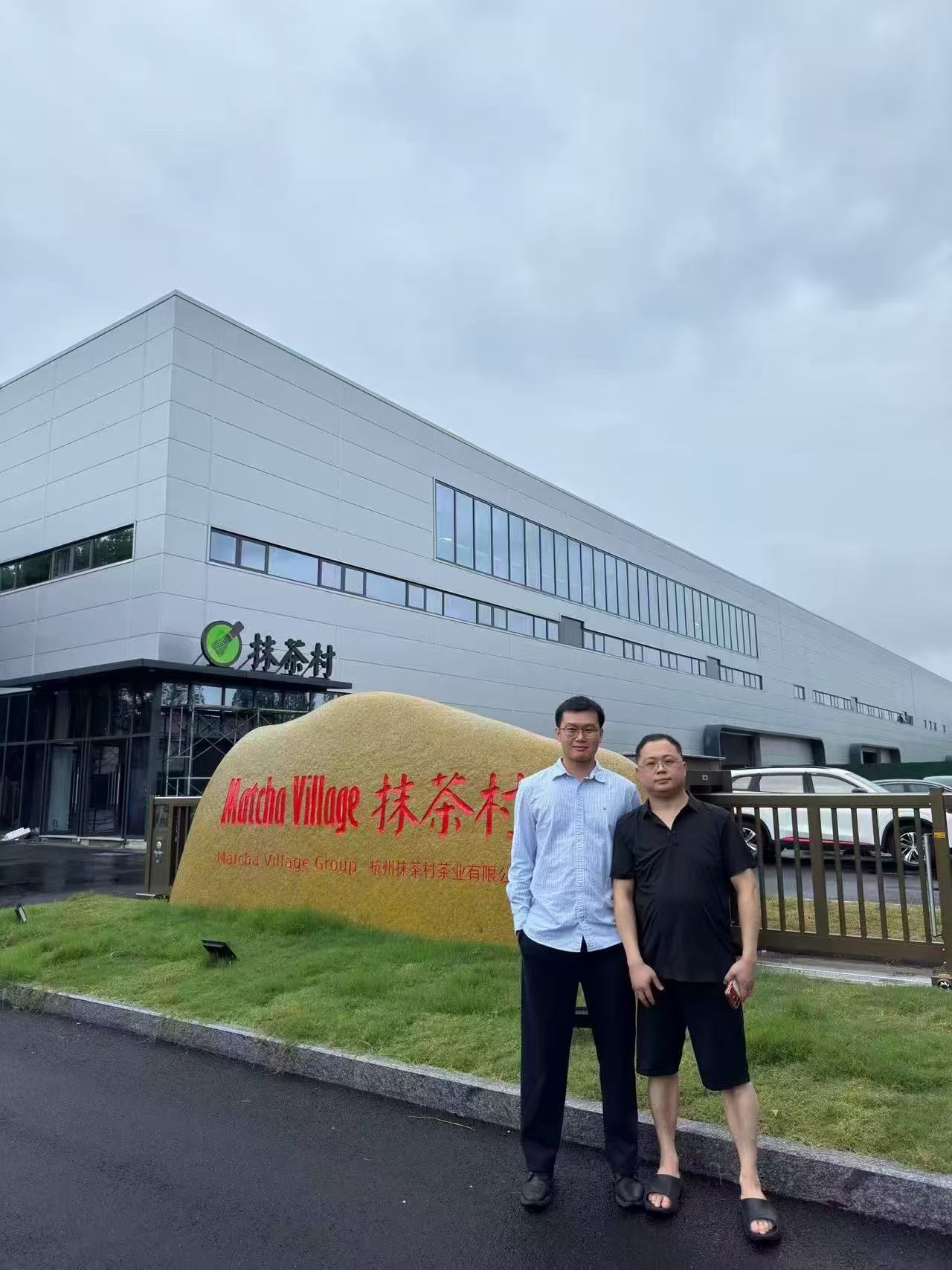
Matcha Village is based in Jingshan, Hangzhou, the birthplace of the powdered tea tradition later introduced to Japan. Today, we are among the world's leading integrated matcha manufacturers.
Our manufacturing base represents an investment of approximately USD 37 million and integrates tencha processing, matcha grinding and packaging. Supported by more than 2,667 hectares of our own tea gardens, we serve bulk, OEM and private label buyers worldwide.
More than 5,500 MT of matcha sold in 2025.
Key milestones in our tea manufacturing, matcha production, and brand development.
A tea factory was established in Hangzhou.
TEASOURCES was established in partnership with the Hangzhou tea factory.
A stone-milled matcha factory was established.
Matcha Village® began expanding into international markets.
Annual matcha sales exceeded 5,500 metric tons.
From tea garden management to manufacturing and global delivery, our team works together to support reliable matcha supply.

Guides tea sourcing and traditional craft to keep raw materials consistent for production.
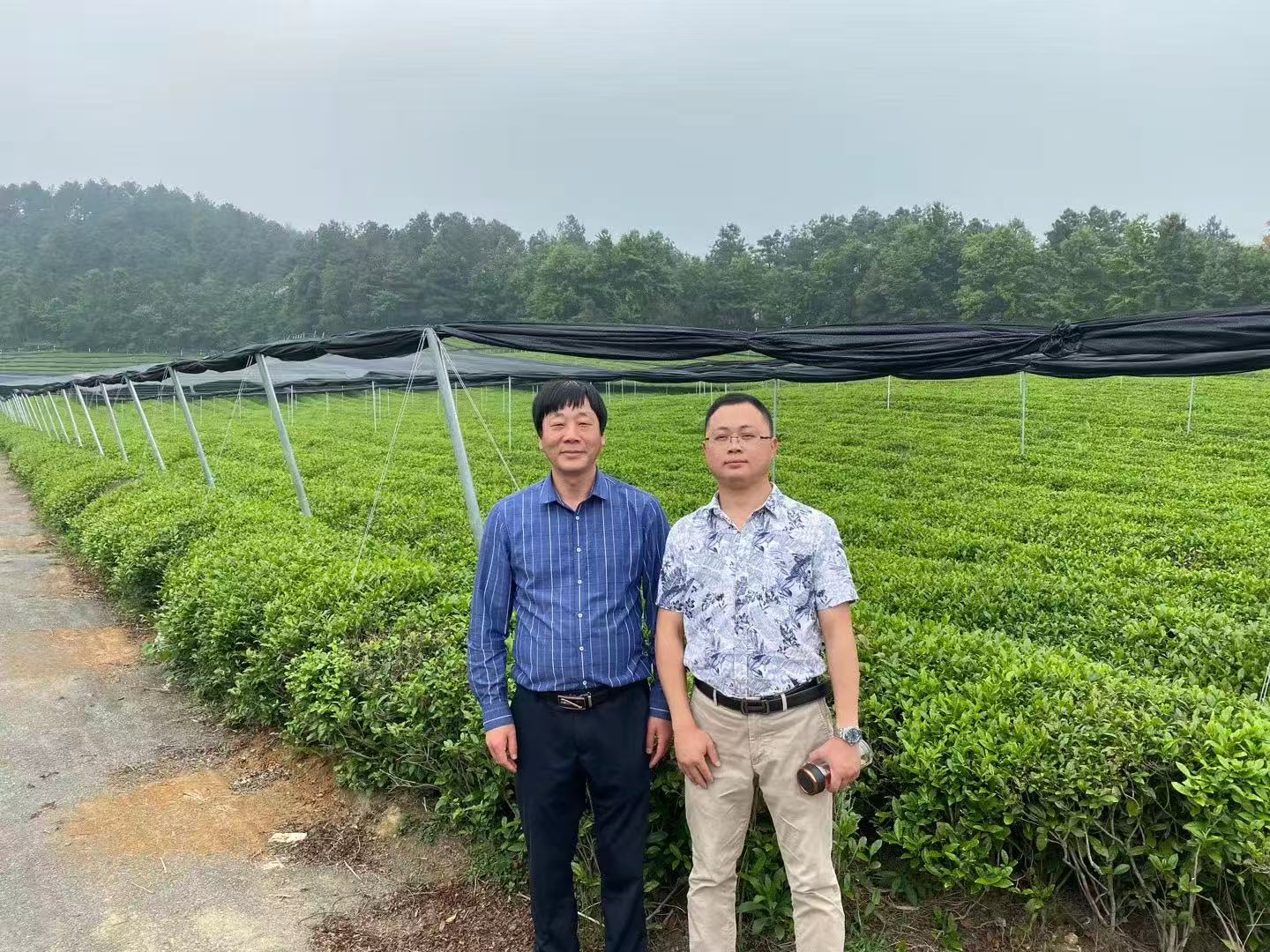
Oversees tea garden cultivation and shading to maintain reliable leaf quality each season.
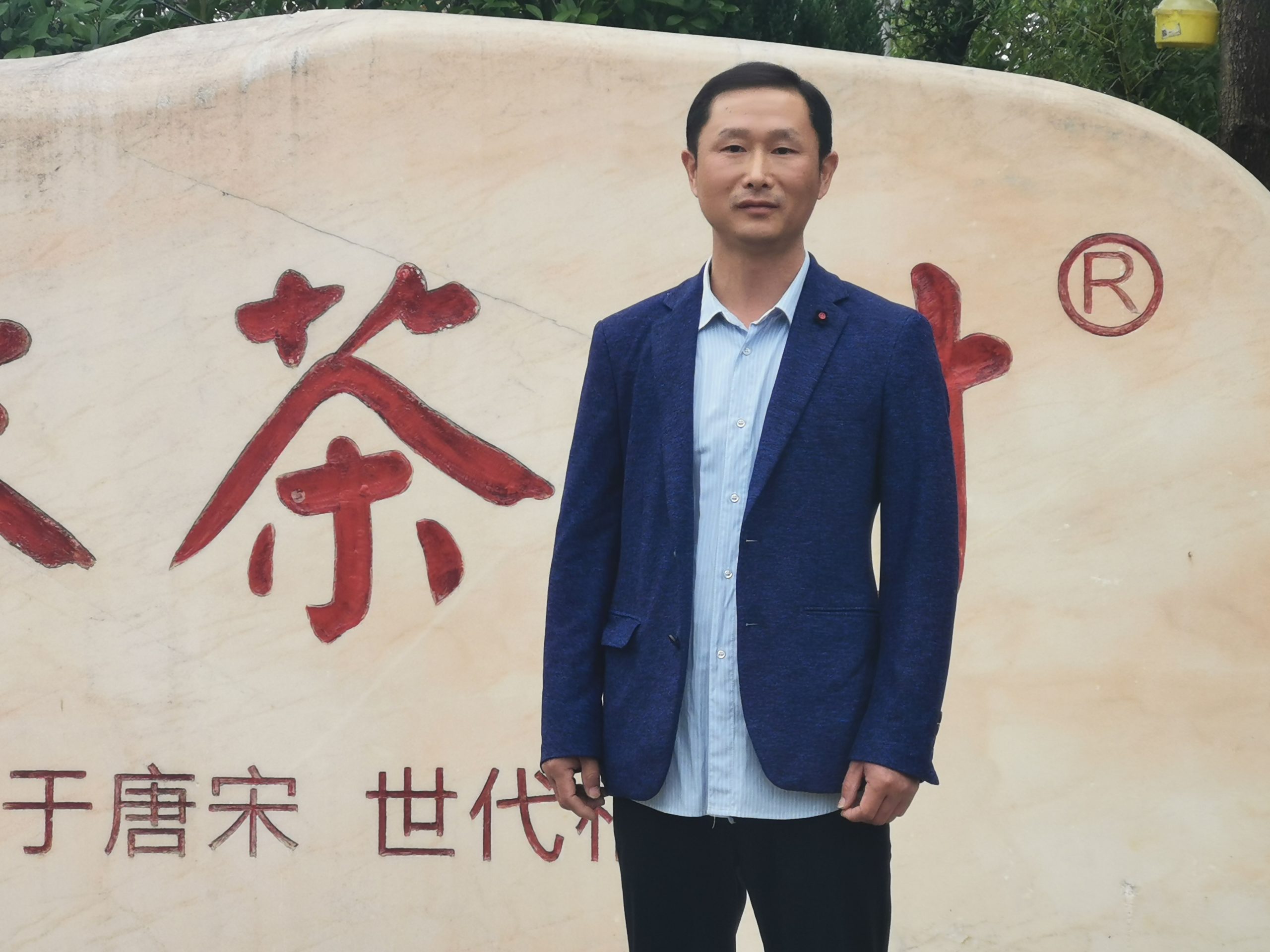
Leads tencha processing, matcha grinding and quality checks for consistent finished products.
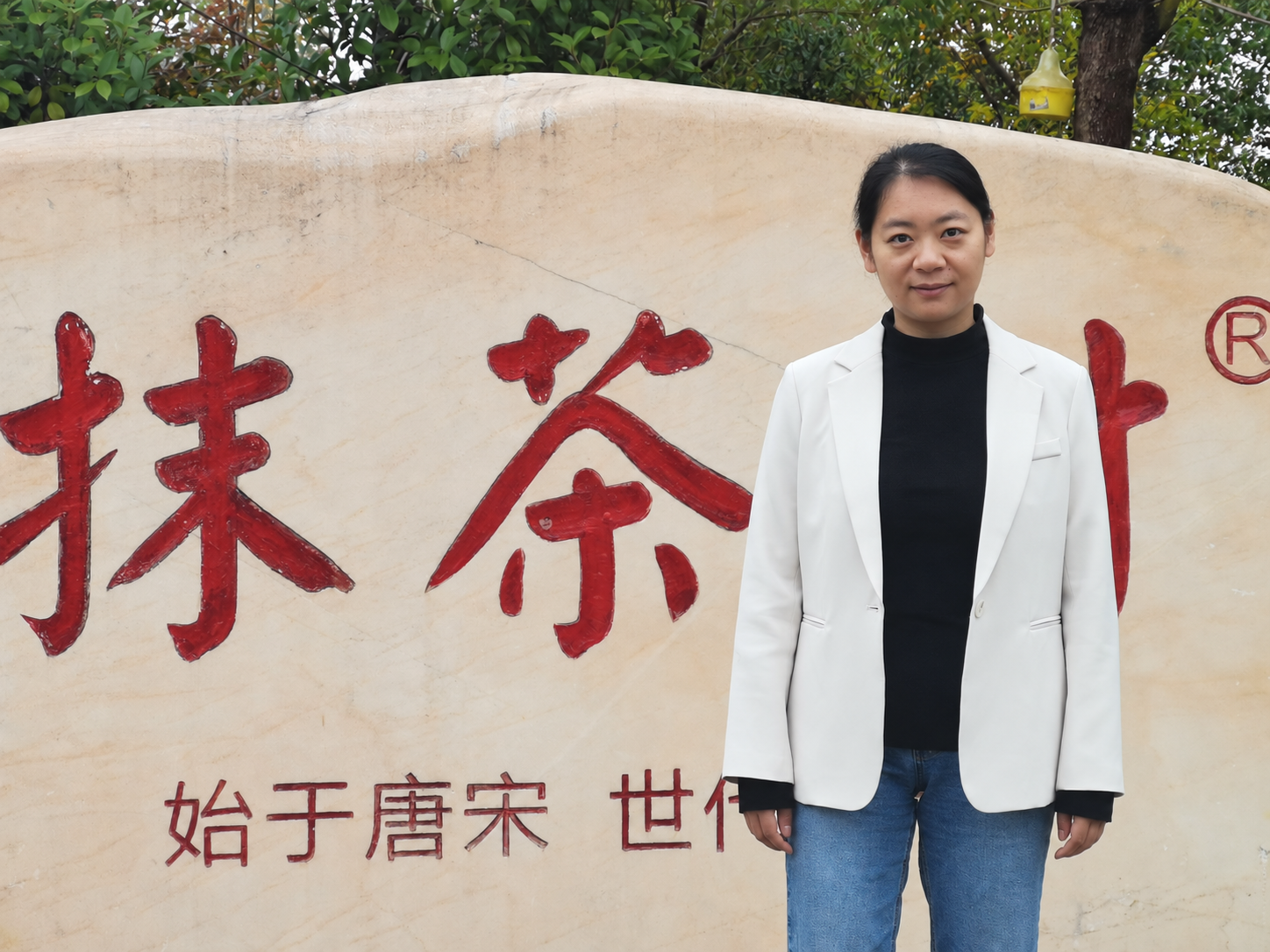
Coordinates international customer needs, export documentation and delivery from order to shipment.
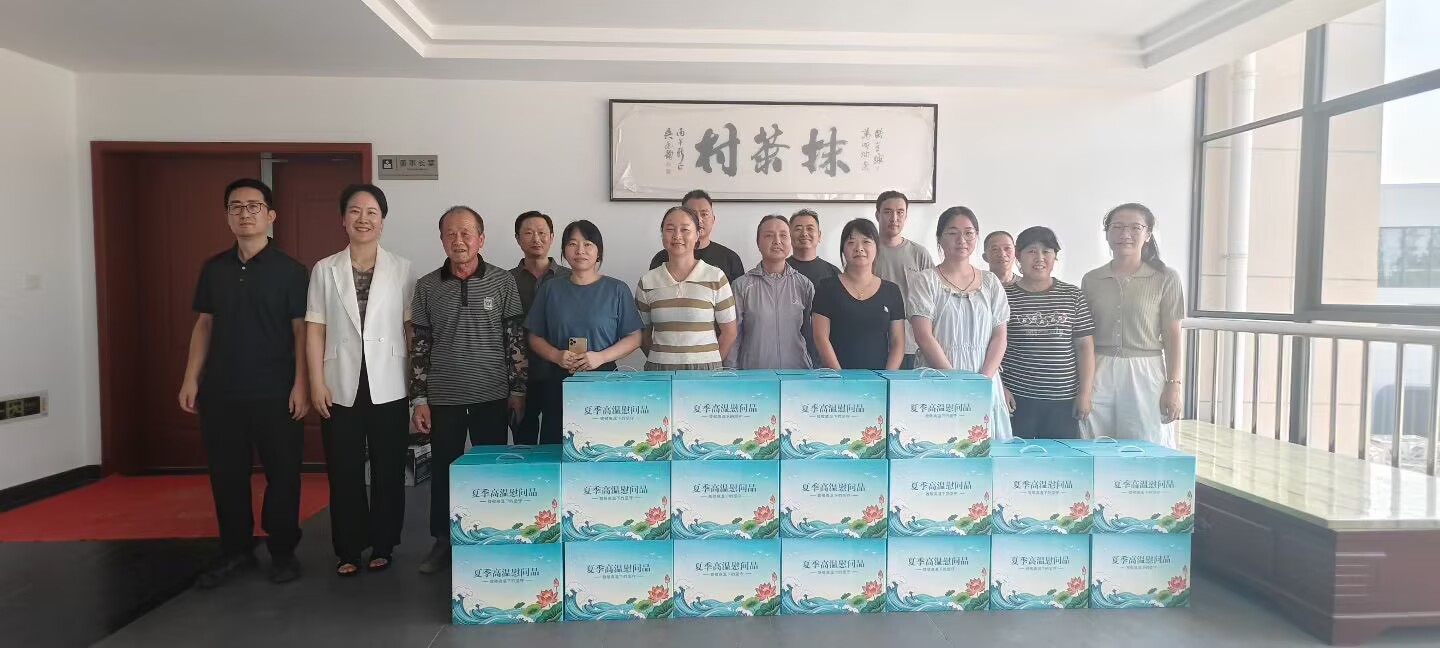
Our tea garden, production, quality and export teams work closely together to support consistent products and dependable supply for customers worldwide.
Have a question about matcha sourcing, production, or your next order?
Our more than 2,667 hectares of self-owned tea gardens are managed to European and organic standards. From ecological cultivation and tea variety selection to pre-harvest shading, we manage each stage to grow leaves suited to high-quality matcha.
Our tea gardens are located away from sources of pollution. We do not use pesticides and manage pests through physical control methods.
We cultivate Longjing, Zhongcha 108, Yabukita, Aolü and Jiukeng. These varieties provide tender leaves for matcha, with fresh, smooth flavors and delicate floral, chestnut or seaweed notes across different grades.
We shade our tea plants for 20–30 days before harvest. Shading increases chlorophyll and theanine, helping develop matcha’s vivid green color, smooth umami taste and low bitterness.
Inside Our Tea Gardens
Learn more about our tea garden practices and organic origin documents.
Fresh leaves are harvested, steamed and cooled before tencha drying, refining, milling, quality checks and protective packaging.
Tender tea shoots are harvested and transferred for processing.
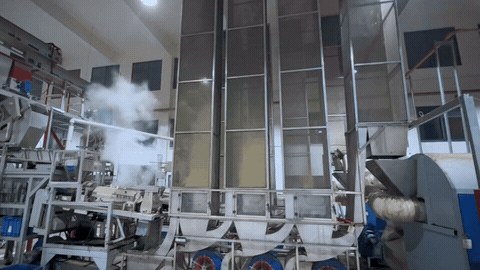
The leaves are steamed to slow oxidation, then cooled before drying.
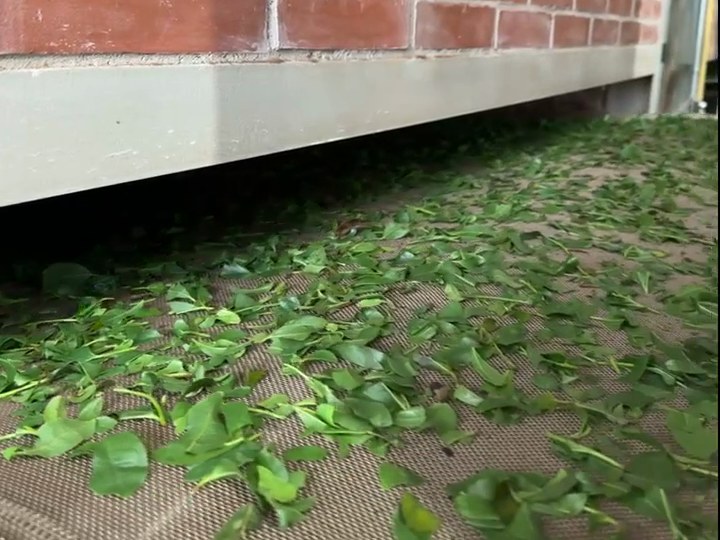
The leaves are dried into tencha, then stems and veins are separated.
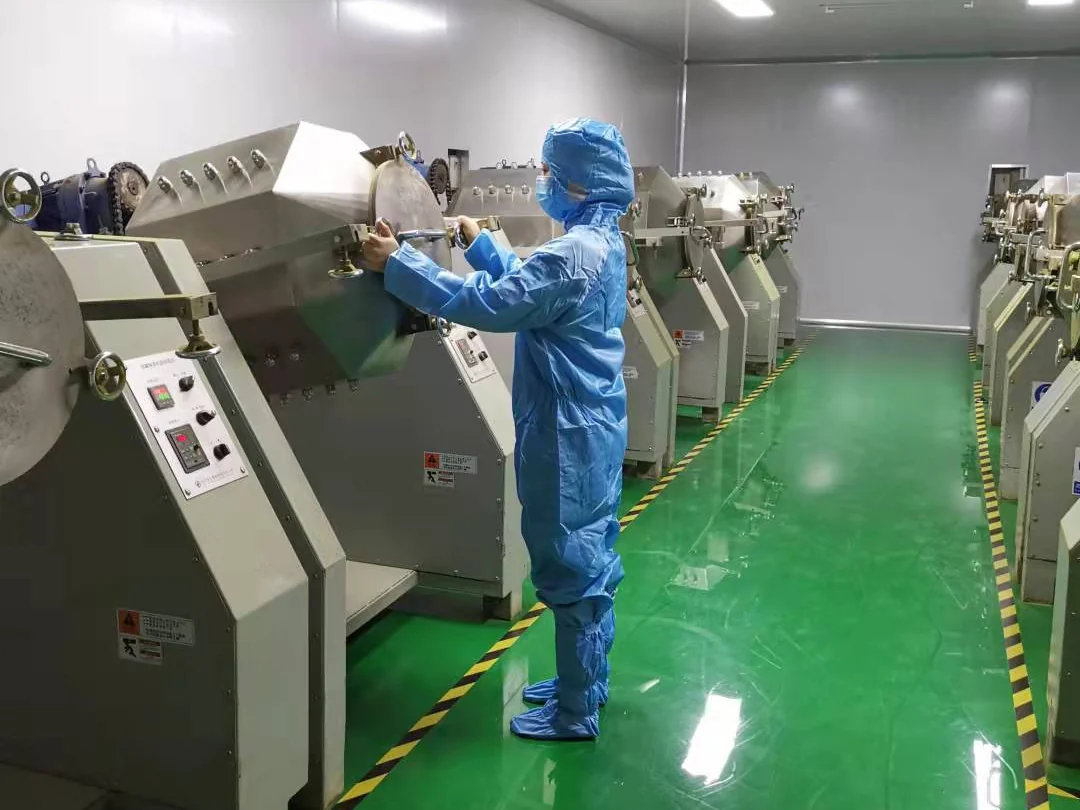
Refined tencha is milled into fine matcha powder.
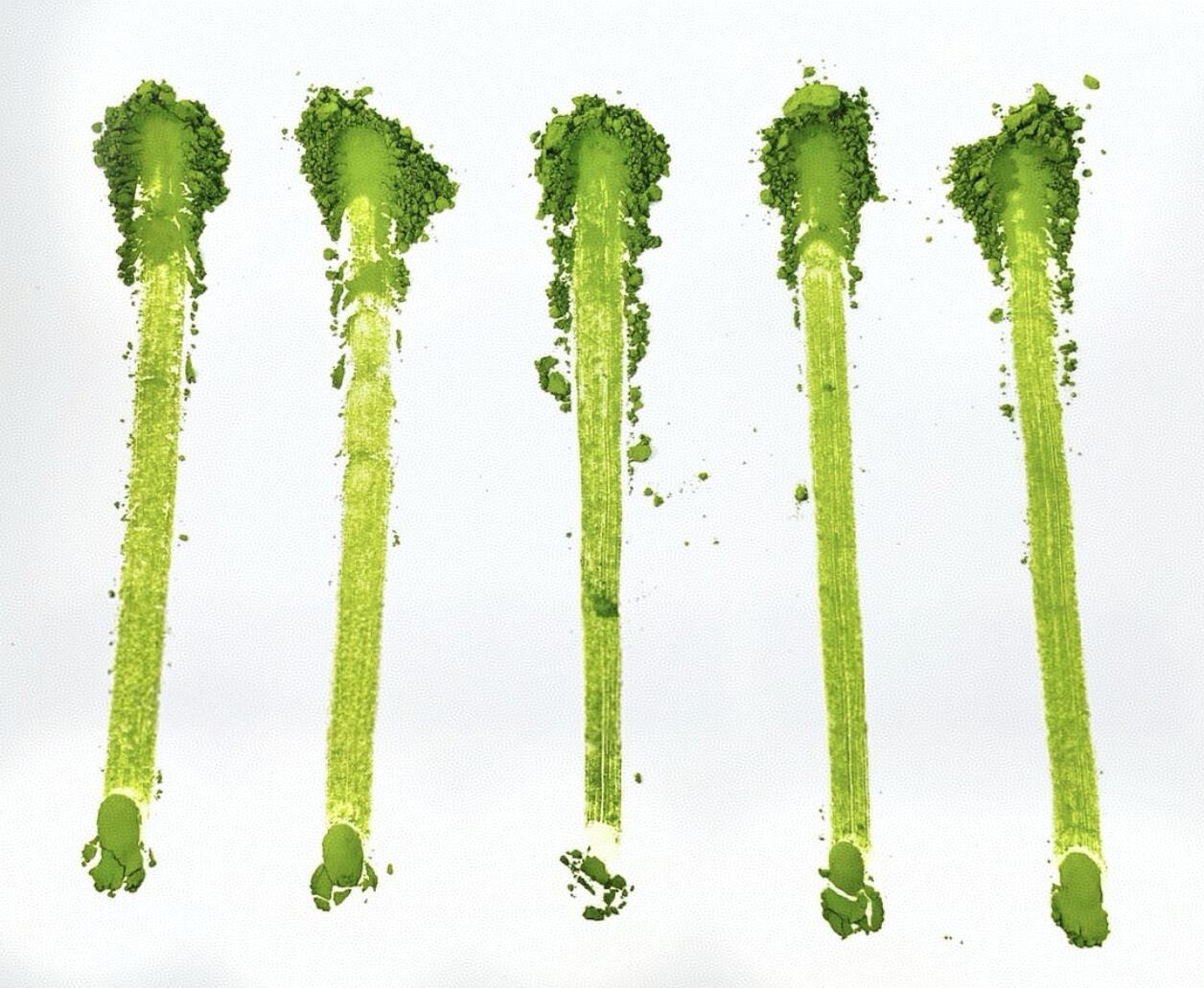
Matcha is sifted and checked for quality before packing.
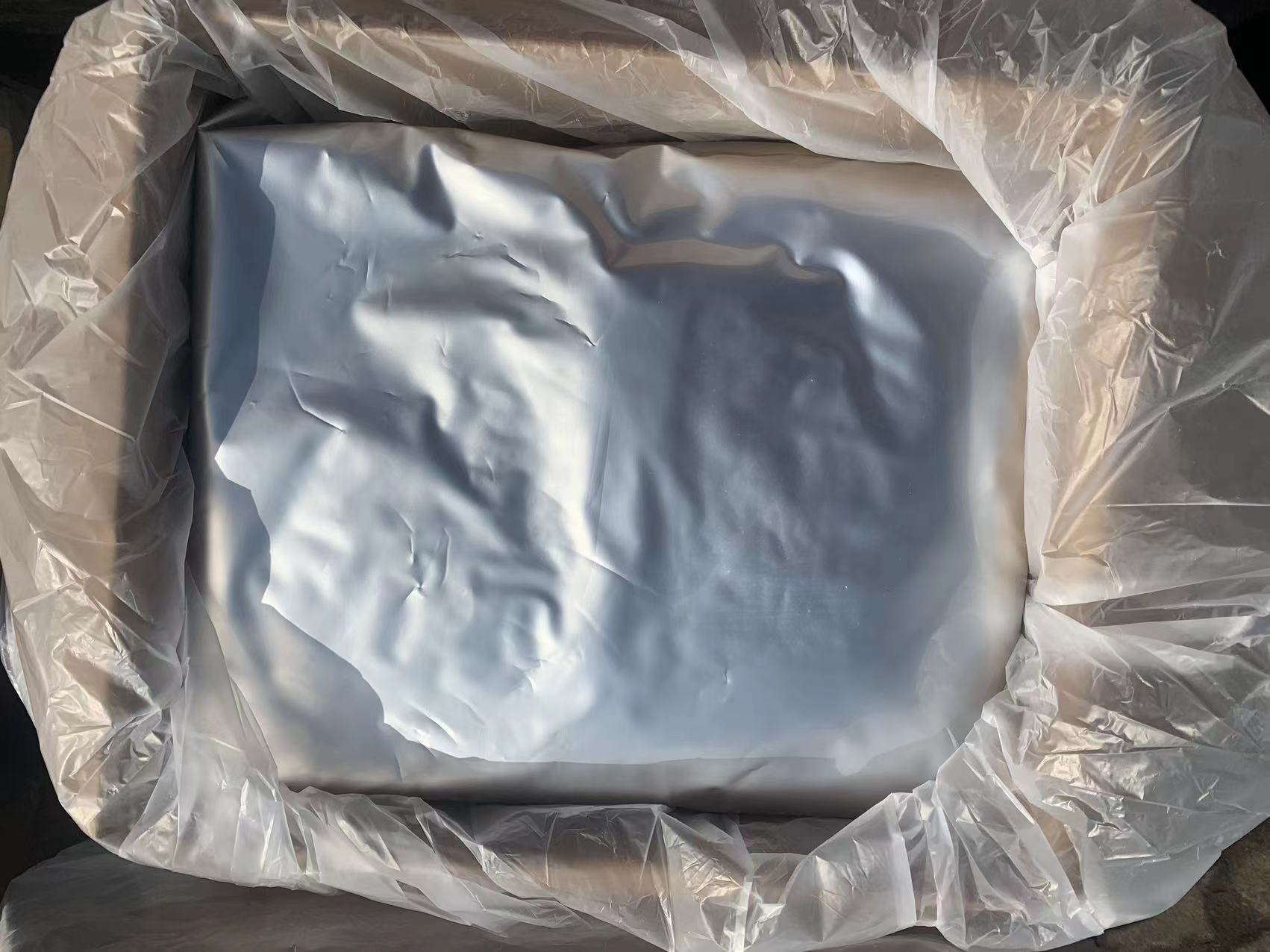
Approved matcha is filled into protective packaging to help preserve freshness.
Need production details for your next order?
Develop more products for your customers with our matcha and tea powders. Choose from pure matcha, matcha latte powder, matcha blends, hojicha and genmaicha, with options tailored to your recipes, applications and brand.
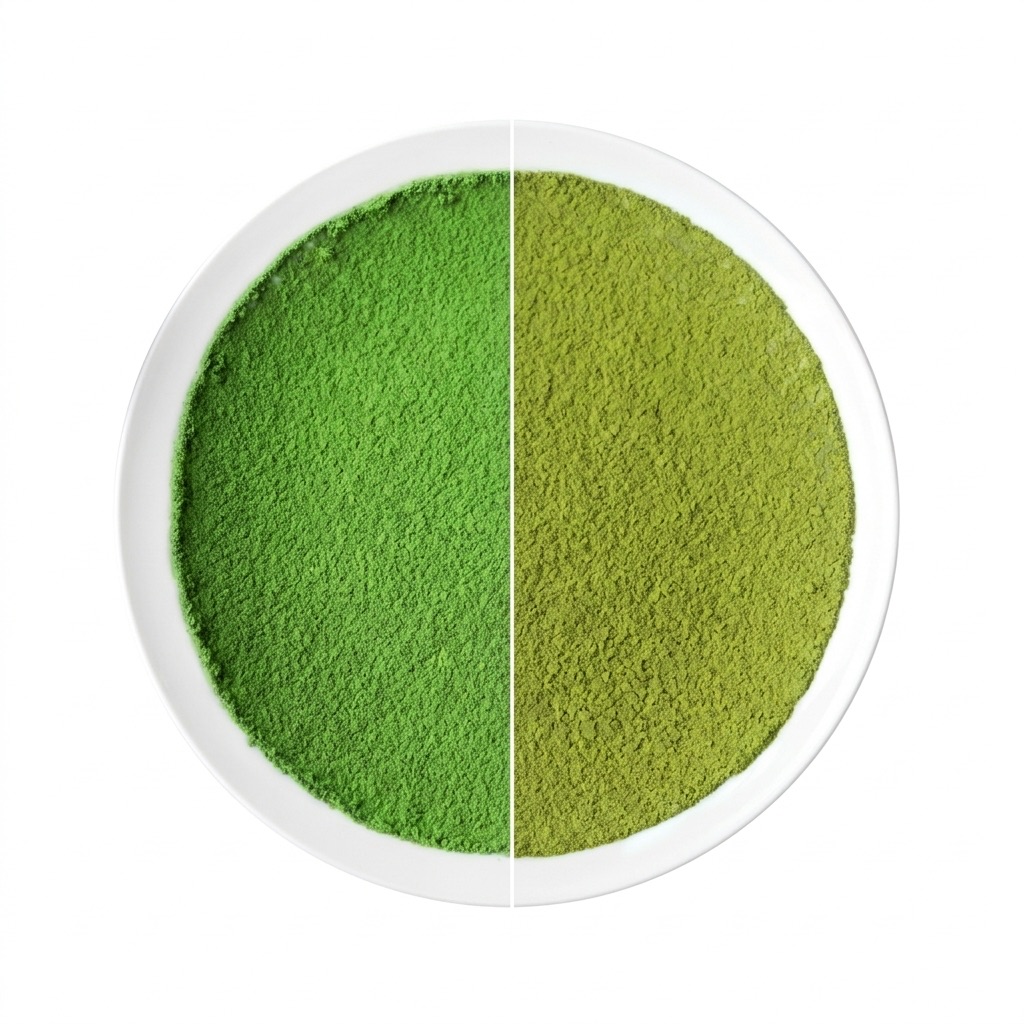
Pure matcha grades for whisked tea, café beverages, food production and retail packs.
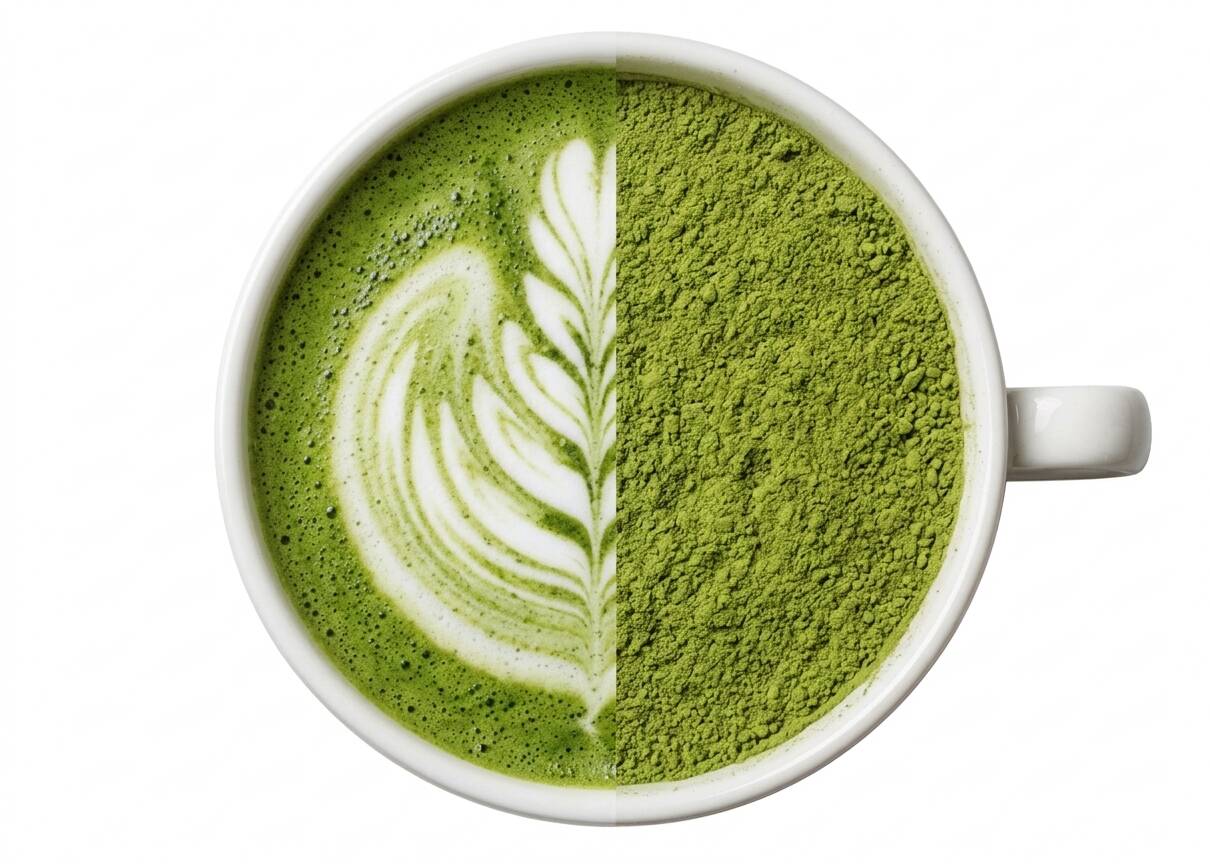
Made-to-order latte powder for café drinks, beverage menus and ready-to-mix products.
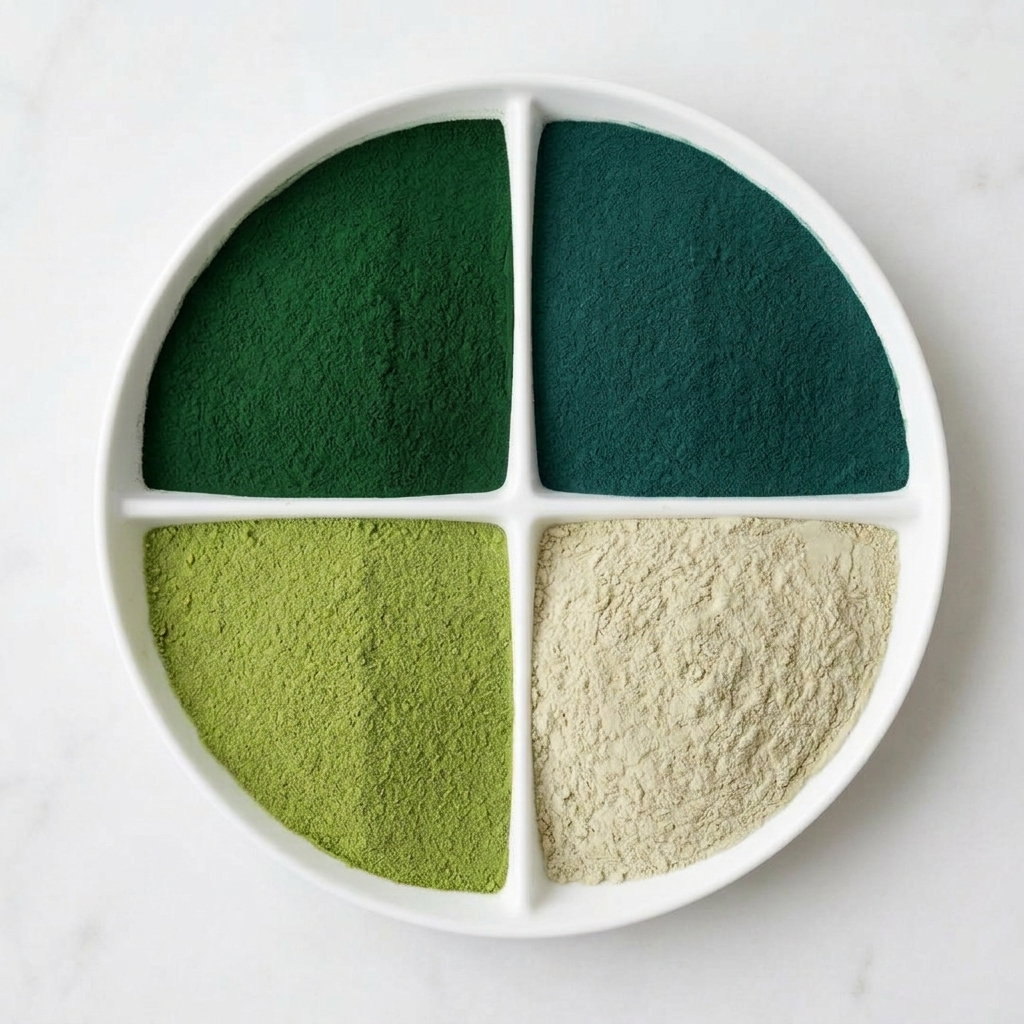
Custom matcha-based blends for specialty beverages, food products and brand formulas.
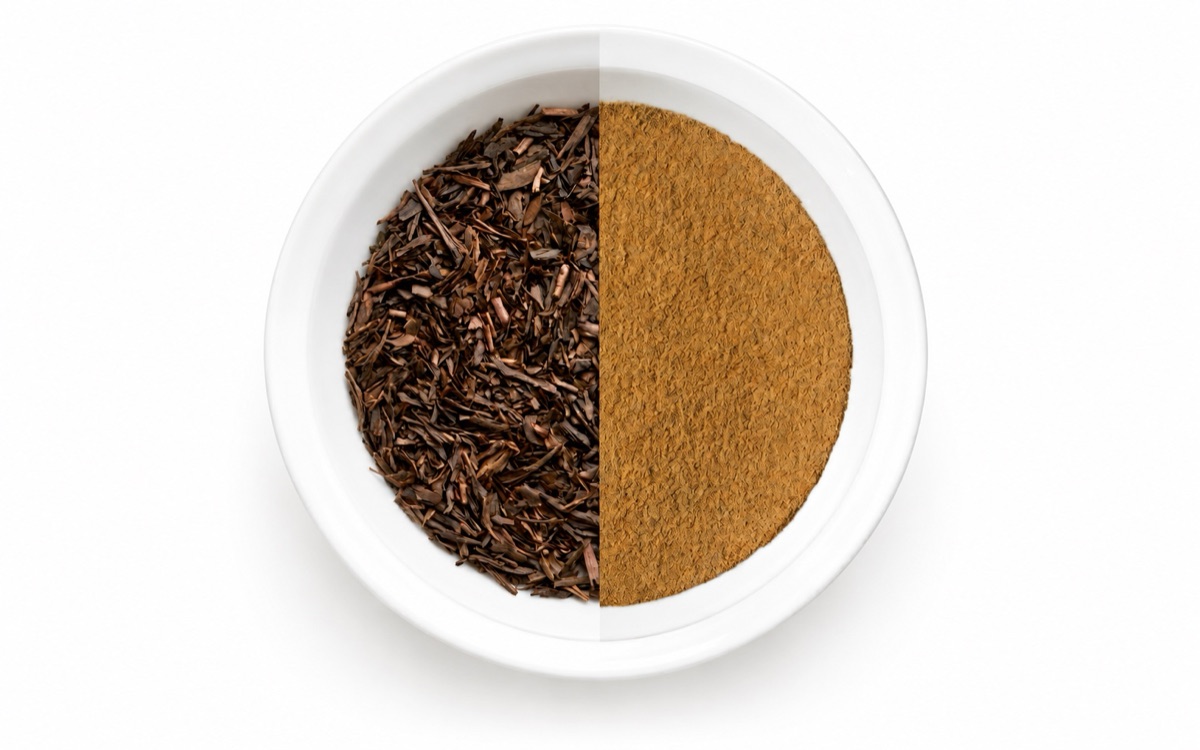
Roasted tea powders for lattes, desserts, tea drinks and retail product lines.
* Note: These recommendations serve as initial directional pathways. Final grades, particle fineness, and color stability should always be validated through client recipe testing and sample formulation.
From milling to final inspection, we check matcha against the specifications for each grade and keep batch records to support your quality review.
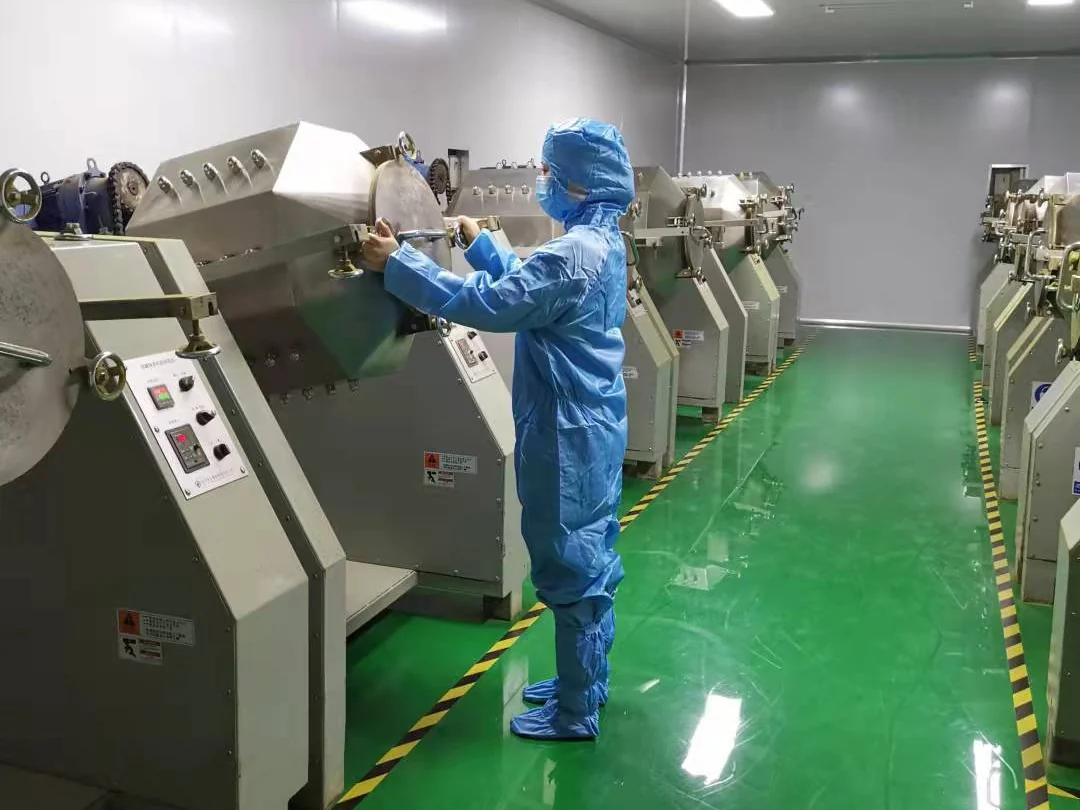
We manage milling conditions to achieve the particle size and texture specified for each matcha grade.
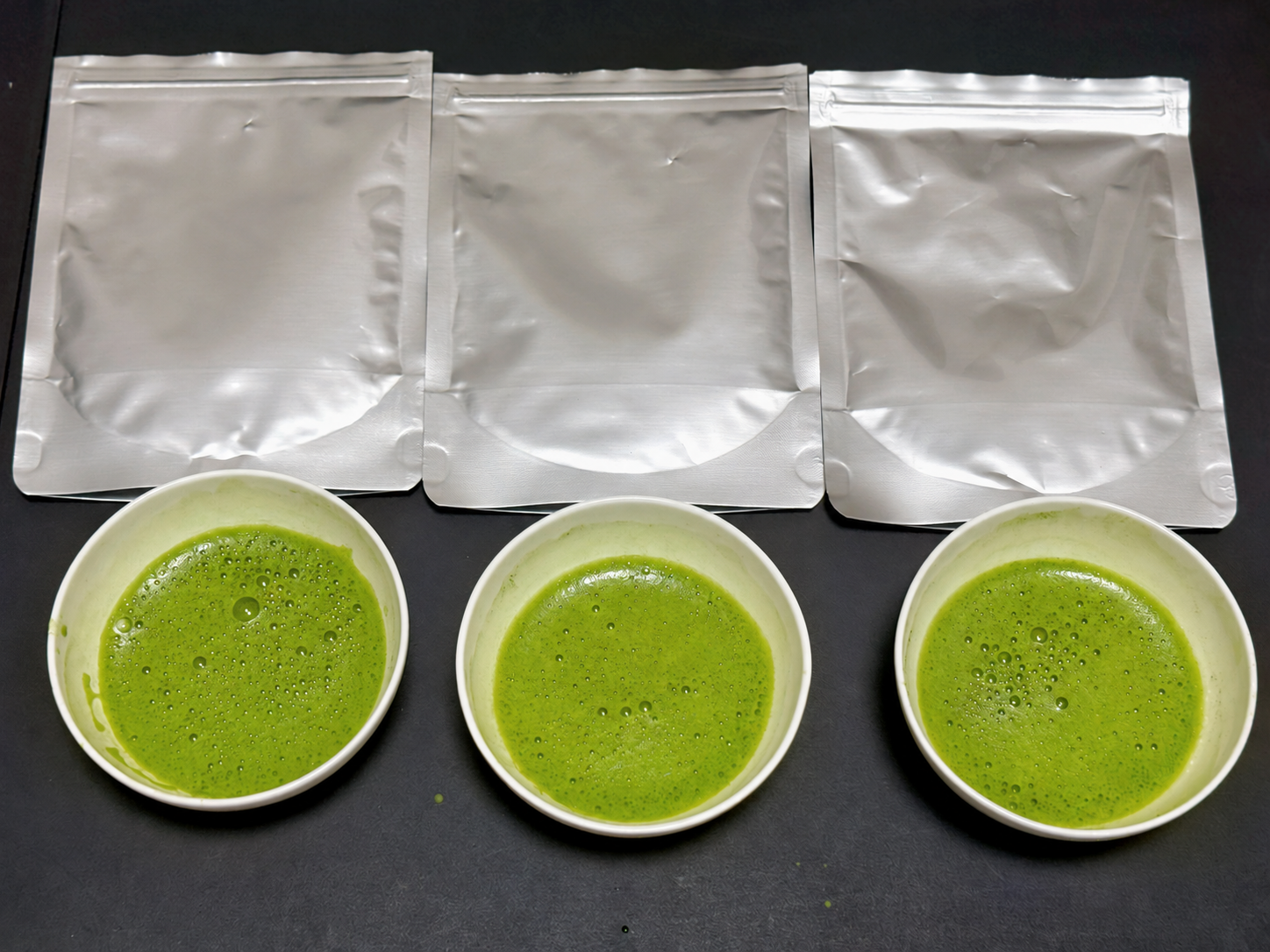
We review each batch for color, aroma, fineness and other agreed specifications before release. Results are recorded for reference.
A lot number connects each finished batch with its production and quality records, making documentation easier to review and follow up.
Built for B2B Quality Review Request product specifications and available batch documents to assess the matcha for your application and market.
Review the certificates and registration documents relevant to your product and destination market. Our team can provide the applicable documents for your order.






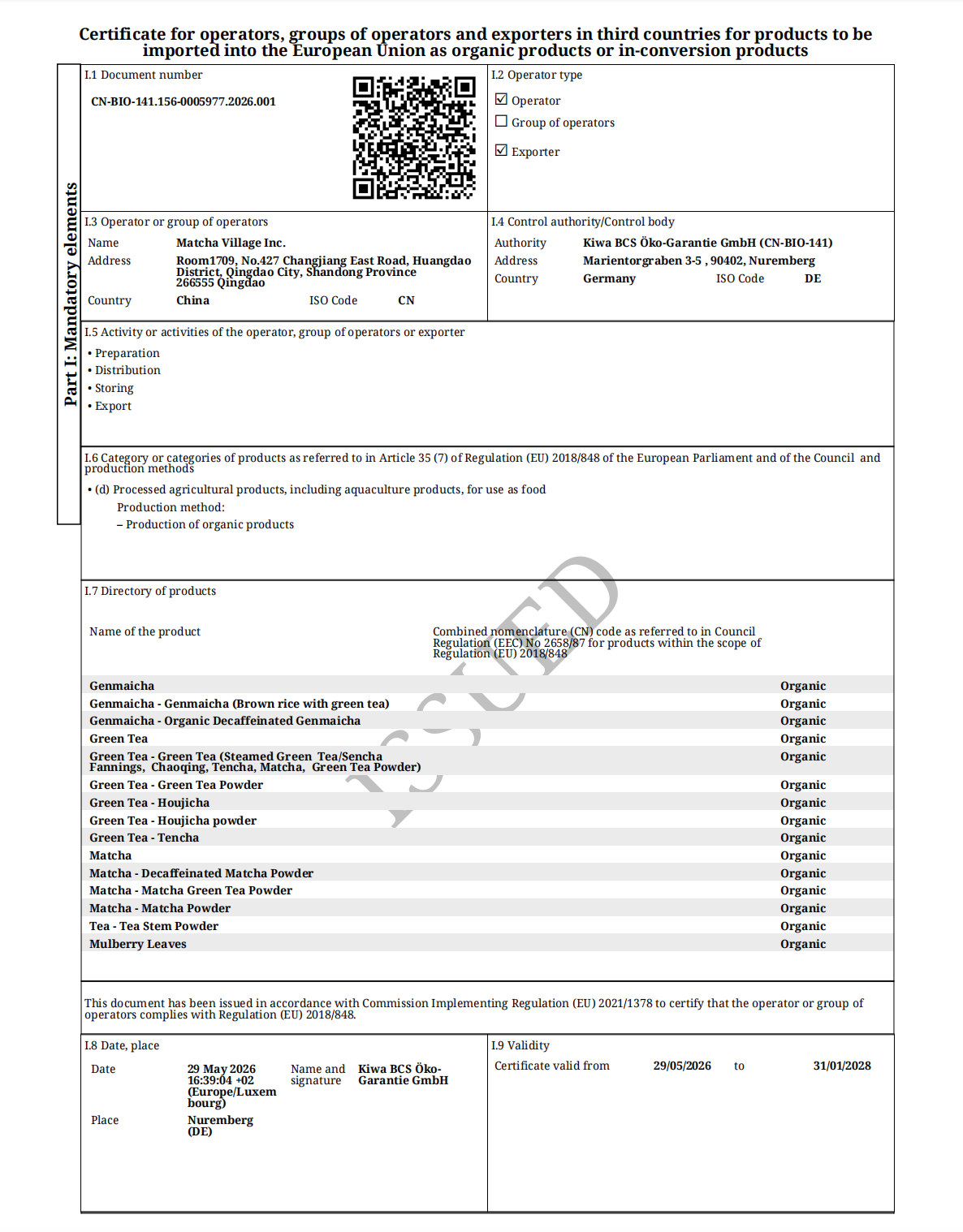 EU Organic
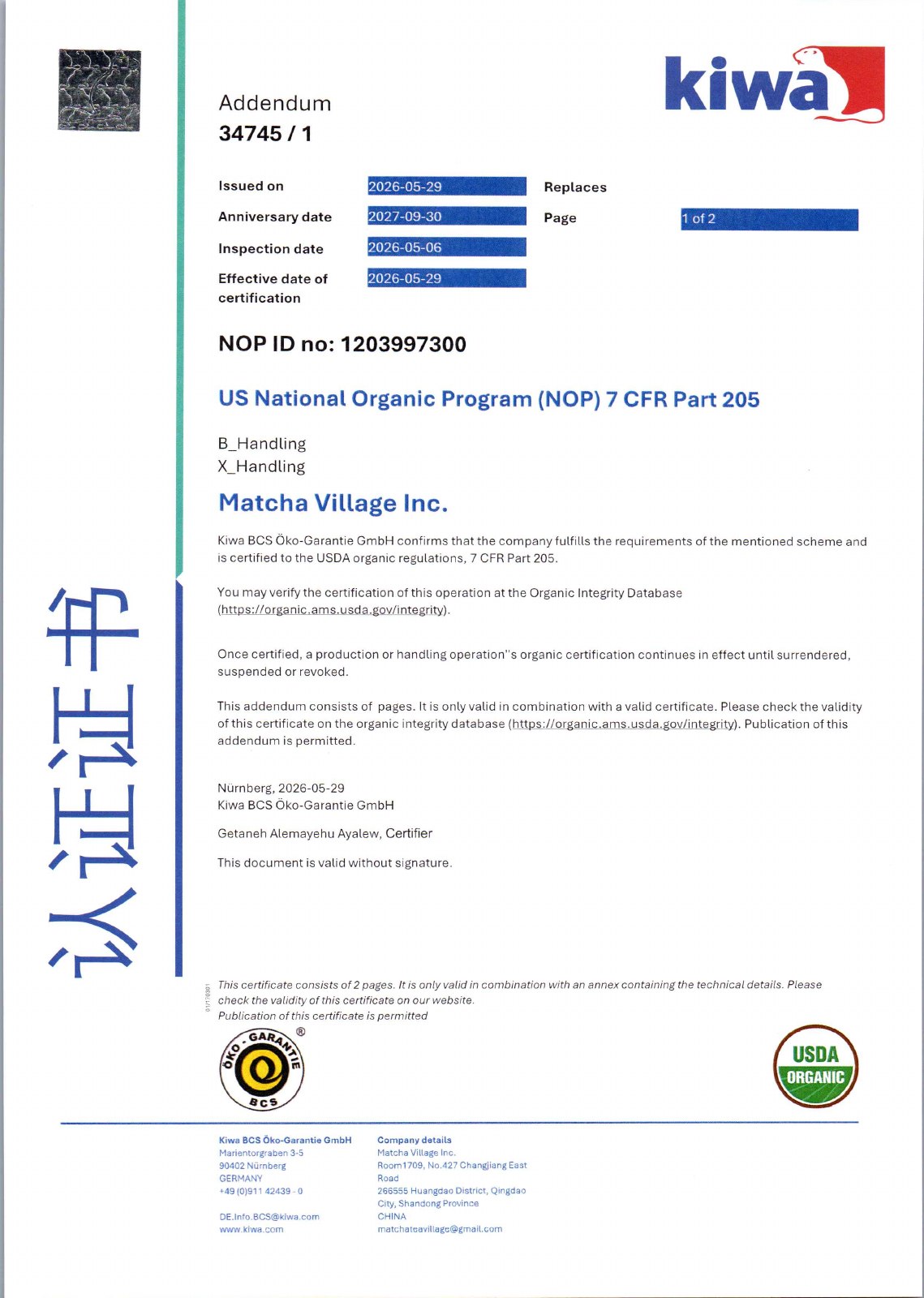 USDA Organic Addendum
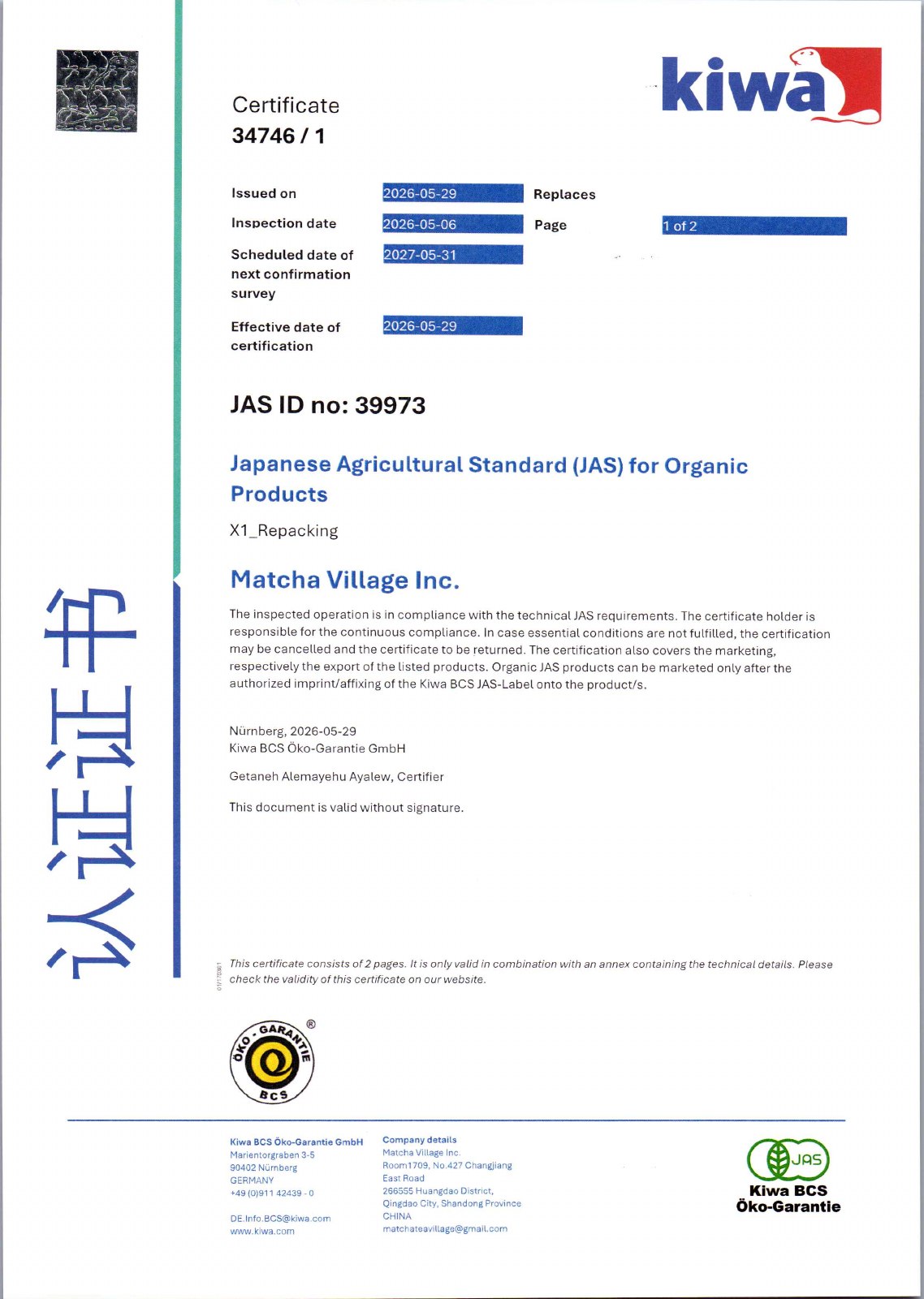 JAS Organic
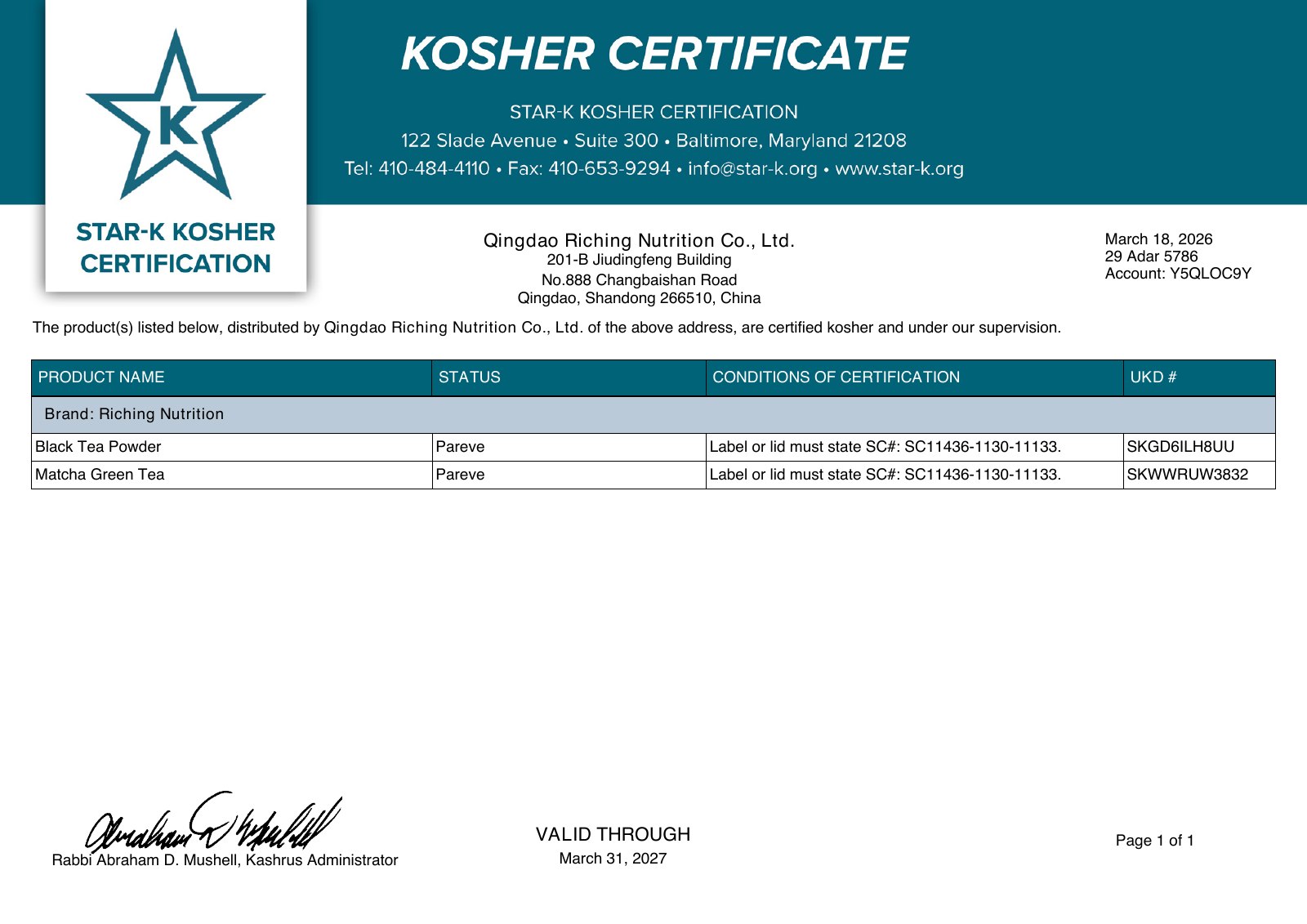 Kosher
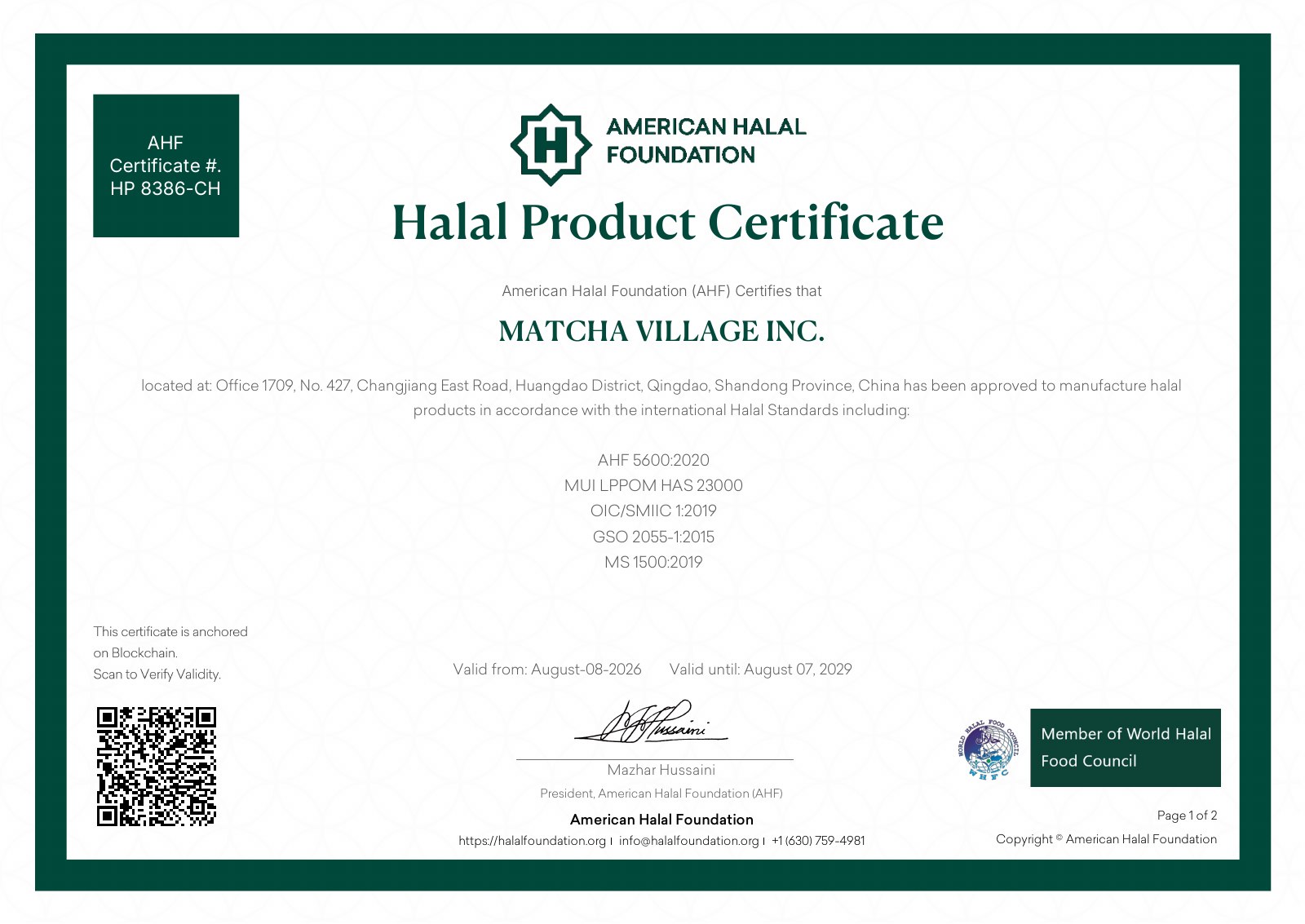 Halal Product Certificate
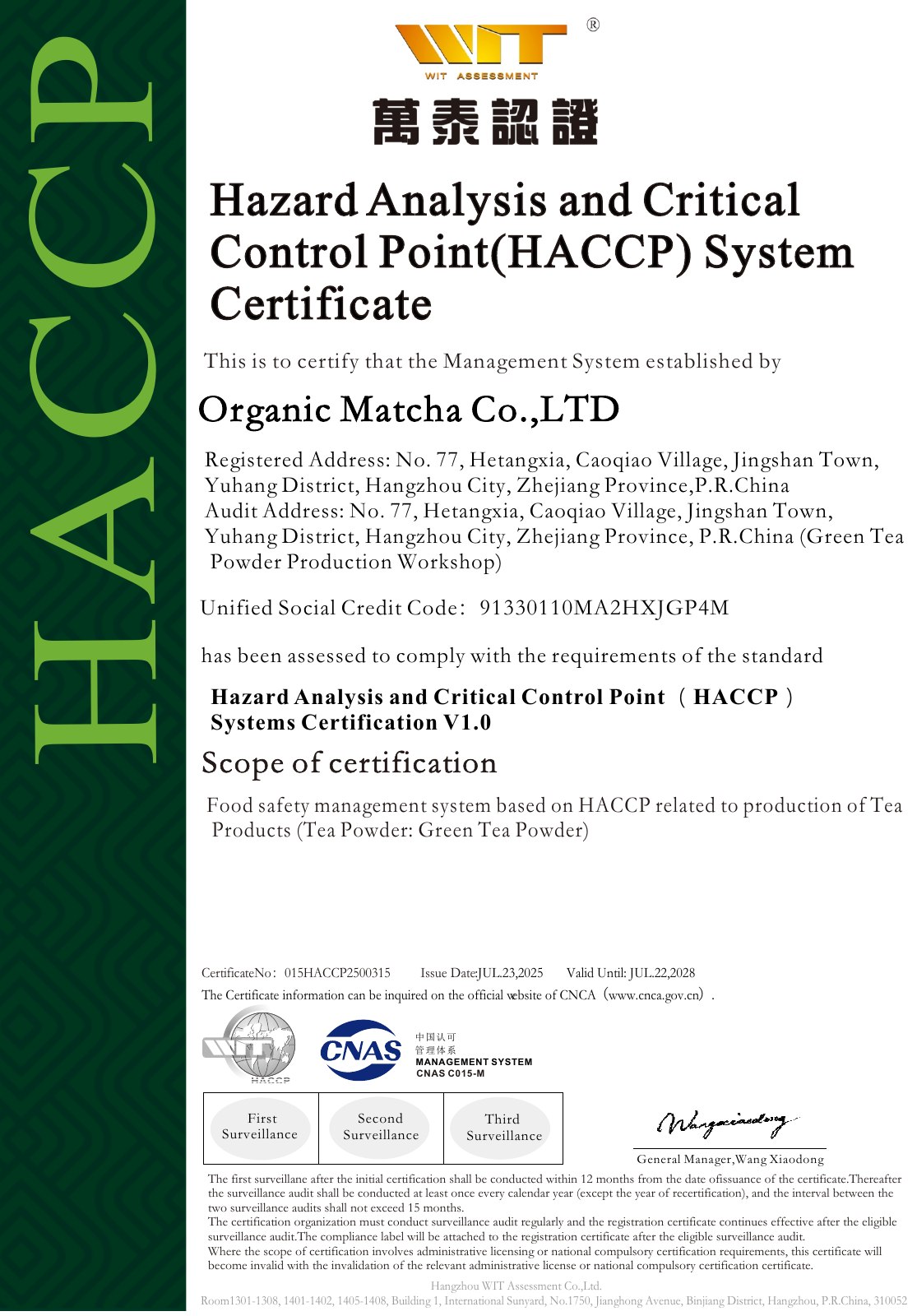 HACCP System Certificate
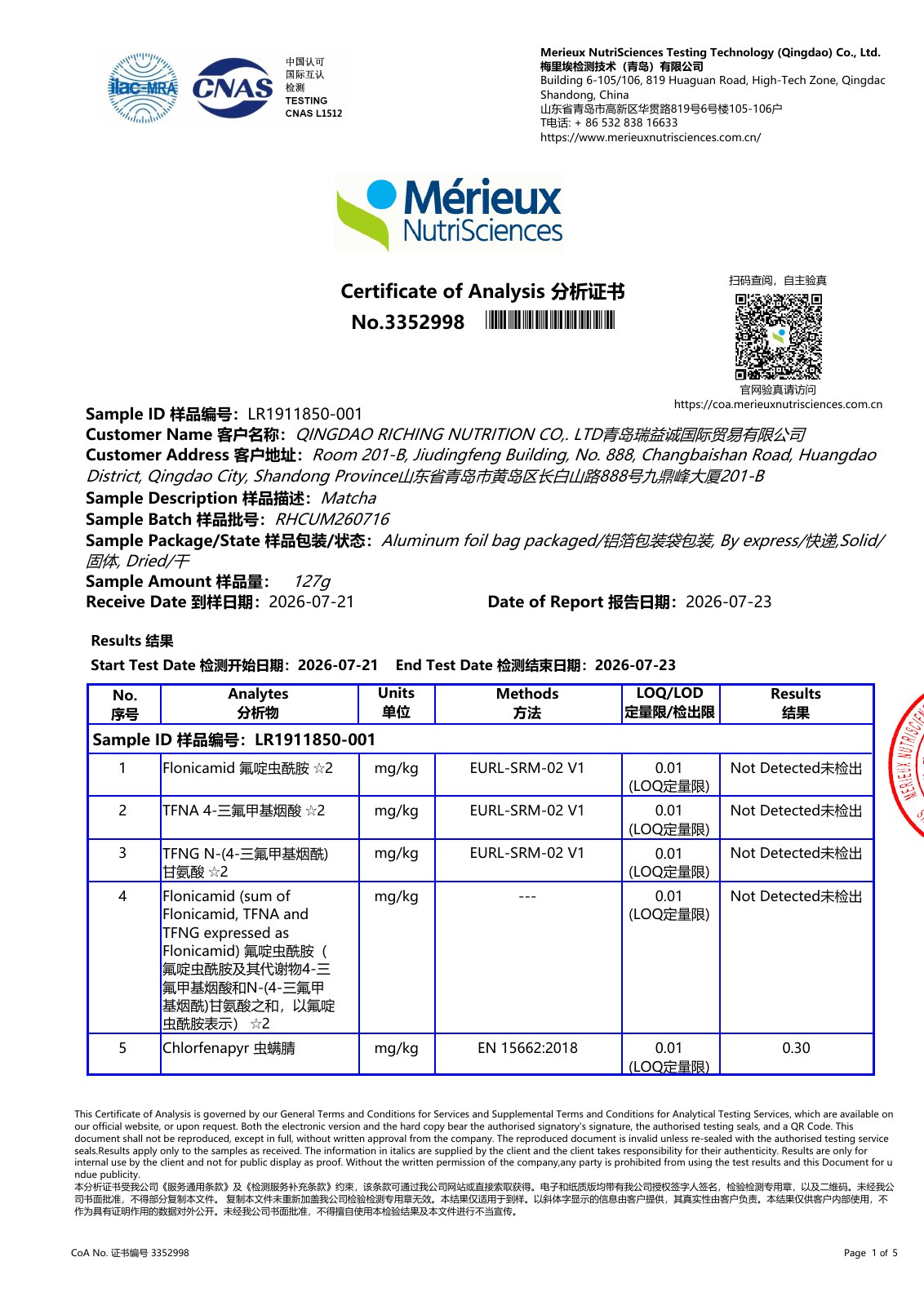 Pesticide Residue Test Report
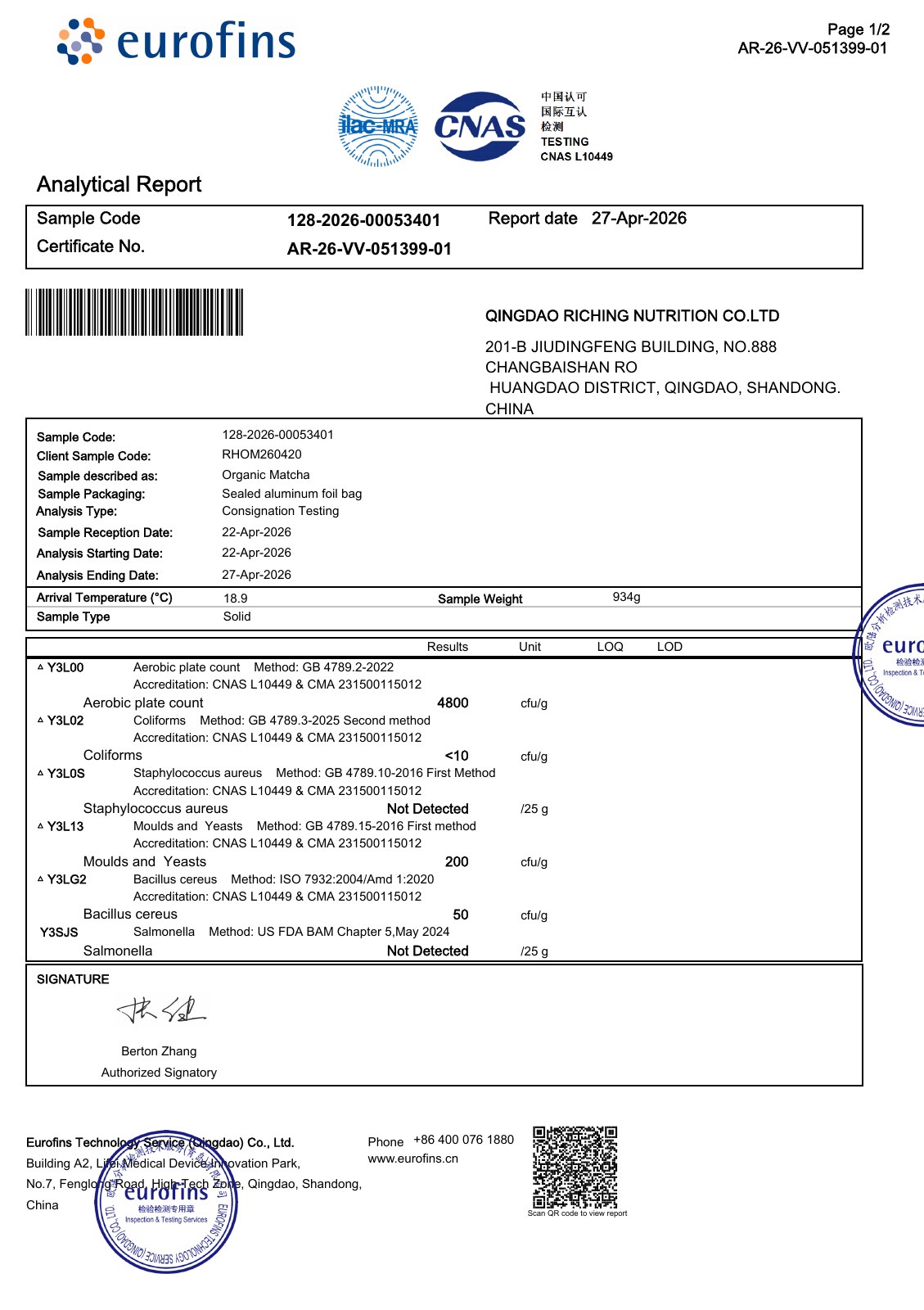 Microbiological Test Report
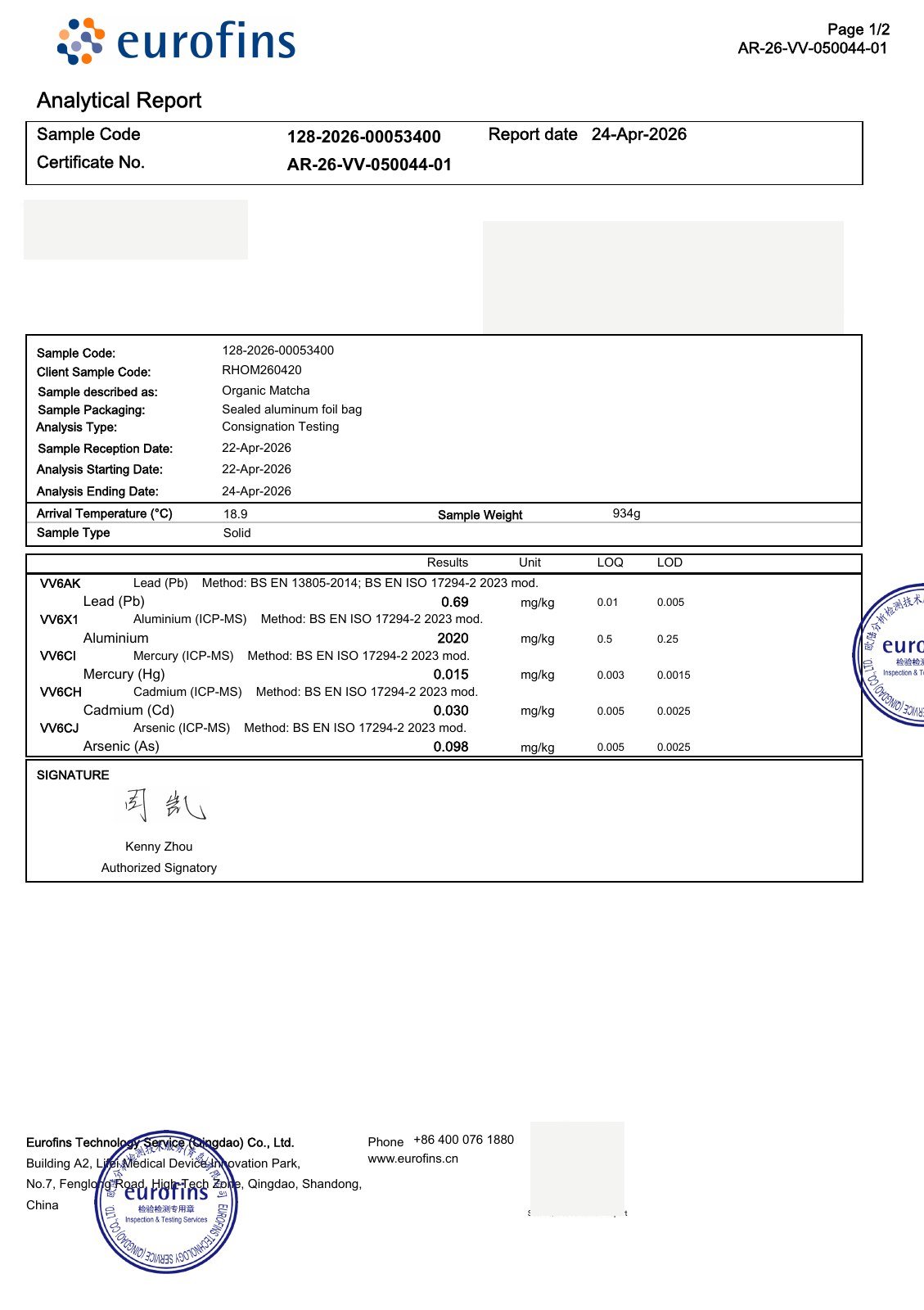
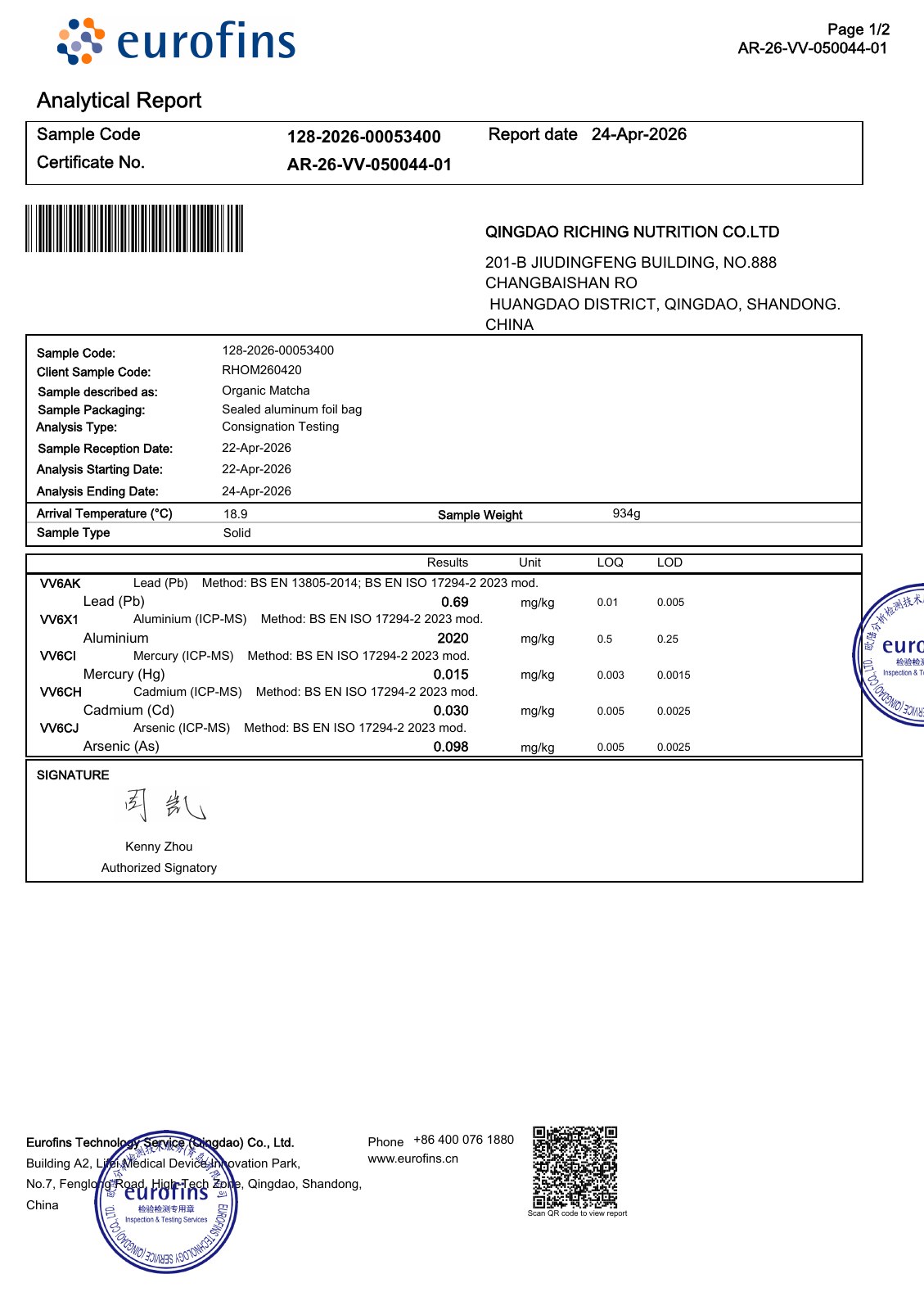 Heavy Metal Test Report
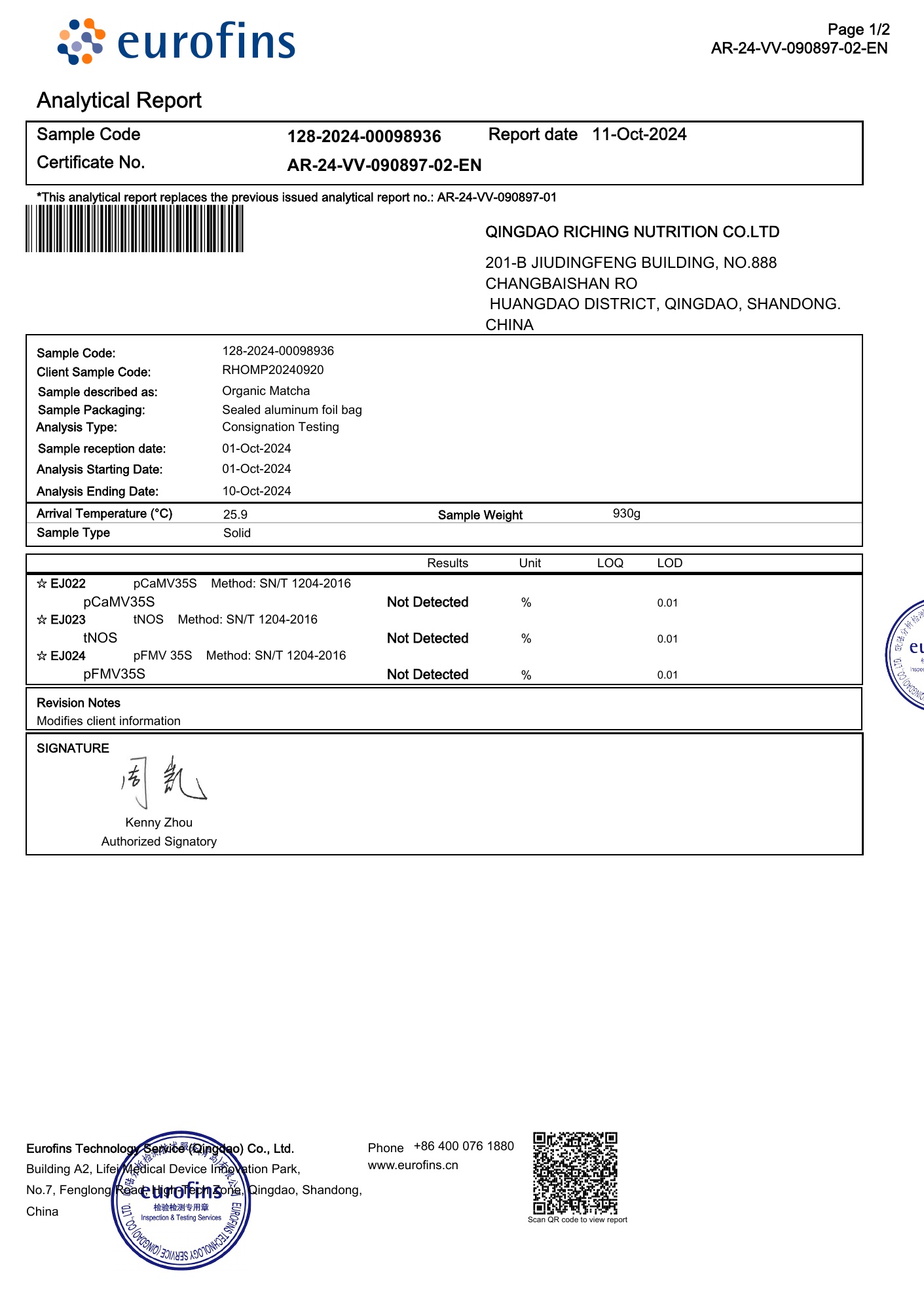 Non-GMO Test Report
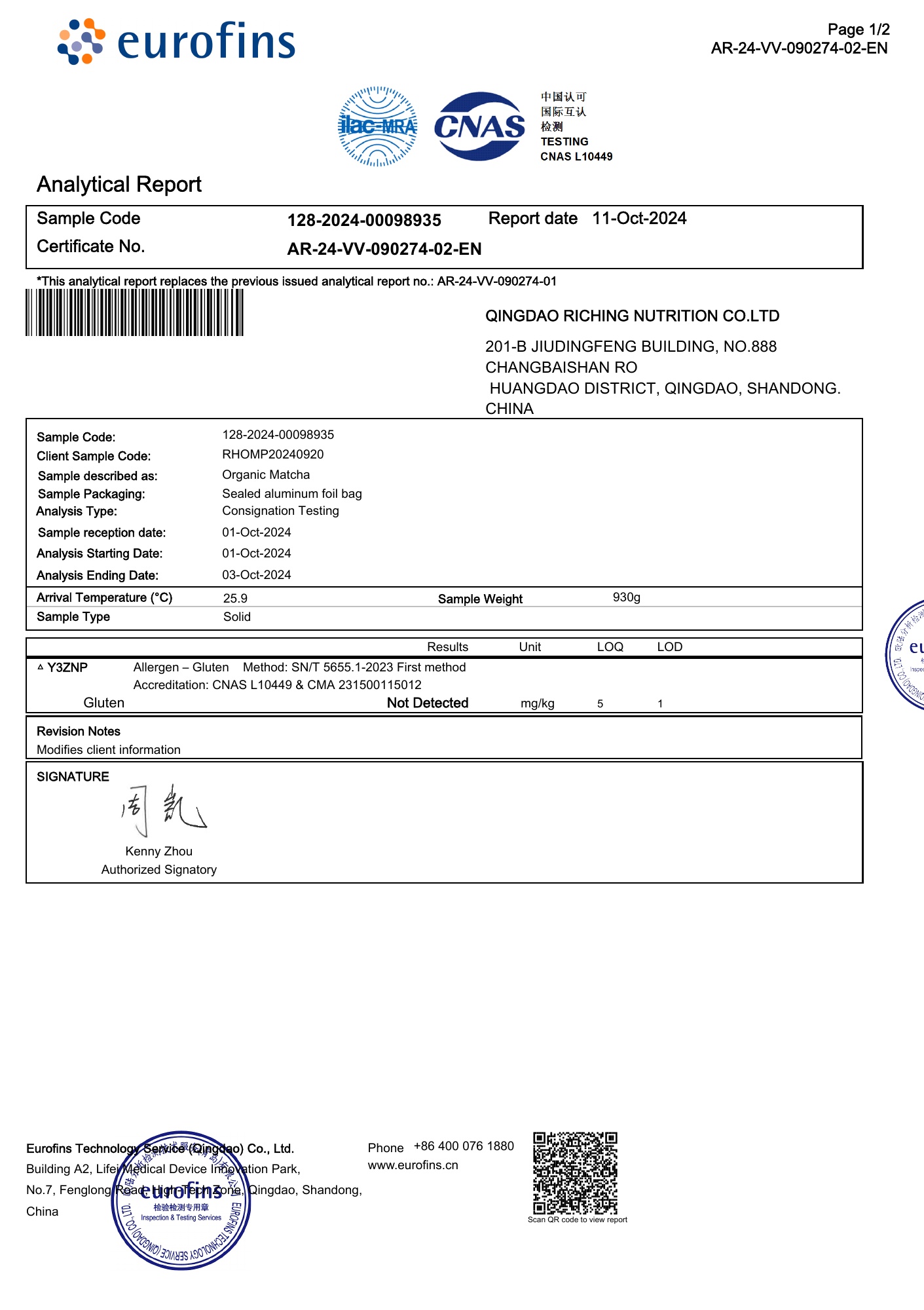 Gluten Test Report
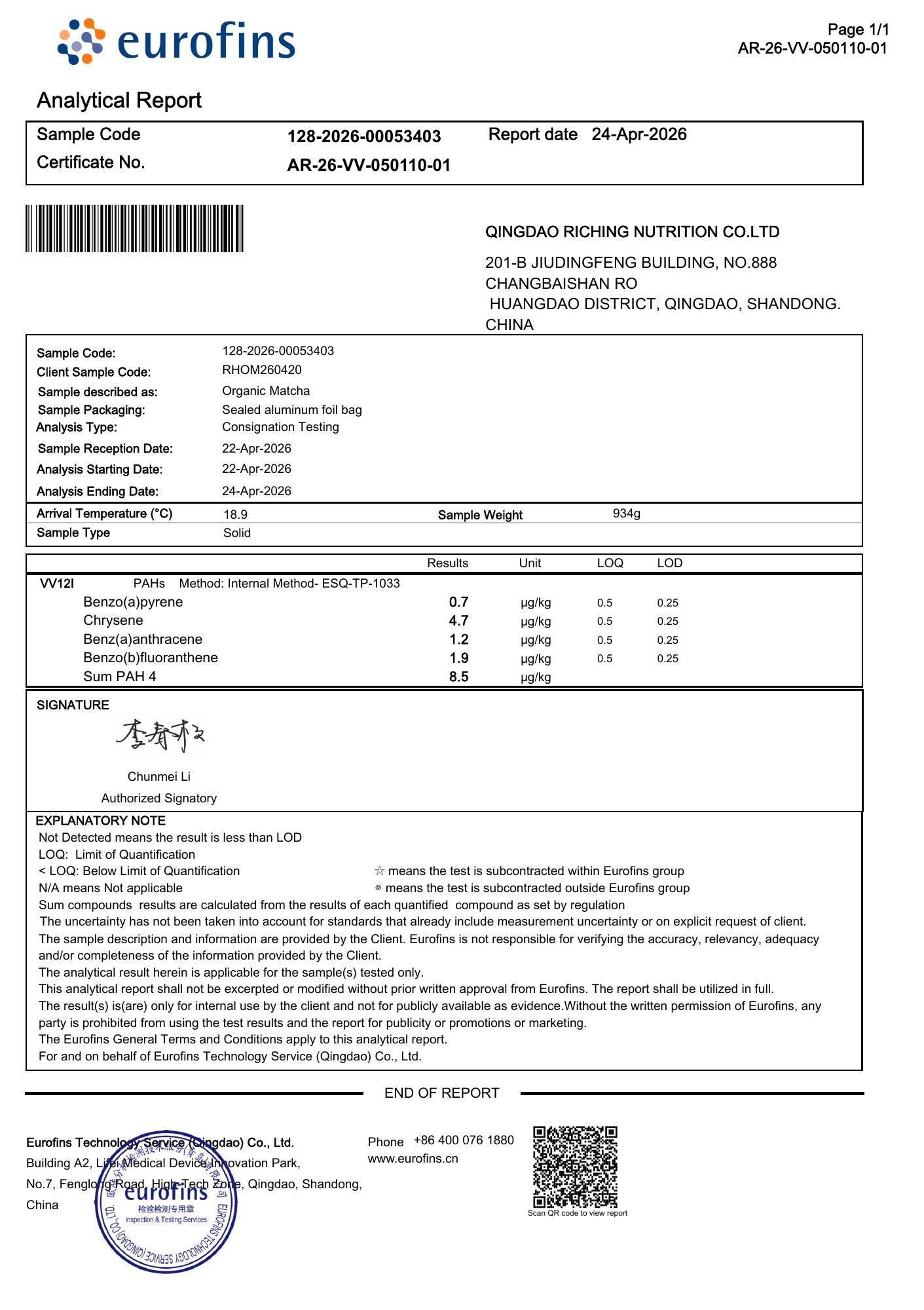 PAH4 Test Report
Need to verify certification scope or request documents for your destination market?
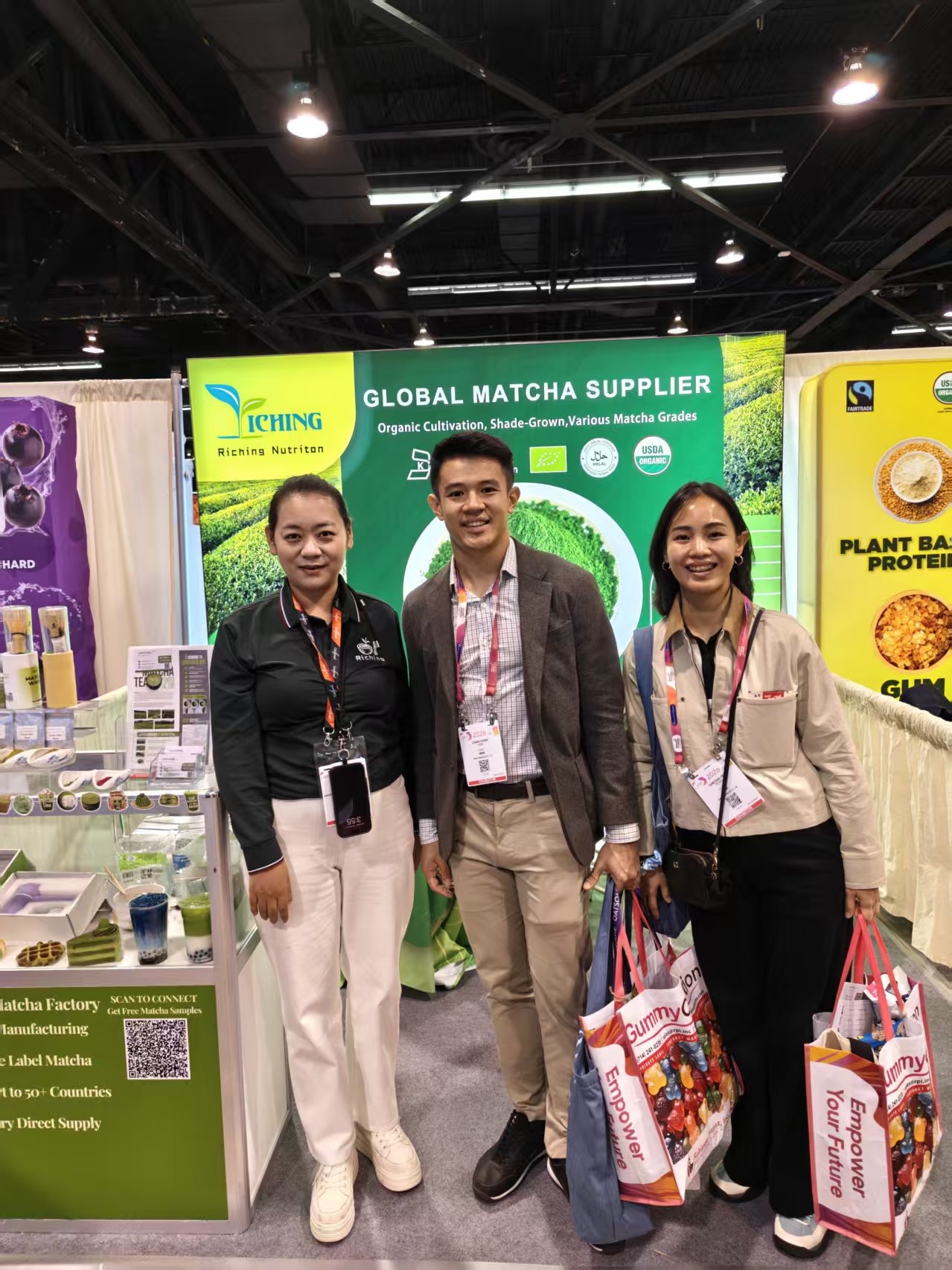
Request Quality DocumentsWe connect with international buyers through export partnerships, trade shows and visits to our tea gardens and factory.
Select a market to discuss supply and import documentation.
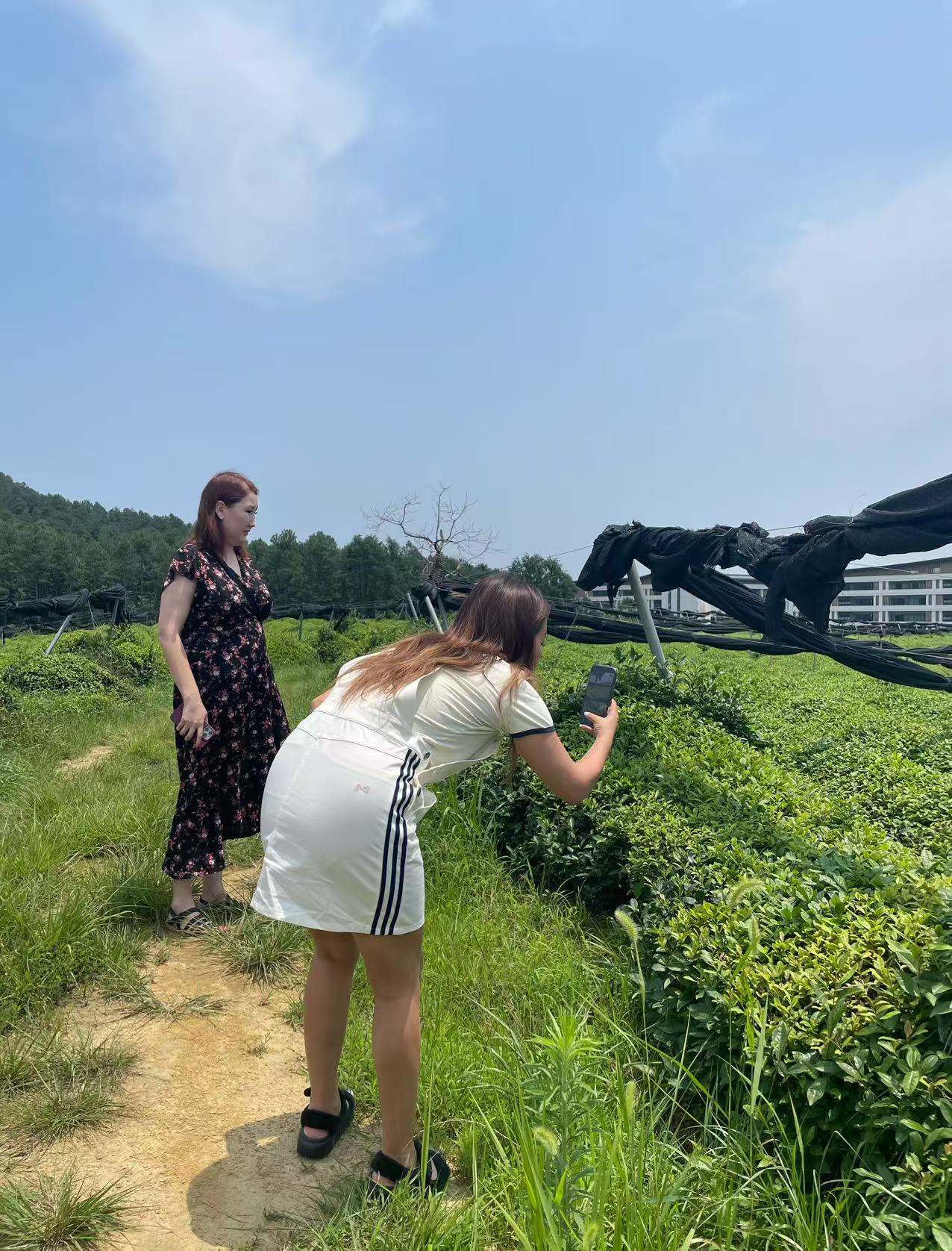
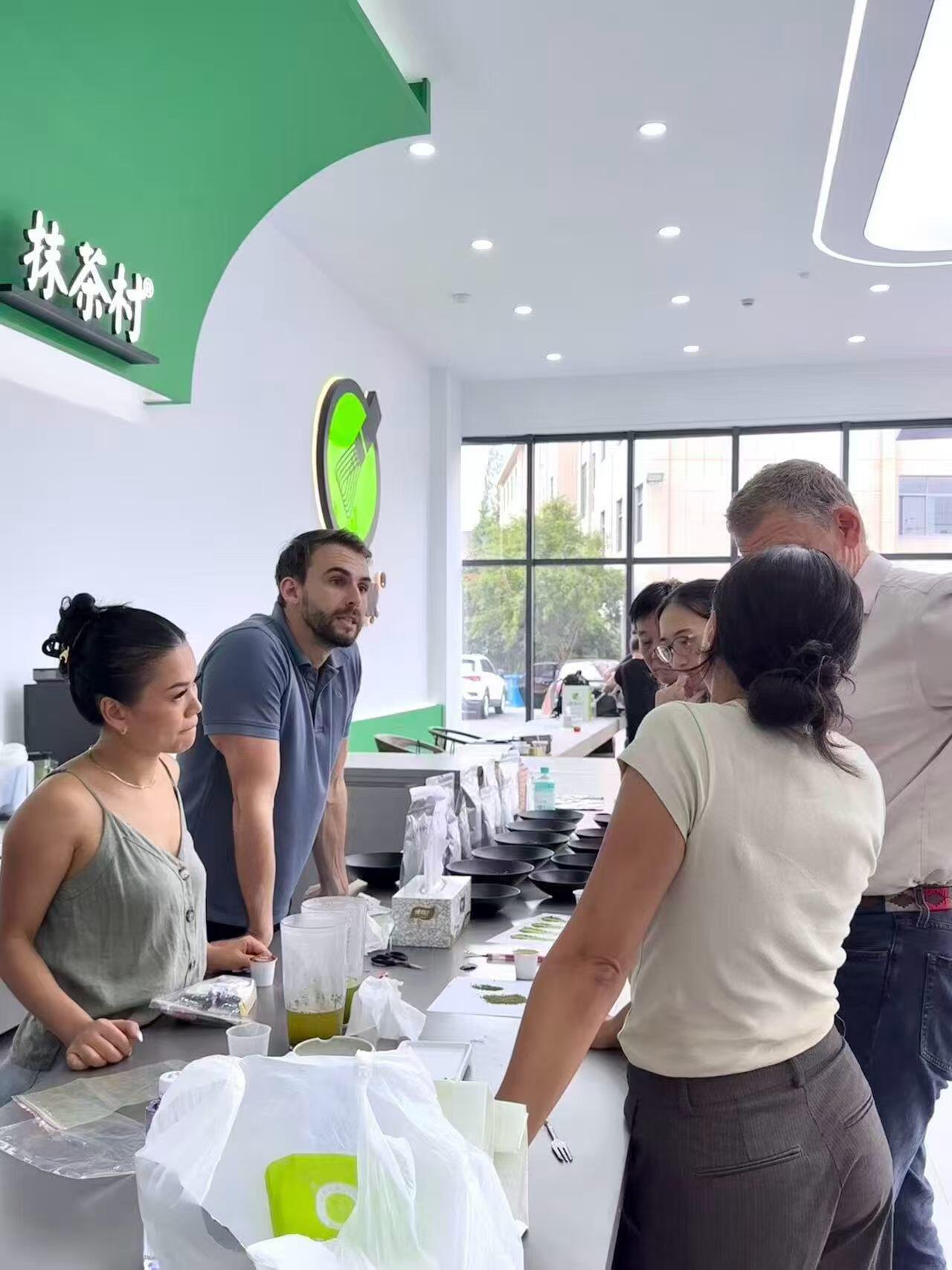
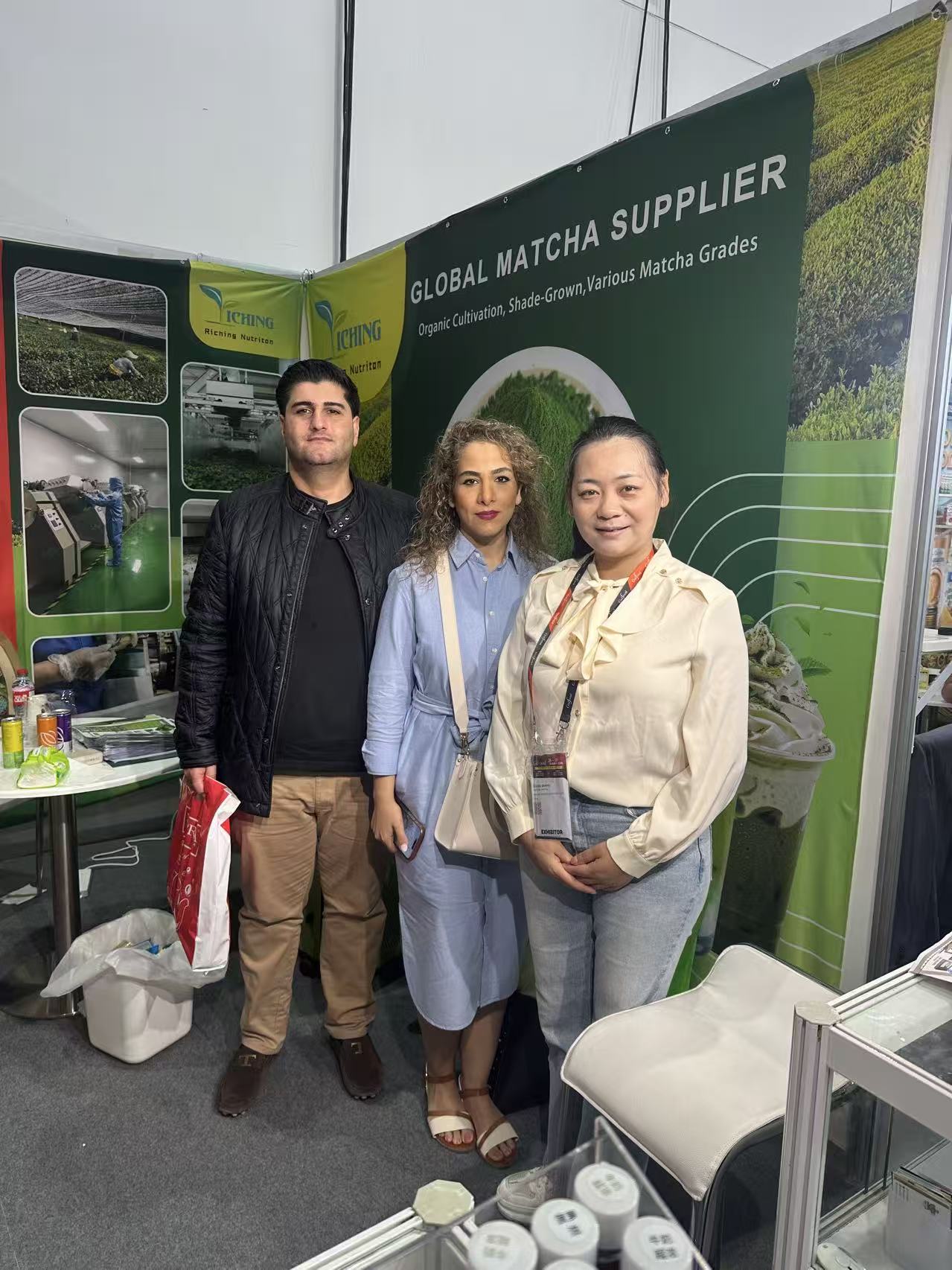
Buyers from different markets visit our tea gardens and production facilities to see our operations firsthand.
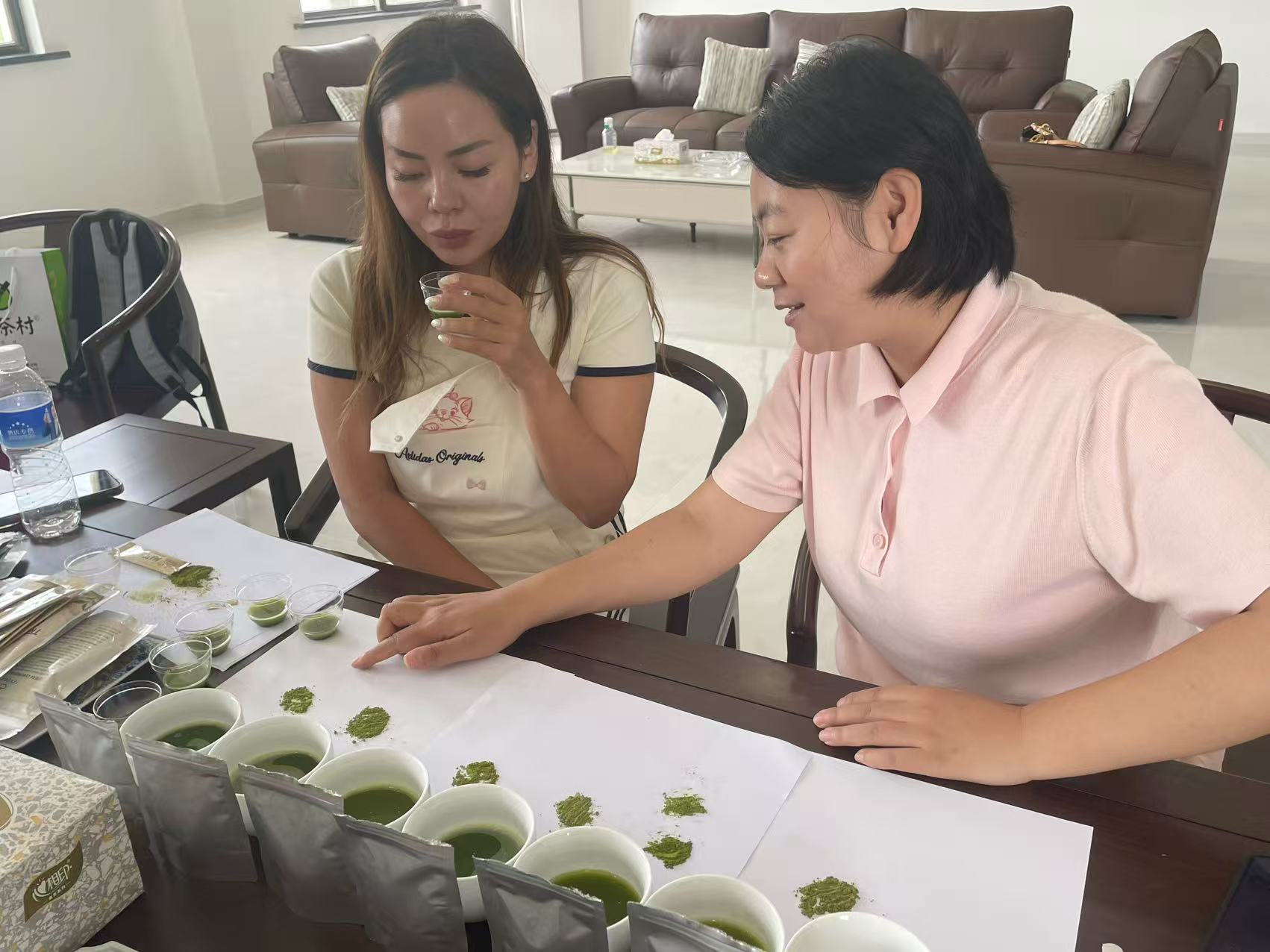
Customer Visit · Central Asia
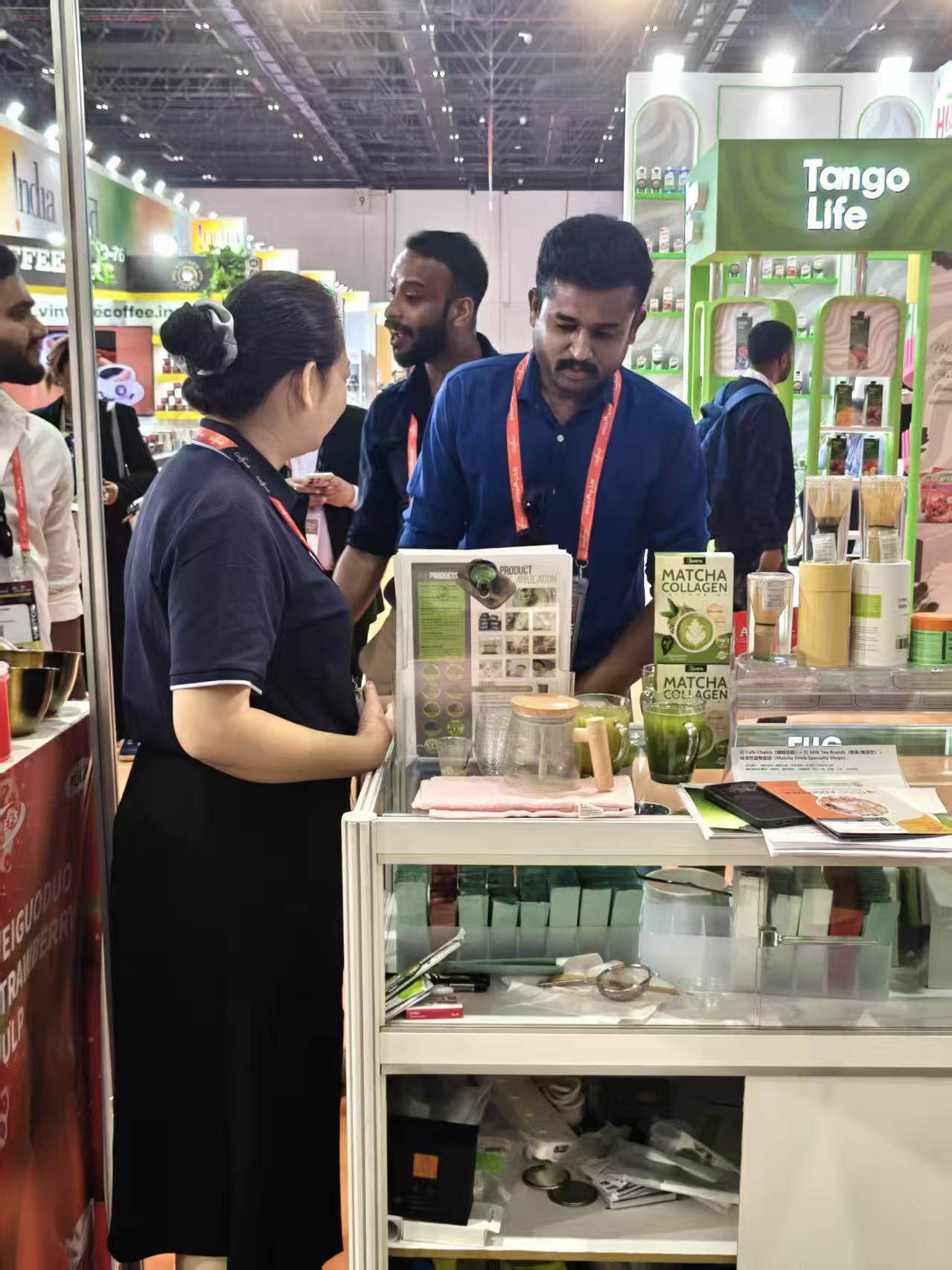
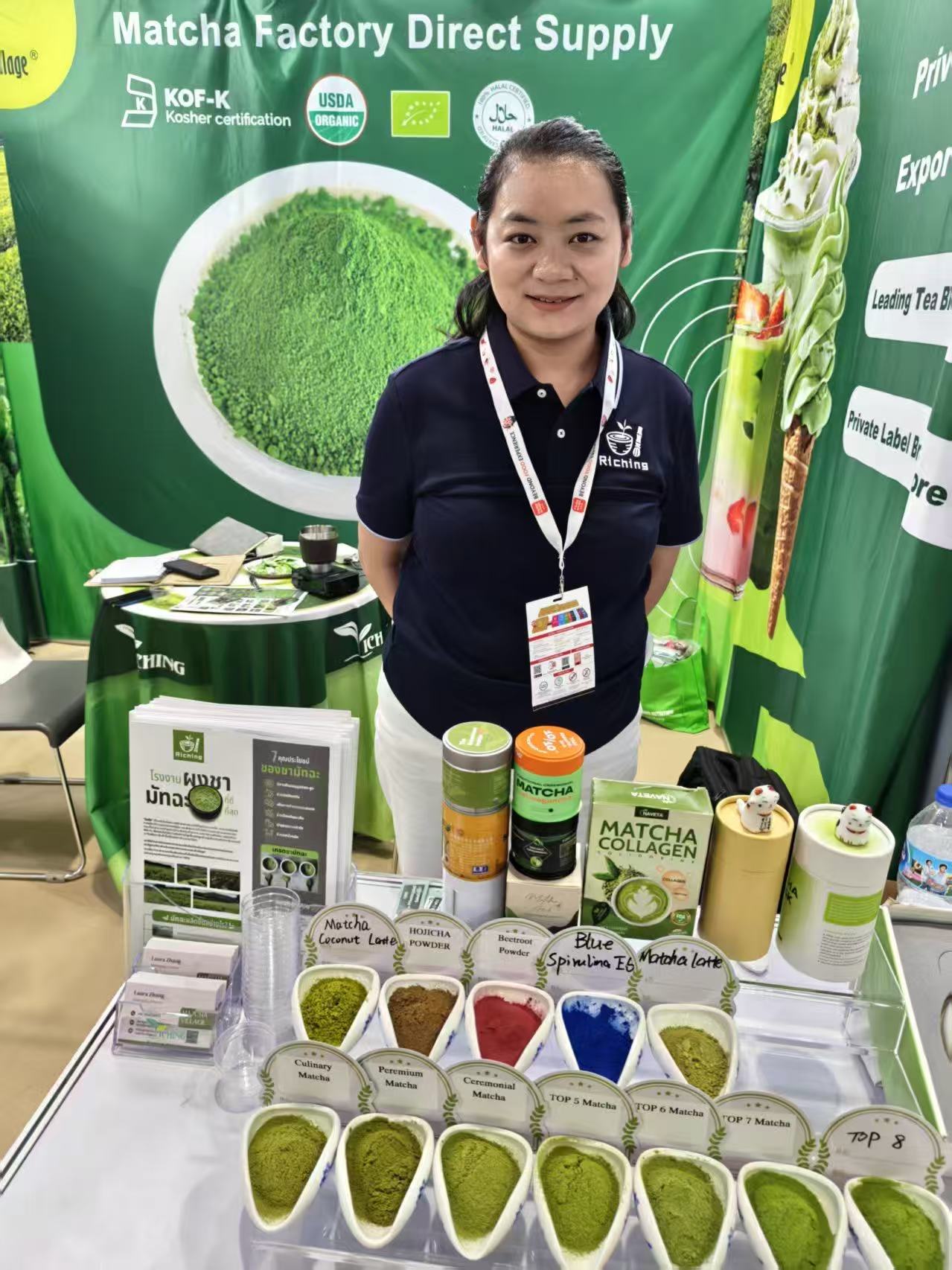
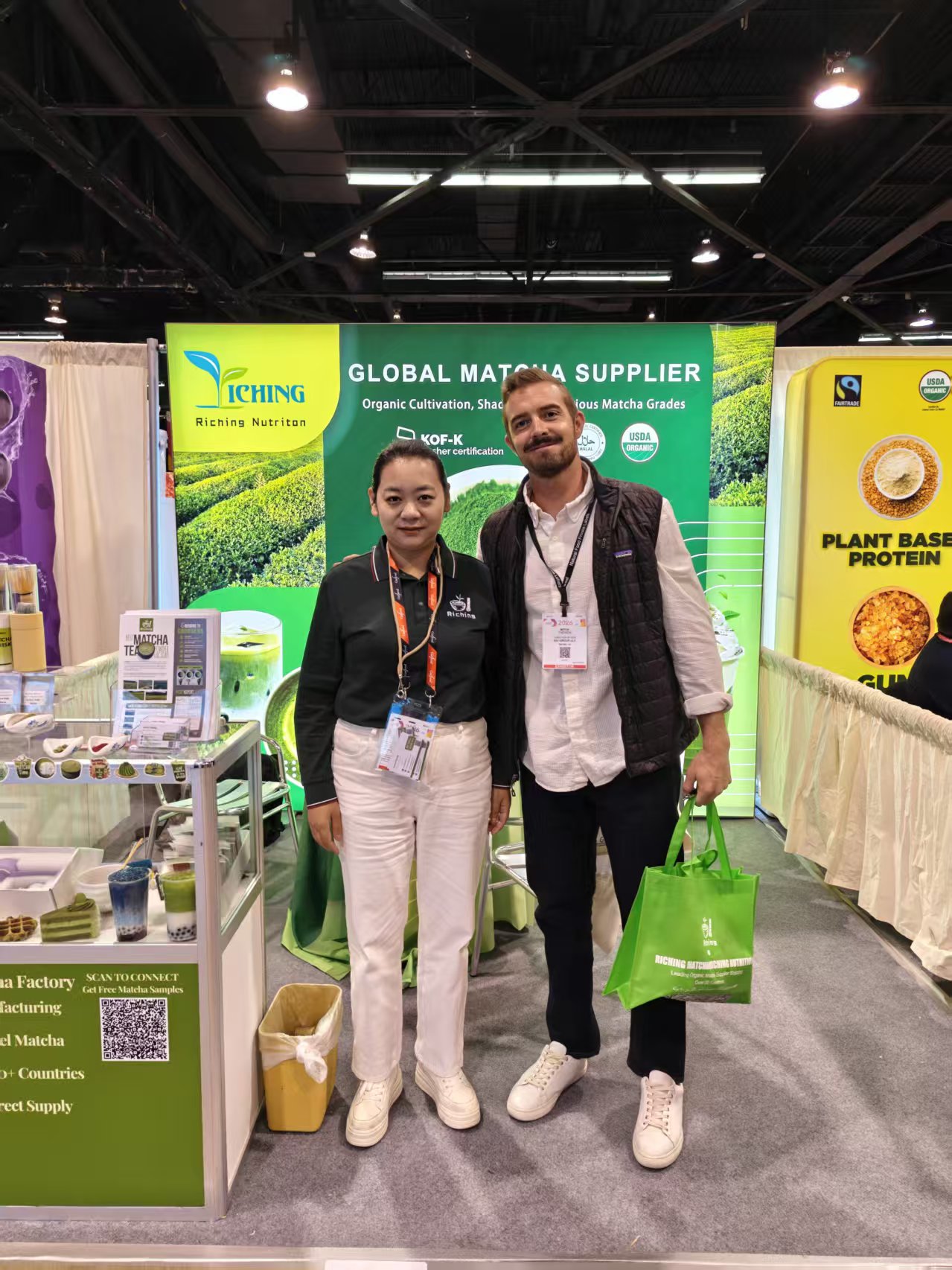
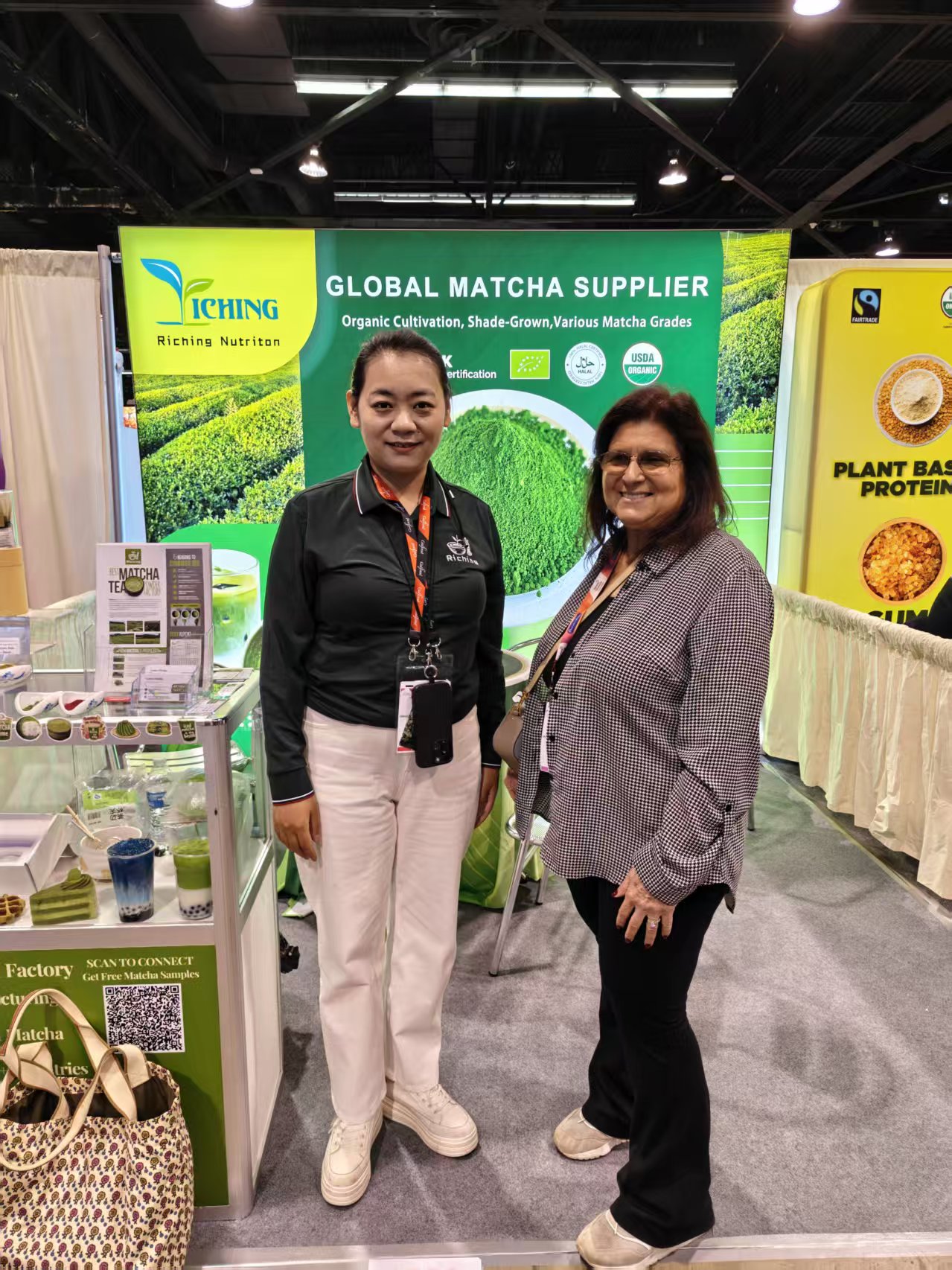
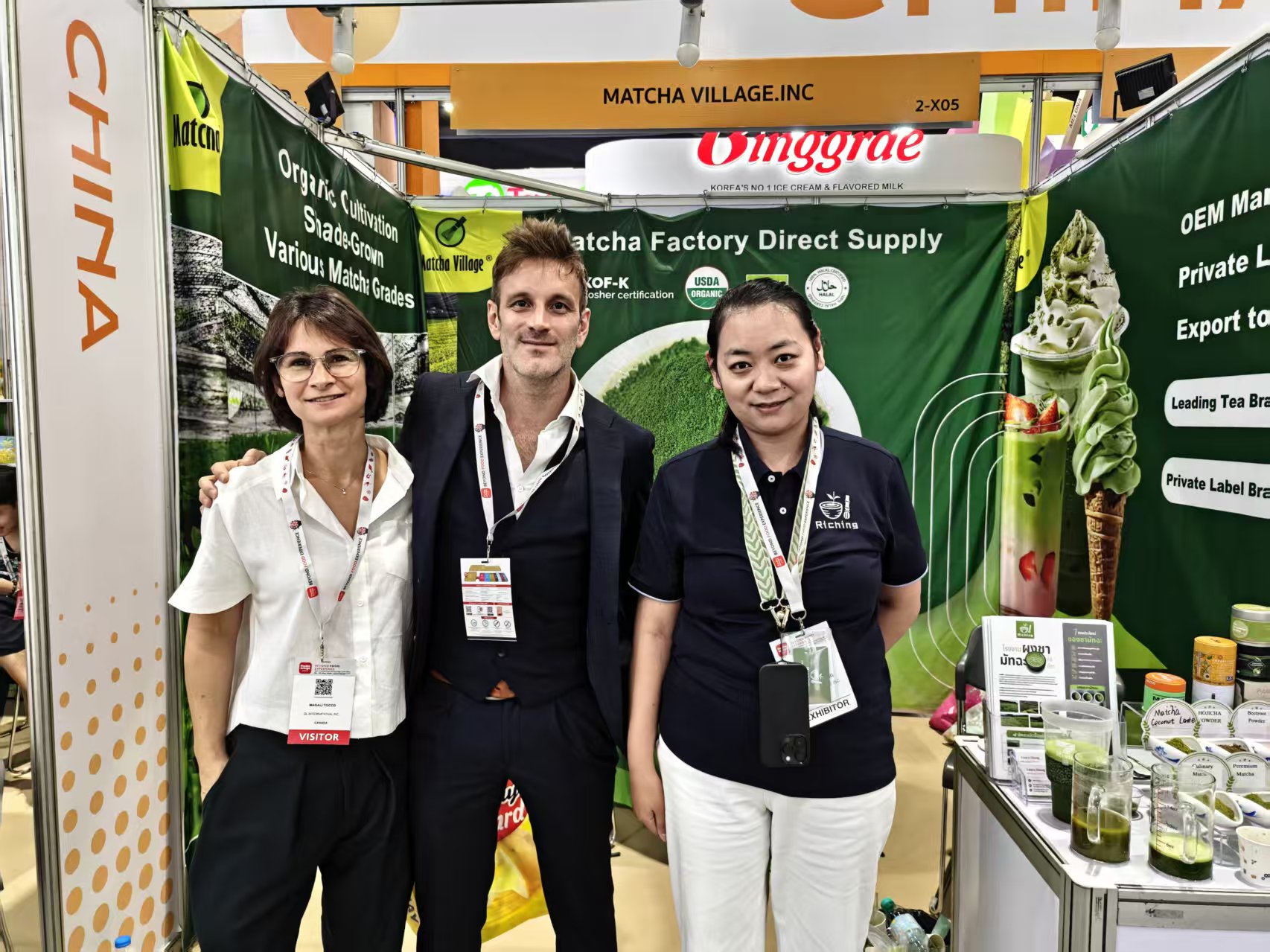
Meet our team at food and beverage trade shows around the world.
Tell us what you are making, where you sell and how much you may need. Our team can recommend suitable products, discuss sample options and prepare a proposal for your project.
Our international sales engineers review every inquiry to ensure we match your exact recipe formulation, color target, and destination import regulations.