
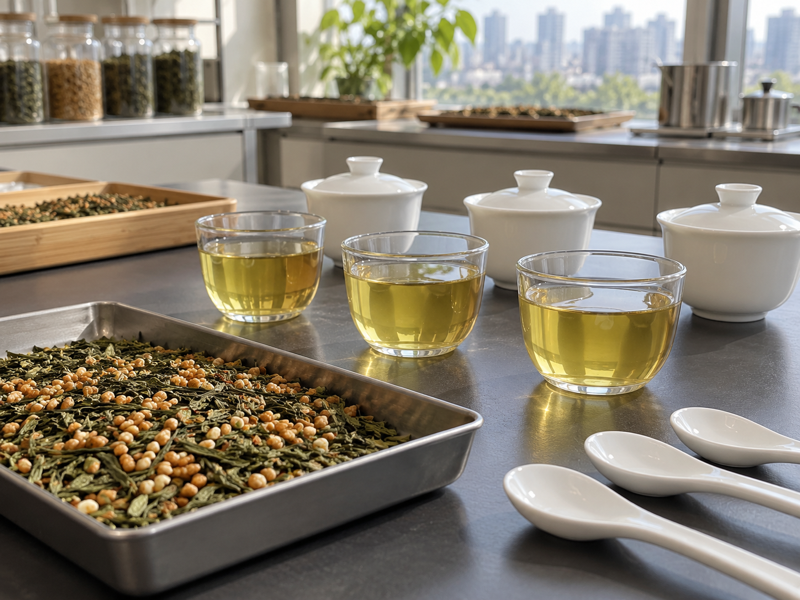
What does genmaicha taste like when a customer actually drinks it? The short answer is toasted rice over a green-tea base, often with a cereal-like aroma and a gentle vegetal finish. Yet two suppliers' blends can differ sharply, and milk, sugar, cold service, or heat treatment can change what remains in the finished product. For a commercial buyer, “nutty” is too vague to approve a sample. This guide breaks flavor into measurable observations and shows how to evaluate genmaicha for retail, cafés, and food development without treating one tasting note as a promise for every lot.
Contents
- 1. What does genmaicha taste like on its own?
- 2. Why does roasted rice change the flavor?
- 3. How does the tea base shape the cup?
- 4. Which words describe genmaicha accurately?
- 5. How does hot brewing differ from cold service?
- 6. What happens when genmaicha meets milk or sweetener?
- 7. How does genmaicha taste in bakery and frozen desserts?
- 8. How is genmaicha different from hojicha or plain green tea?
- 9. How can a buying team create a flavor specification?
- 10. How should buyers describe the taste of their chosen blend?
1. What does genmaicha taste like on its own?
In a plain brewed cup, genmaicha commonly presents a roasted-rice aroma followed by green-tea notes. Depending on the blend, those tea notes may seem leafy, grassy, mildly sweet, or brisk. The roast may evoke toasted cereal or popcorn, but a blend should not automatically taste like a dessert. Aroma, taste, and finish are separate observations. A product may smell richly roasted yet brew a light cup, while another has restrained dry aroma and a full finish.
Japan's MAFF description of Japanese tea identifies genmaicha as roasted rice blended with tea such as bancha, sencha, or gyokuro. Different bases help explain why “genmaicha” is a category rather than a single flavor recipe. Ask which base is used, then taste the actual production sample. Record whether roast or tea leads in the first sip, whether bitterness builds, and how long the toasted note lasts. A useful customer description states the dominant sensations without claiming that everyone will perceive the same nuance.
| Sensory stage | Possible note | Buyer question |
|---|---|---|
| Dry aroma | Toasted grain, fresh leaf | Is there any stale smell? |
| Hot aroma | Roast and green tea | Which component leads? |
| First sip | Light sweetness or briskness | Is the balance right? |
| Finish | Toast, leaf, astringency | Would customers want another sip? |
2. Why does roasted rice change the flavor?
Roasting develops aromatic compounds that make rice smell toasted and warm. Blending that rice with tea changes the sensory balance: the roast can soften the impression of grassy or bitter notes without removing the tea itself. Roast level matters. Light roasting may bring a subtle cereal scent; a stronger roast can dominate a delicate tea base. Burnt or stale notes are defects for most applications, even if a supplier describes them as “deep roast.” Taste the blend brewed under controlled conditions before accepting the description.
The rice form also affects use. Whole grains, puffed grains, and fine particles can distribute differently in a pack or filter. The visible rice percentage is not a reliable shortcut for flavor because processing and tea strength vary. Ask for a sample from a commercial lot and stir the bag before taking an analytical scoop so settled rice does not skew the trial. A café may want a prominent toasted note that stays clear through milk. A loose-leaf brand may want a quieter roast so the tea remains identifiable after several sips.
3. How does the tea base shape the cup?
The tea leaves bring body, color, green notes, and some astringency. A blend made with a more assertive base may stand up better in a sweet drink but feel brisk when served plain. A gentler base may work well in a transparent cup yet disappear in a latte. Leaf size and freshness affect extraction too. Broken leaves can brew quickly and may create more visible particles. A fresher-smelling leaf may improve the whole blend, but a written grade name alone cannot predict the final cup.
Do not compare two samples brewed under different instructions. Use the same water, dose, temperature, vessel, and steep time for an initial tasting. Then let each supplier recommend a method and compare performance under that method as a separate test. If a sample tastes harsh, check whether the water was too hot or the steep too long before rejecting it. If it remains harsh across a reasonable brewing window, it may be poorly suited to your intended service. The choice should reflect the customer's actual cup, not a label on a sample bag.
| Tea-base tendency | Sensory result to check | Likely application question |
|---|---|---|
| Delicate leaf | Clear tea character | Will flavor survive milk? |
| Brisk leaf | More body or astringency | Is the plain cup balanced? |
| Fine cut | Faster extraction | Can staff filter it reliably? |
| Mixed leaf size | Variable cup | Is the lot well blended? |
4. Which words describe genmaicha accurately?
Choose words that correspond to a tested sensation. “Toasted rice,” “green tea,” “cereal aroma,” and “mild vegetal finish” are often useful. “Nutty” can work as a flavor analogy, but it may confuse shoppers who ask about ingredients or allergies. If you use it, keep the actual ingredient list close by and never let a tasting note substitute for an allergen declaration. “Popcorn-like” describes aroma in some blends, though it should not imply popcorn is an ingredient. Avoid calling every genmaicha smoky, buttery, or sweet when the sample does not support those notes.
Use a small tasting panel rather than one writer's memory. Ask each person to describe the sample before sharing suggested adjectives, then compare where the descriptions overlap. A claim such as “smooth” needs context because a beverage can be smooth at one brew strength and astringent at another. Record the recipe beside the tasting notes. For B2B sales material, provide a concise flavor profile plus recommended uses. A buyer can then decide whether the profile suits a tea aisle, café menu, frozen dessert, or packaged drink.
5. How does hot brewing differ from cold service?
A hot cup releases aroma rapidly. As it cools, volatile toasted notes may fade and astringency can become more obvious. Cold brewing changes extraction and serving perception again; some blends taste soft and clean, while others seem weak. An iced drink made from hot concentrate also differs from a true cold extraction. Define which preparation the customer will receive before evaluating flavor. A buyer for a refrigerated bottle should not approve a tea solely from a hot tasting bowl.
Run paired tests at actual serving temperatures. Brew the hot tea, taste immediately, cool a portion, and compare it with a separately made cold brew if relevant. Add the intended ice quantity because melt changes concentration. Check for sediment and color shift after the expected hold. Those are product observations, not proof of microbial shelf life. Food-safety and shelf-life decisions need their own qualified process. Keep the sensory panel focused on flavor: is the roast still apparent, does the tea feel thin, and does a new bitter note appear after holding?
| Serving format | Sensory risk | Trial action |
|---|---|---|
| Hot cup | Over-extraction | Test brew window |
| Iced tea | Dilution by ice | Taste in final cup |
| Cold brew | Weak roast or body | Compare dose and blend |
| Chilled bottle | Aroma fade | Taste across planned hold |
6. What happens when genmaicha meets milk or sweetener?
Milk can cover delicate green-tea notes, while sweetness can make roasted rice seem more like a cereal dessert. That pairing can be attractive in a latte or milk tea, but it changes the product description. Test the actual milk, plant beverage, syrup, and serving ratio. A blend that shines plain may become anonymous under a creamy base. A stronger-roasted material may survive, yet an overly dark note can turn bitter in a high-dose recipe. Compare blind at the same finished sweetness.
For a chain menu, have more than one store prepare the approved recipe. Dispensing, ice, and mixing can change the taste even when the ingredient is sound. For a powder, check whether the particles disperse or settle and whether the rice component leaves a gritty finish. Powdered genmaicha requires a separate sensory standard from a filtered tea infusion. Calculate flavor and cost at a realistic dose, not an impressive but expensive lab sample. If the supplier suggests a flavoring or sweetener addition, distinguish that proposal from the character of the tea ingredient itself.
7. How does genmaicha taste in bakery and frozen desserts?
In ice cream, the dairy base and cold serving temperature can mute tea aroma. A powdered ingredient can bring roasted-rice flavor and color, but it can also affect texture. In cookies or cake, heat may reduce delicate leaf notes while toasted character survives better. Chocolate may dominate the tea unless the formula is balanced around it. Each application needs its own dose trial. Do not promise that a tea tasting note will carry unchanged into baked or frozen food.
Create a plain control recipe before adding the tea ingredient. Make several small batches with measured doses and keep the fat, sugar, and process constant. Taste after production and after the normal storage period. Ask a panel whether the finished food reads as genmaicha or merely as generic roasted flavor. Watch for visible particles, gritty mouthfeel, color change, and astringency. For ingredient buying, record whether you used brewed concentrate, dry tea, extract, or powder. These forms differ in water contribution, flavor delivery, and processing loss, so cost per finished portion is the fair comparison.
| Application | What may mute flavor | What to assess |
|---|---|---|
| Ice cream | Cold and dairy fat | Roast, grit, aftertaste |
| Cake | Baking heat | Aroma after cooling |
| Cookie | Browning and sugar | Tea identity versus roast |
| Chocolate | Cocoa intensity | Balance and finish |
8. How is genmaicha different from hojicha or plain green tea?
Plain green tea lacks the added roasted-rice component. Hojicha is roasted tea, so its toasted quality comes from the tea leaves rather than from rice mixed with green tea. A buyer can therefore use genmaicha when a green-tea-and-cereal balance is wanted, or compare hojicha when a stronger roasted-tea direction suits the product. Flavor varies within each category, so use samples instead of treating those descriptions as fixed rules. The genmaicha versus hojicha guide can provide a category starting point before pilot testing.
For a café menu, naming the drink correctly helps staff set expectations. A genmaicha latte should still show some roasted-rice character. A hojicha latte may feel darker and less leafy. For a retail tea range, offer a consistent tasting method so buyers can notice the contrast. Avoid saying genmaicha is automatically lower in caffeine than every green tea. Caffeine depends on blend and preparation, and any numerical claim should be tied to the finished product or a suitable validated method.
9. How can a buying team create a flavor specification?
Begin with an approved production-representative sample and a written brewing method. Describe acceptable color, roasted-rice intensity, tea character, finish, and any defects. A small scale can help panel members compare lots, but words must remain concrete. “Roast 3/5” means little unless the panel has a control cup. Keep a retain sample and refresh it before age changes its flavor. Ask the supplier to notify you about tea-base, rice-roast, or ratio changes before shipment.
Test each new lot against the control under the same conditions. If the tea is an ingredient in a finished product, run a quick application check too. A minor change in the plain cup may become obvious in a milk beverage or disappear in a cookie. Record decisions with lot codes and tasting dates. This avoids arguments based on memory. A distributor can share a concise sensory sheet with its customers, but should also explain that brewing and recipe choice shape the result. Honest flavor language supports repeat orders better than a crowded list of flattering adjectives.
| Specification item | Good description | Evidence |
|---|---|---|
| Aroma | Toasted rice leads, no stale note | Control sample |
| Tea character | Green note remains identifiable | Standard brew |
| Finish | No persistent harshness | Panel record |
| Application | Roast survives target recipe | Pilot batch |
10. How should buyers describe the taste of their chosen blend?
Write the flavor description after tasting the product in the form customers will receive. A plain brewed tea might lead with toasted rice and finish with a light green-tea note. A milk drink might read as cereal cream with a quieter tea finish. A frozen dessert can mute aroma until the scoop warms. Those are different descriptions, even if the same ingredient appears in each recipe. Have two or three tasters independently write a short note, then keep only descriptors they can all recognize in a repeat sample.
Keep tasting language separate from ingredient and allergen language. “Nutty” can describe an aroma, but it does not establish the presence or absence of nuts. “Popcorn-like” should not imply popcorn was added. Replace broad claims such as “rich, premium flavor” with a sequence a customer can check: what arrives on the nose, what dominates the first sip, and what remains after swallowing. If the blend changes, retaste and revise the description. An approved sensory note is more useful here than another supplier-selection checklist.
FAQ
Q1: Does genmaicha taste like popcorn? Some blends have a popcorn-like toasted aroma, but the category contains tea and roasted rice. Taste the specific blend.
Q2: Is genmaicha sweet without sugar? It may give a mild sweet impression, yet it is not a sweetened drink unless sugar or another sweetener is added.
Q3: Does genmaicha taste bitter? It can, especially with a brisk tea base or strong brewing. Compare samples under a controlled method.
Q4: Will genmaicha taste the same in a latte? No. Milk and sweetener change the balance, so test the finished beverage.
Q5: Can a powder replace brewed genmaicha in dessert? It may work, but dose, texture, color, and flavor need separate trials.