
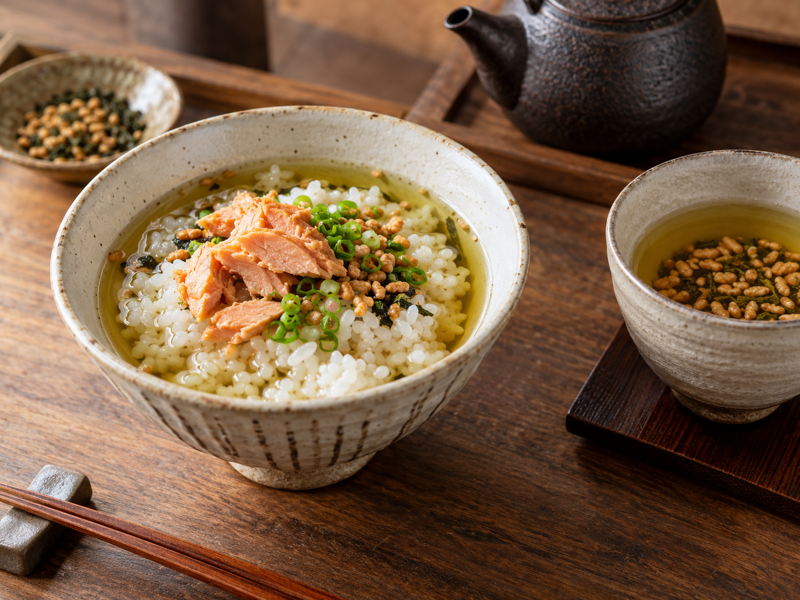
Ochazuke is a Japanese dish in which tea or broth is poured over rice with simple toppings. Genmaicha brings a toasted-rice aroma that can make the tea and rice feel connected. It is also easy to make a weak, muddy bowl: over-brewed tea becomes bitter, tired cooked rice turns heavy, and toppings can overwhelm the tea. This guide is for foodservice teams testing a genmaicha ochazuke menu item. It focuses on broth clarity, assembly, service time, and ingredient control, rather than claiming one recipe represents every Japanese household.
Contents
- 1. What is genmaicha ochazuke?
- 2. What should the bowl taste like?
- 3. How should the genmaicha broth be brewed?
- 4. Which rice works in service?
- 5. Which toppings leave room for the tea?
- 6. How should hot service be assembled?
- 7. Can the broth be prepared ahead?
- 8. What food-safety controls belong in the plan?
- 9. How should the menu describe the dish?
- 10. What should a restaurant measure in a pilot?
1. What is genmaicha ochazuke?
Ochazuke, or chazuke, is rice served with tea or a tea-based liquid and toppings. Using genmaicha makes the tea’s roasted rice note part of the dish. A Japanese tea recipe for genmaicha over rice shows one approach. Restaurants can adapt the idea to their menu, but should describe their own ingredients rather than presenting a new variation as a fixed traditional formula. The tea and rice are the center; toppings should support them.
The dish needs a clear service identity. Is it a light lunch, a small final course, or a warm snack? That decision sets bowl size, rice weight, broth volume, and topping cost. A café using genmaicha as a drink may already have a supplier, but the culinary use should be tested separately. A tea that tastes pleasant in a cup can become too thin when poured over rice, while an over-strong broth can make the last spoonful harsh.
| Core element | Role in bowl | Main check |
|---|---|---|
| Cooked rice | Body | Texture and hold |
| Genmaicha | Broth aroma | Strength and clarity |
| Topping | Contrast | Does it mask tea? |
| Seasoning | Balance | Salt level |
2. What should the bowl taste like?
Set a target in sensory terms: warm toasted-rice aroma, clean green-tea finish, rice that still has texture, and a topping that adds salt or savor without taking over. A broth that tastes excellent alone may be diluted by wet rice. Taste a fully assembled bowl at the time a customer would eat it. The first spoon and the last spoon may differ because rice continues to absorb liquid. Decide whether that change is pleasant or whether the recipe needs less broth or firmer rice.
Use a plain rice-and-tea control before testing elaborate toppings. It reveals whether the tea has enough character. Then add one topping at a time. A strong miso sauce, oily fish, or heavily seasoned pickle can flatten the green-tea note. That does not make the dish bad, but it can make genmaicha an unnecessary cost. The existing guide to genmaicha flavor gives a cup reference; the restaurant needs a separate bowl reference.
3. How should the genmaicha broth be brewed?
Weigh the tea and water, measure temperature, and time the infusion. Strain promptly so loose leaves and rice do not continue extracting in a holding vessel. For a broth, the kitchen may use a stronger brew than for a drinking cup, but that choice should be set by tasting with rice. A stronger tea is not a license to over-steep. Bitterness can appear late in the bowl as liquid cools. Keep the brew clear enough that the rice and toppings remain visible.
Compare a fresh brew with any proposed batch-held version. Note aroma, color, bitterness, and temperature after the planned hold. If broth is reheated, check whether the roast note survives and whether the tea darkens. A kitchen may prefer brewing to order for a small menu item or batching under a validated holding plan for volume. Choose the method from real service time and flavor data. Write it into a station card rather than leaving it to each cook’s judgment.
| Brew variable | Record | Why |
|---|---|---|
| Tea mass | Grams per batch | Cost and strength |
| Water | Volume and quality | Repeatability |
| Temperature | At contact | Extraction |
| Time | Start to strain | Bitterness control |
4. Which rice works in service?
The cooked rice should be warm and firm enough to hold texture when hot liquid is added. Very soft rice can turn the bowl into porridge before it reaches the table. Extremely cold, compact rice can cool the broth quickly and resist separating. Test the rice variety and cook method the restaurant already uses. Portion it by weight, not by a scoop whose fill changes between shifts. The amount of rice affects both the eating experience and the strength of tea perceived.
Food-safety controls for cooked rice matter. A restaurant should follow its approved time-and-temperature process for cooking, holding, cooling, reheating where applicable, and service. Tea cannot compensate for mishandled rice. Design the station so staff can assemble the bowl quickly without leaving cooked rice or tea at uncontrolled temperatures. The culinary brief and safety plan should be developed together. A beautiful bowl photograph is irrelevant if the kitchen cannot hold the components safely during a busy lunch.
5. Which toppings leave room for the tea?
Small portions of cooked salmon, seaweed, scallion, sesame, pickle, or vegetables can add contrast. Use the menu’s existing ingredients where they make sense, but trial them against the tea rather than assuming every Japanese topping belongs. A salty fish can make the roasted-rice note feel sweeter; a sweet glaze can bury it. Aim for a topping that gives a clear bite and leaves enough quiet broth for the tea to be noticed. Avoid piling on ingredients merely to make the bowl look full.
Allergens and dietary claims follow the exact topping. Sesame, fish, soy sauce, or wheat-containing seasonings may change the customer information. A “vegan” or “gluten-free” variation needs separate ingredient and preparation review. Keep the base tea description accurate even when the topping changes. If the kitchen sells several versions, test each full bowl and price it separately. The same genmaicha brew may work with one topping and fail with another.
| Topping | Possible benefit | Check |
|---|---|---|
| Salmon | Savory contrast | Fish handling |
| Seaweed | Umami | Salt and texture |
| Scallion | Freshness | Cut and hold |
| Sesame | Roast echo | Allergen |
| Pickle | Acidity | Tea masking |
6. How should hot service be assembled?
One workable sequence is to place a measured rice portion in a warm bowl, add the prepared topping, and pour a measured volume of freshly strained genmaicha at service. The exact order can change, but it should be written and tested. Too much hot liquid can break apart toppings or make rice soggy; too little can leave a dry bowl. Measure the pour for training, then test whether staff can reproduce it without a scale during peak service.
The bowl temperature and travel time matter. A cold bowl can cool the tea before the customer’s first spoon. A long walk from pass to table lets rice absorb liquid. Run a service simulation with normal staff and normal dishes. Taste at the pass and after the longest expected delay. If the product is for delivery, test it as a separate format; tea and rice packed together may arrive mushy. Packaging the broth apart may help, but adds cost and leak risk.
7. Can the broth be prepared ahead?
It can be, if the kitchen validates the process for quality and safety. A batch brew may save labor but lose roasted-rice aroma during holding. Reheating can change tea color and astringency. Test a fresh reference against broth held under the proposed conditions at several times. Record temperature, appearance, aroma, and taste with rice. If it fails before the intended service window ends, shorten the batch size or brew to order.
Do not rely on a general tea shelf-life date for prepared broth. The brewed liquid is a different product with a different process and handling. The kitchen’s food-safety lead should set holding and disposal rules under local requirements. Use labeled vessels and a clear batch-time record. Staff should know when to discard the broth, not only how to make it. A smaller, fresher batch may cost less than an oversized batch that ends in waste or a flat bowl.
| Preparation model | Advantage | Risk |
|---|---|---|
| Brew to order | Fresh aroma | Service time |
| Small batch | Faster service | Hold control |
| Large batch | Labor efficiency | Flavor loss/waste |
8. What food-safety controls belong in the plan?
Cooked rice, fish, dairy toppings, and brewed tea may have different handling needs. The restaurant’s approved safety plan should cover receiving, storage, cooking, cooling, holding, assembly, and service for every component. Avoid treating hot tea as a final kill step for a topping or for rice that has been held incorrectly. Hot liquid poured at the table is a serving method, not a substitute for safe upstream handling.
Trace ingredients by lot or delivery as appropriate to the operation. Clean tea equipment and strainers so old leaves do not contaminate fresh broth or add bitter flavor. If the dish is assembled in a shared station, include allergen cross-contact controls. Train staff to separate quality rejection from safety rejection: a flat tea broth may be disappointing, while a temperature abuse event requires the food-safety procedure. Both should be recorded and corrected.
9. How should the menu describe the dish?
A concise line is: “Rice served in a warm genmaicha green-tea broth with roasted-rice aroma,” followed by the actual topping. It tells a new customer what arrives without pretending the dish is a plain cup of tea. If broth includes stock or seasoning in addition to genmaicha, disclose that composition appropriately; do not call a strongly seasoned dashi bowl “tea broth” as though tea is the only liquid. Staff should be able to explain the dish in one sentence.
Menu photography should show a normal serving portion, including the liquid level and toppings. A staged bowl overloaded with garnish can create a mismatch at service. If the restaurant offers a small final course and a larger lunch bowl, name and price them separately. Note caffeine from the tea if customer questions arise, without promising a fixed amount unless tested. A clear description reduces hesitation and gives the kitchen a standard to repeat.
| Menu phrase | Works when | Avoid when |
|---|---|---|
| “Genmaicha broth” | Tea is clear in liquid | Tea is barely present |
| “Salmon ochazuke” | Salmon is normal topping | Only seasonal special |
| “Caffeine-free” | Proven separate formula | Standard tea used |
10. What should a restaurant measure in a pilot?
Measure tea mass, brew yield, rice weight, topping weight, portion time, broth temperature at service, waste, and cost per bowl. Taste blind against a plain-tea control and through the normal eating period. Have cooks who did not invent the recipe assemble it from the station card. Their bowls reveal whether the instructions are practical. Record customer feedback on flavor and portion, but separate it from operational defects such as slow service or leaks.
Run the pilot during a real meal period if possible. A dish can be easy for one cook in a quiet kitchen and difficult at lunch rush. Watch how long broth sits, whether rice portions vary, and whether the tea aroma reaches the table. Adjust one thing at a time. Approve the menu item only when the normal team can serve a bowl that looks and tastes like the reference while following the safety plan.
FAQ
Q1. Is genmaicha ochazuke just tea poured over rice? Tea and rice are central, but toppings, broth strength, portion, and service control determine the finished dish.
Q2. Can the restaurant use any genmaicha? Test the exact blend. Roast, leaf grade, and rice ratio affect the bowl.
Q3. Should the tea be very strong? Strong enough to register with rice, but not so over-extracted that the last spoon is bitter.
Q4. Can broth be batched? Yes, if quality and safety hold through a validated service period.
Q5. Is the dish caffeine-free? Standard genmaicha contains green tea and caffeine.
The pilot is successful when the final spoon still has clean tea broth and rice with texture.