
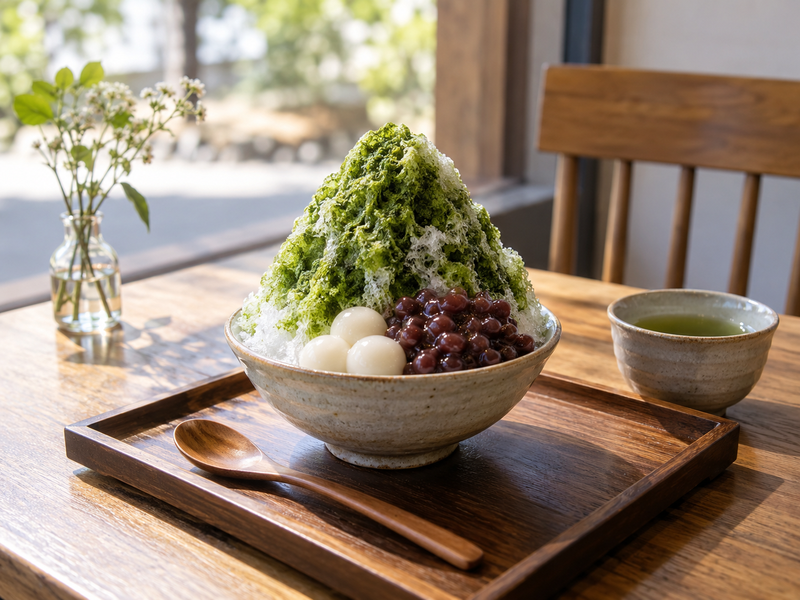
Matcha kakigori can fail between the shaver and the customer’s table. A watery syrup pools at the bottom, azuki slides off the ice, or a careful build melts while staff look for a spoon. A café needs a recipe that survives a real queue, not only a photograph. Define the ice texture and finished portion, weigh the syrup and toppings, then rehearse the handoff with your actual equipment. The Ujikintoki reference recipe pairs matcha syrup with sweet azuki, condensed milk and optional shiratama. That combination is a useful starting point; the service controls below are a separate commercial trial plan.
Contents
- 1. What should matcha kakigori taste and feel like?
- 2. Which ice format fits your service?
- 3. How can a café formulate matcha syrup?
- 4. How should matcha powder be chosen?
- 5. Where do azuki, shiratama and milk belong?
- 6. How can staff assemble each bowl quickly?
- 7. What does a reliable service station need?
- 8. How should the café test a holding window?
- 9. How do you calculate cost and waste?
- 10. What goes in the launch specification?
1. What should matcha kakigori taste and feel like?
Define a finished bowl before buying equipment
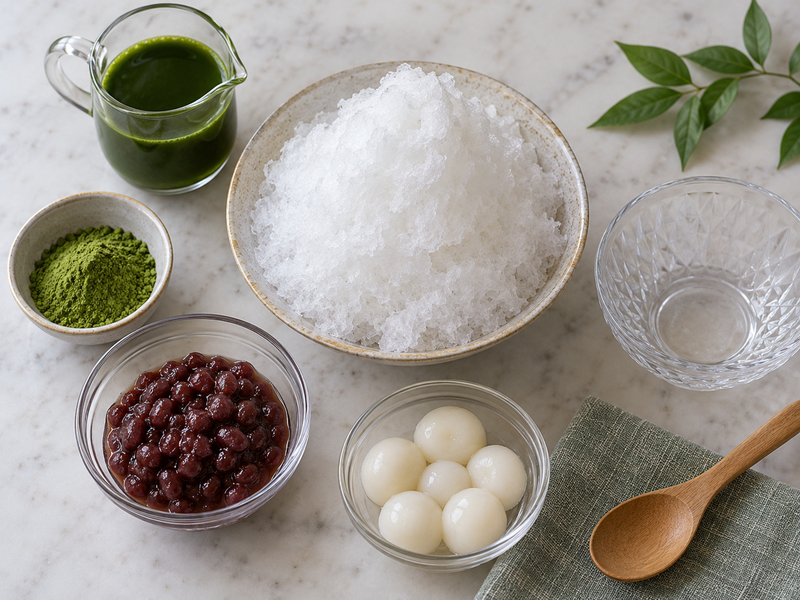
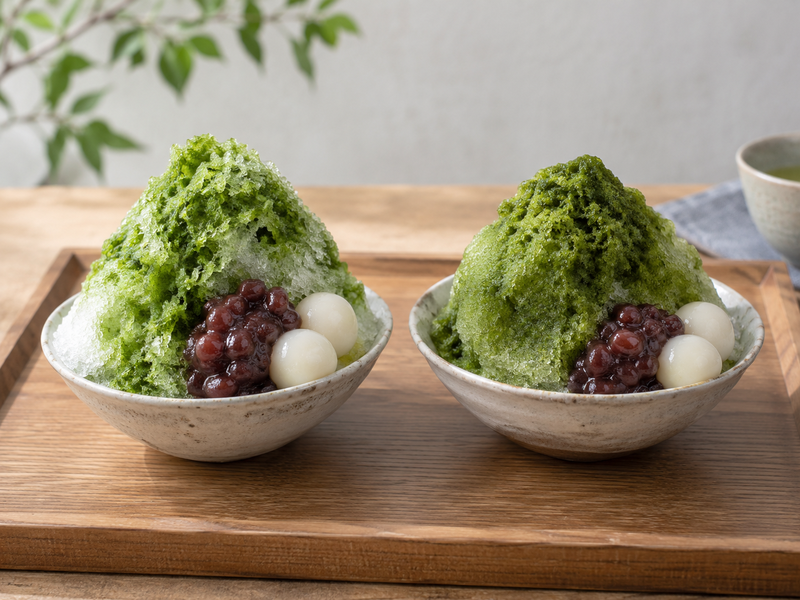
Kakigori is shaved ice dressed with syrup or other toppings. Matcha kakigori adds an earthy tea note that has to remain distinct once cold ice, sugar and beans meet. The Ujikintoki version in the reference article uses azuki and condensed milk. A café can sell that familiar build or choose a leaner variation, but it should decide what each spoonful must deliver: fine ice, visible green syrup, sweet beans and a clean tea finish.
Make three test bowls and taste them at the counter, at a nearby table and after a short wait representative of your service. Photograph a cross-section, not only the top. If syrup colors the crown but leaves white ice beneath, guests get a sweet opening followed by plain ice. If every layer is soaked, the bowl collapses before handoff. Write a simple sensory target that staff can recognize: shavings remain separate, syrup reaches several layers, and the final mouthful still tastes of matcha. This target is more useful than calling a powder “premium” without tasting it in the dessert.
2. Which ice format fits your service?
Test the machine and the water together
Block-ice and cube-fed machines can produce different shavings and have different cleaning routines. Ask a supplier to run the machine with the ice format you can actually buy and store. Measure a finished portion by ice mass, then photograph it immediately and after the time a server normally takes to reach a customer. Bowl shape matters: a narrow base can support a taller mound, while a wide shallow bowl exposes more ice to room air. A machine demonstration using another shop’s ice tells you little about your own service.
Use water and ice that meet your local potable-water and food-handling requirements. The FDA Food Code provides a US retail-food model; your local authority and operating plan govern your site. Document storage, scoop handling and machine sanitation before opening the dessert station. For an internal trial, compare two approved ice formats while holding portion mass and syrup dose constant. Have staff note shaving consistency, machine interruptions and cleanup time. A visually fluffy bowl that takes twice as long during a rush may be the wrong choice for a small café.
| Ice trial item | What staff record | Decision signal |
|---|---|---|
| Ice supply | Block or cube size and storage method | Fits approved storage and machine |
| Portion | Ice mass and bowl fill | Repeatable without overfilling |
| Shavings | Fine, coarse or mixed after service | Matches planned eating texture |
| Machine time | Start to finished mound | Works at target queue volume |
| Sanitation | Steps and minutes after service | Staff can complete daily routine |
3. How can a café formulate matcha syrup?
Separate sweetness, tea dose and pour behavior
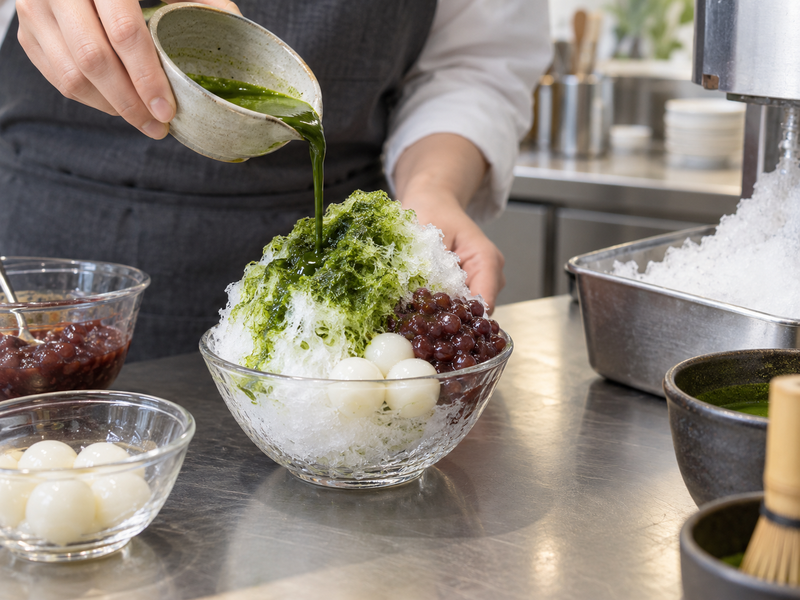
A syrup must carry matcha through ice without creating a gritty layer. Begin with a weighed house syrup, then test at least three matcha doses against the same finished volume. The reference recipe offers one household formula; do not assume it meets your café’s sweetness or batching needs. Sift powder and disperse it thoroughly using a method your staff can repeat. Note whether it settles during service and how much stirring each bottle needs. Use a small trial batch, not a week’s inventory, until your own food-safety process has approved preparation and holding.
Pour a measured dose over a weighed ice mound. Record coverage at the top, middle and bottom. If more syrup only makes the dessert sweeter, adjust viscosity or the way staff apply it: a small dose between ice layers may reach more spoonfuls than one heavy top pour. Compare flavor with azuki and condensed milk already on the bowl. Sugar in those toppings changes the required syrup sweetness. A simple blind tasting can answer whether a more expensive tea powder makes a noticeable difference here. Matcha powder may clump in liquid; our matcha sifting guide gives procurement and preparation checks that also apply to this bench test.
| Syrup variable | Trial measurement | Failure to watch |
|---|---|---|
| Matcha | Grams per finished batch | Weak tea or harsh finish |
| Sweetener | Grams and ingredient source | Toppings make bowl cloying |
| Finished volume | Milliliters after mixing | Portions drift between batches |
| Dispersion | Appearance after stirring | Green sediment at bottle base |
| Deposit | Grams or milliliters per bowl | Uneven coverage and food cost |
4. How should matcha powder be chosen?
Buy against a cold dessert, not a grade label
Ask for a sample from the lot proposed for purchase and test it in the exact syrup. One powder can look vivid in dry form but taste flat under condensed milk; another may hold a clean tea flavor at a lower dose. Record supplier, lot, pack size, ingredient declaration, storage advice and price per usable portion. If the supplier offers several grades, give every sample the same treatment and blind-code the bowls. A staff member should be able to say which version tastes clearer without seeing cost or marketing language.
Consider color after service, too. Make two bowls from each powder, photograph them under the café’s actual light and compare at handoff and after a short wait. The decision should balance flavor, appearance, dose and supply continuity. Ask for batch documentation and confirm any certification relevant to the market before writing it on a menu. Matcha Village’s baking-powder selection article covers a different heat application; it illustrates why a grade name alone is a weak substitute for testing the finished product. For shaved ice, cold dispersion and sweetness balance deserve their own pass criteria.
5. Where do azuki, shiratama and milk belong?
Make the topping distribution intentional
Azuki, shiratama and condensed milk bring different textures and sweetness. Put a measured amount of bean paste where a spoon can reach it without toppling the ice. Test whether shiratama goes under, beside or on the mound; a heavy cluster on top may slide during handoff. Condensed milk can be a finish or an optional add-on. Its placement changes both the first bite and the photograph, so the café should choose one standard and show staff a reference bowl. The Ujikintoki example establishes the flavor family but does not dictate a production layout.
Prepare toppings under the site’s food-safety plan. Bean paste, dairy and cooked starch products do not share a universal holding rule. Check supplier labels, preparation records, temperature controls and the local retail-food requirements that apply. Keep allergen information available for customers and staff, especially when condensed milk or other dairy ingredients are offered. Run a short assembly trial with different staff. If one portion looks impressive but another hides the beans entirely, mark the placement in a picture and weigh the toppings until the team can reproduce it.
| Topping | Portion control | Service check |
|---|---|---|
| Azuki | Weighed scoop or approved ladle | Reachable without collapsing ice |
| Shiratama | Count and portion weight | Texture at customer handoff |
| Condensed milk | Measured bottle squeeze | Sweetness and visible distribution |
| Optional garnish | Count per bowl | Does not delay handoff |
6. How can staff assemble each bowl quickly?
Rehearse the route from ticket to table
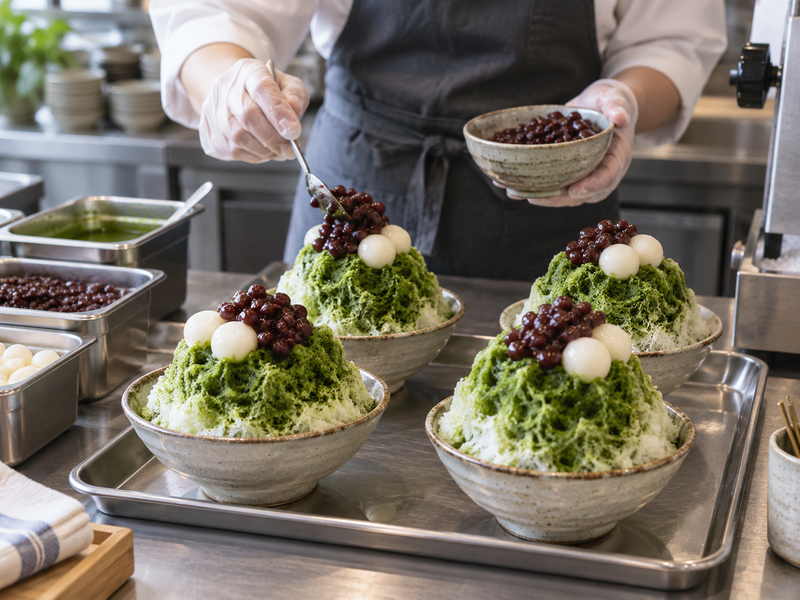
Write the sequence on one station card: select chilled bowl, add any base topping, shave a measured ice portion, apply syrup in the chosen stages, finish with measured toppings and hand off with a spoon. Let an employee who did not write the card make five bowls. Time each build from ticket to pickup. Then taste the fifth bowl; a process that looks fast may deliver half its syrup into a puddle. Keep the number of motions small enough for a peak-service worker to remember without checking a long recipe.
Make room for recovery. Staff need a rule for a collapsed mound, empty syrup bottle or delayed pickup. Remaking a bowl may cost less than serving melted ice under a perfect garnish. If the queue is long, batch the stable components and shave only when an order can move promptly. Do not stack completed bowls beside an espresso machine while another station catches up. A short rehearsal with two simultaneous orders will reveal collisions around the ice shaver, garnish bins and handoff area that a one-bowl trial hides.
7. What does a reliable service station need?
Put cold supplies within a clean workflow
Position the shaver, bowls, ice access, syrup, toppings, scoops and pickup area in the order of work. Leave clearance for changing ice and cleaning the machine. A squeeze bottle with a measured nozzle may be faster than a ladle, but test whether powder sediment blocks it during a busy service. Label each bottle with its ingredient and preparation information required by your operating plan. Use a separate utensil for toppings that contain allergens; the FDA’s food allergy guidance explains why clear ingredient and cross-contact practices matter in US food service.
Walk the station with a tray in hand. Can one person make a bowl while another reaches the milk? Does the shaver spray water onto dry matcha storage? Can staff clean spills without moving ready-to-eat toppings? Draw the answer on a simple counter map and retest after a rush simulation. The final layout may differ from the neat promotional photograph of a dessert bar. It must support safe food handling and a reliable handoff using the people and floor space the café actually has.
| Station zone | Put nearby | Keep separate or controlled |
|---|---|---|
| Ice | Approved storage and scoop | Customer contact and splash |
| Syrup | Ready bottle and mixing record | Heat and unlabelled refills |
| Toppings | Portion tools and service bins | Shared allergen utensils |
| Handoff | Spoon, napkin and ticket | Unclaimed finished bowls |
8. How should the café test a holding window?
Measure the experience rather than promise a lifespan
Shaved ice changes minute by minute, especially when syrup and toppings add weight. Build several identical bowls and observe them at the customer pickup point under normal room conditions. Record appearance, spoon texture, syrup distribution and whether the base becomes liquid. Use time points based on your actual order flow; a nearby-table café and a takeaway counter face different delays. Do not turn this sensory trial into an unsupported food-safety shelf-life claim. Safe storage and sale depend on the ingredients, process, temperature and local requirements.
For takeaway, test the lid, container and delivery route. A deep covered cup may trap condensation and lose the fine shaving texture. A wider bowl may look better but travel poorly. Ask staff to carry the product along the route a customer would take and note spills. If takeaway cannot meet the approved sensory target, keep matcha kakigori as an eat-here item. The service promise should reflect the product customers receive, not the version photographed immediately under studio lights.
9. How do you calculate cost and waste?
Cost the bowl that reaches a customer
Record invoice cost for matcha, sweetener, beans, shiratama, milk, ice, bowl and spoon. Divide the syrup batch cost by measured sellable portions, not theoretical bottle volume; residual syrup and spillage count. Include machine cleaning time and rejected bowls in an internal trial. A cheap powder that needs a heavier dose may cost more per accepted bowl than a higher-priced sample. Compare powders at the same accepted sensory standard and calculate grams of tea used per sale. This shows the purchasing team what a grade change actually buys.
Build one sample cost sheet for dine-in and one for takeaway if both formats are planned. The container can change waste, appearance and labor. Watch what guests leave in the bowl: untouched beans or syrup at the bottom may indicate an assembly problem, not generous portioning. Discuss a target margin only after the café has real purchase prices and a reliable yield count. Our matcha syrup article can support a separate syrup purchasing discussion, while this bowl-level trial ties those inputs to service.
| Cost line | Record | Hidden loss |
|---|---|---|
| Tea and syrup | Grams per sellable bowl | Bottle residue and overpour |
| Toppings | Actual portion weight | Extra scoops under pressure |
| Ice | Purchased or prepared amount | Melt and machine waste |
| Serviceware | Bowl, lid, spoon, napkin | Takeaway format change |
| Labor | Build and cleaning minutes | Rush-hour remake |
10. What goes in the launch specification?
Keep a photo, a portion sheet and a rejection rule
The launch sheet should fit on one page. Record approved ice format, ice mass, syrup batch formula and deposit, topping quantities, assembly order, reference photographs and handoff expectation. Attach supplier and lot information for matcha, azuki, dairy and other bought ingredients. Put food-safety controls in the café’s normal operating records rather than squeezing them into a recipe card. Make one version number and date visible so staff do not mix an older syrup formula with a new topping portion.
Run a supervised service before placing the dessert on the permanent menu. Compare five bowls made by different employees against the reference image and sensory target. Note which faults recur and fix the station or method before blaming individual staff. If the matcha disappears under sweet toppings, revisit the finished recipe with a new powder sample or adjusted syrup. If the last bowl melts in the pickup area, change the handoff route. A supplier conversation becomes useful when you can describe the cold-dessert application, expected tea dose and accepted sample rather than asking for a vague “best matcha.”
FAQ
Q1. Can a café use any matcha grade for kakigori? Test samples in the finished syrup and toppings. Buy the powder that meets your flavor, color, documentation and cost targets at the measured dose.
Q2. Should syrup go only on top? Compare one top pour with a staged pour. Choose the method that distributes tea flavor through the bowl without soaking the ice.
Q3. Are azuki and shiratama mandatory? They belong to a familiar Ujikintoki build, but a café can specify a different bowl. Name the product clearly and assess the finished taste.
Q4. Can matcha kakigori be sold for takeaway? Test your actual container and route. If texture fails before customers can eat it, offer the dessert for immediate service.
Q5. What should a matcha supplier receive from the buyer? Send the syrup application, trial dose, preferred sensory profile, pack size, market documentation needs and a sample of the accepted bowl.