
Matcha syrup can remove a slow whisking step from a café line, but it introduces new problems: settling, syrup buildup in pumps, inconsistent sweetness, and a color that changes in display light. A home method such as Dash of Jazz’s matcha simple syrup explains the appeal. A chain or beverage manufacturer needs a controlled formula and a service test that spans the full bottle. Start with the intended drink, not the syrup in isolation, then verify how it performs during a real shift.
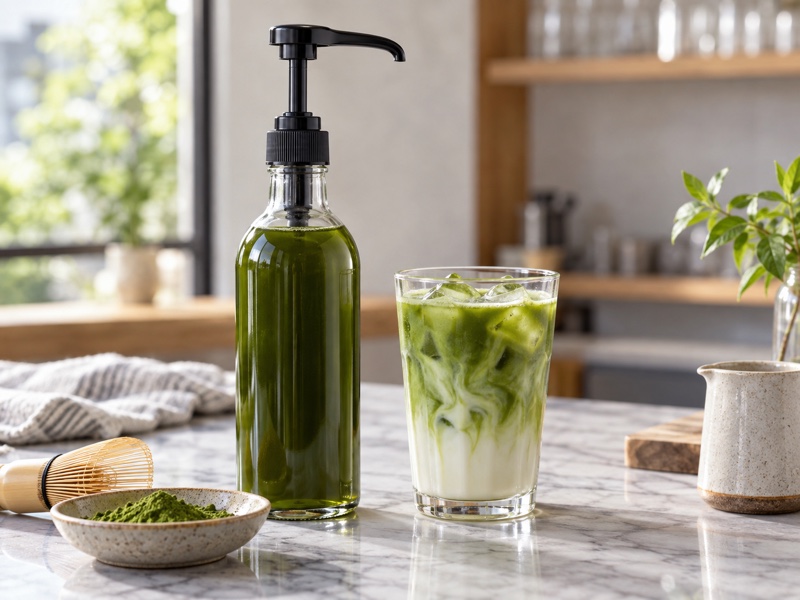
1. What does the café mean by matcha syrup?
The term can describe sweetened matcha dispersed in water, a flavored syrup containing tea extract, or a more concentrated sauce. Those options differ in ingredient declaration, color, sediment, and tea flavor. Ask whether the product is designed as a complete sweetened base or as a minor flavor addition. If staff use a syrup expecting unsweetened tea, the resulting latte may be far sweeter than the menu brief. Define the ingredient by what it contributes to one finished drink.
Write a target for tea strength, sweetness, viscosity, and color in the intended cup size. Test it in cold milk, hot milk, water, and whichever plant-based beverage is actually sold. A syrup that looks uniform in a spoon may stripe a cold oat drink. A concentrate with little sugar might offer better recipe flexibility but require an added sweetener at the point of service. The bar workflow and menu promise should decide the format.
| Format | Typical role | Question for buyer |
|---|---|---|
| Sweet matcha syrup | Tea and sweetness in one pour | Is sweetness adjustable? |
| Unsweetened concentrate | Tea shortcut | How is sweetness added? |
| Tea-flavored syrup | Flavor accent | Is real matcha present? |
| Powder made to order | Fresh tea expression | Can service support whisking? |
2. How much tea belongs in each drink?
Measure the tea solids delivered by the syrup, not only the number of pumps. Ask the formulator for the amount of matcha or tea extract per unit of syrup and the intended serving amount. If that information is commercially sensitive, run a controlled tasting against a powder-made reference at the same sweetness. A small dose may add color while leaving barely any tea finish. A larger dose may taste rough once the drink warms. The right answer depends on the menu’s milk, ice, cup size, and customer expectation.
Make a test matrix using the low, standard, and high pump counts staff might actually deliver. Taste blind and record whether the drink still reads as matcha at the end, after ice dilution. Then compare the cost per finished cup. When changing powder supplier or syrup concentration, update the recipe card rather than leaving an old pump count in place. A chain with several cup sizes should specify both syrup amount and total drink volume. Otherwise, the large cup can be mostly milk with a pale green appearance.
Use a finished-drink reference
Prepare a freshly whisked drink that represents the intended flavor. It is a target, not proof that syrup must taste identical. Compare aroma, sweetness, green color, and aftertaste after a normal service delay. Revisit the reference whenever the base milk or sweetener changes.
3. Why does a syrup settle or form green rings?
Whole matcha is powdered leaf and does not become a true molecular solution simply because it enters warm syrup. Fine particles can sink or cling to a bottle wall, especially if the product sits untouched. Higher viscosity may slow settling without removing it. Test a full bottle upright, then inspect its top, middle, and final dispensed portions. Compare color and flavor. If the last pour is stronger, a “shake before use” note may be necessary, but verify that staff can follow it without leaking or foaming the bottle.
Green rings at the neck or on a pump stem can come from drying syrup and retained particles. They look unattractive and can obstruct a dispenser. Run the product through the actual pump, spout, or automated doser planned for stores. Record the number of strokes before flow becomes inconsistent, then clean it according to the manufacturer’s procedure. Do not assume that a bench pour represents a busy bar’s equipment. If particles must be filtered, taste the filtered version before approval; clarity may cost tea character.
| Observation | Trial | Possible response |
|---|---|---|
| Dense bottom layer | Hold and invert bottle | Adjust dispersion or handling |
| Light top pours | Sample across bottle | Revise mixing or dose rule |
| Pump blockage | Shift-length dispenser test | Change format or hardware |
| Green neck ring | Wipe and reseal cycles | Improve closure and cleaning |
4. Which sugar level works across the menu?
A single syrup may be asked to serve iced lattes, lemonade, and blended drinks. Their sweetness loads differ. Build each recipe from a measured base and compare perceived sweetness after dilution. A syrup that tastes balanced with tart citrus can overwhelm a milk drink. If the chain offers “less sweet,” determine whether lowering the syrup also removes the tea. A separate unsweetened tea component may be the only way to reduce sugar without producing a weak matcha drink.
Ask for soluble-solids information and the exact sweetener list when considering a commercial syrup. These values help operations but do not replace tasting. Different sweeteners and acid systems can change finish and color. Do not claim a “sugar-free” or “low sugar” drink from the syrup label alone; the finished recipe and market-specific labeling rules matter. Compare three formulas in the finished cup at the same perceived tea strength. Note whether staff can make each one in a repeatable number of steps.
Cost sweetness separately
When syrup supplies both tea and sugar, a purchasing team may understate the cost of adjusting either. Calculate cost per drink at the dose that wins tasting, then compare it with powder plus sweetener. Include pump loss and bottles discarded with unusable residue. A cheaper syrup that needs more volume may be expensive per cup.
5. How can pumps and spoons be calibrated?
Pump output varies with viscosity, temperature, fill level, and hardware. Set a target mass per drink, then weigh several consecutive strokes at the beginning and near the end of a bottle. Repeat after the syrup has sat through a normal service lull. If output drifts, choose a better pump, a measured pour, or a bottle design that gives more consistent flow. Do not print “two pumps” on a chain recipe until the installed pumps have been checked against a scale.
A squeeze bottle can work for a small café but depends heavily on the operator. Marking a fill line may help, yet it does not correct for syrup clinging inside. Training should show the actual pour, not only a photograph of the final cup. Keep a simple calibration log for new hardware and for any recipe change. A supplier change that alters viscosity can silently change the amount delivered by the same dispenser.
| Dispenser | Strength | Validation need |
|---|---|---|
| Pump | Fast and trainable | Stroke mass across bottle |
| Squeeze bottle | Low equipment cost | Operator variation |
| Measuring cup | Visible volume | Speed and residue |
| Automated doser | Recipe control | Compatibility and cleaning |
6. How do heat, light, and acid affect the color?
A natural green tea product can darken or turn olive with processing and storage. Compare unopened bottles in intended packaging under normal warehouse conditions and retail light. Use a fixed background, lighting, and camera setting. Inspect not only the bottle but also a prepared drink after a typical wait on the pickup counter. An acidified lemonade may look different from a milk latte. Do not promise a particular shade across every matrix without a recipe-level trial.
If a color additive is proposed, have a labeling specialist review its permitted use and declaration in each market. A naturally colored product may need protective packaging instead. Opaque cartons or sleeves limit light exposure but prevent customers from seeing the green liquid. A buyer should decide whether bottle appearance or drink appearance is more valuable. Keep a protected control bottle for each stability interval so the team can tell genuine change from differences in store lighting.
Taste alongside color
More powder can deepen a fresh sample while introducing bitterness and more sediment. Review taste and color together after the intended hold. The desired shade should never be set from a digital image whose lighting and filters are unknown.
7. What holding and food safety plan is needed?
A freshly made café syrup and a commercially packed ambient product require different evidence. Sugar concentration alone does not establish a safe shelf life. The formulation, processing, packaging, sanitation, and microbial testing must support the stated storage instructions. Ask a qualified food safety specialist to define the validation plan and opening-life instructions. If a café makes syrup in-house, date batches, use clean containers, and follow the applicable local food code. The FDA Food Code is a US retail model, not a universal shelf-life table.
Test the actual opened bottle on the bar. Staff may leave a pump exposed, wipe it with a wet cloth, or top up an old bottle. Such practices can invalidate a laboratory result from a sealed container. Write a cleaning and refill rule. Monitor aroma, visible growth, gas, color, and dispenser condition, but do not rely on sensory signs as the sole safety check. A product can be unsuitable before a bartender notices a visual defect.
| Stage | Control to define | Evidence |
|---|---|---|
| Sealed storage | Time, temperature, light | Validation study |
| Opened use | Date and handling | Store procedure |
| Dispenser | Cleaning and replacement | Training record |
| Delivery | Temperature exposure | Route check |
8. What should a label and product sheet disclose?
A buyer needs an ingredient list, allergen information where applicable, nutrition and claim support for the target market, storage instructions, batch code, and a contact for quality questions. For a syrup containing tea extract plus added color, a generic “matcha” description may be too vague for internal recipe control. Obtain the actual tea ingredient identity and formulation data needed for the channel. If a finished drink makes a caffeine statement, validate it for the prepared serving rather than borrowing a figure from another matcha powder.
The FDA notes that caffeine content varies by product and serving size. That makes blanket comparisons with coffee weak menu copy. Avoid health promises that the finished drink cannot support. For an OEM or private-label syrup, specify who approves artwork and who owns the recipe when a raw-material substitution becomes necessary. Keep approved labels linked to formula versions, not merely to a product name.
9. Which powder and supplier suit a syrup program?
Request matcha samples tied to identifiable lots, with specifications, origin details, storage guidance, and testing relevant to your market. Compare them at equal addition in the syrup formula, then taste in the finished beverage. The most expensive powder is not automatically best after sweetener and processing. A less costly one may carry a clearer tea note; another may make a brighter drink but settle more heavily. Calculate the cost of acceptable finished drinks, including rejects and dispenser maintenance.
Matcha Village’s pure matcha powder can be evaluated for beverage applications. Discuss the actual syrup process, target color, expected annual volume, pack size, and lot-change procedure with the supplier. Keep a retained powder sample and a retained syrup bottle from the accepted lot. If a new lot arrives near a seasonal launch, a side-by-side bench test is cheaper than correcting hundreds of drinks after distribution.
| Supplier question | Why it matters |
|---|---|
| Is the sample lot linked? | Makes approval traceable |
| What pack formats are available? | Controls kitchen exposure |
| What is the change notice process? | Protects formula continuity |
| Which tests support the destination? | Speeds quality review |
10. What does a launch-ready service trial look like?
Run a shift simulation with the final bottle, pump, cup sizes, ice, milk choices, and staff training sheet. Measure drink build time and pump output at opening, mid-shift, and closing. Let a blind panel compare drinks from those points. Photograph color in store lighting. Record spills, blocked pumps, and the amount left in each bottle. If the syrup requires shaking, ask staff to perform that step during the timed trial rather than assuming they will remember it.
Approve a replacement procedure for lot changes and a rejection rule for off-color, unusual odor, or poor dispensing. Put the final recipes in grams or measured volumes with the specified equipment. Train supervisors to recalibrate new pumps. Begin with one hero drink; expand to other menu uses only after each recipe passes its own sweetness and tea-flavor test. Ask suppliers for lot-linked samples and a product sheet, then choose the syrup that works through an entire bottle under normal service.
FAQs
Q1: Is matcha syrup a substitute for whisked matcha? It can be for a specific drink, but compare tea flavor, sweetness, color, and cost in that finished recipe.
Q2: Why does a bottle need shaking? Whole matcha particles can settle. Verify that gentle agitation restores a uniform pour and include a workable staff instruction.
Q3: Can one syrup serve both sweet and unsweetened drinks? A sweet syrup limits how far sweetness can be reduced without weakening tea. Separate tea and sweetener may offer more control.
Q4: Does high sugar guarantee room-temperature shelf life? No. Shelf life needs validation for the actual formula, process, package, and handling route.
Q5: What is the best way to compare supplier prices? Compare cost per approved drink, including dose, waste, packaging, pump performance, and delivery terms.