
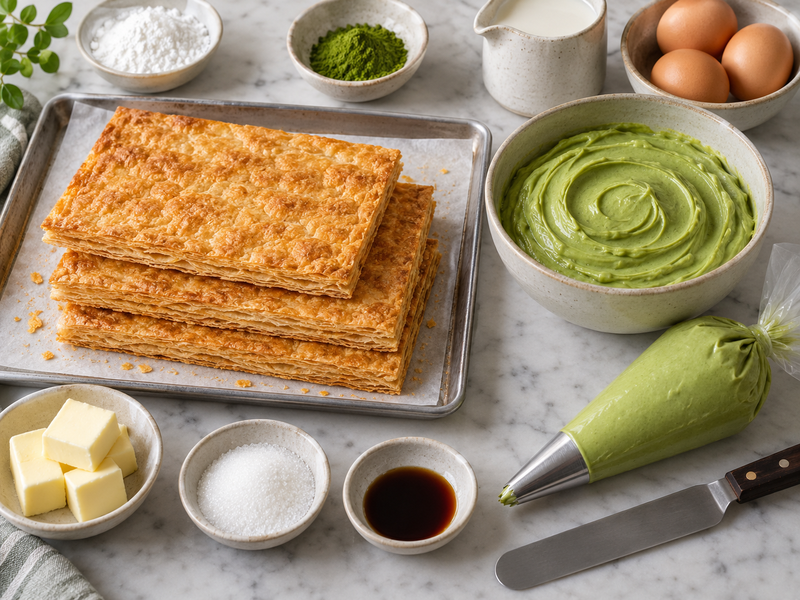
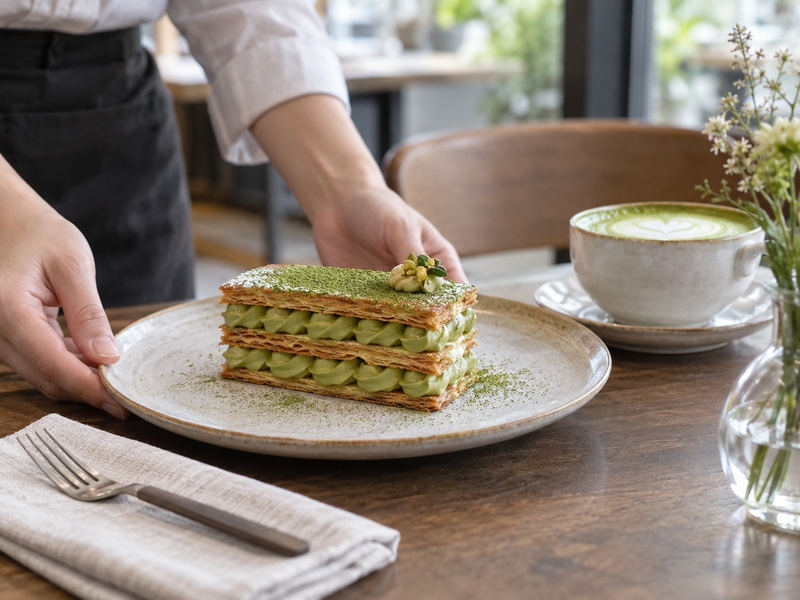
A matcha mille feuille can leave a bakery looking polished at opening and soggy by lunch. Pastry absorbs moisture from cream, layers slide under the knife and a bright green filling may taste mostly of sugar. The workable approach is to specify each component separately, assemble against a realistic selling window and test how customers will cut or carry the finished slice. Coco Sugar’s matcha mille feuille shows the familiar puff-pastry and cream format. The production questions below turn that format into a bakery trial, with measured checks for texture, yield and service.
Contents
- 1. What makes a matcha mille feuille sellable?
- 2. Which pastry sheet gives the right bite?
- 3. How should the matcha cream be developed?
- 4. How much matcha should the bakery test?
- 5. What assembly order keeps layers straight?
- 6. How can a baker cut clean portions?
- 7. What happens during display and transport?
- 8. How should food safety and allergens be handled?
- 9. What does a pilot batch reveal about cost?
- 10. What belongs on the production sheet?
1. What makes a matcha mille feuille sellable?
Define the bite and the look together
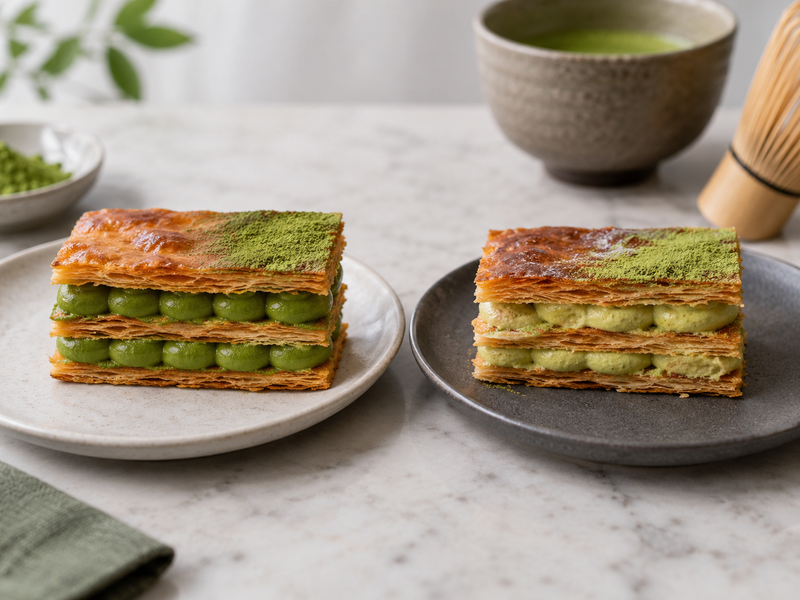
Mille feuille normally stacks thin crisp pastry with cream. Matcha gives the filling a tea flavor and green color, but the pastry still has to fracture cleanly when cut. A display sample that cannot be eaten without the cream squeezing out will disappoint guests. Start by defining a finished slice: number of pastry layers, filling depth, target portion width and acceptable movement when picked up with a fork. Make a control slice with the bakery’s current cream and pastry, then compare a matcha version. This isolates whether failures come from the new ingredient or the original construction.
Taste the whole forkful, not a spoonful of cream. Butter, sugar and any icing can conceal tea. Photograph the cut face beside a ruler at the start and end of the intended selling period. If the top remains neat but the bottom pastry softens, a display-only inspection will miss it. The reference recipe provides a consumer format; a commercial acceptance sample must also survive portioning, boxing and staff handoff. Keep one labeled photo of an accepted slice and one of a failure so the bakery team shares the same standard.
2. Which pastry sheet gives the right bite?
Bake for flatness as well as color
Puff pastry expands during baking, which can produce large pockets that collapse when stacked. Test your usual sheet under a controlled bake: same dough thickness, pan, docking method, top weight if used and oven load. Record sheet dimensions before and after baking. A beautifully browned pastry can still be unsuitable if half the sheet curves or breaks into unusable pieces. Compare three sheets, not one perfect corner. The bakery needs enough flat area for the planned number of portions.
Cool sheets fully before cream touches them. Warm pastry can soften the filling and trap moisture in a covered tray. Decide whether the pastry should have a sugar finish for extra crunch or stay plain so matcha remains clear. Run both variants through the intended display. Do not assume that a crisp slice at assembly will stay crisp for an afternoon. Pastry choice should be judged by usable yield and texture at sale, not only by oven appearance. If the dough comes from a supplier, request a specification for dimensions, ingredient and allergen declaration, and test multiple deliveries before setting a fixed portion count.
| Pastry check | Record during trial | Why it matters |
|---|---|---|
| Raw sheet | Size, thickness, supplier lot | Repeatable oven input |
| Baked sheet | Flat usable area | Portion yield |
| Color | Center and edge appearance | Even baking |
| Breakage | Pieces lost in cutting | Actual cost per slice |
| Bite | Crispness at sale | Customer experience |
3. How should the matcha cream be developed?
Build a filling that holds its line
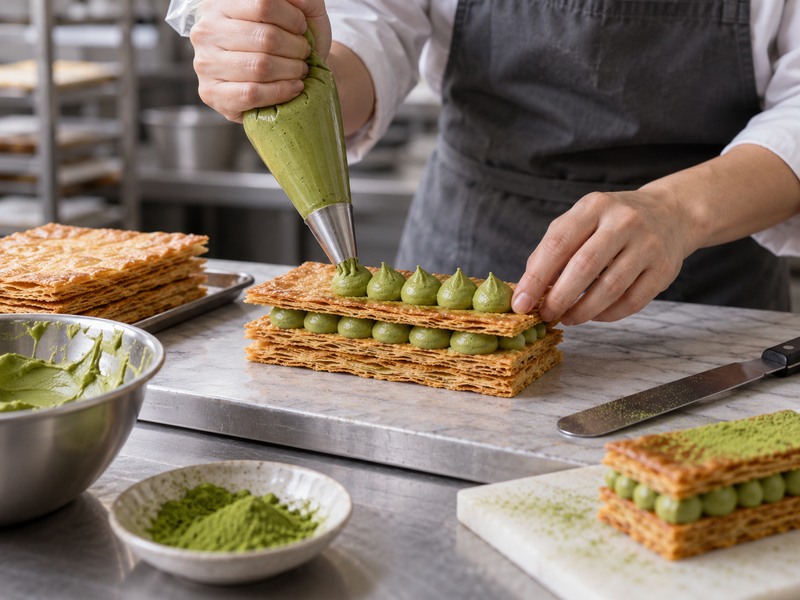
The filling must pipe cleanly, taste of tea and remain stable beside pastry. Pastry cream, diplomat cream and whipped cream behave differently; choose one base before changing matcha dose. For a controlled bench test, make one base batch and divide it. Sift matcha into one portion using a repeatable mixing order. Watch for green specks, thinning, excessive stiffness and weeping after chilling. Our matcha pastry cream guide covers the filling as a separate application; this article tests it inside a layered pastry where pressure and moisture matter.
Pipe equal lines onto test pastry strips and weigh each strip before closing it. If the cream extrudes unevenly, change piping temperature, bag tip or base formula before simply reducing the amount. A thinner stripe may hold its shape yet leave the pastry tasting dry. The goal is a balanced bite and a visible clean edge after cutting. Keep detailed batch notes for milk, eggs or other ingredients, including supplier lots. Use the food-safety procedures required for those ingredients and for chilled ready-to-eat bakery products; flavor trials cannot establish a safe shelf period.
| Filling variable | Test record | Watch after assembly |
|---|---|---|
| Cream base | Formula and mixing method | Hold and mouthfeel |
| Matcha | Lot and grams per batch | Tea flavor and speckling |
| Pipe temperature | Actual working condition | Line definition |
| Deposit | Grams per layer | Squeeze-out and cost |
| Chilled hold | Start and sample time | Weeping or separation |
4. How much matcha should the bakery test?
Compare doses in a finished slice
Matcha amount depends on the cream’s fat, sugar and thickness. A fixed teaspoon instruction is hard to reproduce because powder density and spoon packing vary. Weigh three trial doses around a starting formula and keep the cream base, pastry and portion size unchanged. Blind-code the finished slices and ask tasters to describe tea clarity, bitterness, sweetness and texture. A dark green appearance is not proof of a pleasing flavor. Record cost per accepted slice for each dose, not only powder price per kilogram.
Test the powder from a proposed commercial lot. If the bakery switches suppliers or pack size, repeat the finished-slice comparison before changing purchase orders. Request the ingredient declaration and relevant lot documents from the supplier. Store and handle the powder as specified by its packaging, then use an approved preparation record. A bakery that serves this pastry for several hours should check whether green color dulls under its actual case lighting; judge the sample at the planned sale point, not only immediately after mixing. These are operational trials, so label their dose levels as house tests rather than universal recipe standards.
5. What assembly order keeps layers straight?
Work from a cut plan, not a pile of sheets
Decide whether to build one large slab and portion it or make individual pastries from precut strips. A slab can speed piping but may lose more product at ragged edges. Individual builds give portion control but demand more hand motions. Trial both routes with the same pastry and cream. Align the sheets on a marked board, pipe measured cream lines and check the profile from the side after each layer. Staff should know which face of a pastry sheet becomes the top and how much pressure to apply when settling it.
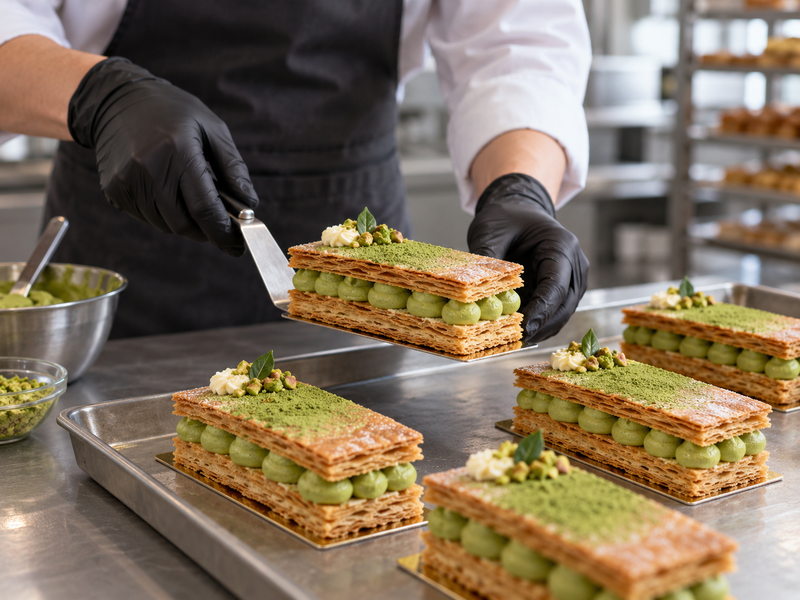
If a decorative finish is planned, test it separately. Powdered matcha on the top may absorb moisture or look patchy under refrigeration. Icing adds sweetness that can mute tea. Photograph both finishes at assembly and after display. Keep the chosen garnish simple enough for a replacement staff member to apply consistently. The Coco Sugar example is a useful visual starting point, but a bakery should set its own dimensions from the sheets it can buy and the packaging it will use. Write down the accepted layering order before scaling to a full tray.
| Build step | Measured control | Rejection sign |
|---|---|---|
| Sheet selection | Approved flat area | Curling or deep voids |
| Cream piping | Grams per layer | Gaps and bulges |
| Layer alignment | Edge offset | Leaning slice |
| Top finish | Fixed deposit | Masked tea flavor |
6. How can a baker cut clean portions?
Cut a trial slab before deciding the display size
Mille feuille resists a blunt downward cut. Test a sharp serrated knife, a suitable pastry cutter or another approved tool on chilled assembled slabs. Note how often the top sheet cracks, whether cream drags across the cut face and how much edge trimming is needed. Use the same portion width across the trial, then weigh accepted slices. Clean the blade between cuts if that improves the edge enough to justify the extra time. A clean cross-section makes quality visible, yet excessive trimming can erase margin.
Cut at the temperature and timing your shop will actually use. A pastry that slices neatly after an extra long chill may lose its crunch while waiting. Another may cut better just before sale but slow the counter. Put the problem into numbers: accepted pieces per slab, average cut time and number needing a box or garnish repair. Show staff a cut-face photo and a rejected example. Do not hide collapsed layers under additional cream; that changes the bite and the cost. If the product cannot be portioned reliably, adjust the sheet or filling structure before designing a larger display case.
7. What happens during display and transport?
Follow one slice through the real route
Place test slices in the planned chilled case and sample at opening, midservice and the end of the proposed selling period. Record top and bottom crispness, cream stability, color and cut-face appearance. Food-safety controls are separate from these sensory observations. For US operators, the FDA Food Code is a model retail-food reference; local rules and the bakery’s validated procedures determine handling. Do not claim a fixed safe display life based on a home recipe or one good tasting.
Takeaway requires a second test. Put a slice in the intended box, carry it along the customer route and open it after a representative journey. The lid may press on the top layer; the pastry can slide on a smooth base. A paper collar or tray insert might help, but verify that it does not trap moisture against the pastry. Decide whether the product is best as counter service, boxed retail or an event dessert after these trials. A narrow selling channel with a consistently crisp slice may outperform a broad offer that reaches customers broken.
| Service route | Observation | Decision |
|---|---|---|
| Chilled case | Crispness and cream line over time | Selling window |
| Counter pickup | Fork and plate handling | Service method |
| Takeaway box | Movement and lid clearance | Packaging fit |
| Short transport | Broken sheets and moisture | Delivery eligibility |
8. How should food safety and allergens be handled?
Keep the pastry record tied to each batch
Matcha itself may be one ingredient among several in the final pastry. Puff pastry can contain wheat and milk; cream may contain milk and egg, and some variations add nuts. Confirm actual supplier declarations rather than assuming a standard formula. In the United States, FDA food allergy information explains major allergen labeling principles. Menus, packaged labels and cross-contact controls must fit the destination market. A pretty green filling does not make the product suitable for a customer with an allergy.
Record pastry and cream lots, preparation time, storage conditions and staff checks within the bakery’s food-safety system. If a central kitchen supplies shops, the route introduces another handling step that needs validation. A sensory display trial can show when a pastry softens, but it does not establish microbiological safety. Set any commercial date marking or holding instructions with qualified staff under applicable rules. Keep the recipe card focused on how to make a good slice while the operational records demonstrate that the same slice can be prepared and sold responsibly.
9. What does a pilot batch reveal about cost?
Count accepted slices rather than theoretical rectangles
Calculate sheet cost, cream ingredients, matcha, garnish, packaging and direct labor for a pilot batch. Then count the slices that meet your appearance and texture standard. Trimmed edges, cracked tops and cream left in piping bags are real losses. Divide the batch cost by accepted pieces and compare that number with the planned sale price. If a lower-priced matcha requires more grams to taste recognizable, its powder cost per kilogram may mislead purchasing. Report both dose and cost per finished slice.
Measure labor across at least two staff members. One experienced baker may assemble a photogenic slab quickly while a new employee needs extra time aligning sheets. If yield changes widely by operator, simplify the build or add a cutting guide before committing to a large order. The pilot should also reveal whether pastries must be made in one central kitchen or can be finished locally. Take the accepted slice, specification and cost sheet into a supplier discussion; a request for a generic “baking grade” gives less useful information than an application with a measured tea dose and cream formula.
| Cost line | Capture | Common loss |
|---|---|---|
| Puff pastry | Cost per baked usable sheet | Curved or broken area |
| Cream | Mixed and deposited weight | Bowl and bag residue |
| Matcha | Grams per accepted slice | Redosing weak powder |
| Labor | Assembly and cutting minutes | Repairs and extra cleaning |
| Packaging | Box and insert | Damage in transport |
10. What belongs on the production sheet?
Give staff a build they can check
Put the approved pastry sheet dimensions, baking method, cream formula, matcha lot and dose, layer deposit, portion dimensions and garnish on one controlled production sheet. Include photographs of an accepted cut face and a clear rejection example. Add a date and version so the shop does not combine an old cream formula with a new cutting plan. The record should point to allergen and food-safety documents rather than paraphrasing them. The bakery can then train a second team without relying on one baker’s memory.
Run another short pilot after any change to pastry supplier, cream base or case temperature. Review taste, breakage and crispness at the planned time of sale. If results hold, place a small launch order and monitor accepted yield each day. If a problem appears, the batch sheet gives you a starting point for diagnosis: sheet thickness, cream deposit, assembly timing and display route are all visible. A supplier who sees this detail can propose a better matcha sample or pack size for your specific pastry.
FAQ
Q1. Can premade puff pastry work for matcha mille feuille? Yes, if your test confirms flat usable sheets, crispness, ingredient documentation and an acceptable portion yield.
Q2. Does the matcha belong in pastry or cream? Cream offers direct flavor control. A bakery can test other locations, but compare finished slices rather than green color alone.
Q3. Can slices be assembled the day before sale? Validate texture and safe holding under your actual process before setting a schedule. Pastry can soften beside moist cream.
Q4. Why do slices collapse when cut? Uneven pastry, overly soft filling, excess layer pressure or the cutting tool can each contribute. Test one variable at a time.
Q5. What should a buyer ask a matcha supplier? Request a lot sample, ingredient and market documents, pack options and enough powder for a finished-pastry comparison.