
Knowing how to keep matcha from separating starts with one distinction: powdered tea disperses in liquid, but it does not dissolve like sugar. A green layer on an iced latte may be intentional; gritty sediment that makes the last sip stronger is a service defect. Cafés can reduce that defect by controlling the powder, concentrate, milk, ice, and handoff sequence rather than asking staff to whisk harder whenever a customer complains.
This guide gives café owners and baristas a way to test those controls on the drinks they actually sell. It uses observable checks and example trial ranges, not a claim that one recipe works for every matcha or milk. Forest Cloud’s article on separating matcha lattes describes the distinction between attractive layering and powder settling; the workflow below turns that distinction into a repeatable café test.
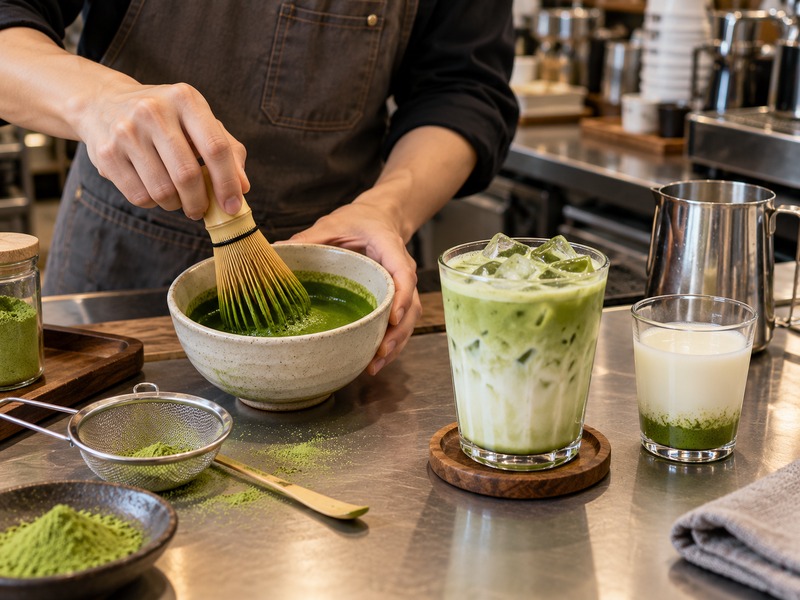
1. What counts as matcha separation in a café drink?
Separate visual layers from gritty residue
A layered iced latte can be a deliberate presentation choice. The matcha sits above the milk for a photograph, then blends with a few stirs. The problem is a cup that still has dry islands, gritty specks, or a heavy green deposit after stirring. Customers experience that as a weak opening sip and a thick, bitter finish.
Run a simple side-by-side check. Make one cup using the normal recipe and another using the proposed adjustment. Photograph both immediately, stir each the same number of times, and inspect the base after the usual customer wait. Do not judge from the surface alone; use a clear test cup and a spoon to see whether powder has collected at the bottom.
| Observation | Likely meaning | Next check |
|---|---|---|
| Clean green layer that stirs in | Intentional iced-drink presentation | Taste after stirring |
| Dry lumps or floating flecks | Poor initial wetting | Inspect concentrate before milk |
| Fine deposit after a short wait | Particles settling from suspension | Compare mixing method and time |
| Curdled-looking milk | Possible milk or ingredient issue | Stop service and check ingredients |
2. Why does matcha powder settle instead of dissolving?
Understand the ingredient before changing the recipe
Matcha is milled tea leaf. Unlike sugar, its leaf particles remain particles in the cup. Whisking spreads them through water and adds air; it cannot turn the leaf into a true solution. Jade Leaf Wholesale makes this point in its guide to matcha dispersion. Some settling after a long rest is therefore expected. A café’s job is to make the drink even through the time a customer normally takes to receive and begin drinking it.
Powder agglomerates can make the result worse. Moisture, compression inside a pack, or a rushed scoop can leave clusters that wet only on the outside. Milk is a poor place to break these apart because a cold, thicker liquid slows the barista’s ability to see and work through them. Start with an adequately mixed base, then adjust dose only after a taste test.
3. How should a barista make a matcha concentrate?
Wet the powder fully before milk enters the cup
Weigh the café’s tested matcha dose into a clean, dry vessel with enough room to whisk. If the powder shows visible compacted clumps, sift it into that vessel. Add a measured small portion of the recipe water and work it into a smooth slurry, scraping the wall of the bowl or pitcher. Add the remaining measured water and mix until no dry edges remain.
Use a trial range rather than copying another brand’s recipe. For example, test two powder doses and two water volumes in the same finished cup, then keep milk, ice, and sweetener fixed. A base that is too thick may cling to the vessel; one diluted with too much water can make the finished latte thin. Record water temperature at the point of mixing, since a machine outlet may deliver something different from its displayed setting. The café’s water-temperature guide can support a separate flavor trial, but the service recipe should be approved from real cups.
| Control | Record on station card | Reason |
|---|---|---|
| Powder | Grams per cup | Flavor and ingredient cost |
| Water | Volume and delivered temperature | Wetting and dilution |
| Mixing | Tool and visual endpoint | Repeatable dispersion |
| Vessel | Shape and size | Access to corners and bottom |
4. Which mixing tool keeps the powder evenly dispersed?
Choose a tool the whole shift can use
A bamboo whisk, handheld frother, small shaker, or dedicated mixer can all be tested, but each needs an actual service trial. A narrow glass may be convenient at the register and still leave dry powder stuck in its corners. A whisk has room to move in a shallow bowl, while a frother can work in a tall vessel if its head reaches the bottom without splashing. A shaker needs a tight lid and a cleaning routine. Compare cups made by a new barista as well as an experienced one; a method that relies on one person’s wrist technique will drift on a busy shift.
Do not use foam height as a stand-in for dispersion. A frother may leave a dramatic surface while coarse powder remains at the bottom. After mixing, tilt the vessel and inspect its base, then pour through the normal service motion. Time the full cycle, including tool rinse and reset. For a broader equipment comparison, see the café’s whisk and frother guide.
5. How do milk, ice, and sweetener change separation?
Test the finished cup, not an isolated matcha sample
Milk changes viscosity, fat content, and flavor. Dairy milk and different plant milks can make the same concentrate look and taste different. A supplier sample mixed only with water cannot show what happens in the café’s oat-milk iced latte. Ice changes dilution and pour behavior: a concentrate poured over the cubes may form the visual green cap a café wants, while a cup built with excess water may taste weak after the ice begins to melt. Syrup should be measured; granulated sugar should be dissolved in a suitable part of the recipe before the drink is handed over.
Prepare the same matcha base in each approved milk and use the exact cup size sold. Taste at handoff and after a realistic wait. Stir the iced version before the second taste so the test measures texture rather than a deliberate color layer. If a particular milk appears grainy, check the milk’s condition and handling first. Do not call every visible particle matcha. Keep the recipe card specific: “170 ml oat milk” is testable, while “top up with milk” is not.
| Variable | Hold constant during trial | Inspect after wait |
|---|---|---|
| Milk type | Matcha base, cup, ice | Texture and flavor |
| Ice fill | Powder, milk, water | Dilution and layering |
| Sweetener | Powder, milk, ice | Undissolved crystals |
| Pour order | All ingredient amounts | Visual layer and ease of stirring |
6. Should a busy café batch the matcha base?
Validate holding before trading freshness for speed
Batching can make peak service faster, but a mixed matcha base may settle in its holding vessel. That is a process issue even if the final cup looks acceptable for a minute. A barista who pours from the top of an unstirred batch can make early drinks weak and late drinks heavy. Run a controlled trial at the café’s expected service pace. Record preparation time, vessel, temperature, stirring or shaking step, and the time the final portion is poured. Compare the first, middle, and last serving for dose, color, and flavor. Use local food-safety rules and the café’s own validated holding procedure for any prepared ingredient.
Dry pre-portioning is another option. It keeps powder sealed until use, reducing weighing during the rush without creating a liquid holding period. Do not assume a large batch is economical just because mixing takes fewer seconds; include discarded concentrate and remake costs. If a prepared base needs vigorous shaking before every pour, build that movement into the station card. The café’s existing matcha concentrate guide covers broader batch planning; this test focuses on settling during service.
7. How can a café test whether a recipe stays mixed?
Set a pass condition that staff can see and taste
Make three drinks from the proposed recipe under normal conditions. Use the actual powder lot, milk, ice, cup, and tools. Photograph each immediately after assembly. At the usual handoff interval, stir each in the same way and taste from top to bottom. Inspect the bottom of a clear test cup with a spoon or against a light background. If one cup has a dry lump, note whether it came from portioning, mixing, or a vessel corner.
Set the acceptance standard before comparing samples. It might say no visible dry clumps at handoff, no objectionable grit after the normal wait, and a flavor the team approves blind in the intended milk. Those are shop decisions, not universal laboratory thresholds. Train staff to reject a cup that fails rather than hiding it under foam or syrup. Repeat the test during a rush, when staff movements change. A recipe that passes only when one person spends an extra minute whisking has not passed the service test.
| Trial moment | What to inspect | Decision |
|---|---|---|
| After concentrate mixing | Dry edges and bottom deposit | Remix before adding milk |
| At handoff | Layer versus flecks | Serve or remake |
| After normal wait | Stir-in behavior and last sip | Approve or revise recipe |
| During rush | Variation across staff | Approve station method |
8. What should a wholesale matcha sample prove?
Compare suppliers in the drink the café sells
Ask suppliers for a sample tied to a product code and, where available, a production lot. Prepare every candidate with the same approved mixing method. Blind-label the cups so staff judge flavor and mouthfeel rather than the supplier name. Check the dry powder for packaging condition and clumps, but make the purchase decision on the finished drink. A powder that disperses quickly yet disappears under milk may require a higher dose. A lower kilogram price can therefore produce a higher cost per accepted latte. Compare cost at the dose that passed the cup test, not at an arbitrary common teaspoon.
Retest a repeat order against the approved sample. The supplier should be able to identify the lot and provide the documents the buyer needs for its market and food-safety program. If the new lot changes in color, aroma, or mixing behavior, isolate the variable before rewriting the recipe. Give the supplier a precise complaint when something fails: “visible dry pockets after the standard mixing step” is more useful than “bad matcha.”
9. How can baristas keep the method consistent on every shift?
Put the critical checks where the drink is made
Place a short station card near the powder, not in a training binder. It should show the weighed dose, water measure, mixing vessel, visual endpoint, milk measure, ice fill, and pour order. A new employee should be able to make the approved drink without guessing what “whisk well” means. Keep a dry scoop or pre-portioned powder away from the sink. Close the powder pack promptly, since moisture and repeated opening make portioning less predictable. Wash and dry the mixing tool between uses under the café’s cleaning procedure.
Have two baristas make the same drink back to back. Compare their concentrate before milk enters the cup. If one leaves a ring of powder around the bowl, improve the movement or change the vessel. If both make an even base but one finished latte settles faster, inspect milk amount, ice, and waiting time. Correct the specific step rather than telling the whole team to “be more careful.” For a deliberately layered iced latte, tell staff to explain that the customer should stir before drinking.
| Station-card item | Useful wording | Avoid |
|---|---|---|
| Powder | Weigh the approved grams | One heaped scoop |
| Mixing endpoint | No dry ring or pockets in bowl | Whisk well |
| Milk | Measure the approved volume | Fill to line by eye |
| Handoff | Stir layered iced drinks before drinking | No customer instruction |
10. What should managers measure after the drink launches?
Link texture complaints to a step and a lot
Track remakes for gritty texture separately from complaints about flavor or appearance. Record the shift, barista, powder lot, milk, recipe version, and whether the drink was hot or iced. A sudden cluster after a new milk delivery suggests a different investigation from a gradual rise after staff skip sifting. Watch ingredient waste as well as preparation time. A process that saves a few seconds but doubles remakes is not a useful shortcut. Review the figures with staff once enough drinks have been sold to reveal a pattern, then change one control and retest.
When a new supplier sample arrives, test it under the same conditions before replacing the current powder. If customers report a heavy last sip, inspect the concentrate and the actual wait before concluding that the powder is defective. If they complain that a layered drink looks “separated,” clarify whether it stirs in cleanly. The goal of learning how to keep matcha from separating is a cup that tastes even through ordinary service, with a method every shift can repeat.
Frequently asked questions
Q1: Can matcha fully dissolve in milk?
No. Matcha is finely milled leaf and forms a suspension. Mix it evenly in a measured base before combining it with milk.
Q2: Is a green layer on an iced latte always a defect?
No. A clean layer can be intentional. Check whether it blends after stirring and whether the last sip leaves gritty sediment.
Q3: Should a café add more matcha when a latte separates?
Check wetting and mixing first. More powder can increase settling if the base still contains dry clusters.
Q4: Can a café prepare matcha concentrate ahead of service?
Yes, if the shop validates its holding and mixing procedure under applicable food-safety rules. Test first, middle, and last portions for consistency.
Q5: What should a buyer compare across wholesale samples?
Use the same cup, milk, dose trial, and service wait. Compare dispersion, flavor, repeatability, and cost per accepted drink.