
Matcha water temperature should describe a measured step in your cafe recipe. A kettle displaying 80 C does not tell staff what temperature reaches the powder or customer. Set a starting method, measure the pour and compare coded samples before choosing a repeatable service routine.
Tea makers publish useful methods, but their recommendations differ. The trial ranges below help a cafe compare its own powder, water and equipment. They are proposed sensory trials, not claims that one temperature suits every matcha or drink.
Contents
- 1. What matcha water temperature should you try?
- 2. Why can kettle and bowl readings differ?
- 3. How should staff measure temperature consistently?
- 4. How can you run a fair tasting trial?
- 5. Does bitterness prove the water was too hot?
- 6. Which recipe variables should stay fixed?
- 7. How does whisking fit into the temperature routine?
- 8. Should lattes and iced drinks use the same method?
- 9. How can a cafe train a repeatable service?
- 10. When should a buyer repeat the temperature trial?
1. What matcha water temperature should you try?
Begin with a maker’s method
For a plain whisked serving, Ippodo’s basic usucha method specifies 2 g matcha, 60 ml water at 80 C and 15 seconds of whisking. That gives a cafe a documented starting combination. Keep the dose and water quantity attached to the temperature when recording the reference.
Jade Leaf’s temperature guide recommends 140-175 F, approximately 60-79 C. This is that brand’s guidance. The small difference between published recommendations gives you a reason to taste the actual powder rather than demand one universal number.
| Proposed trial point | Fahrenheit equivalent | Intended comparison |
|---|---|---|
| 60 C | 140 F | Lower starting temperature |
| 70 C | 158 F | Middle trial point |
| 80 C | 176 F | Ippodo reference temperature |
Use these points as an initial screen for a straight-water drink. If two adjacent samples suit your target, run a narrower comparison between them. Choose for flavor and practical service, then define exactly where staff measure that temperature. A number without a measurement point leaves room for inconsistent preparation.
2. Why can kettle and bowl readings differ?
Follow the water through the station
Hot water exchanges heat with the vessel and surrounding air during preparation. A cold ceramic bowl, a metal transfer pitcher and a warm bowl do not create identical conditions. Pour size, vessel mass and the delay before whisking also belong in the record.
Observe your actual workflow. Staff may pour from a kettle into a measuring cup before adding water to the bowl. Someone else may weigh directly into the bowl. Both routes can deliver the same amount of water while producing different temperature readings at contact with the powder.
To map matcha water temperature, test the normal sequence using the same vessels and volumes. Record the kettle setting, water temperature after pouring and temperature at a defined later step. Repeat with the bowl preparation your cafe intends to use. If staff prewarm it, standardize that step and empty it consistently.
Avoid assuming that every transfer loses a fixed number of degrees. A rule copied from another station may fail when a bowl, pitcher or serving volume changes. Your measured difference can guide a kettle setting, but the service instruction should still identify the receiving vessel and pouring sequence.
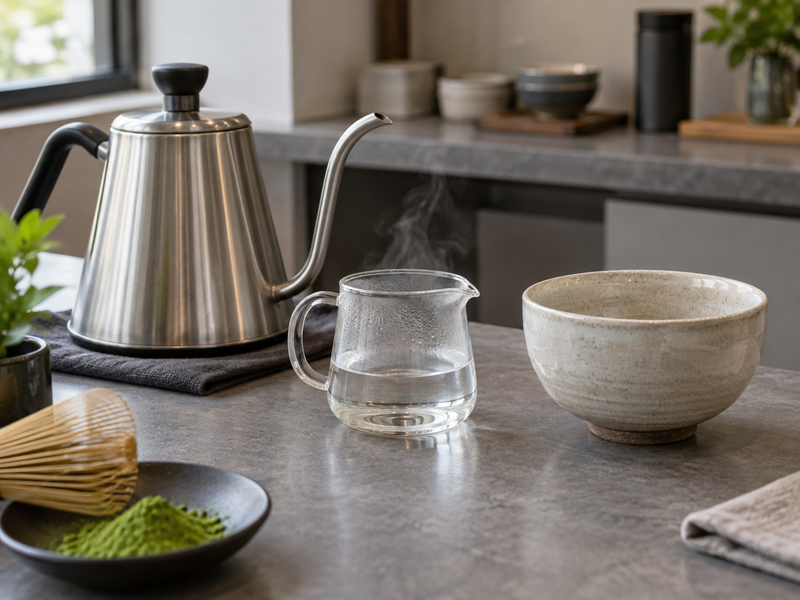
3. How should staff measure temperature consistently?
Define the reading before taking it
Use a suitable food-contact thermometer and follow its instructions for probe depth, response time and accuracy checks. A shallow matcha portion may be difficult to measure with a long sensing area. Choose equipment that can read the small volume without pressing the probe against the bowl.
Set one measurement position and time for checking matcha water temperature. During development, note how long the probe takes to settle. If the reading keeps changing while staff wait, record the value at an agreed interval rather than comparing arbitrary moments.
| Measurement point | What it describes | Record alongside it |
|---|---|---|
| Kettle display | Appliance setting or indicated reading | Kettle identity and fill level |
| Water after pouring | Water in the receiving vessel | Pour volume and elapsed time |
| Drink after whisking | Prepared mixture at a defined step | Whisk duration and bowl |
| Handoff sample | Drink temperature at service | Delay and serving cup |
During a test, follow your hygiene procedure between samples. Keep the probe clear of moving whisk tines. A surface reading and an immersed probe reading also describe different measurement methods; avoid mixing them in one comparison. Once the station is set, decide which checks belong in routine service and which remain development measurements.
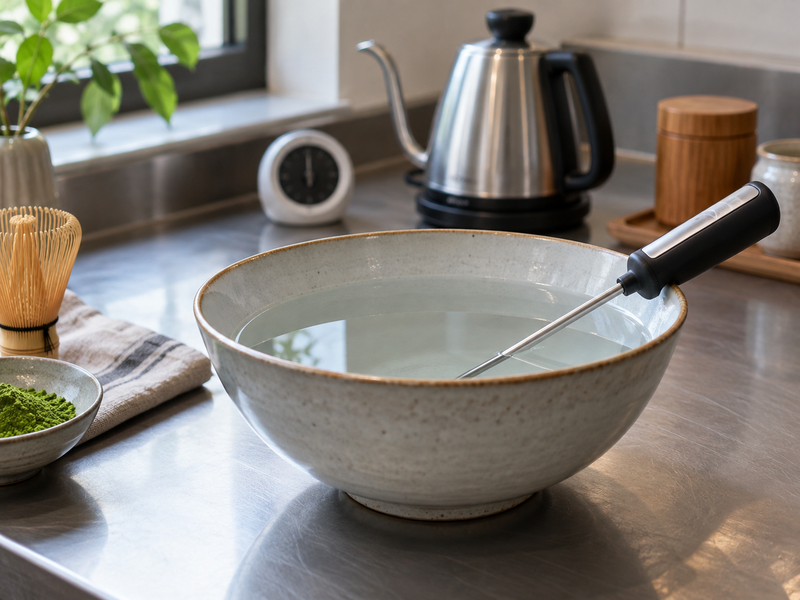
4. How can you run a fair tasting trial?
Separate preparation from serving warmth
For a matcha water temperature trial, use one powder lot and one water source. Weigh equal doses into identical bowls. Label them with neutral codes so tasters do not know the intended temperature. Keep the person preparing samples separate from the people scoring them where staffing allows.
The following proposed design compares three temperatures. Define the target as water measured in the receiving bowl at the chosen preparation step, then record the actual reading. Adjust the kettle as needed during setup.
| Coded sample | Target temperature | Keep constant |
|---|---|---|
| A | 60 C | Powder dose, water amount and bowl |
| B | 70 C | Water source and whisking routine |
| C | 80 C | Tasting delay and score sheet |
Run one comparison at a fixed time after preparation to judge the service experience. For a separate comparison, taste samples at a common measured drinking temperature. These answer different questions, so keep their scores separate.
Ask tasters to record aroma, savory flavor, bitterness, drying sensation and preference before discussing results. Repeat the series in a changed order. A single informal vote cannot show whether staff can reproduce the preferred cup during a busy shift.
5. Does bitterness prove the water was too hot?
Check dose, powder and timing
Bitterness alone cannot identify an error in matcha water temperature. Compare the powder quantity and water amount with the approved recipe. A heavy scoop, smaller pour or different powder lot can change the serving even when the kettle setting remains unchanged.
Ask what the taster means by bitter. They may be describing a drying sensation, a concentrated tea finish or an unfamiliar savory note. Give each observation its own line on the tasting sheet. Staff can then compare a changed recipe without forcing several sensations into one score.
Jade Leaf’s published demonstration compares matcha prepared with 140 F and 212 F water over 1.5 hours. Its reported color difference belongs to those conditions. It does not establish a sharp temperature boundary for every powder or an immediately served cup. Avoid turning a color photograph into a universal claim that matcha burns at a particular degree.
If a normally accepted drink tastes harsh, prepare a measured control serving from the same lot. Check temperature, dose and preparation delay one at a time. Record whether the fault repeats before changing the cafe’s recipe or rejecting the ingredient.
6. Which recipe variables should stay fixed?
Keep the temperature trial small
A comparison becomes difficult to interpret when staff change water, dose and whisking together. Choose one powder lot, one portion size and one preparation method before starting. Keep sugar and milk out of the initial plain-tea comparison unless the trial specifically concerns a latte.
Record water source, filter system and maintenance status. Taste the plain water before preparing samples. An unfamiliar odor deserves investigation before you blame the matcha. If testing another water source, do that in a separate series using the chosen temperature.
| Variable | Practical control | Mistake to avoid |
|---|---|---|
| Powder | Weigh the same lot and dose | Comparing loose spoonfuls |
| Water quantity | Use one measuring method | Switching between cup markings |
| Bowl | Match material and preparation | Mixing cold and prewarmed bowls |
| Timing | Start a timer at the pour | Tasting the oldest sample last every time |
Keep the powder container closed between weighings and follow the supplier’s storage instructions. Label the opening date and lot. Compare samples from the same working container during a session. For repeat trials, document any change in powder handling so it does not become an unexplained difference in the tasting notes.
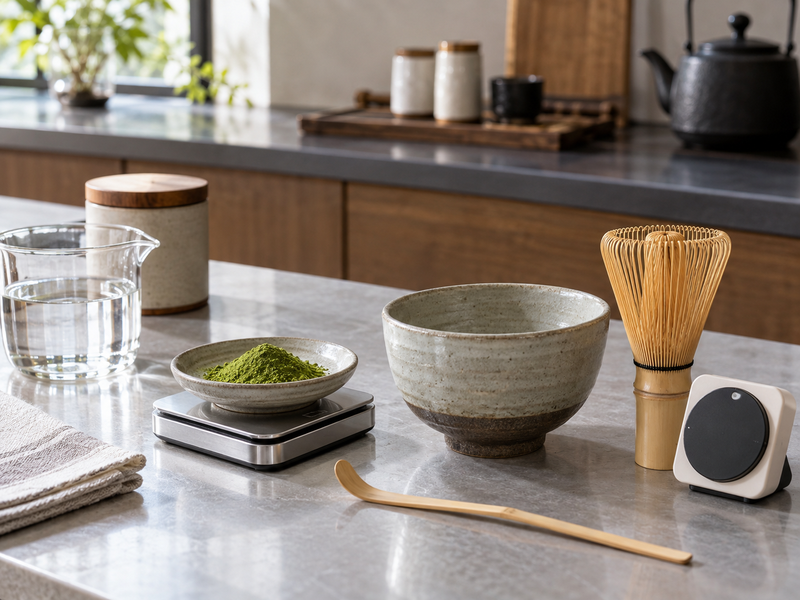
7. How does whisking fit into the temperature routine?
Control dispersion and elapsed time
Sift the powder as specified in your chosen method. Then use the same whisk, bowl and motion across samples. Changing from a bamboo whisk to an electric frother adds another variable, including how long the drink remains in the bowl before serving.
Keep whisking duration consistent during temperature development. Record visible clumps, foam texture and powder left on the bowl wall separately from flavor. A clump felt on the tongue should prompt a dispersion check before a new kettle setting.
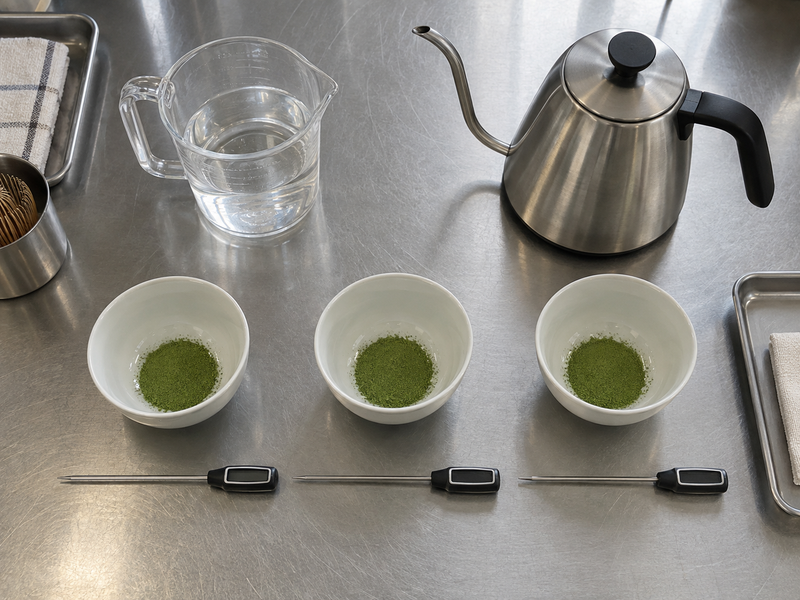
Use a demonstration cup to train the movement and stopping point. Counting vague strokes can vary with the operator; a timed routine and visible reference are easier to compare during a trial. Change the whisking method only after choosing a temperature range worth investigating further.
Add tool care to the station sheet. Matcha Village’s whisk care guide is a relevant companion for that routine. Inspect tools before service and follow the cafe’s cleaning process. Record replacements when checking whether an established preparation method still produces the expected result.
8. Should lattes and iced drinks use the same method?
Test the finished menu item
The matcha water temperature chosen for straight tea needs another trial inside a latte. Keep the matcha concentrate recipe fixed while comparing finished drinks with the intended milk and sweetener. Taste the complete portion because a small sample of concentrate cannot represent the balance after dilution.
For an iced recipe, define water, milk and ice quantities separately. More hot water in the preparation stage can change the temperature and dilution pattern of the finished drink. Compare samples at a fixed time after assembly rather than allowing one to wait longer on the counter.
| Drink format | Temperature question | Other quantity to control |
|---|---|---|
| Straight warm matcha | Does the cup suit immediate service? | Powder-to-water ratio |
| Hot latte | How does the assembled drink taste? | Milk amount and temperature |
| Iced latte | Does the drink stay balanced as served? | Ice mass and assembly delay |
| Cold-water preparation | Can staff disperse the powder reliably? | Mixing tool and duration |
Cold preparation deserves its own procedure. It does not need to inherit a warm-water recipe automatically. Measure clumping, taste, assembly time and consistency across staff. A successful trial should produce a drink the team can repeat in the cup size sold to customers.
9. How can a cafe train a repeatable service?
Turn trial notes into a short station card
Write the chosen matcha water temperature, powder dose, water quantity and bowl preparation on one card. Include the corresponding kettle setting. Name the measurement point used to approve the recipe. Add whisking duration, serving cup and expected time between preparation and handoff.
Use the trial records to set a practical working range. Do not invent a tolerance that your equipment or staff cannot maintain. Check a sequence of drinks prepared by several operators before deciding how tight that range should be.
Assign a clear response when a check falls outside the approved range. Staff may need to recheck the thermometer placement, inspect the kettle setting or prepare another serving under the cafe’s procedure. Document who can authorize a recipe change.
Check the routine after opening and under representative service demand. A station used occasionally can behave differently from one handling repeated orders, particularly when staff refill a kettle or swap bowls. Keep a brief log of measured readings and deviations. Review repeat problems with the person responsible for equipment and training, then update the card when an approved correction changes the process.
10. When should a buyer repeat the temperature trial?
Recheck after a material change
Repeat a focused comparison when changing powder specification, supplier, water system, kettle, bowl or drink size. A new lot should also pass the cafe’s receiving and application checks. Keep the previous approved preparation available as a control while deciding whether the recipe needs adjustment.
For a Matcha Village sourcing inquiry, state whether the powder will serve straight tea, hot lattes or iced drinks. Include the working dose, water amount and measured preparation temperature. Request samples identified by code and lot, then compare them in the intended menu item.
Share concrete feedback with the supplier. Report an accepted sample’s aroma, finish and dispersion beside the rejected sample’s observations. Specify which recipe variables stayed fixed. A comment such as "too bitter" becomes more useful when attached to an actual dose and measured preparation routine.
Retain the approved tasting sheet, powder specification and station card together. When ordering again, confirm the product code and current requirements. Schedule the next application check around an actual ingredient or equipment change, and record any revised matcha water temperature on the recipe staff use.
FAQ
Q1: Is 80 C a reasonable starting temperature?
Yes. Ippodo specifies it for its basic usucha method. Start with the accompanying dose and water quantity, then compare the result with other measured temperatures using your powder.
Q2: Can a cafe rely only on the kettle display?
Check what reaches the receiving bowl during development. The display describes the kettle’s setting or reading. Pouring, vessel condition and delays affect the preparation that staff must reproduce.
Q3: Does cooler water remove caffeine from matcha?
Do not use a preparation-temperature change as a decaffeination claim. This tasting method compares drink quality; it does not measure caffeine or establish a reduced-caffeine product.
Q4: Should a temperature trial include sweetener?
Begin with plain servings when selecting a powder for straight tea. For a sweetened menu item, follow with a separate finished-drink trial using the actual syrup and portion size.
Q5: What should a cafe record after choosing a temperature?
Keep the powder code, dose, water amount, measured temperature point, vessel preparation, whisking time and serving method. Give staff the approved version and date each revision.