
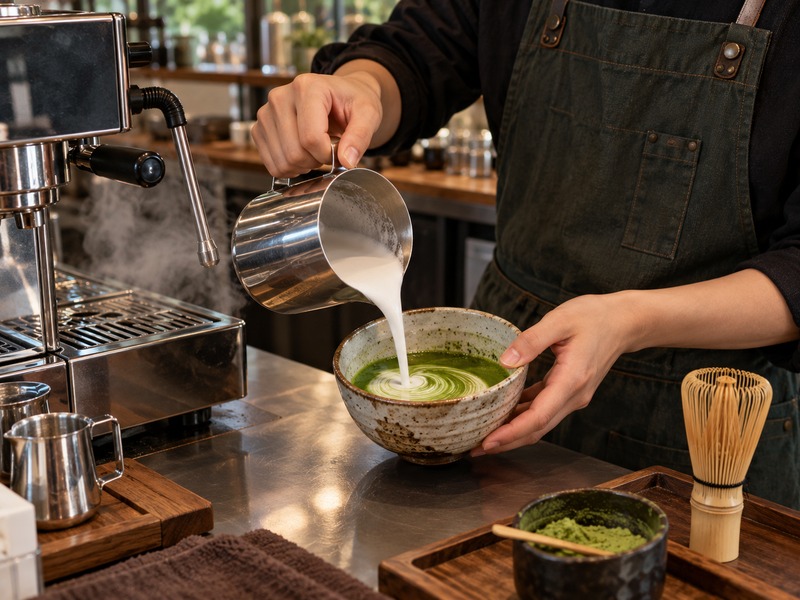
A matcha latte for coffee machine service uses a coffee machine for hot water or milk while the matcha is mixed in a separate cup or pitcher. A shop that simply pours powder into a bean hopper, portafilter or milk circuit risks a clogged machine and an inconsistent drink.
This guide is for café managers choosing a repeatable process. It covers espresso machines with steam wands, machines with automatic milk systems and cold-milk functions. De’Longhi’s matcha latte recipe mixes powder with water outside the machine, froths milk and then combines them. Use your own machine manual for permitted use and cleaning. Matcha Village supplies powder to B2B buyers; the steps below are a service framework, not machine-specific warranty advice.
1. Which jobs can a coffee machine do in a matcha latte workflow?
Assign water, milk and coffee functions separately
Use the machine for functions it was built to perform. An espresso machine can heat water and steam milk. Some automatic machines dispense hot or cold textured milk. Neither function requires matcha powder to pass through the coffee path. The powder can be portioned, hydrated and mixed in a clean cup before the machine contributes milk. For a dirty matcha latte, espresso is a separate optional ingredient prepared through the coffee path. Distinguish that drink from an ordinary matcha latte so menu descriptions and staff instructions remain accurate.
Make a process map for each machine model. A manual steam-wand unit gives the barista direct control over milk texture. An automatic milk system can reduce hand movements but may offer less control over the foam and cleaning cycle. A machine’s hot-water tap may be convenient, yet its delivered temperature and volume still need checking. Do not assume every steam wand, milk carafe or water outlet behaves alike. The manufacturer manual governs permitted use. Keep matcha in food-contact vessels that the team can wash thoroughly between drinks.
| Machine feature | Useful matcha-latte job | Check before service |
|---|---|---|
| Hot-water outlet | Hydrate powder in a separate cup | Delivered volume and temperature |
| Steam wand | Texture milk in a pitcher | Milk technique and cleaning |
| Automatic milk system | Dispense textured milk | Permitted milk and wash cycle |
| Espresso group | Optional coffee shot only | Keep matcha out of coffee path |
2. Where should matcha powder go when using a coffee machine?
Protect the machine and make the dose visible
Put matcha in a cup or mixing pitcher, not a machine compartment intended for beans or coffee. Fine tea powder is a different ingredient from whole beans and may behave differently in grinders, funnels and internal passages. Do not put it into a water tank or milk circuit either. Those paths are difficult to inspect after service and are cleaned for the machine’s specified ingredients. A café that wants a drink dispensed from one button needs an appliance or accessory explicitly approved for that ingredient and a validated cleaning process.
Weigh the powder before mixing. Small dose errors become visible across a busy shift, especially with sweetened beverages where staff may keep adding powder until color looks right. Use an approved food-safe vessel and a repeatable water measure. Keep a separate dry spoon or dedicated dispenser; a wet scoop returned to a bag introduces moisture. When the base is ready, move the cup under the milk outlet or pour milk from the pitcher.
3. How should a café prepare the matcha base?
Set a weighed recipe, then test it under service conditions
Start with the intended cup, not a universal teaspoon rule. Matcha grades, serving sizes, milk and sweetener levels vary. Test a few powder doses in the actual drink and choose the one that passes a blind cup comparison at an acceptable cost. Weigh powder and water for the trial. Add a small measured amount of water to the powder, stir or whisk until no dry pockets remain, then add any remaining water specified by the recipe. A narrow cup can trap powder at its edge; a wider mixing vessel may save time.
Water temperature is another controlled variable. Very hot water can change perceived bitterness and can make the work uncomfortable during a rush; water that is too cool may require longer mixing. Test the machine’s actual outlet rather than trusting a display setting. Record the delivered temperature and volume after the machine reaches normal operating conditions. If the outlet is unsuitable, a dedicated hot-water source may be better. Do not heat an empty matcha mixture in a steam wand unless the machine maker permits that use and the café has validated cleaning.
| Base control | Record in the recipe | Failure it helps prevent |
|---|---|---|
| Powder | Grams per serving | Weak or costly cup |
| Water | Volume and tested temperature | Changing flavor and texture |
| Mixing | Tool, time and visual endpoint | Dry clumps |
| Hold time | Maximum approved interval | Stale prepared base |
4. What milk method works with a machine-made matcha latte?
Choose texture for the drink, then train the movement
Milk is the machine’s contribution, so evaluate it in the finished cup. For hot service, a steam wand gives the barista control over aeration and temperature. Texture milk in a clean pitcher and pour it into the prepared matcha base. A very stiff foam may sit above the matcha rather than integrate with it; a thin, well-textured milk often gives a more even drink. Use the same milk, fill level and machine setup during recipe trials. If plant-based milks are offered, test each one separately because they can foam and taste differently.
An automatic milk system may make production faster, but its settings should be measured. Check how much milk it dispenses into a standard cup and whether the foam varies as the carafe level changes. Measure the actual serving, not the button label. For a hot matcha latte, the powder base should be fully mixed before milk arrives. Otherwise the milk can cover a dry pocket that breaks loose on the customer’s last sip. Staff can pour a small amount of milk, stir the base and then finish the cup if that improves integration.
5. How can hot matcha lattes stay consistent during a rush?
Build a short sequence with one quality pause
Sequence matters more than adding equipment. Set the cup, weigh matcha, hydrate it, inspect the base, texture milk and combine. The inspection takes seconds when the powder disperses well. It prevents a finished drink with clumps or an unbalanced dose. A shop can pre-portion dry powder into sealed, labeled food-safe portions when its operating rules permit; do not prepare more liquid base than the team can use within a validated holding period. A rush is when staff are most likely to skip a weighing step, so the setup must make weighing easy.
Time the complete drink at an ordinary pace and during peak service. If milk steaming is the bottleneck, a second pitcher or an automatic milk unit may help more than a faster whisk. If mixing is the bottleneck, test another vessel or tool while keeping the recipe fixed. Watch cup-to-cup variation across three baristas. A recipe that works only for the strongest employee is not ready for menu rollout. Include the reset: wipe and purge the steam wand as directed by the machine maker, rinse the whisk or frother and return clean tools to a dry area.
| Step | Operator check | Common shortcut to avoid |
|---|---|---|
| Portion | Measured dry powder | Uncalibrated scoop |
| Hydrate | No visible dry pockets | Adding milk onto dry powder |
| Texture milk | Approved volume and texture | Using a preset without checking output |
| Reset | Tools and wand cleaned | Leaving residue for the next drink |
6. How should iced matcha service differ from hot service?
Control dilution and cold milk separately
An iced drink is not a hot latte poured over extra ice. Its final flavor depends on ice mass, milk volume, water in the matcha base and how long the drink waits before handoff. Prepare a smooth base with the least water that the tested method needs, then combine it with measured cold milk and ice. If a machine offers a cold-milk function, test its output against milk poured directly from refrigeration. Cold foam can be an optional finish but should not conceal a weak base.
During trials, taste immediately and after a normal customer handoff interval. A recipe that looks strong at the counter may become watery after a few minutes. The answer may be a different dose, less base water or a different ice fill, not a darker powder. Keep food safety and temperature handling aligned with the café’s local requirements and its milk supplier’s directions. Prepared matcha base should not sit untracked beside a warm machine simply because the final drink is iced.
7. Can an automatic coffee machine make a matcha latte?
Define what the button actually automates
Many machines can automate milk, not the full matcha preparation. A barista can mix matcha in a cup, put it under the machine and select a programmed milk drink. Some systems have ingredient-specific beverage modules, but a café should verify the manufacturer’s instructions before using tea powder or formulated mixes in them. An ordinary coffee bean grinder and brew group should stay assigned to coffee. Do not infer a powder path from a recipe labelled “matcha” on a marketing page.
Measure output from a standard automatic cycle over several drinks. Check milk volume, foam ratio, temperature, residual milk in the line and cleaning time. Then compare the finished matcha with the manual version. If the automatic cycle gives a weaker cup because it dispenses more milk, adjust the approved recipe only after a taste and cost test. A one-button workflow may save seconds per drink but increase cleaning or maintenance.
| Workflow | What the machine does | What staff still do |
|---|---|---|
| Steam wand | Heats and textures milk | Weigh, mix and pour matcha |
| Automatic milk | Dispenses set milk profile | Weigh and mix matcha, verify output |
| Cold-milk function | Dispenses or foams cold milk | Control base and ice |
| Specialty ingredient module | Depends on approved design | Follow maker’s permitted ingredients and cleaning |
8. What cleaning protects quality and equipment?
Clean the paths that touched milk and powder
Matcha powder and milk leave different residues. The matcha mixing cup, whisk, spoon or frother needs washing that removes fine powder from crevices. A steam wand or automatic milk circuit needs the cleaning cycle specified by its manufacturer and the café’s food-safety procedures. Do not use a quick wipe as a substitute for a required purge or sanitation step. Keep tools dry before returning them to the powder station. A damp scoop can spoil portioning and introduce moisture to an open bag.
Assign the reset to a specific point in the workflow. Between drinks, clear visible residue and follow the normal machine routine. At closing, inspect the parts the staff can remove safely and complete the prescribed milk-system cleaning. If powder is found in a coffee path, stop and follow the machine maker’s service guidance instead of forcing another cycle through it. Record recurring clogs, poor foam or off flavors as equipment issues, not just drink complaints.
9. How should a café choose matcha for this machine workflow?
Test powder in the actual milk, cup and service time
Buy for the finished drink. A powder can look vivid in a dry sample and still taste faint under a large milk serving. Request a normal production-lot sample, not only a showroom sample. Test the powder with the chosen water, mixing tool, machine milk output, cup size and sweetener. Record dose, dispersion, color in the finished cup, flavor after a normal wait and cost per accepted serving. A grade name alone cannot predict those results. If the café serves both hot and iced versions, test both because dilution changes the answer.
Give suppliers a brief that includes pure powder versus formulated mix, monthly volume range, desired pack size, destination, quality documents and the approved recipe. Ask for a product code and lot-specific records so a repeat order can be checked against the trial. Smaller sealed inner packs may fit a low-volume machine station better than one large bag. Matcha Village’s café powder guide covers the broader grade choice; this machine workflow adds an equipment and service test.
| Supplier test | Acceptable evidence | Buyer decision |
|---|---|---|
| Dispersion | Normal-shift cup test | Mixing tool and time |
| Flavor | Blind comparison in hot and iced cups | Grade and dose |
| Consistency | Lot code, specification and COA | Repeat order approval |
| Pack | Sealed inner units and handling advice | Opened-stock waste |
10. What should a coffee shop measure after launch?
Review drink quality beside machine time
Measure the cup and the work behind it. Track preparation time, powder dose, milk output, remakes, complaints and cleaning time. A faster automated milk cycle is only valuable if the drink remains consistent and the cleaning routine is completed. If customers report weak flavor after a machine setting changes, check actual milk volume before blaming the powder. If clumps rise, observe the hydration step. Keep a reference recipe and an approved lot sample so the team can compare later deliveries.
A new barista, different milk or replacement machine can change the process. Update the station card when a controlled test justifies a change and train every shift on the same version. For a quote, send the supplier the tested dose and estimated monthly cups; that turns a kilogram price into cost per accepted serving. A matcha latte for coffee machine service works best when matcha preparation stays visible, machine functions are used as intended and the café can explain each step to a new employee.
Frequently asked questions
Q1: Can matcha powder go in an espresso machine’s bean hopper?
Do not put it there unless the machine maker explicitly permits it. Mix matcha in a separate vessel and use the machine for approved water, milk or coffee functions.
Q2: Can a coffee machine steam milk for matcha?
Yes, when the machine has an appropriate milk function. Prepare the matcha base separately, then combine it with the textured milk.
Q3: Is an automatic milk system enough for one-button matcha?
Usually the matcha still needs weighing and mixing outside the machine. Check the model’s permitted ingredients and cleaning instructions before using any specialty module.
Q4: Why does machine-made matcha sometimes taste weak?
The machine may dispense more milk than the recipe assumes. Weigh the powder and measure actual milk output, then retest the finished cup.
Q5: What matters most when buying powder for this workflow?
Test dispersion, flavor and dose in the actual hot and iced recipes. Compare cost per accepted serving and verify that repeat lots match the approved specification.