
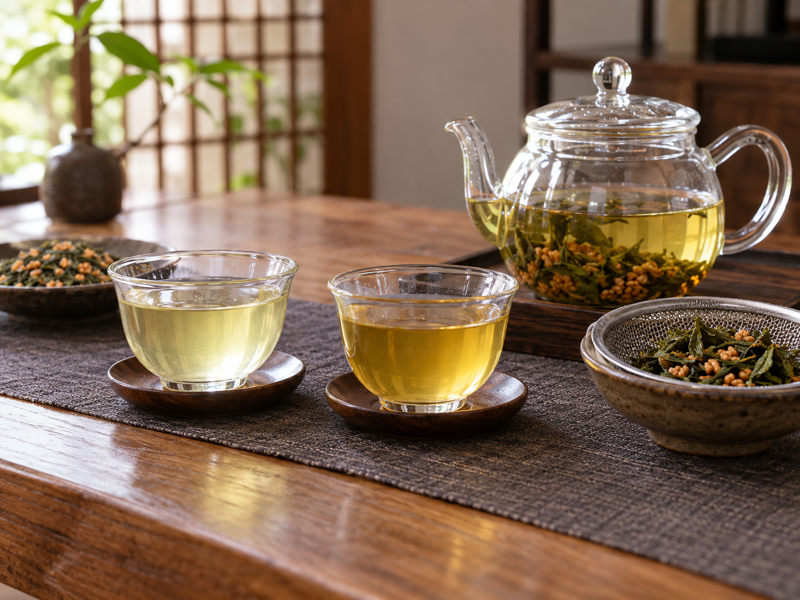
A genmaicha second steep can give more from one portion, but it will not taste like a replay of the first cup. Some roasted-rice aroma has already left the blend; tea leaves and rice also release flavor at different rates. That makes the second infusion a useful sensory test, not a guaranteed cost saving. This guide helps cafés and tea buyers compare the first and second cups under a measured method. It focuses on whether customers would enjoy the second cup and whether the operation can serve it consistently.
Contents
- 1. Can genmaicha be steeped twice?
- 2. Why does the second cup taste different?
- 3. How should the first infusion be prepared?
- 4. What should change for the second infusion?
- 5. How can a buyer compare two tea blends?
- 6. Does a matcha-added blend behave differently?
- 7. What happens if wet leaves wait too long?
- 8. Should cafés sell a second cup?
- 9. How should the cost be calculated?
- 10. What should a brewing card say?
1. Can genmaicha be steeped twice?
Yes, a second infusion can be made from the same leaves and rice. Whether it is worth serving depends on the blend, first brew, and customer expectation. A genmaicha brewing reference gives one approach; the second cup still needs tasting with the exact tea sold. A blend with plenty of intact leaf may yield a pleasant later cup, while one dominated by heavily roasted rice may lose much of its signature aroma early. Do not promise the second cup will equal the first.
Separate “possible” from “commercially useful.” A home drinker may enjoy a lighter second cup. A café charging for a premium service needs to decide whether that lighter cup meets its menu standard. Brew both infusions side by side and record aroma, tea body, roast, bitterness, and color. If the second is weak, it may still be offered as a complimentary continuation of a pot, but it should not be sold under the same flavor promise without disclosure.
| Question | First cup | Second cup |
|---|---|---|
| Roast aroma | Often strongest | May be lower |
| Leaf extraction | Early release | Remaining compounds |
| Customer promise | Standard reference | Define separately |
| Cost | Full tea portion | Extra water/labor |
2. Why does the second cup taste different?
Rice and green tea do not extract identically. The first infusion can release a large share of the readily available toasted-rice aroma. The remaining wet leaf can still contribute green-tea flavor, so the second cup may taste more leaf-forward and less cereal-like. The exact pattern depends on roast, leaf grade, particle size, and how thoroughly the first infusion was poured out. A pot left with liquid around the leaves keeps extracting between servings and changes both cups.
Taste the second cup without trying to force it to match the first. Record whether it has a clean green-tea finish or a thin, bitter edge. A weak cup can be caused by an overlong first brew that exhausted the material; a harsh cup can result from excessive second-steep time or too-hot water for that blend. The solution is a controlled experiment, not a claim that all genmaicha can be steeped a fixed number of times.
3. How should the first infusion be prepared?
Use a measured tea dose, water volume, temperature, and contact time that already produces the approved first cup. Pour or strain the liquid completely at the endpoint so the wet blend is not left swimming in tea. The existing steep-time guide focuses on that initial brew. For a two-infusion test, the first method must be held constant; otherwise the second cup cannot be compared fairly. Record how long the wet material waits before the next brew.
Choose a vessel that lets staff pour consistently. A teapot with a strainer can work, but some designs retain more water than others. Weigh the input tea and note the first-cup yield. Taste the first cup before judging the second, because a weak first brew may leave more extractable flavor behind but fail the primary customer experience. A two-steep program should improve total enjoyment, not weaken the first cup to make the second seem impressive.
| First-brew variable | Record | Reason |
|---|---|---|
| Tea mass | Grams | Comparable dose |
| Water | Milliliters | Strength |
| Temperature | At contact | Extraction |
| Time | To complete pour | Repeatability |
| Residual liquid | Approximate | Second-cup effect |
4. What should change for the second infusion?
The second infusion may need a different time or water temperature to reach a pleasant strength. Change one variable at a time in a small trial. Start from the supplier’s advice if available, then taste. Do not automatically double the time; that can draw out bitterness without restoring roasted-rice aroma. Use the same water volume if a direct comparison matters, or a smaller cup if the menu can support that format. Make the decision from the drinking experience.
Run at least two versions of the second cup and taste them blind. Note roast aroma, leaf character, astringency, and clarity. Record the time between infusions, because wet leaves held for several minutes behave differently from leaves re-steeped immediately. Once a method works, test it in normal service with normal staff. A second steep that requires a precise, fussy dance around the kettle may not be practical during a rush.
5. How can a buyer compare two tea blends?
Buyers often compare genmaicha blends by their first cup alone. If the sales concept includes multiple infusions, test both. Use the same protocol for each blend and record the first and second cup separately. A leaf-heavy blend may produce a stronger second infusion but cost more; a rice-forward blend may make a more aromatic first cup but fade quickly. Neither is universally better. The purchase decision should follow the intended service and cost per enjoyable cup.
Sample at least two lots if possible. Rice roast and leaf grade can change how much flavor remains. Check whether the dry blend segregates in a bulk bag; a scoop with more rice may behave differently from a scoop with more leaf. A supplier claiming “three steeps” should show the method and sensory basis. Ask for a normal-cup test rather than accepting a tiny tasting vessel result that does not match customer service.
| Blend feature | Likely effect | Buyer test |
|---|---|---|
| More intact leaf | Later tea body | Second-cup taste |
| More rice | First-cup roast | Aroma decline |
| Fine particles | Faster extraction | Bitterness |
| Matcha coating | First-cup cloudiness | Later clarity |
6. Does a matcha-added blend behave differently?
A matcha-iri genmaicha has powdered tea on or among the leaves and rice. Much of that suspended powder can enter the first cup, changing color and body. The second infusion may look clearer and taste different even if leaves continue to extract. Do not compare it directly with a plain genmaicha as though only the rice ratio changed. Use separate reference standards and explain the variation to customers if the tea is served across two cups.
A café may prefer the visual impact of the first matcha-iri cup and find the second too light. That is an honest operational result. If the second cup is still pleasant, name it as a lighter follow-up rather than promising the same vivid green and texture. The matcha-iri genmaicha article covers the blend composition; a second-steep decision needs the actual tea, water, vessel, and service timing. A label cannot predict the whole sequence.
7. What happens if wet leaves wait too long?
Wet tea left at room temperature can lose quality and, depending on the handling context, raise safety concerns. A café should follow its approved food-safety and tea-handling procedures rather than storing used leaves indefinitely for a later order. From a flavor standpoint, leaves left in a damp strainer may continue oxidizing or absorb odors. Residual water can keep extracting, making the next cup unpredictable. Set a maximum hold time based on the operation’s quality and safety plan.
For a customer table pot, the second infusion may follow immediately. For a barista preparing separate orders, reusing wet leaves may be too hard to control and trace. Do not treat a second steep as a way to stretch stock across unrelated customers. A clean, measured fresh portion is simpler for many cafés. The business case for multiple infusions is strongest in a dedicated tea service where the same customer receives the sequence and the timing can be managed.
8. Should cafés sell a second cup?
A second cup can be part of a tea service if it tastes good and the customer understands the difference. A tasting flight could present the first and second infusions together, inviting comparison. A café could also provide hot water for a pot at the table. Charging the same price for a noticeably weaker second cup may create disappointment. Decide the offer from a blind sensory test and customer trial, then write the menu description accordingly.
Service time and vessel handling matter. Staff need to know when the first brew ended, how wet leaves were held, and how to prepare the second. A rushed operation with shared equipment may struggle to deliver that consistency. Run a pilot during normal service, not only in a quiet tasting room. Count actual orders, customer reactions, wasted tea, and labor. If the benefit is small, keep the idea for a specialty tasting rather than adding it to the everyday menu.
| Service model | Possible benefit | Constraint |
|---|---|---|
| Table pot | Customer controls pace | Instructions |
| Tasting flight | Educational | Labor |
| Separate charged cup | Added revenue | Value perception |
| Fresh brew only | Consistency | More tea use |
9. How should the cost be calculated?
Calculate cost per enjoyable serving, not just grams of tea used. A second infusion adds water, energy, labor, cleaning, and possibly a second cup or pot. If it is offered as part of one pot price, the customer may value the experience. If it is sold separately, compare willingness to pay with the sensory difference. A tea portion yielding two good cups can improve value, but only if both meet the agreed standard and the service time is manageable.
Include waste and variability. If half the second cups are discarded or returned because they taste thin, the apparent saving disappears. A premium leaf blend may cost more but give a stronger later infusion. A rice-forward blend may be cheaper and better in the first cup. The procurement and operations teams should use the same test data. A spreadsheet can show cost, but the tasting panel determines whether the second line in that spreadsheet is a drink worth serving.
10. What should a brewing card say?
List the tea SKU, dose, water for the first infusion, first contact time, complete-pour instruction, maximum allowed wait, second water volume, second time, and expected sensory difference. If staff should not reuse leaves after a certain period, state the rule clearly. Include a photograph or small description of the intended first and second cup. Train staff with the actual vessel; a card written for a pot will not work identically with an infuser basket.
Test the card with someone who did not develop it. Ask them to make both cups and compare them with the reference. If the second is inconsistent, identify whether the issue is retained water, timing, tea portion, or the blend itself. Update the card after supplier changes. The goal is a second cup the business can describe honestly and repeat, not a fixed claim about how many times “genmaicha” in general can be used.
| Card field | First infusion | Second infusion |
|---|---|---|
| Water volume | Approved amount | Trial amount |
| Contact time | Approved target | Tested target |
| Pour | Complete | Complete |
| Expected note | Rice and tea | Lighter tea profile |
FAQ
Q1. Can genmaicha be steeped twice? Yes, but the second cup may have less roasted-rice aroma and a different green-tea balance.
Q2. Should the second steep be twice as long? Not automatically. Trial time and temperature with the actual blend.
Q3. Can wet leaves be saved all day? A café should follow its approved safety and quality hold rules; long uncontrolled holding is a poor service plan.
Q4. Is matcha-iri genmaicha the same on the second steep? No. Much of the powdered matcha may move into the first cup.
Q5. Is a second cup cheaper? It uses the same tea portion, but water, labor, and quality still determine real value.
Serve a second infusion only when the next cup is one you would choose to drink.