
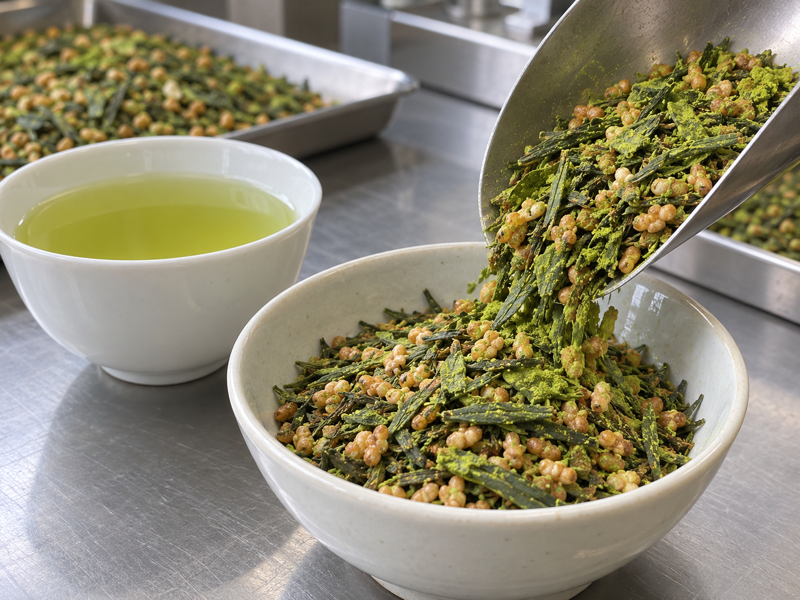
Genmaicha matcha iri means genmaicha with matcha added. The Japanese phrase matcha iri means “containing matcha”; on an imported retail tea pack it should lead to a clear ingredient list, not a guess from color. The base combines green tea and roasted rice, while fine matcha powder changes appearance and handling. This guide centers on terminology, loose-blend pack consistency, brewing directions, and label approval for tea importers and private-label buyers. The same name can cover different ratios, so verify the offered SKU. Japan's agriculture ministry describes the underlying genmaicha category.
Contents
- 1. What does “matcha iri” mean on a tea pack?
- 2. How does it differ from standard genmaicha?
- 3. What should the dry blend look and smell like?
- 4. How should genmaicha matcha iri be brewed?
- 5. Is the caffeine level different from plain genmaicha?
- 6. Which retail pack details make the term useful?
- 7. How should an importer request retail samples?
- 8. What quality and label documents should be reviewed?
- 9. How do you keep the blend consistent across lots?
- 10. When is the retail pack ready for approval?
1. What does “matcha iri” mean on a tea pack?
Iri in this context indicates an addition: the genmaicha contains matcha. It does not specify a percentage, grade, origin, or whether matcha is the dominant taste. A supplier may offer a subtle dusting for color, while another makes a more tea-forward blend. Both can use a similar name. A purchaser therefore needs the actual ingredient statement and, ideally, a composition range or measurable sensory specification.
Check that the sales sample and formal quotation refer to the same SKU. An importer may see a photograph of a very green blend yet receive a production product with a lighter appearance. Color alone is weak evidence because lighting, powder distribution, and brewing all affect it. Request an unopened production sample, lot number, specification revision, and preparation guidance. If the exact matcha share is commercially sensitive, ask for a controlled range and a clear change-notification agreement. The purchasing contract should define what arrives in cartons more precisely than the broad Japanese-style name.
| Label term | Reasonable reading | What it does not establish |
|---|---|---|
| Genmaicha | Green tea plus roasted rice | Exact leaf or rice ratio |
| Matcha iri | Matcha is added | Matcha percentage or grade |
| Powdered genmaicha | A powder-format product | Same behavior as loose tea |
2. How does it differ from standard genmaicha?
Standard genmaicha combines green tea with roasted rice. The Japanese Ministry of Agriculture, Forestry and Fisheries notes that leaf choices can include bancha, sencha, or gyokuro and that roasted rice prepared from cooked white rice can be used. The matcha-iri version adds fine tea powder. That addition can make the dry blend greener and may give the brew a more vegetal tea note. It can also create fine sediment that plain loose tea would not have.
Compare the two under one controlled recipe before deciding that matcha-iri is “better.” A café seeking strong roasted aroma may prefer plain genmaicha; a retail brand seeking a greener visual may favor the matcha-added variant. But the result still depends on the particular supplier's formulation. Taste both hot, then test the finalist in its intended final drink. An iced latte might hide a small matcha addition, while a clear hot cup shows it. For a useful side-by-side category comparison, see genmaicha versus matcha; the procurement decision still needs exact SKU trials.
3. What should the dry blend look and smell like?
You should be able to recognize green tea leaves and roasted rice, with matcha powder distributed in a way consistent with the supplier's specification. The color may range from lightly dusted to visibly green. A fresh sample should have both tea and roasted-rice aroma, without stale, damp, or burnt notes. A few popped rice pieces may occur in some styles; they are not a substitute for checking roast consistency and ingredient distribution.
Inspect more than the top of one bag. Fine powder can migrate downward in transit, while larger rice pieces remain nearer the top. Sample top, middle, and bottom portions after the handling the product will actually experience. Weigh and brew each portion under the same method. If they produce different color or flavor, the blend may need better mixing, smaller packs, a different dispensing method, or a tighter specification. Packaging should protect the product from moisture and odor pickup, but the exact shelf life must come from supplier evidence for that SKU and pack.
| Inspection point | What to record | Why it matters |
|---|---|---|
| Leaf and rice visibility | Photo and composition note | Confirms category appearance |
| Powder distribution | Top/middle/bottom samples | Reveals segregation |
| Dry aroma | Fresh tea and roast profile | Screens storage or roast issues |
| Pack condition | Seal, moisture signs, lot code | Supports traceability |
4. How should genmaicha matcha iri be brewed?
Use a controlled hot-brew trial. Japan's agriculture ministry suggests 90–100°C and roughly 30 seconds to one minute as a genmaicha starting point. Because matcha powder may disperse into the drink, that method is a starting trial rather than a fixed instruction for every matcha-iri blend. Use a weighed dose, measured water, a defined strainer, and a clear endpoint. Record how much powder passes into the cup.
Taste promptly and after a realistic hold. Powder can settle, making the first and last poured servings differ. Stirring may solve that problem for a café cup but may not suit a clear bottled tea. If the roasted aroma is weak, compare a higher dose against a longer steep; over-steeping can make the leaf taste harsh without making rice aroma more appealing. Retail preparation instructions should be tested with ordinary customer equipment. A recipe that only works with a laboratory filter or constant agitation will disappoint a home brewer who follows a short label instruction.
5. Is the caffeine level different from plain genmaicha?
It can be. Matcha adds another source of tea caffeine, and any powder that enters the cup contributes to the served drink. The amount depends on how much matcha the manufacturer adds, the green tea leaf share, the dry dose, brewing, filtration, and cup size. A dark green color cannot tell a buyer the caffeine amount. A name such as “low-caffeine rice tea” should not be inferred from the presence of rice.
Japan's agriculture ministry lists a genmaicha infusion value of 10 mg caffeine per 100 mL for one stated preparation method. That figure is not a test result for a matcha-added product. If caffeine is part of a menu, pack, or buyer specification, test the exact finished beverage. The US FDA notes wide variation among drinks and individual caffeine sensitivity. For customer service, state that the tea contains caffeine and provide a measured serving value only when one exists.
| Statement | Evidence needed | Buying action |
|---|---|---|
| Contains caffeine | Tea ingredient statement | Include on staff information |
| Exact mg per serving | Finished-drink test | Fix recipe and serving size |
| Lower than another tea | Matched comparison | Name comparator clearly |
| Caffeine free | Exact proof and local review | Avoid assumption |
6. Which retail pack details make the term useful?
For retail tea, matcha-iri genmaicha offers visible leaf and rice with a clear preparation story. The front panel can explain that matcha is an addition to the blend, while the ingredient declaration gives the actual contents under local rules. A transparent window may help customers inspect the mix, but light exposure and powder staining need a packaging trial. Choose pack size and fill process that keep the fine matcha reasonably distributed through transport and normal store handling.
Test aroma and color in the final sealed pack, not only in an open tasting jar. Open packs from the start and end of a filling run and compare representative portions after a shipping simulation. Ask whether the proposed brewing directions produce a cup with an acceptable powder deposit; consumers may read visible sediment as a defect if the pack never explains it. A single-serve bag or sachet can improve portion consistency, but its fill weight and material must be tested. These retail questions are more specific than whether the blend tastes good in a development bowl.
7. How should an importer request retail samples?
Send a brief with target roast, matcha visibility, acceptable sediment, pack size, planned shelf presentation, volume, import market, and document needs. Request production-representative unopened packs or material from the filling line, rather than a hand-arranged display sample. Ask for the ingredient list, current specification, and pack-material description at the same time. A loose blend that tastes right but marks the inside of a clear pouch may need a different pack before it is ready for retail.
Run a blind hot-cup screen, then inspect top and bottom portions of finalist packs after handling and a shipping simulation. Keep photographs under consistent light and sensory notes from each portion. Before a broad order, compare another lot with the approved control and confirm that the quotation names the same SKU, pack material, and fill weight. Price should include unusable packs and any rework caused by poor powder distribution. A cheaper bulk blend may be more expensive once it is filled into a small private-label pack.
| Sample request | Purpose | Approval condition |
|---|---|---|
| Production lot sample | Representative quality | Matches quote and spec |
| Ingredient list | Label review | Names tea, rice, matcha |
| Brew guide | Trial starting point | Works in target process |
| Second lot | Repeatability | Within approved sensory range |
8. What quality and label documents should be reviewed?
Review a current product specification, ingredient and allergen statements, lot code format, shelf-life basis, storage instructions, and any testing relevant to the import market. Ask whether a certification applies to the exact SKU and facility scope before printing it on a pack. If a supplier discusses organic or other certifications at company level, request the current documents and transaction evidence needed for the market. Do not infer certification from a broad portfolio description.
The label should distinguish matcha-iri genmaicha from pure matcha and from plain genmaicha. If it says “Japanese,” verify what that means for tea, rice, blending, and packaging under local rules. For Matcha Village, which identifies genmaicha powder in its stated portfolio, ask what exact form is offered and whether a matcha-added loose blend is available. Its general company profile does not prove a specific formulation. Keep label approval tied to the supplier's exact product code and revision so artwork can be reviewed when ingredients change.
9. How do you keep the blend consistent across lots?
Write an acceptance standard for both sensory quality and physical mix. State the approved preparation method, aroma target, color range if measured meaningfully, and allowable visual variation. Ask the supplier how it blends fine matcha with larger leaf and rice pieces, how it samples finished batches, and how it controls pack filling. Do not demand a laboratory number where a sensory or distribution test is the real issue, but use measurable criteria where they help.
On receipt, compare a new lot with a retained approved sample using the same brew. Sample more than one carton or location when the shipment is large enough to justify it. Record any drift and investigate before using the lot in a national rollout. If the powder share has shifted, the drink's color, taste, and caffeine may also shift. A change notice should cover leaf source, rice roast, matcha content, processing, or packaging that could affect performance. Agree on that process before the first shipment, when both parties can still adjust specifications.
| Control point | Practical method | Escalation trigger |
|---|---|---|
| Aroma | Blind brew versus retained sample | Stale or burnt note |
| Distribution | Multi-position pack sampling | Materially different cups |
| Color | Standard lighting and recipe | Outside approved appearance |
| Documentation | Lot and revision check | Mismatch with approved SKU |
10. When is the retail pack ready for approval?
Approve the exact matcha-iri SKU and its retail presentation together. Confirm the ingredient statement, check powder distribution in filled packs, validate printed brewing directions, and compare another production lot with the retained control. Inspect the sealed pack after a realistic transport trial for color loss, staining, or changed aroma. If the artwork makes a numerical caffeine or origin claim, obtain evidence and market review before printing. A good loose blend can still fail as a retail product if its pack misleads customers or the fill varies.
For a new supplier discussion, send target roast, matcha presence, pack size, destination market, and artwork needs. Request production packs and SKU-specific documents from Matcha Village or another qualified producer. Keep the approved pack, brew card, retained sample, and supplier revision together. That file gives an importer a clear basis for accepting the next shipment.
Frequently asked questions
Q1: Does matcha iri mean the tea is mostly matcha? No. It means matcha is added; ask for the formulation or controlled range.
Q2: Is it different from plain genmaicha? Yes. The added matcha can change color, taste, mouthfeel, and caffeine.
Q3: Is the tea caffeine free because it contains rice? No. Green tea and matcha contain caffeine.
Q4: Why is the last cup greener than the first? Fine matcha may settle in a pot or pack; test agitation and dispensing.
Q5: What should an importer request before ordering? Exact SKU specification, ingredient list, representative samples, lot records, and documents required by the destination market.