
Why is matcha green? The short answer is that its tea leaves contain chlorophyll. The answer a buyer needs is more specific: cultivar, shade, leaf selection, processing, particle size and storage can all affect the color seen in a powder and the drink made from it. An unusually bright photograph tells little about taste, safety or consistency. For cafés and product teams, color is one quality signal to measure alongside aroma, flavor, formulation performance and supplier records.
Contents: Pigment · Shade · Leaf · Processing · Milling · Water · Heat · Storage · Assessment · Specification
1. Which Pigments Make Matcha Look Green?
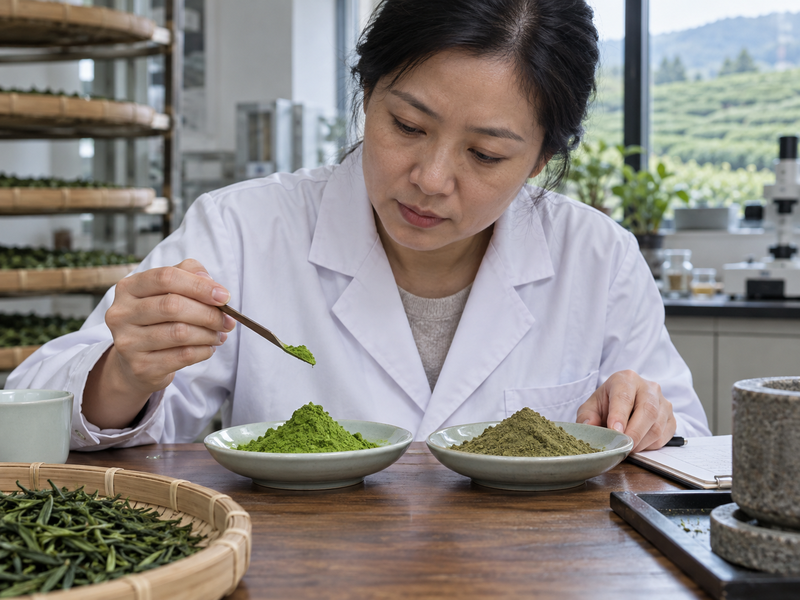
Begin with the leaf, not the photo
Tea leaves contain chlorophyll, which contributes the familiar green appearance of fresh plant tissue. Ground tea carries that color into the powder. Other leaf components and the physical structure of the powder affect how light is reflected, so a shade of green is not a direct numerical readout of chlorophyll. The visible result also depends on illumination and the surface under the sample.
A useful buyer comparison places samples in identical dishes at equal depth under the same neutral light. Photograph them with fixed camera settings or, for tighter control, use a calibrated color measurement method. Do not compare a supplier’s heavily lit marketing image with a dim phone photo from a receiving dock. Color should trigger questions, not settle the purchase. Taste the samples at the same dose and ask how they perform in the application where they will actually be used.
| Observation | Possible explanation | Better check |
|---|---|---|
| Bright dry powder | Leaf and processing differences | Taste and document comparison |
| Dull powder | Age, storage or raw material | Lot history and pack condition |
| Bright photo only | Lighting or editing | Side-by-side physical samples |
| Green drink | Formula and viewing conditions | Standardized recipe trial |
2. How Does Shading Affect the Leaf?
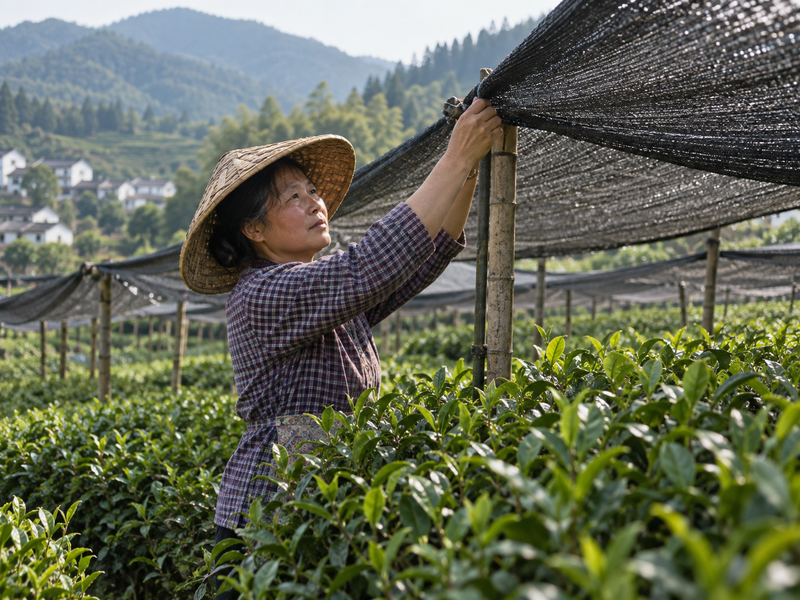
Describe the practice without a universal formula
Matcha production commonly involves shading tea plants before harvest. Reduced light can alter leaf chemistry, including pigments and some flavor-related compounds. A published tea shading study found higher chlorophyll under particular shade treatments in its studied cultivar and conditions. That result supports shading as a relevant factor, but it does not establish one ideal shade percentage or timing for every matcha farm.
Buyers can ask how the supplier defines its shaded-leaf material: farm, shade method, period, harvest and lot separation. A vendor saying only “shade-grown” has provided a process description, not proof that every batch will match a specific green hue. Compare the approved sample with commercial lots and keep records when a season changes. Color can respond to growing conditions, so an absolute visual promise may be difficult to maintain without a realistic tolerance.
3. Does Leaf Selection Change Color?
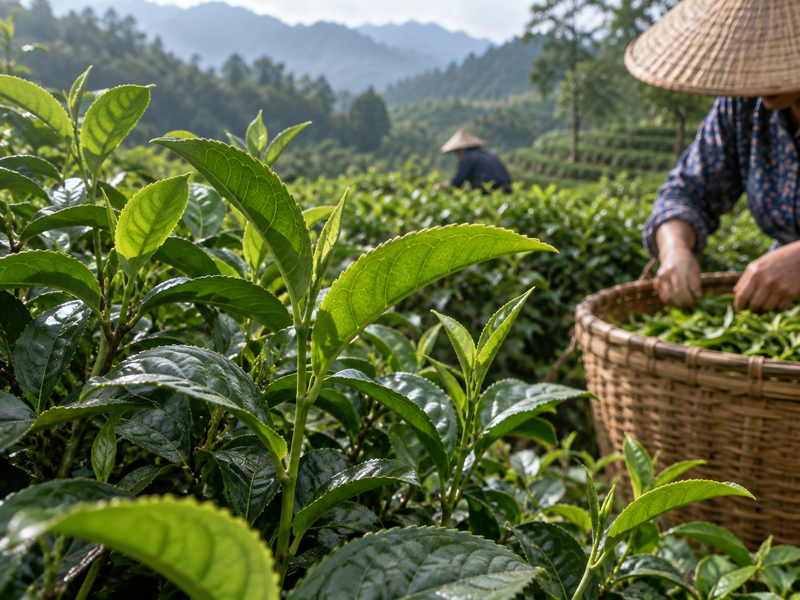
Keep cultivar, season and grade separate
Even within a shaded crop, leaves are not identical. Cultivar, maturity and harvest timing affect the raw material the processor receives. Stems and veins may be handled differently from the tender leaf material used for finely milled tea. A buyer should ask what material enters the mill and how the supplier controls grade. A broad label such as “premium” is less useful than an agreed sample and a clear specification.
Compare lots from the same recipe with similar age and packaging. If one powder is bright but tastes harsh in a water bowl, it may not be a better choice for a premium drinking product. A slightly less vivid powder may fit a bakery application if it remains acceptable after heat and meets the target price. The decision belongs to the final product, not to an isolated color contest. Retain samples so a later production lot can be judged against a physical reference.
| Raw material variable | What to ask | What to compare |
|---|---|---|
| Cultivar | Is it recorded or blended? | Flavor and color across lots |
| Harvest | Which season and picking? | Approved reference sample |
| Leaf selection | What is removed before milling? | Texture and appearance |
| Blend | Can components change? | Batch specification |
4. What Happens to Color During Processing?
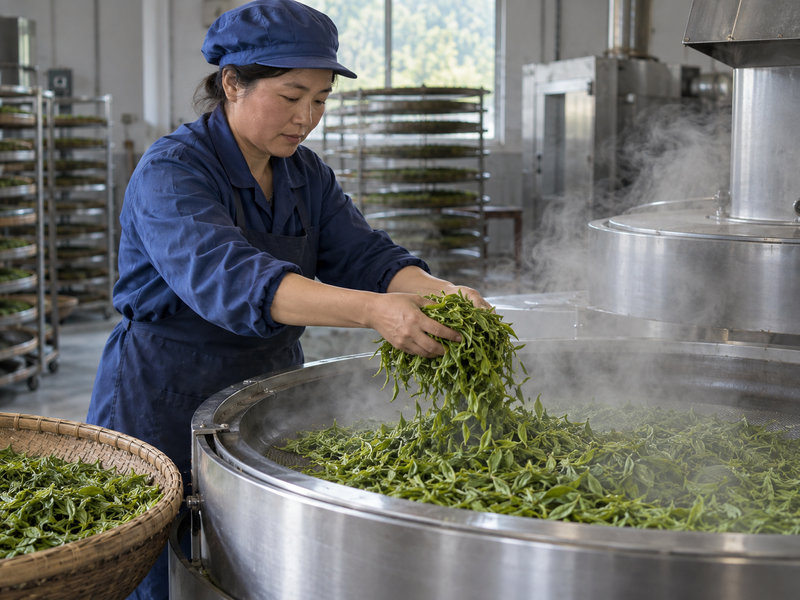
Review the sequence and the controls
After harvest, green tea material is processed to limit unwanted changes and prepare it for drying and milling. Time, temperature, moisture and handling all influence the final powder. A process designed for a different tea style may not produce the same appearance or flavor, even when the harvested leaves began similarly. A supplier should be able to explain its process and the checks used to release finished lots without divulging every proprietary setting.
Processing claims need precision. “Stone ground” says something about a milling method but does not tell the buyer whether the leaves were well selected or protected through distribution. Likewise, bright powder alone does not prove the process was correct. Ask for a flow description, lot traceability, moisture and sensory release criteria. When evaluating a new supplier, sample more than one production lot. A single carefully prepared showcase sample may not represent normal factory output.
5. Can Particle Size Change What the Eye Sees?
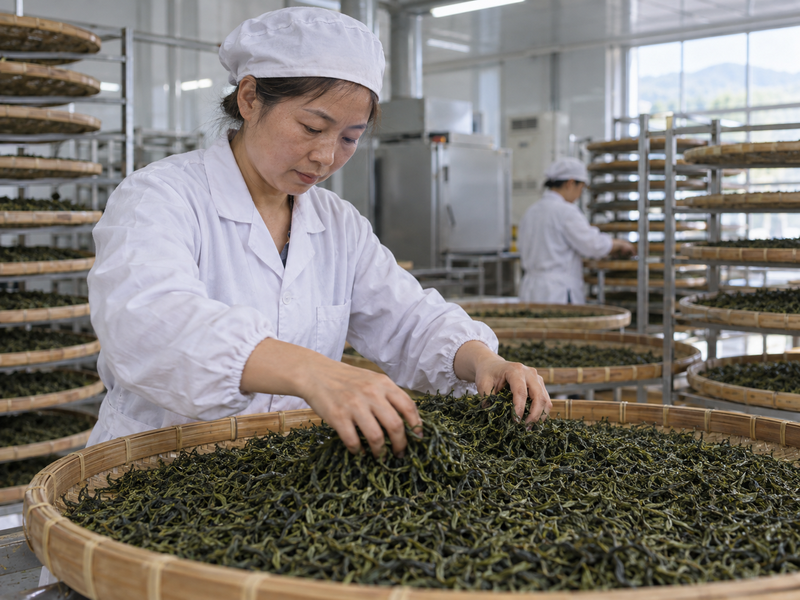
Powder optics are part of the comparison
Milling changes the powder’s particle distribution and surface appearance. A finer powder can look different from a coarser sample even when both came from green tea leaves. It may also disperse differently in water or milk, changing how light passes through the drink. This is one reason a powder photograph cannot substitute for a prepared-cup test. Buyers should assess both dry and wet appearance using the same dose and method.
Ask for a particle-size specification when texture and dispersion matter to the application. A café may care about a smooth bowl; a food manufacturer may care about mixing, sediment or dosing into a batter. If a lot has the expected color but an unusual gritty texture, it has not met the practical requirement. Keep color, texture and formulation performance as separate acceptance criteria so a supplier can diagnose a problem rather than debate a vague judgment such as “not green enough.”
6. Why Does the Drink Look Different From the Powder?
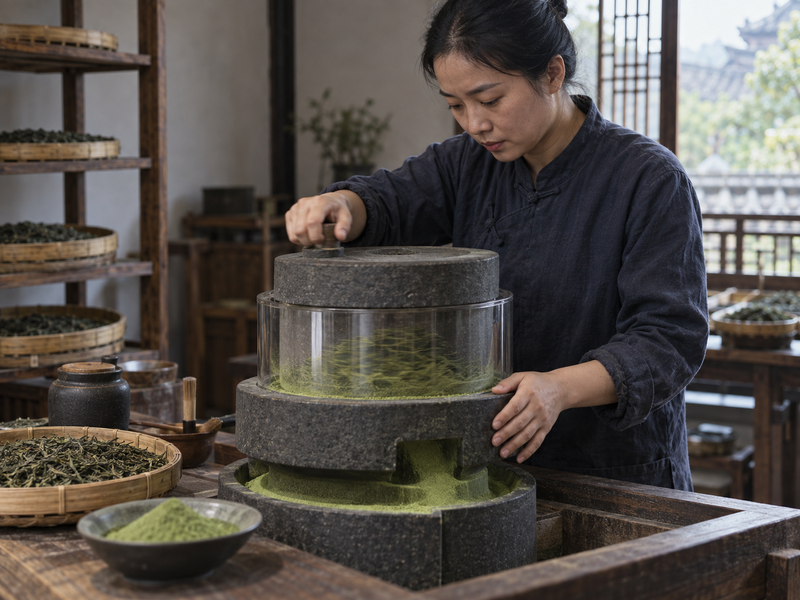
Control the recipe before blaming the leaf
A dry powder is viewed in air. A prepared drink contains suspended particles in water or another liquid, with a different surface and depth. The amount of powder, water volume, cup color and lighting all change the visible shade. Milk makes a pale green drink even when the dry matcha is vivid. A transparent glass and a white ceramic bowl can make the same preparation look unlike itself.
For product trials, standardize powder grams, liquid volume, temperature, mixing time and vessel. Photograph samples together under one light. Note separation after a realistic holding period. If a buyer needs a particular green for a bottled drink, test the complete formula and process; do not infer its shelf appearance from a whisked water bowl. Our matcha drinks guide covers recipe formats where these differences matter.
| Test condition | Hold constant | Record |
|---|---|---|
| Water bowl | Dose, volume, temperature | Initial and later appearance |
| Milk drink | Milk type and ratio | Color and taste |
| Bakery sample | Recipe and bake profile | Crumb and surface color |
| Bottle | Package and light exposure | Stability over time |
7. What Do Heat and Recipe Ingredients Do?
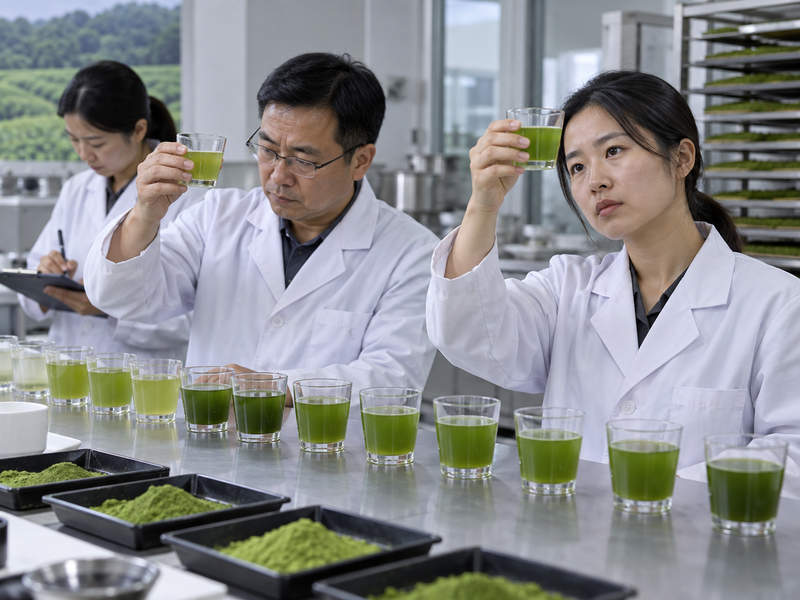
Judge color after the product is made
An attractive powder can become less vivid in a hot bake or a long-held beverage. Temperature, acidity, other ingredients and processing time may change the visible result. Sugar and dairy also alter the color a customer sees by changing the surrounding matrix. A bakery team should evaluate the finished cake after cooling and during its intended display period, rather than approve powder solely from a dry sample.
Do small trials before changing the tea dose to chase a photograph. More powder may make the product greener, but it may also increase bitterness, cost or caffeine. Record the baseline formula, adjust one variable at a time and taste every version. If the product needs a highly stable green under severe processing conditions, matcha alone may not achieve the exact visual target. The brand should decide whether its priority is tea flavor, a particular hue or both, then review any added color ingredients under the rules of its market.
| Trial change | Color question | Other effect to check |
|---|---|---|
| Higher tea dose | Is green deeper? | Bitterness and cost |
| Different milk | Is the shade clearer? | Taste and allergens |
| Shorter heat exposure | Is color retained? | Process adequacy |
| Different package | Does color hold in display? | Shelf-life evidence |
8. How Can Storage Dull Matcha?
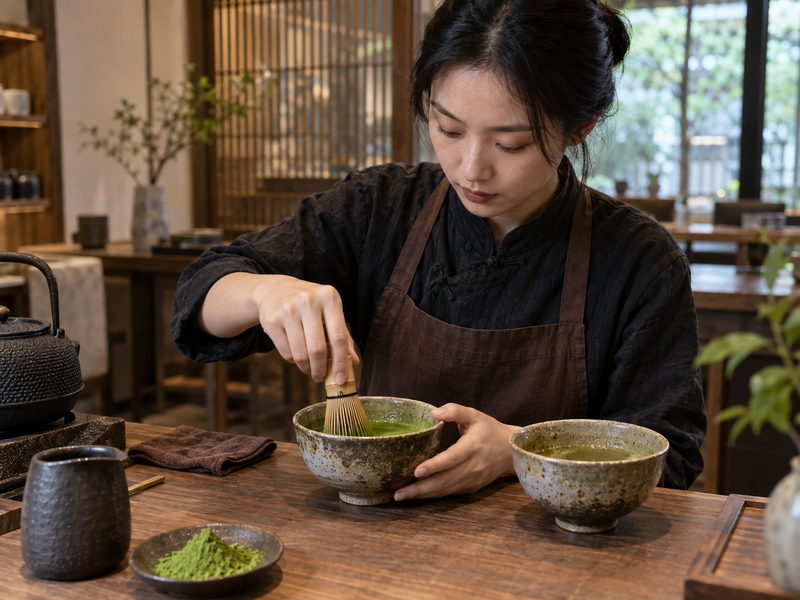
Protect the approved appearance through distribution
Light, oxygen, moisture, heat and time can change the appearance and sensory quality of a fine tea powder. A package that looks attractive on a shelf may offer less protection than an opaque barrier pouch. The pack material, seal and closure all matter. Ask how the supplier stores finished powder before shipment and how it verifies pack integrity. A good incoming sample can deteriorate if it sits in a warm, bright warehouse.
At receiving, compare the lot with an approved retained sample of similar age under standardized light. Check for damaged seals or moisture before drawing conclusions about the tea itself. Record the manufacture or pack date and follow the product-specific storage instructions. Once opened, control exposure during service by closing the pack promptly and using a suitable container. Our matcha storage guide addresses the practical handling steps in more detail.
| Risk | Visible clue | Practical control |
|---|---|---|
| Light exposure | Fading over display | Opaque pack |
| Moisture entry | Clumping or uneven color | Intact seal and dry handling |
| Heat | Faster sensory decline | Controlled storage |
| Long open use | Drift from reference | Smaller service packs |
9. How Should Buyers Compare Color?
Use a repeatable protocol
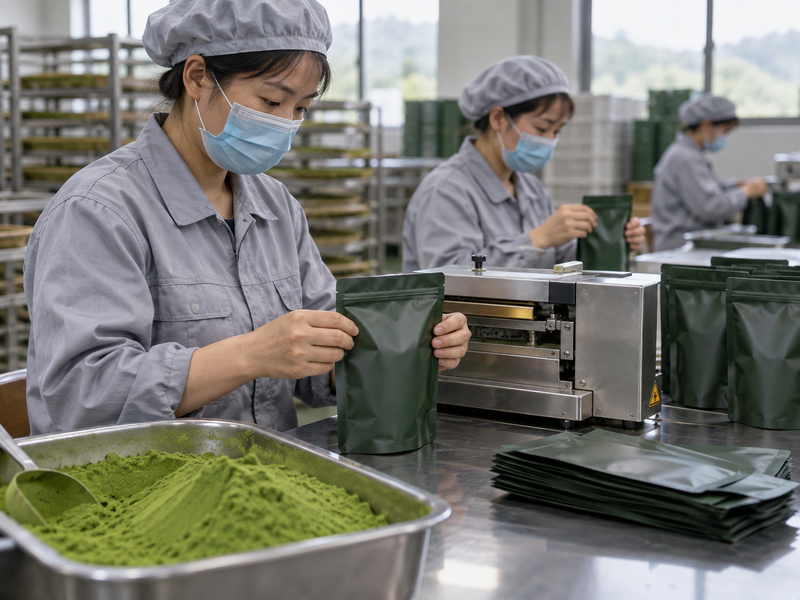
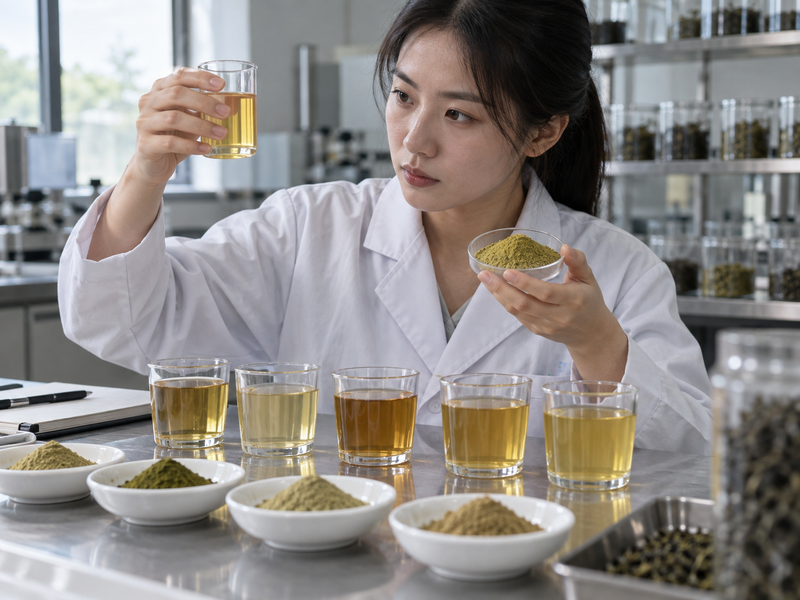
Create a simple bench protocol before inviting bids. Use equal powder weights in identical white dishes and the same illumination. Prepare water and target-application samples at a fixed recipe. Capture photographs with a neutral reference or use an instrument if the buying volume justifies it. Record the sample date, lot, package age and the time between preparation and assessment. Have more than one trained person review sensory attributes.
Do not let camera saturation replace actual sampling. Digital images can help communicate a concern, but exposure and screen settings vary. If the color target is contractual, specify the measurement method and acceptable range, not just an adjective such as “emerald.” Pair that range with taste, aroma, texture and microbiological or chemical specifications as relevant. A powder can satisfy a color number while failing the customer’s drink, and the reverse can also happen.
10. When Should Color Be a Purchase Specification?
Define a limit only if it serves the product
Color deserves a formal specification when it affects brand consistency or a validated product design. A chain selling a clear iced drink may need a narrower visual range than a bakery using matcha inside a dark chocolate product. Even then, the specification should be tied to a preparation method. “Green powder” without viewing conditions is too subjective for resolving a disputed shipment.
Start with several commercially representative lots and a reference sample. Determine what variation customers actually notice in the finished product, then agree on a tolerance the supplier can meet. If the raw material is seasonal, discuss how a blend can maintain consistency and how substitutions will be approved. Matcha Village describes manufacturing and private-label services in its materials; a buyer should still request lot-level samples and process records. A useful specification makes color measurable without pretending that hue alone defines good matcha.
Frequently Asked Questions
Q1. Is bright green matcha always better?
No. Brightness may be desirable, but taste, aroma, texture, safety records and performance in the finished recipe also matter. Compare physical samples under consistent conditions.
Q2. Does shading cause the green color?
The leaves contain green pigments, and shading can influence their composition. The outcome depends on cultivar, growing conditions and processing, so one shading schedule is not universal.
Q3. Why is my matcha latte pale green?
Milk dilutes and changes the appearance of suspended matcha. Powder dose, cup size and lighting also affect the shade. Check the recipe before rejecting the powder.
Q4. Can a photo prove that a lot meets a color specification?
Usually not by itself. Lighting, camera and screen settings can distort appearance. Use standardized physical sampling or an agreed measurement method.
Q5. Why did a once-green powder become dull?
Age, light, heat, moisture or pack damage may contribute. Check the lot history and package condition and compare it with a retained sample before drawing a conclusion.