
Matcha drinks can look simple on a menu and still create expensive problems behind the bar: slow mixing, uneven color, too much sweetness, or a different flavor at each location. A recipe list does not solve those problems by itself. Beverage teams need to decide which formats fit their customers, then set powder, dose, liquid and preparation standards that staff can repeat.
Contents: Portfolio · Powder · Base · Hot · Cold · Acid · Frozen · RTD · Cost · Pilot
1. Which Matcha Drinks Belong in a Product Range?
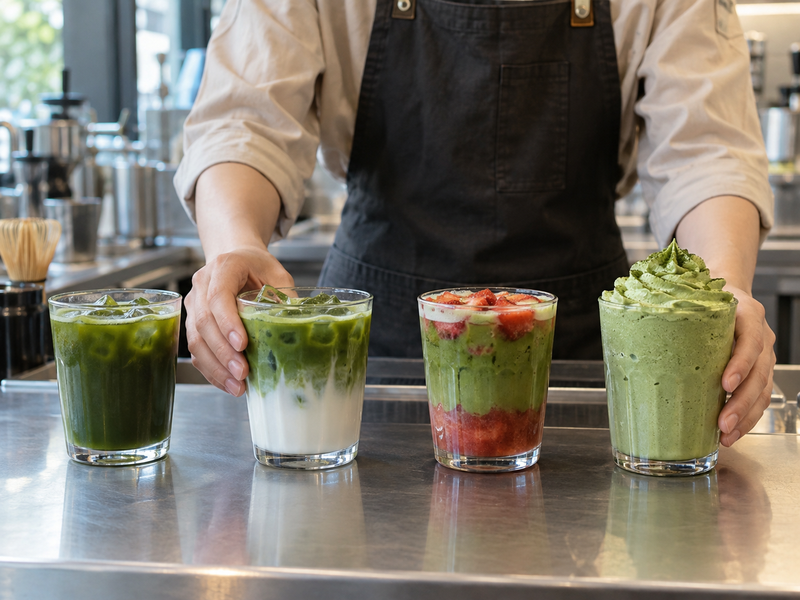
Start with a small set of distinct jobs
A café does not need six green drinks that differ only by syrup. A useful starting portfolio might include a plain matcha for customers who want to taste the tea, one milk-based drink, one cold seasonal option and one non-dairy or low-sweetness choice. The exact mix depends on the existing menu, equipment and customer demand. A bottled beverage brand has different constraints: distribution, shelf life, package claims and production equipment may matter more than bar speed.
Write down the job of each proposed drink before developing the recipe. Is it an alternative to coffee, a dessert-style purchase, a breakfast drink or a premium tea experience? That answer guides powder selection and acceptable sweetness. A delicate powder may justify a premium plain serving. A stronger tea profile is often easier to detect under milk or fruit. A menu with clear differences makes inventory and staff training simpler, while giving customers a reason to choose one format over another.
Test demand with a limited menu before printing a large range. Count repeat purchases and waste, not only launch-week social photos. If a drink needs an extra preparation station for few sales, its margin may be weaker than the menu price suggests.
| Format | Customer expectation | Main operational constraint |
|---|---|---|
| Plain matcha | Clear tea aroma | Consistent water and whisking |
| Milk drink | Balanced tea and milk | Powder still perceptible |
| Fruit drink | Refreshing flavor | Acidity and color stability |
| Frozen drink | Smooth dessert texture | Clumps and ice dilution |
2. How Should a Brand Choose Matcha for Each Format?
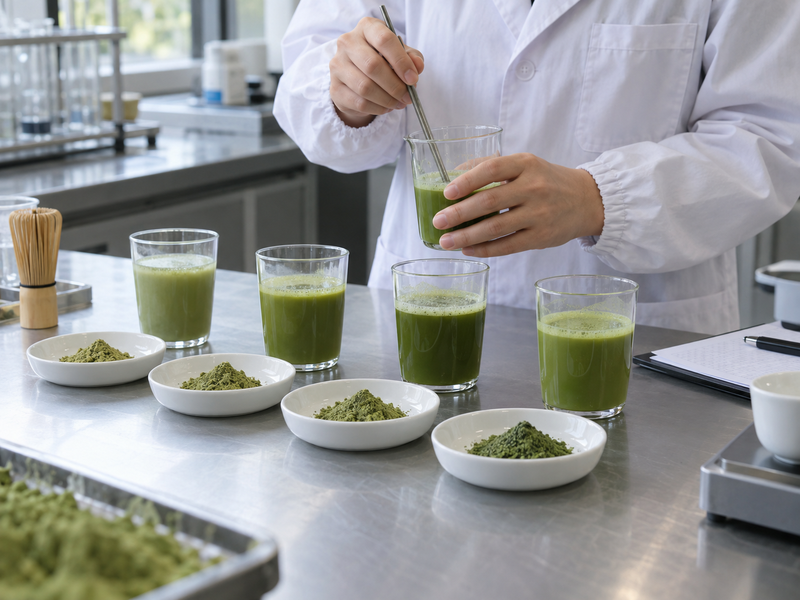
Screen powder in the finished recipe
The most expensive powder on a supplier list is not automatically the best ingredient for every drink. Begin with a plain-water tasting to understand aroma, bitterness and texture. Then prepare each intended beverage with the same powder weight and liquid volume. Milk, sweetener, citrus and ice can change what tasters notice. Some attractive dry powders settle quickly in a cold formula; some assertive powders become pleasantly balanced with milk. Record both the raw tea impression and the finished drink result.
Ask for a specification, lot identification and a representative sample. Matcha Village describes multiple bulk and OEM matcha formats in its company material, but any supplier should be assessed by the exact material it can deliver. Request more than one production lot if repeatability is critical. A café chain should also test the powder with its real water supply and milk brands. A formula that works in a development kitchen may change when service moves to another location.
Choose a measurable target: color in the actual cup, tea presence after the usual sweetener, mixing time and cost per serving. Avoid buying a grade term alone. If a lower-priced powder needs a much higher dose, calculate that dose before comparing quotes.
3. What Is the Most Reliable Way to Make a Matcha Base?
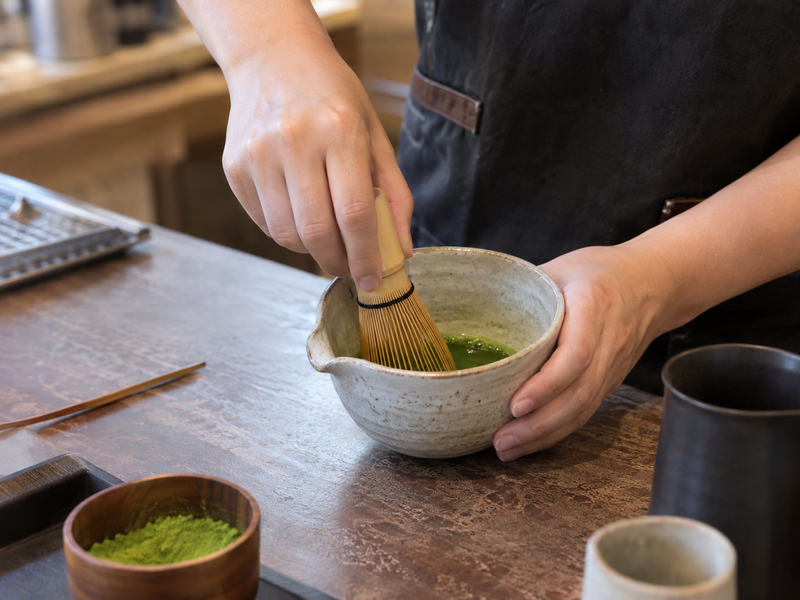
Control powder, water and mixing before flavor additions
A concentrated matcha base can make service faster, but only when the preparation method is fixed. Weigh the powder, measure the water and define the temperature range used for mixing. Sift powder when the selected grade clumps easily, then whisk or mix until no dry pockets remain. Add milk, ice or flavor after the powder has dispersed. Dumping dry powder directly into a large cold cup often creates floating islands and inconsistent drinks.
Decide whether staff will make each serving individually or prepare a small batch for a short service window. Individual mixing offers fresher presentation but takes time. A batch base can help busy bars, yet it needs a use window, covered storage and regular mixing because particles can settle. Validate those controls in a peak-hour trial. If the recipe is made with sugar or other ingredients, update the holding procedure and food-safety review for the complete mixture rather than assuming plain tea rules apply.
| Variable | Record in the recipe | Why it matters |
|---|---|---|
| Powder | Weight and lot | Tea strength and cost |
| Water | Volume and temperature | Mixing and taste |
| Tool | Whisk, mixer or shaker | Texture and speed |
| Time | Preparation and holding | Consistency through service |
4. How Can Hot Drinks Stay Consistent?
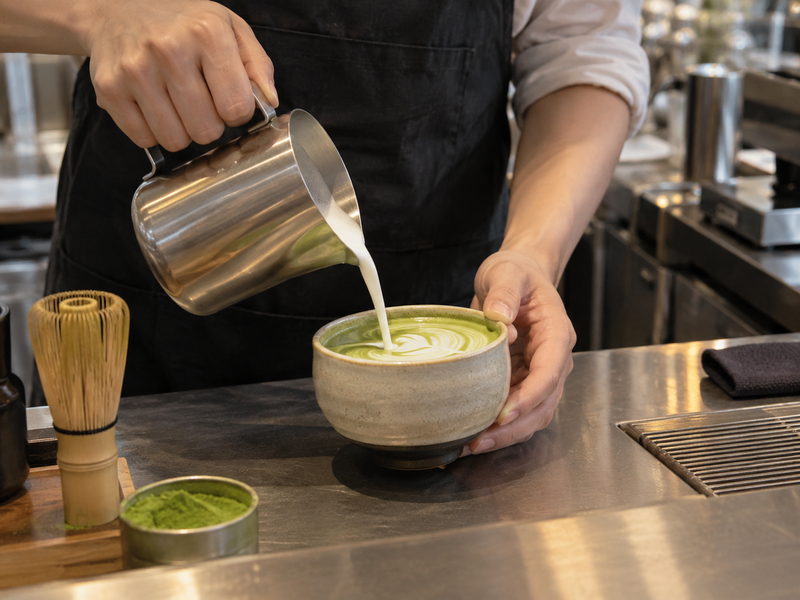
Design the cup around a reproducible sequence
For a hot milk drink, prepare the matcha base first, then add warmed milk at a specified volume and temperature. The bar should know whether foam is required and how much sweetener belongs in the standard cup. Staff should not make up a different dose to compensate for an old powder or a larger cup. If customers choose alternate milks, test those options: sweetness, fat content and foam can change how much tea the drink appears to contain.
A hot plain matcha offers a useful quality reference. It exposes coarse texture, bitterness and stale aroma that milk may hide. Train staff to use a consistent bowl or vessel and a clean tool. Extreme heat may emphasize harsh notes, while cooler preparation can taste weak if the powder dose is not adjusted thoughtfully. The useful range is the one your powder supplier recommends and your tasting panel approves. Put it in the recipe card, then audit actual practice at the bar.
When a customer requests less sweetness, the tea should still taste intentional. If the base only works with a large syrup dose, reconsider the powder or formula. A resilient recipe accommodates ordinary customization without becoming a different product.
5. What Changes When a Drink Is Served Cold?
Account for ice, dilution and slower dispersion
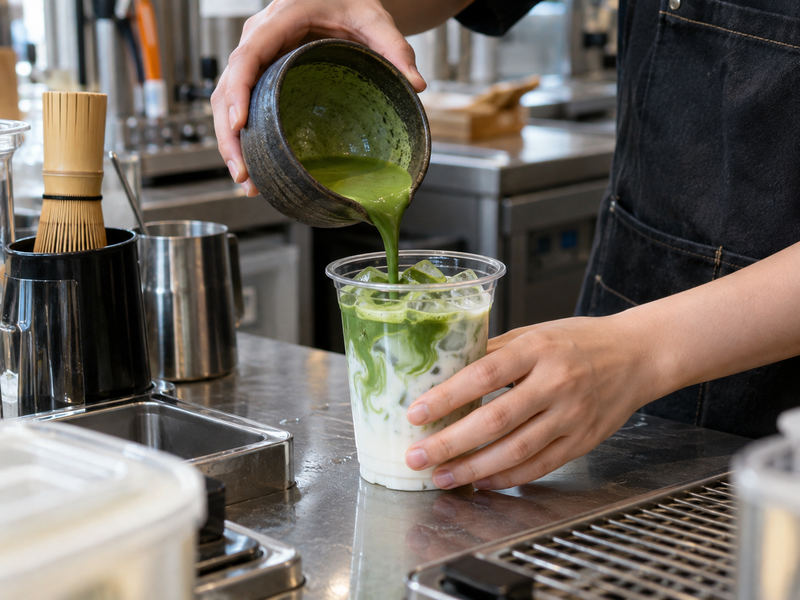
Cold liquids make fine powder harder to disperse without a deliberate mixing step. Use a small, smooth base before adding chilled milk or water. Choose ice amount and cup fill level together; otherwise two baristas may make very different drinks while following the same powder dose. Taste immediately and after the time a customer might spend carrying the cup. Notice whether green powder collects at the bottom, whether the flavor fades with ice melt, and whether the drink becomes too sweet as it warms.
For a layered visual, decide whether the appearance survives normal service. A striking separation may look good for thirty seconds and then leave a concentrated tea band. If the intended drink is meant to be mixed, tell staff and customers. A product photograph should represent how it is served, not an unstable setup arranged only for the camera. An opaque takeaway cup also changes the value of visual layering; in that setting, flavor and mixing speed may matter more.
| Cold-service issue | Simple test | Possible adjustment |
|---|---|---|
| Dry clumps | Inspect first sip and cup wall | Make a smooth base first |
| Excess dilution | Taste after ten minutes | Adjust ice and liquid volumes |
| Settling | Inspect the cup during service | Mix before handoff |
| Weak tea flavor | Taste with standard sweetener | Review powder grade or dose |
6. Can Matcha Work With Fruit and Acid?
Treat flavor pairing and stability as separate questions
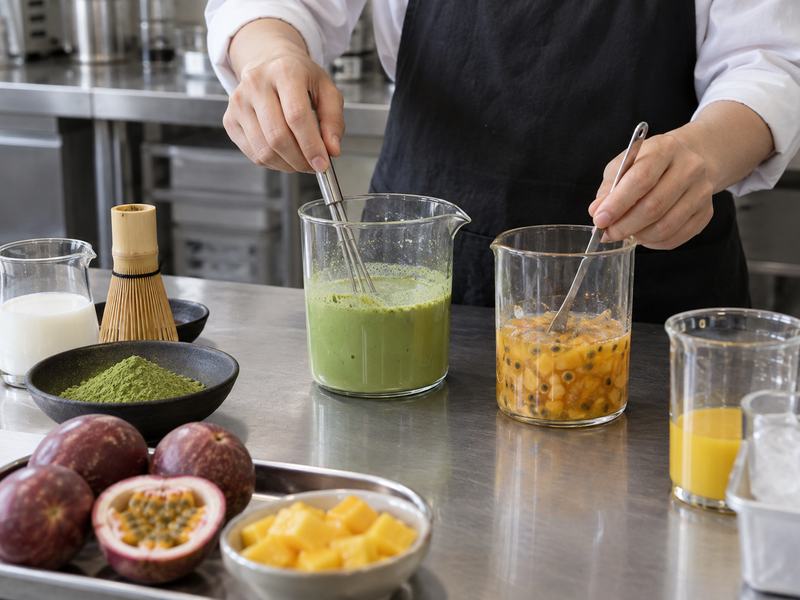
Fruit can make a matcha drink appealing, but a good flavor pairing does not guarantee a stable product. Citrus and other acidic ingredients may change color and make tea notes seem sharper. Sweet fruit purées can mask bitterness while adding enough sugar to change the nutrition panel and menu promise. Test each combination at the planned dose, temperature and service window. A fruit layer and a premixed beverage may behave differently even with the same ingredients.
Begin with a short list of flavors that complement the tea rather than overpower it. Prepare blinded comparisons against a simple matcha base. Ask tasters what they can still identify as tea. If the answer is “only the color,” consider whether matcha is the right ingredient at that cost. For bottled products, involve a qualified food technologist in acidity, processing and shelf-life decisions. A café trial cannot establish microbiological safety or long-term color performance for a ready-to-drink product.
Keep the ingredient statement accurate. Natural-looking green color in a photo should not imply that a formulation contains only tea when syrup, fruit preparation or colorants are present.
7. What Should Be Tested in Blended Drinks?
Look beyond the first sip
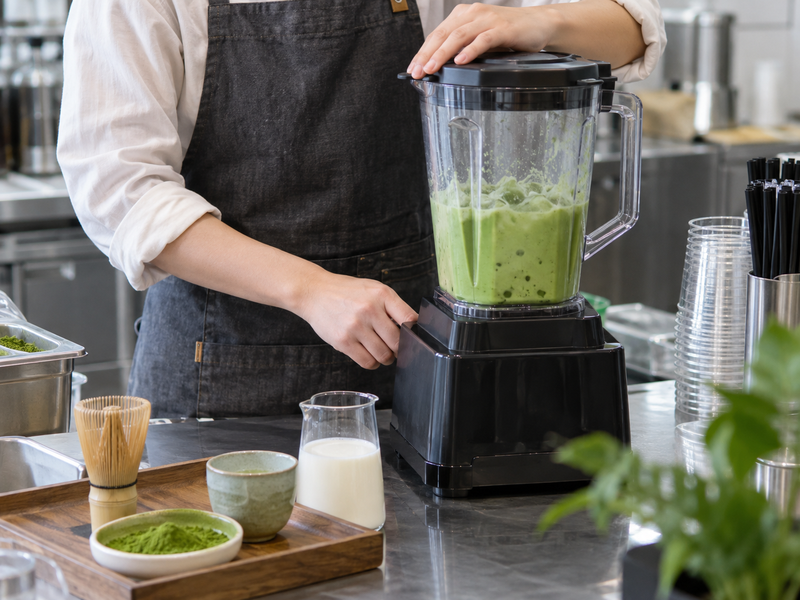
Ice-heavy or blended drinks can hide powder defects at first, then reveal them as the ice melts. Standardize the ice weight, liquid base, blending time and final cup size. Check whether the matcha forms fine green specks, a smooth mixture or gritty deposits. Taste after a short wait. A formula that is balanced when very cold may become overly sweet or thin as the drink warms. These checks matter for delivery and takeaway orders, where consumption is delayed.
Equipment changes can alter texture. A high-powered blender in the development kitchen may disperse powder better than the machines used in stores. Test with actual operating equipment, including the number of drinks made in sequence during a rush. If the powder needs an extra pre-mixing step, account for that labor in the recipe and training. A good specification explains the desired texture and repeatable method; it does not rely on one skilled developer making every drink.
Do not use a frozen drink as proof that a powder works in plain tea. Each format should earn its place with its own sensory test.
8. What Is Different About Ready-to-Drink Products?
Move from bar recipe to controlled production
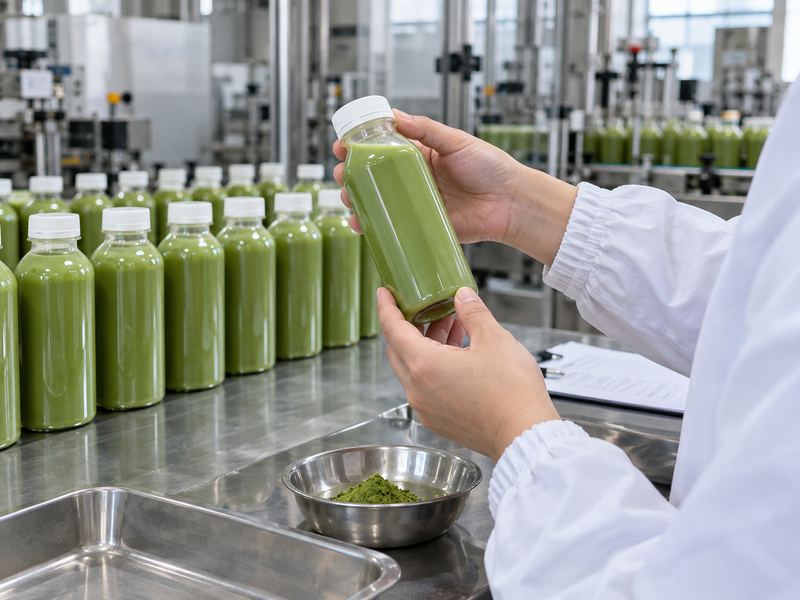
A bottled or canned matcha drink needs a formula suited to its processing method, package and distribution route. Settling, color change, flavor drift and food safety must be assessed over the intended shelf life. Milk or plant-based ingredients introduce their own requirements. A café recipe poured into a bottle is only a prototype; it is not a commercial process. Engage a qualified manufacturer or food technologist to choose processing conditions and validate safety for the finished product.
Request a small production pilot using the exact matcha lot or approved specification. Evaluate samples at the start and end of the intended shelf life under realistic distribution conditions. Keep sensory and analytical results together. If the product claims a particular amount of tea or caffeine, verify that the finished beverage and label support the statement. The supplier’s powder certificate can help, but the finished formulation still needs its own review.
| RTD question | Evidence needed | Decision owner |
|---|---|---|
| Will particles settle? | Stability trial in final pack | Formulation team |
| Does color hold? | Time and light exposure checks | Quality team |
| Is the process safe? | Validated food-safety plan | Qualified manufacturer |
| Does the label fit? | Finished-product analysis | Regulatory reviewer |
9. How Do You Price a Matcha Drink Honestly?
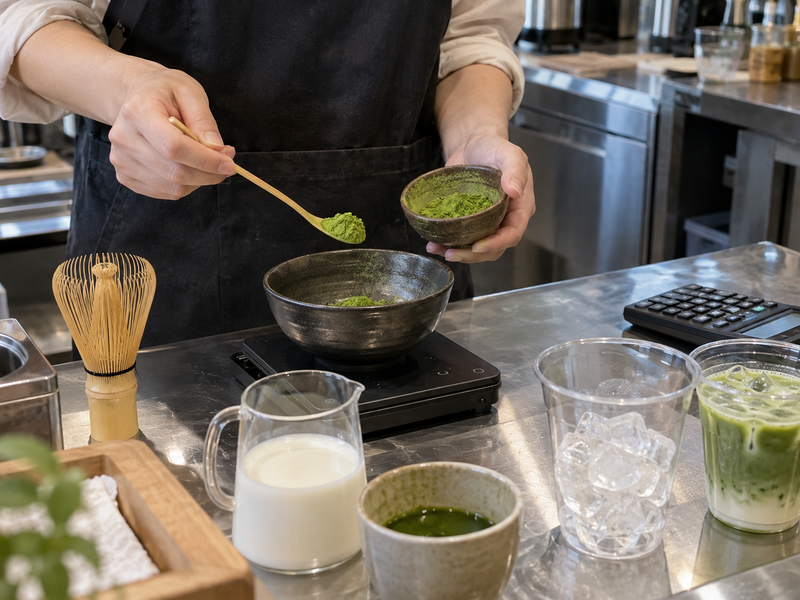
Use the full recipe and service cost
Cost per serving begins with powder weight and price, but the cup also contains milk or water, sweetener, ice, packaging and labor. Waste from poor mixing or an oversized open pack belongs in the calculation. Test whether a higher-grade powder allows a lower dose or a simpler recipe. Then check whether customers perceive enough difference to support the price. A green color alone is a weak reason for a premium if the tea flavor is absent.
Consider the price ladder across the whole menu. A plain tea may have a different gross margin from a dessert-style drink because equipment, milk and preparation time differ. A bottled format adds manufacturing, freight and retail margin. Keep the internal recipe card precise while making the customer menu easy to read. If the brand mentions origin, organic status or health benefits, verify the claim separately; a high menu price does not make a claim true.
| Cost item | Typical unit | Common omission |
|---|---|---|
| Matcha powder | Grams per cup | Variability in scoop size |
| Other ingredients | Milliliters or grams | Customization and waste |
| Packaging | Cup, lid, bottle | Takeaway upgrades |
| Labor | Preparation time | Extra mixing step |
10. How Should a Team Launch and Review the Range?
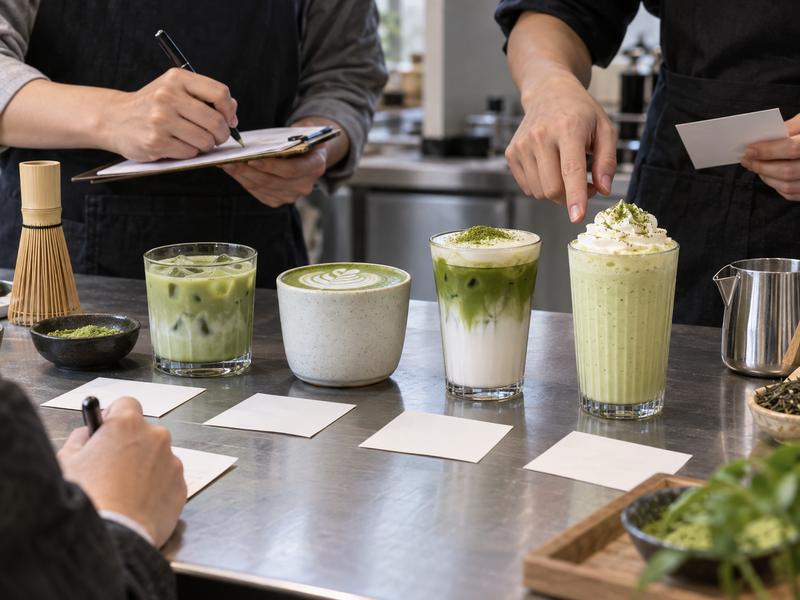
Pilot one location or one production run first
Choose a small set of drinks, write exact recipes, train staff and run a controlled launch. Keep the same powder lot while comparing formats. Record preparation time, remake rate, customer feedback, repeat sales and actual ingredient use. Ask staff where the instructions fail during peak periods. A drink that requires perfect execution in a quiet test kitchen may fail during the morning rush. Revise the method before a chain-wide rollout.
Set a procedure for replacing a matcha lot. Keep an approved sample and test the next delivery in at least the most sensitive drink, often plain tea, and the highest-volume milk formula. Update recipe cards if the powder changes materially. Matcha Village’s product range includes matcha, latte and blended applications; use that as a starting point for supplier questions, then demand evidence from the actual powder and final formula you will buy.
The menu review should also remove weak performers. A shorter set of distinct, repeatable matcha drinks is easier to execute and more credible than a long menu built from tiny syrup variations.
FAQ
Q1. Can the same matcha powder serve every drink?
Sometimes. Test one powder in plain tea, milk, fruit and frozen formats before standardizing. A single stock item simplifies purchasing, but the result must still meet each drink’s target.
Q2. Why does matcha clump in a cold drink?
Dry powder can resist immediate wetting in cold liquid. Make a small smooth base with measured water before adding the main liquid, then check the final drink for residue.
Q3. How should a café choose matcha dose?
Start with a weighed development recipe, taste it in the final cup, and calculate cost per serving. Train staff to use the same measuring method rather than relying on a casual scoop.
Q4. Can a café recipe be bottled for sale?
It can be a starting prototype. Commercial packaging needs a validated process, finished-product safety review, stability testing and suitable label claims.
Q5. What should a pilot report include?
Record sales, repeat orders, preparation time, remakes, waste, staff comments and lot information. Those figures show whether the drink works beyond a tasting session.
For a consumer-oriented range of ideas, see Chamberlain Coffee’s matcha drink examples. For ingredient procurement, see our bulk matcha guide. A commercial launch should use tested recipes and verified supplier records.