
A matcha yogurt parfait may look excellent when assembled and disappointing after an hour in the case. Granola absorbs moisture, fruit releases juice, and poorly mixed matcha leaves dark specks in the yogurt. The café version needs a layer plan, measured portions, and a display trial under the shop’s handling procedure. Start with the cup at purchase time, not the cup just made. Our matcha cake guide describes the same discipline for baked products: judge matcha in the finished item.
Contents
- 1. What should the customer find in the cup?
- 2. Which yogurt makes a reliable base?
- 3. How do you mix matcha without specks?
- 4. How sweet should the yogurt layer be?
- 5. Which fruit belongs in a display cup?
- 6. Where should granola or crunch go?
- 7. How should the cup be layered?
- 8. What handling plan does the case need?
- 9. What does one saleable parfait cost?
- 10. How can staff repeat the build?
1. What should the customer find in the cup?
Define the eating experience
Set the cup size and target proportions before choosing a dramatic layer pattern. The customer should get matcha yogurt, fruit, and any crunch in more than one spoonful, not a large plain-yogurt base beneath a decorative green stripe. Decide whether the parfait is a breakfast item, a lighter dessert, or a packaged snack. Each use suggests a different portion, price, and sweetness. Photograph a passing cup from the side and from above, then taste it with the spoon and lid intended for service.
Compare the first and last bites. A cup that starts with dry granola and ends with watery fruit has poor balance even when its total ingredient masses are correct. The Matcha.com home parfait combines yogurt, matcha, fruit, and granola, which is a useful format reference; its nutrition and energy language should not be transferred to a café product. Write your own product standard from the finished cup and the time it will spend in the case.
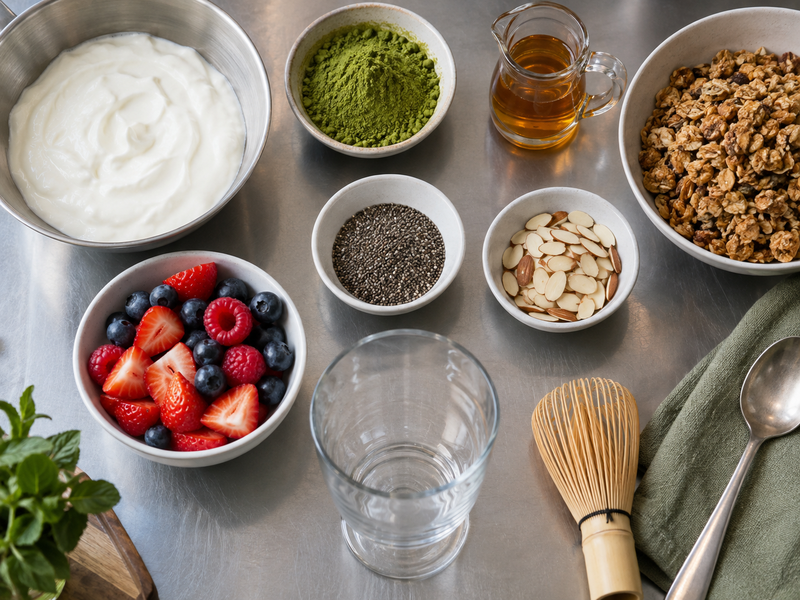
2. Which yogurt makes a reliable base?
Test the exact product and temperature
Yogurts vary in thickness, acidity, sweetness, and how they release liquid during holding. Compare candidate products at the same mass in the saleable cup. Fold in the same matcha dose, then observe whether the layer remains distinct above fruit. A thick product may look stable but taste too tart; a sweetened one may leave little room to control the flavor. Record the brand, version, and ingredient statement rather than writing only “Greek yogurt” on the recipe card.
If a plant-based option is proposed, test it separately. Its viscosity and flavor may behave differently, and a simple substitution can turn the cup runny or overly sweet. Check the product’s handling instructions and the site’s allergen process. An “alternative” label does not establish freedom from cross-contact in a shared prep area. The chosen yogurt should support both the eating experience and a prep routine staff can follow at speed. A supplier change is a reason for a short side-by-side cup test.
| Base trial | Taste check | Hold check |
|---|---|---|
| Plain thick yogurt | Acidity against matcha | Layer definition |
| Sweetened yogurt | Total sweetness | Liquid separation |
| Plant-based product | Flavor fit | Texture in finished cup |
3. How do you mix matcha without specks?
Build a small smooth premix
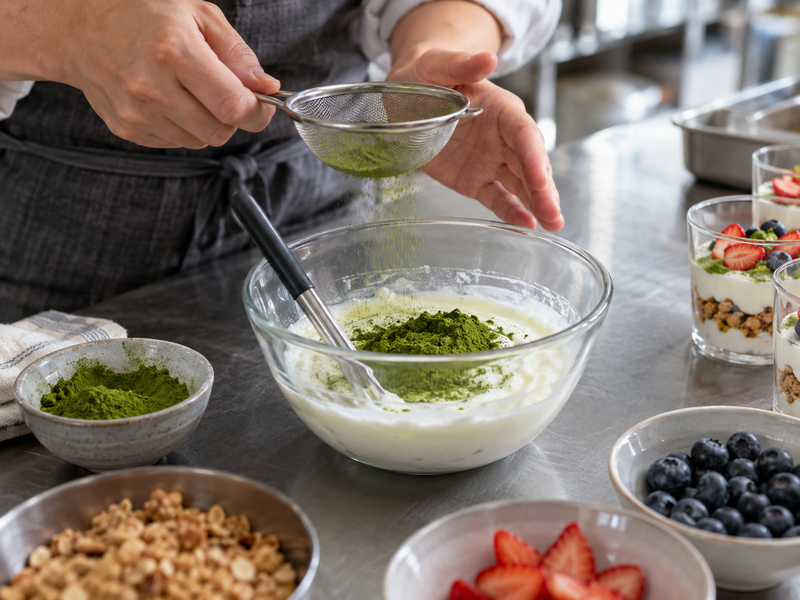
Weigh the matcha for a known yogurt batch. Passing it through a clean dry sieve can break visible clumps before mixing. Rather than dumping powder over a full container, blend it into a small portion of yogurt and fold that smooth premix into the remainder. Compare the result with your usual mixer or whisk. The target is a uniform green layer without pockets of dry tea. Scrape the vessel sides and check a spoonful from the bottom before portioning.
Matcha should be selected in the intended yogurt, not only in water. A delicate powder can disappear beneath a tart base; another may become harsh at a higher dose. Test several weighed doses while keeping yogurt and sweetener fixed. Record grams of matcha per batch and per cup. If using a sweetened matcha blend, its sugar and other ingredients alter the whole formula. Do not substitute its total mass for pure matcha mass or assume the same caffeine contribution. Keep the approved product and lot with the trial record.
4. How sweet should the yogurt layer be?
Taste sweetness across the entire cup
Fruit, sweetened yogurt, granola, and a syrup drizzle can each contribute sweetness. Evaluate the full cup before adding another sweetener to the matcha layer. Make a plain-yogurt control, then add syrup or honey in measured changes while keeping fruit and crunch constant. Taste again after chilling, because the balance at the mixer may not match the cup sold later. A greener, less sweet yogurt layer can give the fruit a clearer role.
Write the sweetener as a measured ingredient. “Drizzle to taste” can create wide variation in cost and menu expectations. If the shop offers a less-sweet option, specify what changes and whether the base yogurt or granola is already sweetened. Menu copy should say “no added syrup” only when that accurately describes the assembled product. Track any substitution in the ingredient record. The goal is a repeatable matcha and fruit balance, not a uniform sweetness level borrowed from another café.
| Source of sweetness | Check on label | Recipe decision |
|---|---|---|
| Yogurt | Added sugar | Plain or sweetened base |
| Fruit | Ripeness and syrup | Fresh or prepared portion |
| Granola | Coating or inclusions | Standard weighed topping |
5. Which fruit belongs in a display cup?
Test color, juice, and portionability
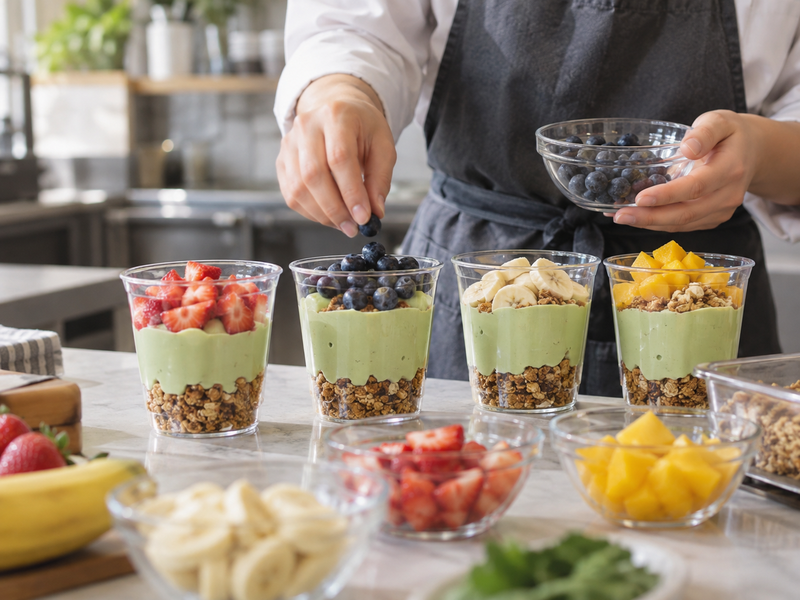
Fruit choice affects more than color. Cut berries can release juice into yogurt; banana can change appearance after cutting; frozen fruit can bring extra liquid as it thaws. Build identical cups with candidate fruits and observe them at preparation, mid-display, and the planned end of sale. Note whether the matcha layer is still visible and whether the fruit tastes fresh in the complete spoonful. Record the actual prepared fruit mass, not only the purchased weight.
Use a portion that staff can deliver consistently. A large strawberry sliced by one employee and three small berries used by another can change both cost and appearance. Define cut size or a weighed mix. Wash and handle produce under the site’s food-safety procedure, and keep the fruit at the appropriate temperature for the complete parfait. If seasonal availability changes, approve an alternate fruit through the same cup test rather than replacing it silently. This protects the menu promise and the quality window.
6. Where should granola or crunch go?
Measure the loss of crispness
Granola buried between wet yogurt and fruit may soften before a customer opens the cup. Place it at the top, in a sealed side compartment, or in a protected layer and compare. Use the same granola mass and planned display interval in each trial. Taste the crunch after the lid has been on, because condensation and moisture transfer can change it even when the layer looked crisp at assembly. The preferred placement depends on the package and how the guest will eat the parfait.
Side compartments can preserve texture but add packaging cost and a second action for staff or the customer. A top layer may look attractive but spill when the lid opens. Choose the simplest arrangement that passes a real handling test. Granola ingredients may include nuts, wheat, or other allergens, so the exact product belongs in the ingredient record. If the supplier changes the granola, check both labeling and crunch under the same hold conditions before treating it as an equal substitute.
| Crunch position | Advantage | Trial risk |
|---|---|---|
| Between wet layers | Attractive stripes | Early softening |
| On top | Easy assembly | Condensation or spill |
| Separate cup | Protects crunch | Added cost and waste |
7. How should the cup be layered?
Build for both appearance and spoon access
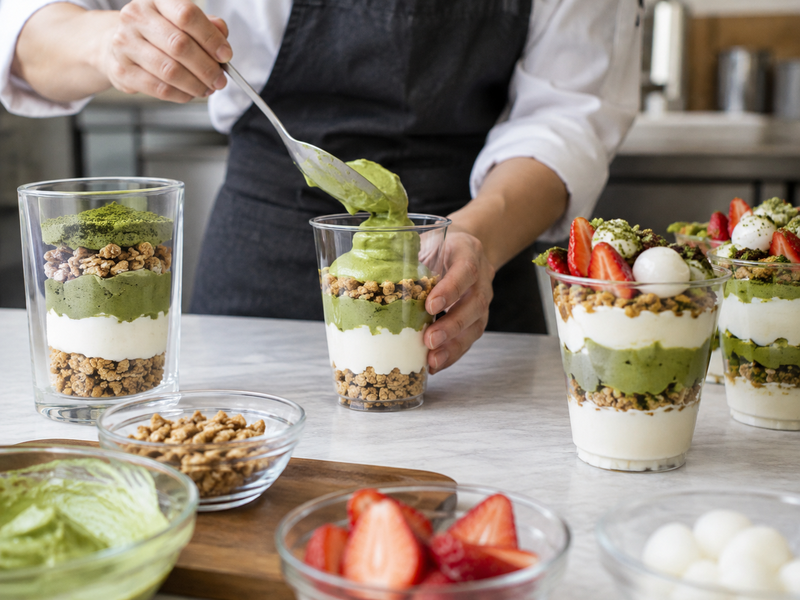
Draw a simple cross-section with grams assigned to each layer. Put enough yogurt in the bottom to anchor fruit, but avoid a deep plain layer that makes the first bite unbalanced. Use the clear cup planned for sale; a narrow base and wide top can make equal masses look very different from a straight-sided trial vessel. Weigh the first several cups and mark practical fill lines for staff. Check how the lid meets the topping and whether it smears the green layer.
The best visual may require fewer layers than a promotional photograph. Every extra layer adds scooping time and another chance for fruit juice to streak the yogurt. Assemble several cups in sequence and note how much ingredient remains in containers after the planned yield. A layout that looks good only in the first cup of a batch is not a production standard. Train to a passing finished cup, then give staff a defined response when a layer is missing or the cup is overfilled.
8. What handling plan does the case need?
Separate quality observations from safety rules
This is a perishable assembled food. Have the site’s food-safety lead set receiving, preparation, chilled storage, display, labeling, and discard procedures under local requirements and the ingredients used. The FDA Food Code is a US model reference, not a substitute for the rules governing an individual café. Do not use a visually attractive cup as evidence that it remains safe for a particular number of hours.
Run a quality trial within the approved handling plan. At several planned observation points, assess separation, fruit juice, granola texture, lid condensation, and flavor. Record batch time and formula version so a weak cup can be traced. A display window may need to be shorter than a food-safety limit because texture fails first. Decide whether cups are assembled to order, in small batches, or before opening based on both quality and staffing. This decision also affects waste and cost.
| Observation | Record | Action if quality fails |
|---|---|---|
| Yogurt separation | Layer and time | Change base or batch size |
| Fruit juice | Fruit and cut | Rework fruit layer |
| Granola softening | Placement and pack | Move topping or separate |
9. What does one saleable parfait cost?
Cost the cup, lid, and loss
Sum the portion costs of yogurt, matcha, fruit, granola, sweetener, and any garnish. Add cup, lid, label, and a realistic allowance for trimmed fruit and unsold cups. Divide by cups that meet the standard at sale, not merely those assembled in the morning. A small increase in fruit portion or a premium separate granola container can move cost more than the tea dose. Use current purchase prices and the prepared yield of fruit after trimming.
Compare assembly time between versions. A five-layer cup may look distinctive but slow a breakfast line or encourage inconsistent portions. Watch several employees build cups with the same sheet. If their finished weights vary, improve the scoop or fill guide before changing menu price. Recalculate when the yogurt brand, cup size, or fruit season changes. Costing should describe the actual cold-case product customers buy, including the waste generated by its display plan.
10. How can staff repeat the build?
Put the build card at the cold station
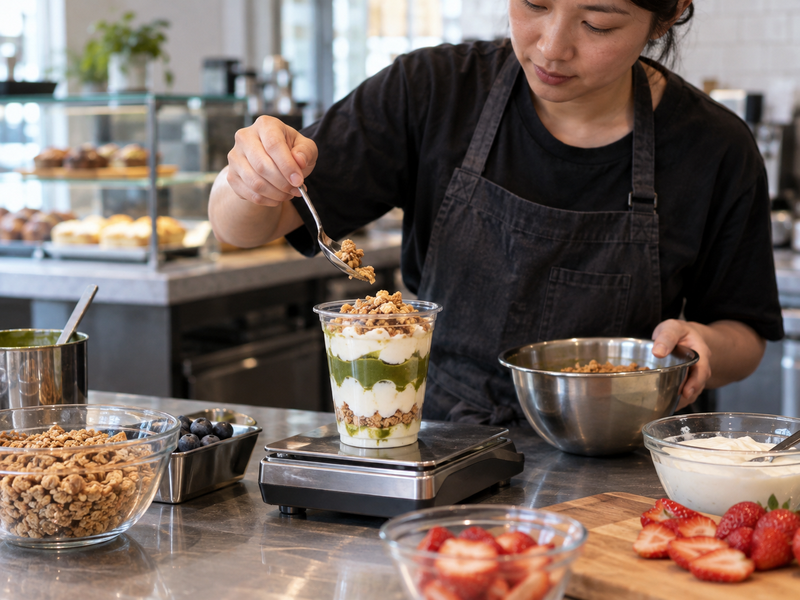
Write one card with exact ingredient products, batch quantities for matcha yogurt, per-cup masses, layering order, cup and lid, and the approved handling route. Include a side photo and a top photo. Ask a second employee to make several cups without verbal coaching, then compare weights and appearance. If they differ, identify the unclear step. “One scoop of yogurt” may need a calibrated scoop or a target mass; “fruit to the line” may need a better cup marking.
Keep a version date and owner. When a fruit, granola, yogurt, or matcha product changes, check the complete cup again and update ingredient information before sale. Record customer comments that identify a specific problem, such as “granola was soft” or “matcha layer was too tart.” These lead to a controlled trial. A standard parfait is not a rigid artwork; it is a cup the café can make repeatedly and that customers can enjoy at the time they buy it.
| Control point | Passing sign | If it fails |
|---|---|---|
| Matcha yogurt | Smooth and even | Check premix and lot |
| Layers | Target masses and fill | Adjust scoop or guide |
| Handoff | Clean lid and crunch | Review assembly timing |
FAQ
Q1. Can matcha be stirred straight into a large tub of yogurt? A small smooth premix generally gives better control. Test the method with the exact powder and yogurt used in service.
Q2. Does granola need a separate container? Only if a hold trial shows it is needed and the added pack cost fits the product. A top layer may pass for a shorter display window.
Q3. Can a café use frozen berries? Test thawing, liquid release, flavor, and the site’s handling procedure in the finished cup before substituting them for fresh fruit.
Q4. How long will a parfait keep? The complete formula and local rules determine handling. Set a separate quality window from observation under the approved display process.
Q5. What should the menu promise? Describe the actual yogurt, matcha, fruit, and crunch. Avoid nutrition or health claims that have not been reviewed for the saleable serving.
Build the cup the customer actually buys
A reliable parfait is measured, layered for spoonfuls as well as photographs, and tested through its intended display. Choose a stable base, disperse matcha fully, protect the crunch, and let a controlled handling plan set production timing. The result is a café cup another shift can make with confidence.