
What does matcha taste like when a buyer needs to approve repeat lots? A dry powder can smell green and fresh, then taste quite different in water, milk or a baked product. Buyers need a shared vocabulary and a fixed preparation method before deciding which sample fits the menu. This guide turns sensory impressions into a practical record. Our matcha beverage formulation guide covers the recipe work that should follow an initial powder comparison.
Contents
- 1. Which flavor words help a buying team?
- 2. How do aroma and taste differ?
- 3. What is the difference between bitterness and astringency?
- 4. How can preparation change the flavor?
- 5. What should a straight-tea trial record?
- 6. How should a milk-drink trial be run?
- 7. What changes in baked or frozen food?
- 8. How do buyers compare samples fairly?
- 9. What does an off-note tell you to investigate?
- 10. How can sensory approval survive a reorder?
1. Which flavor words help a buying team?
Use descriptors people can observe
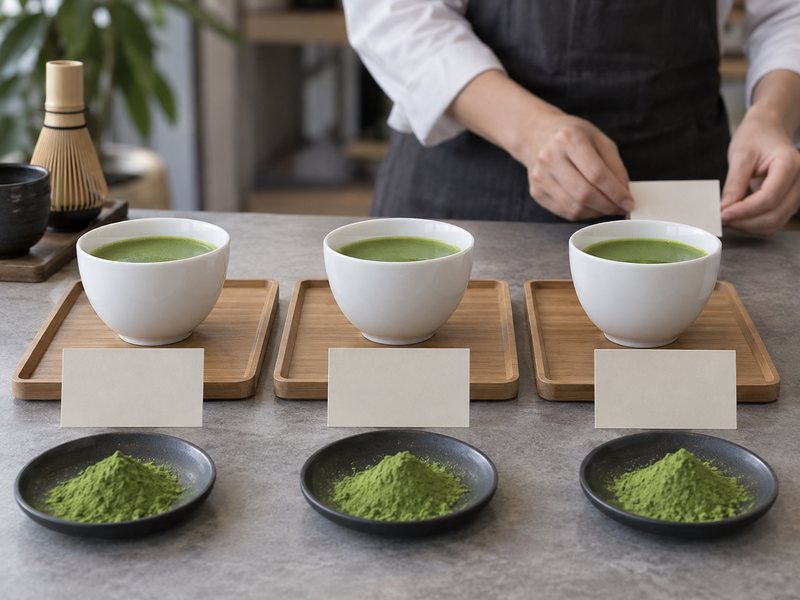
Teams often describe matcha as vegetal, grassy, savory, sweet or nutty. A sample can also be bitter or leave a drying sensation. These words help only when tasters use them consistently. Build a short lexicon that fits your product and add a one-line description for each term. “Vegetal” might mean cooked leafy greens to one reviewer and fresh cut grass to another. Ask panelists to write what they notice before discussing the sample as a group.
Keep the assessment tied to the buying decision. A straight-tea brand might look for a balanced green aroma and a clean finish. For cafés, the tea note may need to remain recognizable after milk and syrup. Bakers could prefer a stronger profile that persists through heating. One ranking of “best matcha” would hide these differences. Record both the desired note and an unacceptable defect so the supplier understands what to preserve when it proposes another lot.
2. How do aroma and taste differ?
Observe the sequence of experience
Smell the dry powder soon after opening and record the note without looking at price or grade. Then prepare the sample under a fixed method and note aroma again. Taste includes the initial flavor, body, bitterness and finish. A powder can smell fresh in its pouch but appear dull in a drink; another may seem muted dry and work well with milk. Keep those observations separate rather than compressing them into one score.
Check whether the pack and storage conditions could influence the result. Compare samples with similar age and handling where possible. If one arrived warm or in an unsealed bag, flag the difference before judging the supplier’s normal product. Use neutral water and clean utensils for an initial straight-tea test. Avoid fragrance, strongly flavored snacks or a long tasting sequence without breaks. These ordinary controls make comments more useful when the team returns to them after an order arrives.
| Stage | Ask the panel | Record example |
|---|---|---|
| Dry aroma | What appears on opening? | Fresh green or stale note |
| Prepared aroma | Does it persist? | Tea note in water or milk |
| Aftertaste | What remains? | Clean, bitter or drying |
3. What is the difference between bitterness and astringency?
Name the sensation before diagnosing it
Bitterness is a taste; astringency is a drying or puckering mouthfeel. They can occur together, so a team that calls both “bitter” may investigate the wrong variable. Ask panelists to note when each appears: at the first sip, after swallowing or after several sips. Use a consistent dose and preparation. A very concentrated drink can exaggerate both sensations even when the powder would be acceptable at its intended serving strength.
Do not promise that an expensive or “ceremonial” label will remove bitterness. Tea material, processing, age and preparation can all contribute to the experience, and the customer may prefer some firmness in a milk drink. If the first sample feels harsh, retest under the intended recipe before rejecting it. Then compare a second coded powder without changing the mixing procedure. A supplier can act on “drying finish in oat milk after five minutes” more effectively than a general complaint that the matcha is low quality.
4. How can preparation change the flavor?
Keep water, dose and mixing fixed
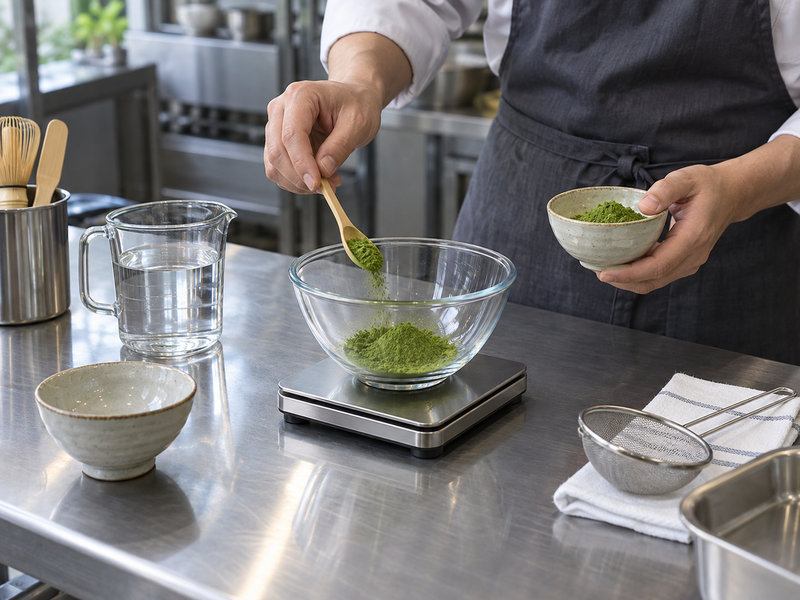
Amount of powder, liquid volume, water temperature, mixing time and serving delay can shift the taste a customer receives. A crowded café may use a shortcut that differs from a product developer’s careful whisking. Set the test method to mirror store practice, then check whether staff can reproduce it. Our matcha water temperature guide offers a related preparation review. Do not use one unusually hot or concentrated cup as the sole basis for rejecting a batch.
Run a simple variation test after the initial comparison. Change one variable at a time: dose, water temperature or milk type. Record whether the flavor issue follows the powder or the method. If a powder only works under a preparation that staff cannot maintain, it may be a poor commercial choice even if it tastes excellent in a tasting room. Include the drink’s normal holding time, since sediment and flavor balance can change before a customer finishes it.
| Variable | Hold constant elsewhere | Buyer question |
|---|---|---|
| Dose | Liquid and mixing | Is flavor too weak or strong? |
| Temperature | Dose and water | Does harshness change? |
| Milk | Dose and equipment | Is tea still recognizable? |
5. What should a straight-tea trial record?
Capture more than a tasting adjective
Use a written recipe for powder weight, water volume, temperature and mixing method. Prepare coded samples in identical vessels. Record dry aroma, prepared aroma, color under stable lighting, body, bitterness, astringency and finish. Ask each reviewer to score without knowing the supplier. A straight-tea use exposes features that sweetener or milk can mask, making it a useful application test when your product will be served that way.
Keep a reference sample from the powder you approve. If a later lot differs, repeat the same procedure before sending a complaint. Note whether the result falls outside an agreed range or merely differs from one taster’s preference. A panel of trained internal reviewers can describe variation more clearly than an informal office tasting. Avoid making health or nutrition judgments from sensory cues; a greener or smoother cup does not establish a particular compound content without a suitable test.
6. How should a milk-drink trial be run?
Recreate the menu item
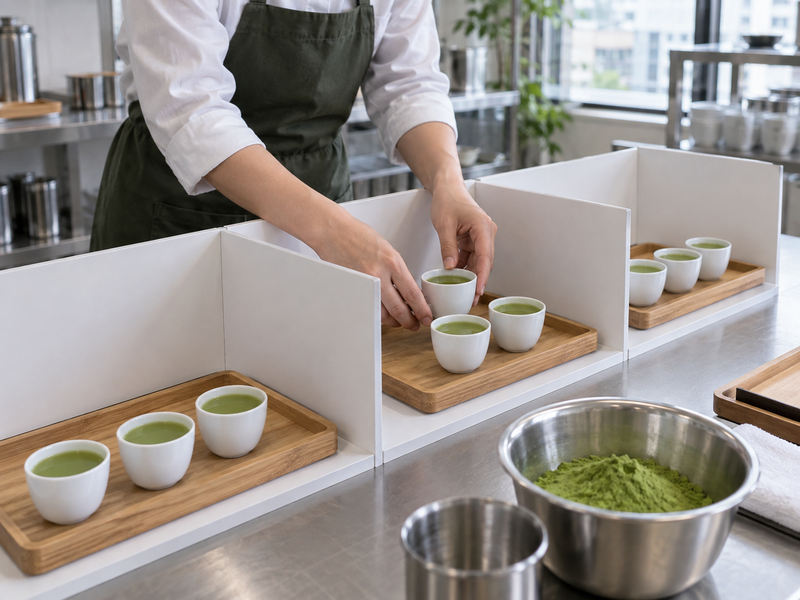
Use the actual dairy or plant milk, syrup, ice and equipment. A powder’s tea note may be diluted, while bitterness can be softened or become more noticeable after the sweetness fades. Taste immediately and again at the normal service delay. Observe lumps, separation and visible sediment, because texture affects the overall flavor judgment. A sample that wins in water is not automatically the best choice for a latte program.
Record the dose needed to reach a target tea character and convert it to cost per serving. A lower price per kilogram can disappear if the drink needs a larger dose. Have more than one staff member prepare the recipe from instructions; a product that depends on one expert may be difficult across locations. If the test fails, adjust one variable at a time, then decide whether the recipe or powder should change. Keep each revised formula labeled so you do not compare different drinks as though only the powder varied.
| Trial point | Observe | Commercial consequence |
|---|---|---|
| Tea note | Present after milk and syrup? | Customer recognition |
| Texture | Lumps or sediment? | Staff time and service |
| Dose | Weight per serving | Real ingredient cost |
7. What changes in baked or frozen food?
Judge the product after processing
Heat, fat, sugar and freezing can alter how a matcha note presents. A bakery should taste the item after its normal bake and cooling period. An ice cream maker should evaluate the frozen product after the intended storage period, not only the liquid base. Use a controlled recipe and compare powders at the same addition rate before optimizing each one. Otherwise a sample can appear superior because it received a more favorable formulation.
Record whether the tea flavor survives, whether bitterness becomes distracting and whether color remains acceptable to the brand. A powder that seems assertive in water may perform well in a rich pastry. Another with delicate straight-tea flavor may disappear in a sweet frozen dessert. Matcha Village’s supplied range includes grades for multiple applications; request a coded product recommendation for the exact process, then validate it. Keep the approved recipe and sample identity together for repeat manufacturing trials.
8. How do buyers compare samples fairly?
Blind-code and separate decisions
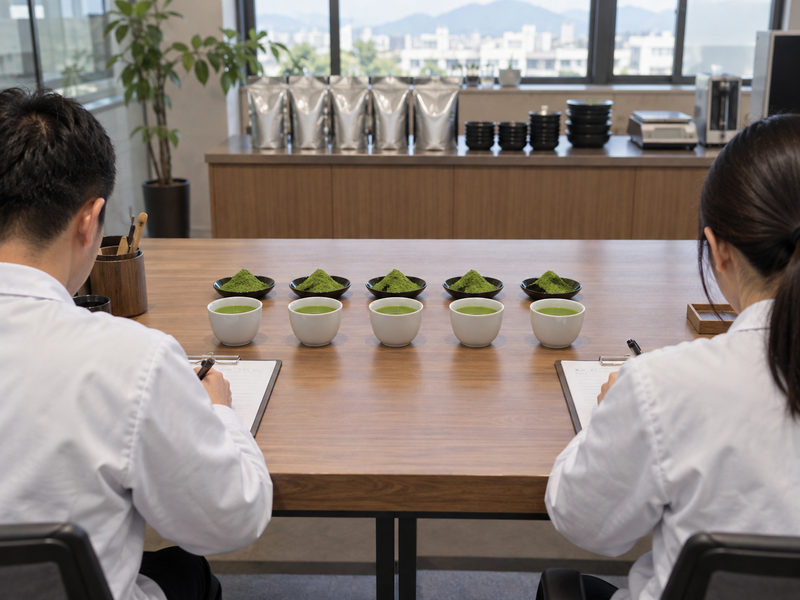
Assign neutral codes to samples and keep the key with one coordinator. Use the same recipe, equipment, serving vessel and observation time. Let reviewers score aroma, flavor, texture and aftertaste individually before a discussion. Record outliers instead of averaging them away. If one taster detects a stale note that others miss, a repeat with a fresh coded sample can test whether the observation was real.
Review price and supplier documents only after the sensory result is clear. Product fit is one decision; food safety, claims, capacity and landed cost are additional decisions. A winner on flavor can still fail a required document gate, while a close second may offer a better overall business fit. Ask for a second lot before committing to a long program if consistency is a priority. Store the trial method with the scorecard so a later team can repeat the comparison rather than reinterpret handwritten adjectives.
| Comparison control | Why it matters | Record |
|---|---|---|
| Blind code | Reduces brand bias | Sample key |
| Same recipe | Isolates powder difference | Preparation sheet |
| Separate price review | Keeps flavor judgment clean | Commercial sheet |
9. What does an off-note tell you to investigate?
Check preparation, pack and lot before assigning cause
An off-note is a signal for investigation, not instant proof of a defective factory batch. Verify the lot code, pack seal, storage history, opening date and preparation method. Compare with a sealed retain sample under the same recipe. If only one opened pack tastes stale, inspect handling after opening. If sealed units across a lot differ from the approved reference, ask the supplier for its batch and release review.
Describe the observation precisely and send conditions with the complaint. “Cardboard-like aroma after storage in an opened tin” gives more to investigate than “bad matcha.” Avoid diagnosing oxidation, contamination or incorrect leaf source from taste alone. Those possibilities need evidence. Agree with the supplier who will examine retained samples and how affected stock is held meanwhile. A structured response protects the buyer without making claims the sensory panel cannot substantiate.
10. How can sensory approval survive a reorder?
Link the reference to a product and process
Approve a coded sample, current specification, intended recipe and acceptable sensory range. Ask the supplier to keep product code and lot identity consistent across packaging and reports. Set notice triggers for material source, blend, milling or pack changes that could alter aroma or taste. The buyer can decide whether a fresh application trial is necessary. A remembered tasting from last quarter is too fragile for a purchasing standard.
At receiving, take a defined sample and run the same critical test used during approval. Keep a record of later lots so normal variation becomes visible over time. If the powder works in your drink and the supplier’s records support repeatability, extend the order program with a forecast and change route. The answer to “what does matcha taste like?” then becomes useful to the business: a described, tested profile that customers encounter consistently.
| Approval component | Save | Recheck when |
|---|---|---|
| Reference powder | Sealed coded unit | New lot or complaint |
| Recipe | Dose and method | Menu change |
| Sensory range | Panel notes | Source or process change |
FAQ
Q1. Should matcha taste bitter? Some bitterness can be present. Decide whether it is balanced in the intended recipe.
Q2. Is astringency the same as bitterness? No. Astringency describes a drying mouthfeel, while bitterness is a taste.
Q3. Can milk hide a weak powder? Milk can change perception. Test each powder at the menu’s actual dose and compare cost per serving.
Q4. Is bright color proof of good flavor? No. Judge color and taste separately under fixed conditions.
Q5. What should a buyer send with a flavor complaint? Send lot, pack condition, storage and preparation details plus a precise sensory description.
Before choosing a supplier, decide which flavor profile the finished product needs. Run coded trials, retain the approved powder and make preparation repeatable. A later shipment can then be judged against a record your staff understand, not an adjective from an old sales call.