
What is matcha made of when the ingredient appears on a product label? Pure matcha is ground tea leaf from Camellia sinensis, commonly prepared as tencha before milling. That simple answer becomes less simple when a sales sample is a latte mix, the leaf route is unclear or the label makes an origin claim. Buyers can settle these questions by tracing material identity from leaf to finished powder. Our tencha and matcha production guide explains the upstream handoffs.
Contents
- 1. What plant supplies the leaf?
- 2. What is tencha in a matcha specification?
- 3. Why does shaded cultivation appear in the description?
- 4. Which parts of the leaf reach the mill?
- 5. How does a mill change the ingredient?
- 6. What can a pure matcha label say?
- 7. When does a matcha product become a blend?
- 8. Which origin and organic claims need proof?
- 9. How should buyers test ingredient identity?
- 10. What records keep composition stable?
1. What plant supplies the leaf?
Start with a clear botanical identity
Matcha comes from the tea plant, Camellia sinensis. The powder is not a mixture of parsley, spinach or generic green plant material when sold as pure matcha. That sounds basic, but the purchasing file should still name the ingredient and product code because some catalogues place pure powder beside flavored or sweetened tea mixes. Ask whether the supplier’s offer is a single-ingredient tea powder and request its current ingredient statement. The Clemson Extension explanation describes the tencha route used for traditional matcha.
Do not confuse plant identity with a promise about growing country, cultivar or grade. Those are separate attributes. If a brand needs a named origin, ask which input lot and records support it. If cultivar matters for a particular tea line, request a source-specific document instead of inferring it from flavor. A food manufacturer may only need a defined color and taste profile, but it still benefits from knowing the supplier’s allowed input range. Write the business requirement before evaluating a romantic farm narrative.
2. What is tencha in a matcha specification?
Describe the prepared leaf before grinding
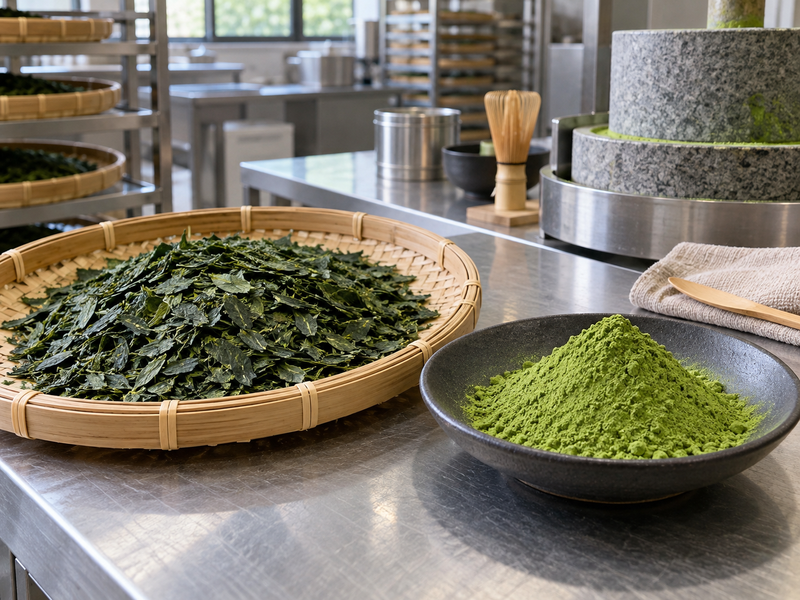
Tencha is tea material prepared for matcha grinding through a route that includes shade cultivation and post-harvest processing. The exact equipment and sequence can vary by producer. Ask the supplier where its tencha or equivalent prepared material is made, how it is identified and whether its product uses one material source or a controlled blend. A buyer does not need to prescribe a traditional machine to require a clear input definition. The relevant question is whether the material used for the approved sample can be recognized again.
Ask for a process map and a redacted record for one recent lot. The code on an intake bag should lead to a storage position, production batch and finished powder code. If the milling plant purchases prepared tea, its upstream supplier controls deserve review. If the same company owns both stages, the connection still needs documentation. A broad claim that all tea is “carefully selected” cannot replace one traceable example.
| Tencha question | Record to request | Buyer use |
|---|---|---|
| Who prepared it? | Named site or supplier | Map responsibility |
| Which lot entered? | Intake code | Trace finished powder |
| Can source change? | Approved input range | Set notice trigger |
3. Why does shaded cultivation appear in the description?
Treat shade as a practice, not a guaranteed flavor
Shade management is associated with tea prepared for matcha. A controlled study of tea plants found that different shade intensities changed measured leaf components, including amino acids and chlorophyll; its results depended on the study’s cultivar and conditions. See the published shading experiment for the specific evidence. The buyer should not turn that finding into a universal claim that a stated number of shade days guarantees sweetness or color in every commercial lot.
Ask the supplier to describe the actual growing practice for the offered material and how harvest lots remain identified. If the brand plans to print “shade grown,” request a record route that supports the statement. Then test the finished powder. Dry color, aroma and taste are shaped by more than the field practice: processing, milling, packing and storage also matter. A documented shade schedule helps explain an input, while a coded sample and specification show whether the resulting ingredient suits your product.
4. Which parts of the leaf reach the mill?
Ask about sorting rather than assuming a recipe
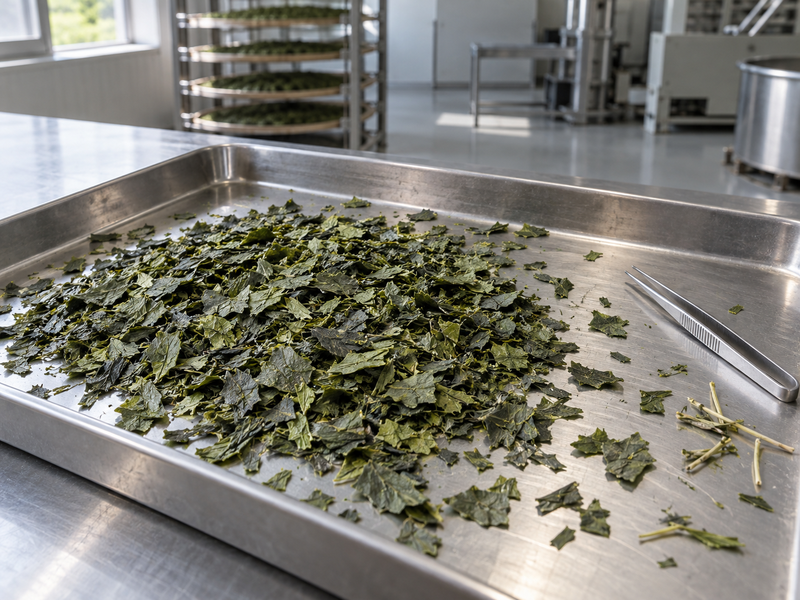
Descriptions of tencha processing often mention removal of stems and veins before grinding. Ask what sorting steps the proposed powder follows and what the plant accepts as prepared milling material. A buyer should be able to see a material specification, relevant process record and disposition for rejected portions. Do not assume every producer applies the same sequence or that a marketing photo of leaf fragments proves the contents of the commercial powder.
Sorting decisions can affect texture and flavor, yet the useful acceptance test takes place on the powder and finished food. A café group might notice grit immediately in hot water. A bakery may care more about even dry distribution. Ask whether the supplier uses a sieve after milling and how screen checks are recorded. If a later product change alters sorting, milling or sieving, decide whether the item remains within your approved specification. Linking upstream choices with a practical trial is more useful than debating the phrase “finest leaf.”
| Processing stage | Supplier explanation | Buyer observation |
|---|---|---|
| Leaf sorting | Material standard | Flavor and appearance |
| Milling | Approved route | Mouthfeel |
| Sieving | Screen and inspection | Lumps or grit |
5. How does a mill change the ingredient?
Connect prepared tea with powder behavior
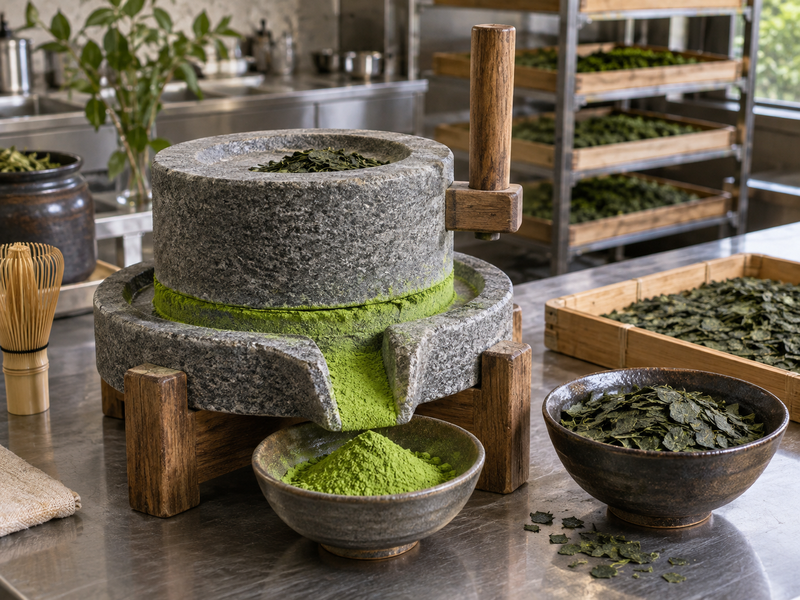
Grinding changes the physical form of prepared tea; it does not add another ingredient to pure matcha. Milling route and control can influence how powder feels, disperses and presents in a drink. Ask which product code, material lots and process instruction produced the offered sample. Request the factory’s current physical specification and the test method behind any particle-size claim. A generic “ultra fine” statement is difficult to evaluate without method and application context.
Run a controlled test with your equipment. A dry blend, cold latte and straight tea expose different issues. Record dose, mixing method, visual sediment and mouthfeel. If one powder works only after an impractically long whisking step, that matters for café operations even if the laboratory particle-size figure looks favorable. If the factory offers stone milling or another route as a selling point, compare coded outputs under the same test. The approved product should be defined by performance and records, not by an attractive photograph of the mill.
6. What can a pure matcha label say?
Keep the ingredient name tied to the SKU
A pure powder can have a straightforward ingredient statement, but the final label still depends on destination-market rules and the way the product is sold. Ask the supplier for the exact composition of the proposed code and any processing aids or additions that a qualified reviewer should consider. A brand should approve its own consumer-facing wording rather than copy a catalogue line. If the pack will be filled by a second operator, verify the product and lot identity through that stage too.
Avoid mixing a factual ingredient declaration with unsupported nutrition or health claims. If marketing wants to mention caffeine or particular compounds, request product-specific data and have the market team review what can be said. The label should identify the actual powder and not imply a single origin or organic status merely because those products exist elsewhere in the supplier’s range. Keep the artwork version beside the ingredient specification. When composition changes, the label review needs to reopen before printing.
| Label element | Source of truth | Recheck when |
|---|---|---|
| Ingredient | Product specification | Formula changes |
| Origin | Lot and source records | Sourcing changes |
| Claim | Qualified market review | New pack or market |
7. When does a matcha product become a blend?
Read every component in the offer
Matcha latte powder may include sugar, milk ingredients, flavors or other materials; matcha blends can serve different food and beverage needs. Those products are not misrepresented simply because they contain more than tea, provided the buyer receives an accurate composition and label. Ask the supplier to identify all components for the proposed SKU and state whether it is intended as a ready-to-mix base or an ingredient in a larger formulation. A pure powder sample cannot approve a later sweetened mix.
Test the blend as it will be used. For a chain beverage, use actual milk or water, dose and service equipment. For a food manufacturer, check how the blend interacts with other ingredients and processing. Ask for allergen information and change controls relevant to the finished market. Matcha Village’s supplied company material lists pure matcha and formulated latte or blend products; request a separate code and specification for each. A clear blend definition saves time for purchasing, product development and the label team.
8. Which origin and organic claims need proof?
Follow the actual material, not the catalogue category
Origin and organic status describe different things. A growing-area claim needs traceable source material; an organic claim needs current certification and a chain of custody for the product and destination. Ask what is covered by the certificate’s operator, site, activity and product scope. If the supplier buys prepared leaf from another company, include that handoff. A batch made with several origins needs accurate wording if the brand wants to describe where the tea grew.
For organic imports, market procedures may add shipment records. The USDA describes electronic NOP Import Certificates for organic agricultural products entering the U.S.; the European Commission describes electronic inspection certificates for EU organic imports. Have the importer and certifier confirm the route for the actual consignment. A laboratory result does not replace certification. Keep claim review separate from the sample’s flavor score so a good tasting cannot override a missing document.
| Proposed claim | Evidence to connect | Buyer reviewer |
|---|---|---|
| Named origin | Input-to-finished lot chain | Brand and quality |
| Organic | Current scope and transaction | Certification specialist |
| Grade description | Supplier definition and sample | Product team |
9. How should buyers test ingredient identity?
Compare the offered powder with its paperwork
Ask for a sealed, coded sample, current specification, ingredient statement and a sample lot report. Check that product code and lot identity agree across the files. Then prepare the powder in the intended recipe. A buyer can notice a mismatch between a “pure matcha” offer and a very sweet ready-to-mix sample, but sensory review alone cannot prove composition. Use the documents and supplier explanation to settle that question. If identity remains unclear, do not approve artwork or production.
Retain a sample from the first commercial lot and compare it under the same method as the approved trial. Request a batch trace when a later result differs. For an importer, keep supplier evaluation and receiving records appropriate to its market. The aim is a chain that can answer what went into the product and whether the delivered item matches the one your team tested. Anonymous sample pouches and generic specifications break that chain at the beginning.
10. What records keep composition stable?
Carry one definition into every order
Approve a named product code, composition, material route, specification revision, pack and sample reference. Ask the supplier to identify the people authorized to change the formula or source range. Set notice triggers for a new input, blend component, milling or packing site. Your team can choose whether an updated document or a new trial is needed. This is especially important when a product line contains both pure matcha and mixes with similar brand names.
At receipt, match each carton lot with the order, specification and agreed release report. Put unidentified or mislabeled stock on hold while the supplier clarifies it. Save the record set with the decision so another buyer can reorder without relying on memory. The answer to “what is matcha made of?” should remain visible in the purchase file: a named tea ingredient or a fully described blend, supported by the material and production chain for the units you actually receive.
| Stable record | Purpose | Owner |
|---|---|---|
| Composition revision | Define the ingredient | Product and quality |
| Material trace | Support source statements | Supplier quality |
| Lot and pack code | Identify the delivery | Warehouse |
FAQ
Q1. Is pure matcha made from more than tea leaf? Pure matcha is ground tea leaf. Formulated matcha products can contain additional ingredients and need their own statements.
Q2. Is tencha the same as finished matcha? Tencha is prepared tea material; milling turns it into powder.
Q3. Does shade growing prove a powder will taste sweet? No. Shade practice affects the leaf under specific conditions, while the finished product still needs a sensory trial.
Q4. Can a green tea powder use the matcha name? Ask the supplier to document its leaf and processing route and have your market team review product naming.
Q5. What should a buyer keep after approval? Retain the coded sample, composition, specification, trace route and lot document format.
Choose one proposed code and follow it from leaf material to the packed sample. Check the ingredient statement, trial performance and claim evidence before ordering. That disciplined answer protects the label and gives your team a clear reference when the next lot arrives.