
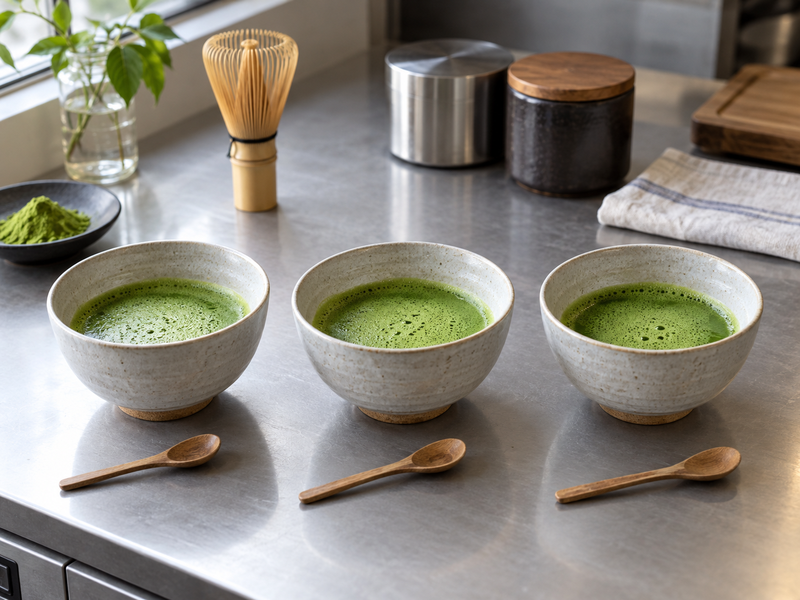
Usucha is a thin preparation of matcha whisked with water, usually served in a small bowl. For cafes, its short ingredient list makes uneven dosing, unsuitable powder and inconsistent water temperature easy to taste. A measured service routine gives buyers a fair way to compare tea and gives staff a repeatable starting point.
Contents
- 1. What should a cafe promise when serving usucha?
- 2. What ratio should a team use as a starting point?
- 3. How should buyers choose a matcha for straight drinking?
- 4. How should water temperature be measured?
- 5. How does whisking affect the finished bowl?
- 6. What equipment belongs at the service station?
- 7. How can staff serve several orders consistently?
- 8. How should a team run a useful tasting?
- 9. How much matcha does each serving cost?
- 10. What should a supplier brief include?
1. What should a cafe promise when serving usucha?
Describe the serving before taking an order
A menu should explain the cup size, ingredients and service format. Customers familiar with large iced lattes may be surprised by a small bowl without milk or syrup. Describe it as whisked matcha with water, then identify any optional sweet accompaniment separately. Keep the listed serving size consistent with the amount staff pour.
The word thin describes this preparation in relation to thicker matcha preparations. It does not promise a weak taste. A small serving can have a pronounced aroma and a lingering finish. Avoid equating foam height with tea quality on your menu or training card. Staff can judge the drink through aroma, texture and taste without turning a particular surface appearance into a universal rule.
Decide whether customers drink from a bowl at the counter or receive another vessel for takeaway. That choice changes heat loss, handling and presentation. Test the actual vessel before approving the recipe. A beautiful tasting bowl does not tell you how the same tea will arrive in a narrow paper cup after a wait at collection.
2. What ratio should a team use as a starting point?
Weigh powder and measure water separately
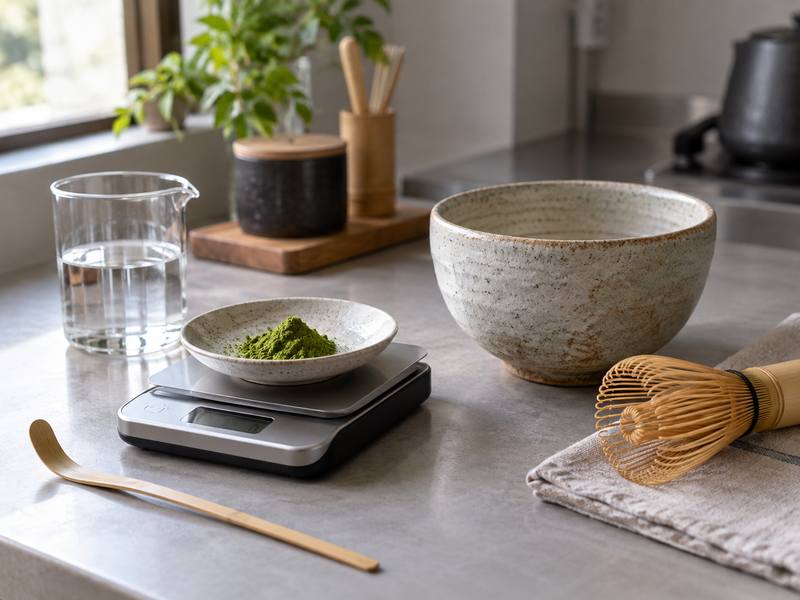
Ippodo’s published usucha method uses 2 g of matcha, 60 ml of water at 80 C and about 15 seconds of vigorous whisking. Treat these quantities as one tea maker’s reference method. They give a buyer a clear starting point for comparison. Ippodo basic usucha recipe
Once that reference is repeatable, a cafe can run the proposed water-volume trial below. Keep the tea lot, powder weight, bowl preparation and whisking method fixed. These are development samples, not validated recipes or statements about traditional practice.
| Trial | Matcha | Water | Question for tasting |
|---|---|---|---|
| Reference | 2.0 g | 60 ml | Is the body suitable? |
| More water | 2.0 g | 70 ml | Does the finish feel lighter? |
| Largest trial | 2.0 g | 80 ml | Does aroma remain clear? |
A spoon can help transfer powder, but its apparent fullness varies with packing and scoop shape. Use a scale that resolves the intended dose clearly. For water, use a repeatable volumetric measure or an approved mass-based station recipe. Write the chosen unit on the recipe card so staff do not switch between methods during service.
3. How should buyers choose a matcha for straight drinking?
Taste the application that customers will receive
Request samples suited to water-only service. A tea that tastes pleasant in a sweet latte may feel drying or coarse when milk and sugar are absent. Conversely, a delicate sample may lose its appeal if your service recipe adds too much water. Prepare every candidate at the same starting ratio before changing the recipe for individual teas.
Ask the supplier for the product identity, ingredient statement, origin information and available lot documentation. Record the sample code on the tasting sheet. Marketing grade names can help organize a supplier’s range, but your purchase specification needs measurable requirements and an agreed sensory reference.
Compare aroma before drinking, the sensation across the tongue and the finish after swallowing. Useful notes include leafy, toasted, marine, creamy, drying or coarse. Let tasters describe what they perceive rather than choosing a flattering word from the supplier sheet.
For a broader purchasing checklist, use the Matcha Village bulk supplier guide. For usucha, add one explicit requirement to that brief: evaluate the sample in unsweetened water at your chosen serving ratio. Keep a retained reference sample under the supplier’s recommended conditions for later comparisons.
4. How should water temperature be measured?
Check the water that reaches the bowl
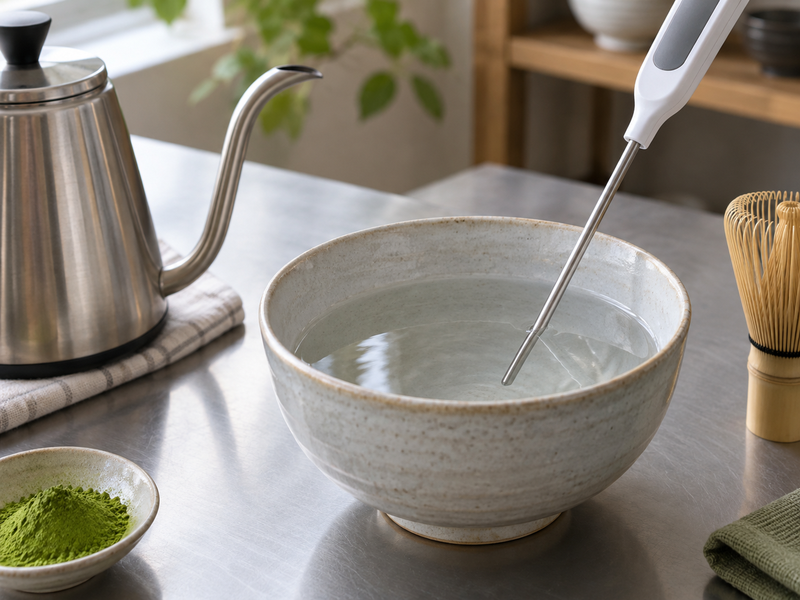
A kettle display describes conditions at the kettle sensor. A transfer jug, cold ceramic bowl and pause before whisking can change the temperature that reaches the powder. Standardize bowl preparation before trying to identify a preferred water setting. Empty prewarming water completely so it does not add an unmeasured dose.
Run the following proposed temperature comparison with one powder lot and one ratio. Measure water immediately before adding it to matcha. Record the interval between pouring and tasting. The numbers are trial settings, not an assurance that one temperature suits every tea.
| Variable | Keep fixed | Record during each trial |
|---|---|---|
| Kettle setting | Chosen setting per sample | Display temperature |
| Bowl preparation | Same prewarming routine | Bowl identity |
| Delivered water | Same volume | Measured temperature |
| Service delay | Same planned interval | Actual elapsed time |
Try 70, 75 and 80 C as a small comparison if those settings suit the supplier’s preparation advice. Judge aroma, bitterness, texture and comfortable serving conditions independently. Do not change the powder dose halfway through this comparison. If one bowl tastes thin, finish the temperature trial before running a separate ratio adjustment.
5. How does whisking affect the finished bowl?
Break up dry clumps before chasing foam
Sift the measured powder into a dry bowl using clean equipment. Add the selected water quantity and whisk with a controlled back-and-forth motion. Give staff enough room to move the whisk without striking the bowl rim. A cramped vessel makes the same hand motion harder to reproduce.
Check the bottom and sides after a practice serving. Dry green islands or paste stuck in a corner suggest a dispersion problem. Longer whisking may help in some cases, but it can also hide a poor starting method. Inspect sifting, bowl shape and powder wetting before setting a longer whisking time as the default correction.
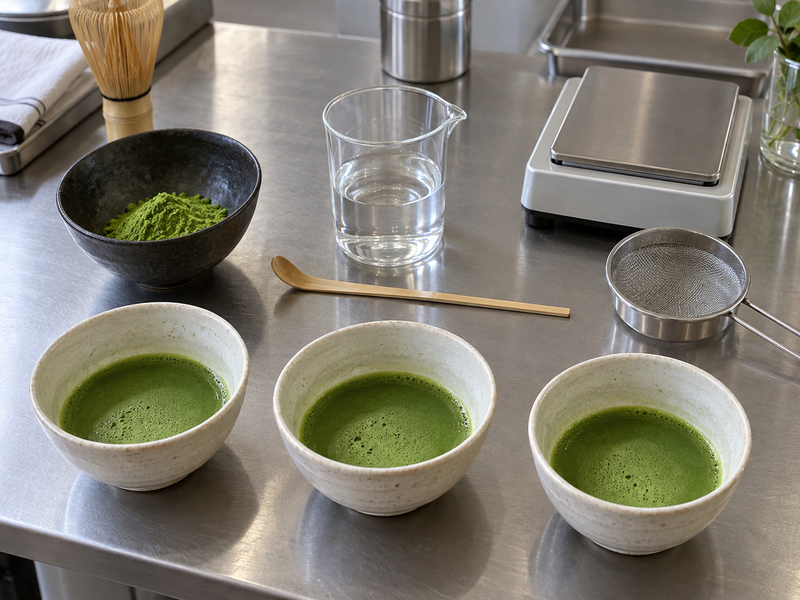
A fine surface foam can be part of your presentation standard. Set that standard using a reference photograph from your own approved trial. Avoid demanding an identical foam cap from every powder and utensil combination. Have trainees taste a bowl with visible clumps beside a smoothly dispersed bowl from the same lot. That comparison gives the texture requirement a physical meaning they can recognize during service.
6. What equipment belongs at the service station?
Separate dry powder handling from wet work
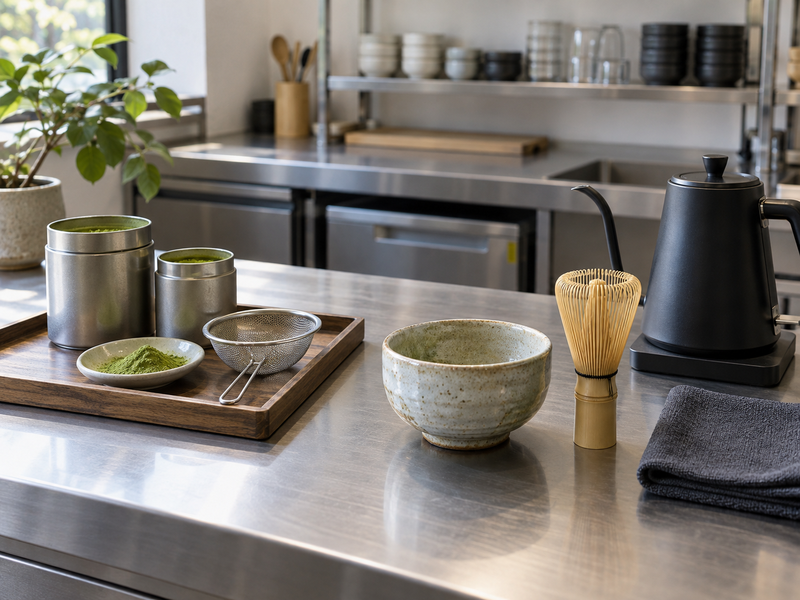
Place the scale, powder container and dry sieve away from splashes. Keep the kettle and rinsing area within reach without putting the tea beside rising steam. Staff should be able to weigh a dose while another bowl drains. Label the powder container with its identity and the opening details required by your operating procedure.
| Tool | Service task | Acceptance check |
|---|---|---|
| Small scale | Weigh matcha | Stable reading at serving dose |
| Dry sieve | Remove powder clumps | Clean mesh without damage |
| Wide bowl | Allow whisk movement | Intact rim and clean interior |
| Thermometer | Verify delivered water | Checked under site procedure |
| Whisk and stand | Disperse tea and allow drying | Intact tips and clean surfaces |
Ippodo advises wetting bamboo whisk tips before use, rinsing soon afterward, drying in open air and replacing a whisk with broken tips. Incorporate the utensil maker’s care instructions into your commercial cleaning procedure. Ippodo chasen care
A spare service whisk can help maintain the station while one is being cleaned or drying. Keep damaged tools out of circulation. Staff should know where replacements are stored and who records a recurring breakage problem. The whisk care guide can support that training discussion.
7. How can staff serve several orders consistently?
Time the whole ticket
Measure the work from order entry to handover. Weighing, warming a bowl, sifting, whisking and resetting the station all consume time. A short whisking step does not establish the total labor requirement. During a proposed service trial, ask two staff members to prepare consecutive orders with the same equipment layout.
Record where the sequence slows. If weighing causes a queue, test a controlled portioning procedure that protects powder from moisture and follows your site handling rules. If bowl preparation causes delays, review vessel supply and washing capacity. Avoid preparing a large volume of finished tea merely to hide a bottleneck before you have evaluated its taste and appearance over the actual service interval.
Assign one handover check: correct vessel, measured serving and clean rim. For table service, coordinate the tea with any accompaniment so the bowl does not sit waiting for a pastry. Give staff a brief description they can repeat accurately. Customers can then decide whether the small unsweetened serving matches their preference before ordering.
8. How should a team run a useful tasting?
Compare coded samples with a defined question
Choose one question per session. You might compare three powders at a fixed ratio or one powder at three temperatures. Mixing those questions creates too many explanations for a preference. Use neutral sample codes and rotate serving order when practical. Ask tasters to record their notes before discussing them together.
The following tasting sheet is a proposed internal tool. Use it to keep notes consistent across staff. Add a short written description so the buyer can distinguish a preference from a preparation defect.
| Attribute | Prompt for the taster | Useful observation |
|---|---|---|
| Aroma | What is clear before sipping? | Named aroma and intensity |
| Texture | How does the liquid feel? | Smoothness or detectable grit |
| Finish | What remains after swallowing? | Drying, bitter or lingering notes |
| Service fit | Would the intended customer reorder? | Reason linked to menu format |
Repeat the preferred preparation with another staff member. If the result changes sharply, investigate dose, water delivery and whisking before choosing a more expensive tea. Use photographs to document differences in appearance and record taste observations separately.
9. How much matcha does each serving cost?
Calculate from a weighed portion
Powder cost per bowl equals the purchase price per kilogram multiplied by dose in grams, divided by 1,000. The examples below use invented prices for arithmetic. They are not Matcha Village quotations and exclude freight, tax, labor, utensils and waste.
| Illustrative powder price | Dose | Powder cost per bowl |
|---|---|---|
| USD 40 per kg | 2.0 g | USD 0.08 |
| USD 70 per kg | 2.0 g | USD 0.14 |
| USD 100 per kg | 2.0 g | USD 0.20 |
At a 2 g dose, one kilogram contains 500 theoretical portions before handling losses. Actual saleable yield may be lower because of training bowls, remakes and powder left in packaging. Record these separately during a trial week. Otherwise, a buyer may blame price when the larger expense comes from an inconsistent serving routine.
Include the vessel wash cycle and station reset in labor costing. A cafe using table service will have different costs from a counter tasting bar. Compare powders after approving taste, then calculate the finished service cost. Reducing a dose solely to meet a target price requires another tasting because it changes the product customers receive.
10. What should a supplier brief include?
Send the actual service conditions
A useful sample request states that the tea will be served as usucha, with water and without sweetener. Include your target powder dose, water volume, preferred temperature range and vessel. Describe the flavor direction in plain sensory language. A request for less drying finish is easier to act on than a request for the best grade.
Add expected purchasing quantities, packaging preferences and destination market. Ask which documents are available for the proposed product and lot. Confirm details directly before making claims about origin, certification or testing on a menu or retail pack.
For Matcha Village enquiries, submit the approved trial recipe and a short comparison sheet with your sample request. Identify whether the project needs bulk tea, private label packaging or several products for different menus. Keep water-only service separate from latte development in that sheet so each sample has a clear job.
Before ordering a larger quantity, have the intended store team repeat the shortlisted preparation. Save the recipe revision, powder code and purchasing assumptions together. The next supplier discussion can then address a specific bowl, a specific pack size and a specific demand forecast.
FAQ
Q1: Is usucha the same as a matcha latte?
Usucha uses matcha and water. A latte adds milk or a milk alternative and may include sweetener. State those ingredients clearly on the menu.
Q2: Does thin matcha mean less powder in every recipe?
No universal cafe ratio follows from that name alone. Use a measured reference recipe, then document any changes your team approves through tasting.
Q3: Can staff use an electric frother?
They can evaluate one for their service format. Compare dispersion, large bubbles, bowl splashing and cleaning time against the approved preparation before adopting it.
Q4: Should a cafe whisk every serving separately?
Individual preparation gives direct control over each dose and handover time. Any batching proposal needs its own taste, appearance, handling and workflow evaluation.
Q5: What should buyers request with samples?
Request product identification, preparation advice, packaging information and available market-specific documentation. Send your measured usucha recipe so the supplier understands how the sample will be assessed.