
A chasen is a bamboo whisk used to disperse matcha in water. Its shape affects how it moves through a bowl, how a drink looks at handoff, and whether staff can repeat the result. That makes an attractive catalog photograph a poor buying test. This guide turns the types of chasen into a small, workable sample plan for cafés and retailers. It draws on Tezumi’s account of whisk designs and pairs those descriptions with checks a buyer can perform at the service counter.
Contents
- 1. What does a chasen type actually describe?
- 2. Which shapes should a buyer recognize?
- 3. How do usucha and koicha change the choice?
- 4. Does tine count identify a whisk type?
- 5. Which bowl fits each whisk shape?
- 6. How should buyers inspect craftsmanship?
- 7. Should a café stock more than one type?
- 8. What belongs in a fair recipe trial?
- 9. How should a retail listing describe chasen types?
- 10. What should go on the purchase specification?
1. What does a chasen type actually describe?
Name the design before comparing price
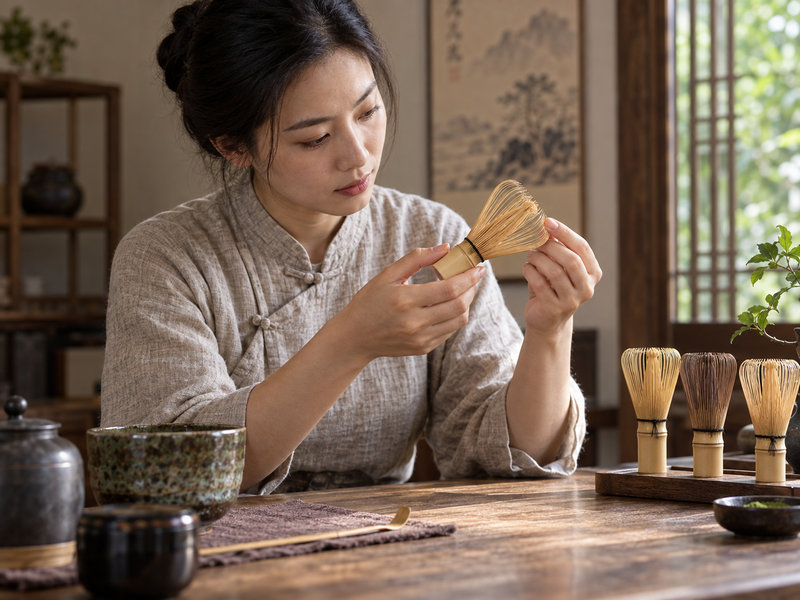
“Type” can refer to tine count, the curve at each tip, handle proportions, bamboo color, or a school-specific design. These are different attributes. A listing headed “100-prong chasen” does not tell a buyer whether the head has tightly curled tips, gradual curves, or a wide working diameter. Tezumi separates count from shape in its guide to chasen. That distinction helps when two products share a count but feel different in the hand.
For procurement, write down the intended drink before choosing a type. Thin tea puts foam and mouthfeel in front of the customer. Thick tea asks the whisk to work a dense mixture without chasing foam. A latte station may care more about a lump-free concentrate. Photograph candidate heads beside a ruler, then add bowl and recipe notes to the sample record. A type name helps only when staff can reorder the same design.
| Attribute on a listing | What it describes | What to check in person |
|---|---|---|
| Tine count | Nominal design family | Width and finish of actual tines |
| Tip profile | Curl, gentle bend, or straight finish | Contact and movement in the bowl |
| Head diameter | Space occupied during whisking | Clearance at the bowl’s working floor |
| Handle and node | Grip and traditional profile | Comfort across several preparations |
2. Which shapes should a buyer recognize?
Compare standard, shin, and straight heads
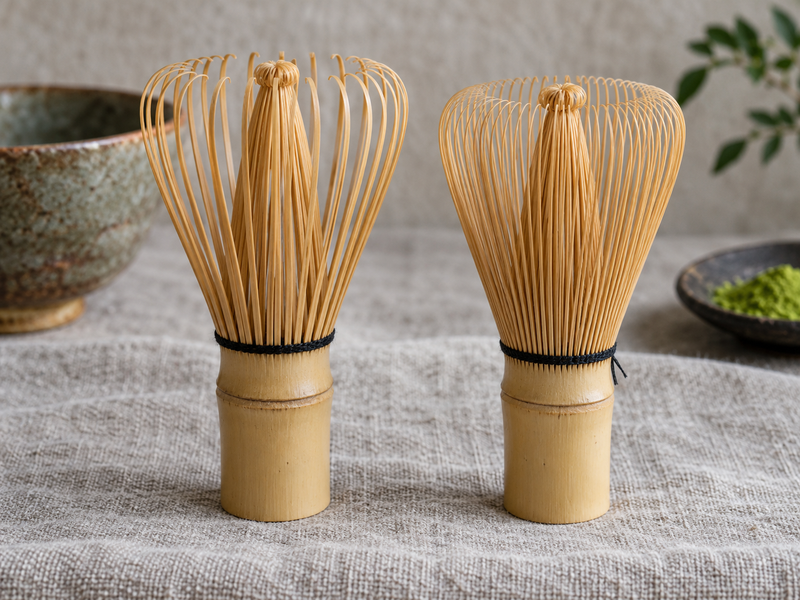
Tezumi describes standard, shin, and straight-tined profiles among the many chasen shapes. Standard whisks generally carry a clear curl at the tips. A shin profile has a more gradual curve and a less pronounced end curl. Straight-tined designs form another family, often associated with particular tea-school practice. Those names describe form and tradition; they are not grades in a universal quality ladder.
A retailer can show these three heads side by side. Let customers see the tip profile rather than relying on “ceremonial.” For a café, a standard and a gradually curved sample make a manageable trial. Add a straight-tined whisk if the service or bowl gives it a purpose. Hold each whisk in the intended bowl and move it without pressing into the ceramic. A head that catches the side will slow service.
| Shape family | Visible clue | Sample when |
|---|---|---|
| Standard curled | Distinct inward curl at tips | General thin-tea service |
| Shin profile | Gentler tine curve | Tea-school or display preference |
| Straight-tined | Little or no tip curl | Broad bowls or a specific service style |
3. How do usucha and koicha change the choice?
Choose movement for the drink being served
Usucha is a lighter preparation commonly whisked with a quick movement that can create a fine surface. Koicha uses more powder with less water and is worked into a thick, smooth mixture. The Ichizen preparation comparison describes that difference as whisking versus kneading. A café offering both should train those motions separately instead of issuing one generic instruction to “whisk vigorously.” A dense drink judged by its foam has been judged against the wrong target.
Some chasen families have fewer, sturdier tines associated with koicha. Finer tines are commonly used for usucha, but count cannot predict a particular whisk’s performance. Test the matcha, bowl, water, and staff movement. For koicha, look for dry pockets and excess force. For usucha, inspect dispersion at handoff. If a venue serves only lattes, a specialist koicha whisk may add stock without solving a menu problem.
4. Does tine count identify a whisk type?
Treat the number as a shortlist tool
Count can distinguish families, yet a printed number rarely captures the whole head. Tezumi notes that advertised tine counts are approximate and that a nominal increase may come with a wider head. A purchaser who compares only “80 versus 100” can miss the bowl clearance, tine thickness, or curl responsible for the handling difference. Keep the number on the buying sheet, but place the supplier model and sample photograph beside it.
Choose a small spread of designs rather than every count on a marketplace. Two or three samples with different construction can answer more than ten similar listings. Record each sample’s intended use, then verify it with the venue’s recipe. Higher count does not guarantee finer foam or longer life; powder, movement, bamboo, and service conditions all affect the result. Our whisk count guide covers the number question in more detail.
| Trial candidate | Reason for inclusion | Record besides nominal count |
|---|---|---|
| General-purpose head | Baseline for the menu | Diameter, curl, grip |
| Denser or finer head | Surface comparison | Tine thickness, bowl fit |
| Sturdier head | Dense mixture comparison | Flex and residue after use |
5. Which bowl fits each whisk shape?
Measure the working floor, not the rim
A bowl can look broad from above while narrowing near the bottom, where the whisk works. A wide chasen may touch the wall during a brisk stroke. A narrow head may leave powder near an angled base. Measure the interior working area, pour the normal water volume, and test there. Liquid level changes how much of each tine is submerged.
Straight-tined heads can demand particular clearance. Tezumi notes that wider straight-tined examples suit bowls with broader bases. That is a fit observation, not a rule that every straight whisk requires one named pottery style. In a retail set, assemble the actual bowl and whisk before ordering cartons. In a café, trial the spouted or service bowl staff already use. Watch for repeated ceramic contact, splashing, and awkward wrist angles. A well-matched bowl can improve an ordinary whisk’s consistency; a poor pairing can make a fine chasen look ineffective.
6. How should buyers inspect craftsmanship?
Look past a polished product photograph
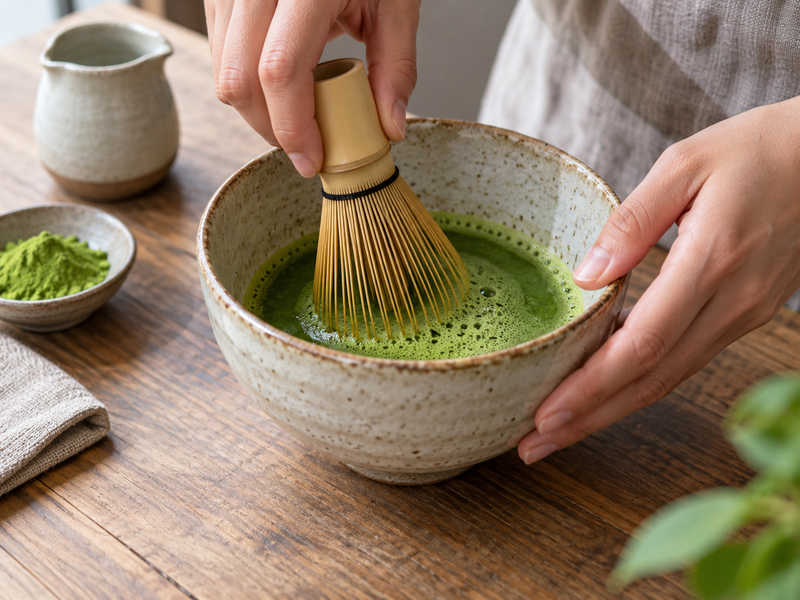
Inspect several units from a proposed lot. Compare tine spacing, rows, tip finish, binding, handle feel, and rough or split bamboo. Rotate each head under good light. Photograph loose thread, damaged tines, or asymmetry. Handmade variation can be normal, yet obvious damage should not be hidden under the language of craft. Ask the supplier which variations it accepts and which are defects.
The Japanese government’s account of Takayama whisk craft offers context for the handwork behind traditional chasen. Origin and craft claims on a particular shipment still require supplier evidence. If a retail label names a town, maker, bamboo species, or tea school, request documentation matching that SKU. For a café, exact origin may matter less than a consistent head and reliable replenishment. Write a short accept/reject checklist staff can apply when each box arrives.
| Inspection point | Acceptable evidence | Hold for review when |
|---|---|---|
| Tines | Even, sound head across samples | Split or broken tips arrive |
| Binding | Secure thread, neat rows | Thread shifts with normal handling |
| Geometry | Fits approved bowl | Head varies beyond approved sample |
| Origin claim | Traceable supplier document | Label claim lacks matching evidence |
7. Should a café stock more than one type?
Limit SKUs to separate tasks
One chasen model can serve a small program if it passes every recipe sold. Multiple types make sense for distinct preparations with a measured benefit. A tea room serving usucha and koicha may need different heads. A latte-only café may need one model and clean spares for rush periods. More varieties create training, storage, and reordering work, so each design needs a defined job.
Run a short shift trial with the favored candidates. Note how quickly the head clears the bowl, whether anyone changes grip, and whether the finished drink meets the same standard across operators. Then estimate the spare stock for each design from observed usage and cleaning time. Avoid a hard monthly lifespan promise: Ippodo’s chasen care guidance calls for replacing broken tips and drying the tool openly. Build an inspection and replacement trigger around condition. That gives staff a reason to remove a whisk instead of a date alone.
8. What belongs in a fair recipe trial?
Separate tool effects from recipe effects
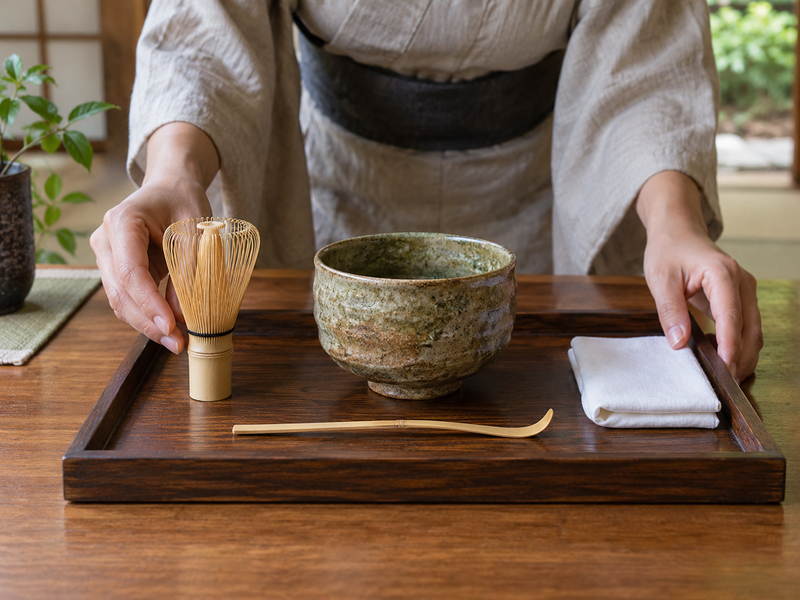
Write a trial card before the first bowl. Record matcha lot, dose, water, bowl, operator, target drink, and handoff time. Change only the whisk model. A different bowl or hotter pour can hide the tool effect. Use two operators when possible; a design that works only in one practiced hand can be costly to teach.
Photograph the surface under the same light and score visible clumps, mouthfeel, handling, splash, and cleanup. Do not let foam height dominate a koicha assessment or a latte concentrate test. The Ippodo usucha recipe supplies a concrete thin-tea starting point, though the venue should use its own approved recipe for purchasing. Run the comparison again if the first round has inconsistent powder or technique. Keep a labeled winner sample, plus its trial card, so the next buyer orders the tested model.
| Trial field | Keep fixed or observe? | Why it matters |
|---|---|---|
| Matcha lot and dose | Keep fixed | Powder changes texture |
| Water and bowl | Keep fixed | Geometry and temperature affect handling |
| Preparation time | Observe | Reveals service fit |
| Clumps and texture | Observe at handoff | Measures the actual drink |
| Cleanup and damage | Observe after use | Exposes operating cost |
9. How should a retail listing describe chasen types?
Show the buyer what arrives
A listing needs a front photograph, head profile, and measurements for bowl fit. State tine count, shape, dimensions, material, accessories, and intended preparation. If a stand is included, show it with the whisk. Explain rinsing and air-drying rather than using a vague “premium ceremonial” badge. Use verified origin data; a Japanese name does not establish manufacture in Japan.
Separate tested uses from suggested uses. “Tested with our thin-tea recipe in a wide bowl” has a defined basis. “Perfect for every matcha drink” does not. For a private-label assortment, start with one general model and add a specialist style only if customers can identify the distinction from photographs, description, and recipe. Provide the same care card in the box and on the product page. This reduces the chance that customers store a wet bamboo whisk in a closed sleeve, a practice Ippodo cautions against.
10. What should go on the purchase specification?
Order the approved physical design
The purchase specification should name supplier, model, tine count, tip profile, dimensions, finish, packaging, care card, and approved bowl pairing. Attach photographs of a passing sample. Specify how incoming damage will be reported and replaced. If the vendor changes the head but keeps the count, require a fresh trial. A type name alone is too vague for a reorder.
For Matcha Village customers building a powder-and-tool program, pair this accessory brief with the matcha grade and recipe being sold. Matcha Village supplies matcha and supports product and gift-set planning; confirm the whisk’s manufacturer and product claims with the accessory supplier. Run the drink test using the exact powder lot intended for launch. The result is a specification staff can use at receiving, on the counter, and in the next replenishment order. If the sample does not pass in its intended bowl, change the combination before printing the listing.
| Purchase record | Minimum detail | Recheck when |
|---|---|---|
| Whisk identity | Supplier, SKU, approved sample photos | Model or source changes |
| Construction | Shape, dimensions, finish | Incoming lot varies |
| Recipe fit | Powder, bowl, movement, target drink | Menu changes |
| Packing and care | Protection, instructions, holder fit | Package changes |
For retail storage, compare the matcha whisk holder options alongside the whisk shapes.
FAQ
Q1. Are all chasen made for the same preparation? No. Designs and traditional uses vary; test the specific whisk with the intended drink and bowl.
Q2. Is a higher tine count a better quality grade? No. Count describes one aspect of the head and does not prove craftsmanship or service fit.
Q3. What is a shin chasen? It is a whisk shape with a more gradual tine curve than a strongly curled standard profile.
Q4. Does a straight-tined whisk need a wide bowl? It often benefits from more working room, but check the dimensions of the actual whisk and bowl.
Q5. Can one café whisk handle lattes and thin tea? Yes, if it passes both recipe trials and staff can keep enough sound, clean units in rotation.
Choose a whisk your team can reorder
The useful distinction among types of chasen is the result each physical design gives in your bowl. Shortlist by shape and intended preparation, then test the finished drink with staff who will make it. Keep the passing sample and written specification. Those records turn a beautiful accessory into a repeatable purchase.