
Koicha vs usucha whisk technique is a difference in finished texture and hand movement. Usucha is thin tea, commonly whisked with enough water to form a light surface. Koicha is thick tea, worked gently into a smooth mixture rather than aerated. A café that teaches one motion for both will produce uneven drinks and confuse guests. This guide gives managers two separate service cards and a way to test them. The distinctions follow Ichizen’s explanation of usucha and koicha and Ippodo’s usucha recipe.
Contents
- 1. What changes between usucha and koicha?
- 2. How should a team set each recipe?
- 3. What whisk motion makes usucha?
- 4. How is koicha kneaded without foam?
- 5. Which chasen and bowl fit each method?
- 6. What should the finished texture look like?
- 7. Which mistakes cause clumps or harsh taste?
- 8. How can a café train two repeatable methods?
- 9. How should operators test matcha lots?
- 10. When should a menu offer both styles?
1. What changes between usucha and koicha?
Two service goals require two motions
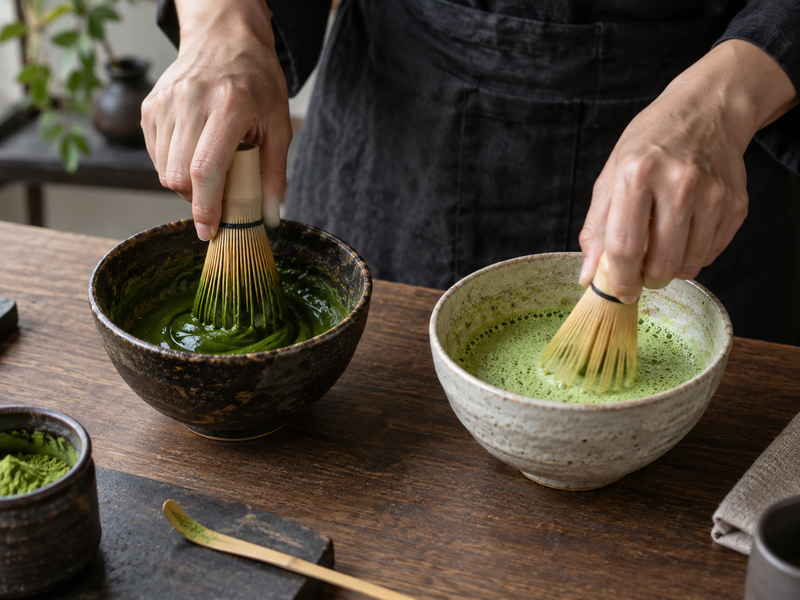
The distinction begins with concentration. Usucha has a lighter body and invites fast chasen movement that disperses powder and can incorporate air. Koicha uses more powder with less water and needs a slow, controlled kneading motion. Ichizen’s comparison makes the contrast explicit. This is why an instruction such as “whisk until foamy” belongs on a thin-tea card, not a thick-tea card. A guest ordering koicha should receive a glossy, dense drink rather than a foam-topped version of usucha.
The words describe a service experience, not cup color. A strong latte concentrate can be thick without being koicha. Traditional thick tea has its own method and context. Write the powder, water, technique, vessel, and handoff description separately. Staff can then explain what they serve without calling every highly dosed drink koicha. Agree on each drink’s intended texture before judging operator speed.
| Service style | Mixing aim | Visual target | Operator motion |
|---|---|---|---|
| Usucha | Disperse and aerate | Even liquid, fine surface | Quick, light strokes |
| Koicha | Hydrate and smooth | Dense, glossy mixture | Slow kneading strokes |
2. How should a team set each recipe?
Weigh powder and measure water
Use a scale for the matcha dose and a measured vessel for water. A scoop can vary with powder packing and operator technique. For a thin-tea reference, Ippodo gives 2 g matcha, 60 ml water at 80°C. Ichizen cites approximately 1.8 g per person for usucha and 3.75 g for koicha from tea-school materials, while noting that practice varies. These figures are starting points from named sources, not a universal café standard. Set a house recipe after tasting the actual powder and recording guest feedback.
For koicha, add water in small portions. The amount depends on powder and target texture. A full pour makes the initial paste harder to control. Record water temperature and dose beside the sample lot. If a new lot tastes harsh as koicha, ask the powder supplier what it recommends for that preparation and test it before printing the menu.
| Recipe field | Usucha reference | Koicha planning note |
|---|---|---|
| Matcha | Ippodo: 2 g per serving | Ichizen cites about 3.75 g per person |
| Water | Ippodo: 60 ml at 80°C | Add gradually to target texture |
| Approval | Fine dispersion and flavor | Smooth, dense mouthfeel and flavor |
3. What whisk motion makes usucha?
Move lightly through the liquid
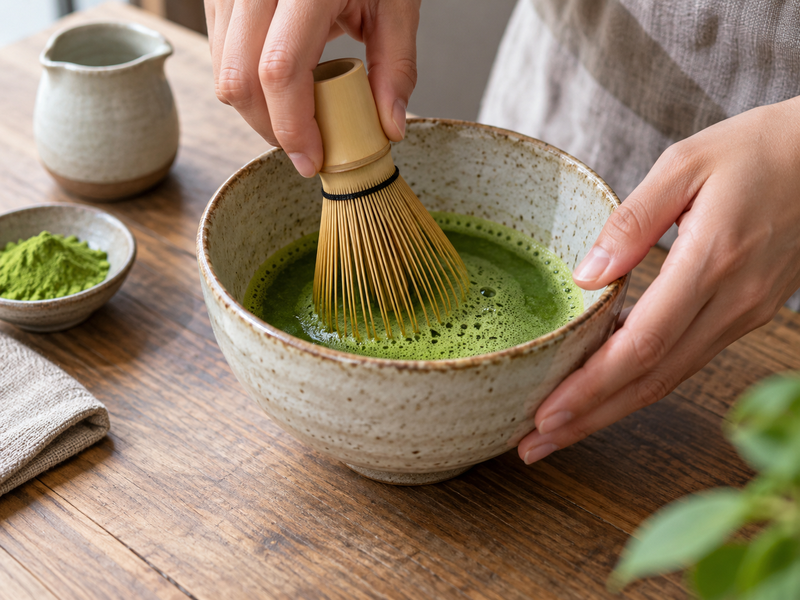
Sift the weighed matcha into a clean bowl if the powder has formed visible clumps. Add the recipe’s measured water, then move the chasen briskly back and forth through the liquid. Keep the head working in the drink rather than grinding it into the ceramic base. The goal is a dispersed tea with a fine surface and no dry powder at the edges. Ippodo’s basic usucha method uses a short vigorous whisk; a café should test its own bowl and staff before setting a time target.
The wrist matters more than a dramatic arm movement. Excess pressure can bend tines against ceramic; shallow movement can leave powder behind. Lift the head through the surface and look for large bubbles or clumps. A smooth finish may need a short adjustment. Teach trainees to judge the bowl at handoff. Document the movement with a demonstration and photograph of an accepted result.
4. How is koicha kneaded without foam?
Build the mixture a little at a time
Place a weighed portion of suitable matcha in the bowl. Add a small measure of water and work it through the powder gently with the chasen. Once no dry islands remain, add another small portion and continue until the mixture is smooth and dense. This is a slower kneading action, often working along the bowl, rather than the quick aerating movement used for usucha. Ichizen describes a staged water method, while making clear that schools and teachers differ in their details.
Watch the force applied to the whisk. Koicha is thick, but tines should not serve as a hard scraper. A wider bowl and suitable chasen can ease movement. Stop when texture meets the house standard. If gritty pockets remain, check the initial water, powder storage, and bowl-edge technique. Show accepted texture in natural light on the training card.
5. Which chasen and bowl fit each method?
Test the tool with its intended movement
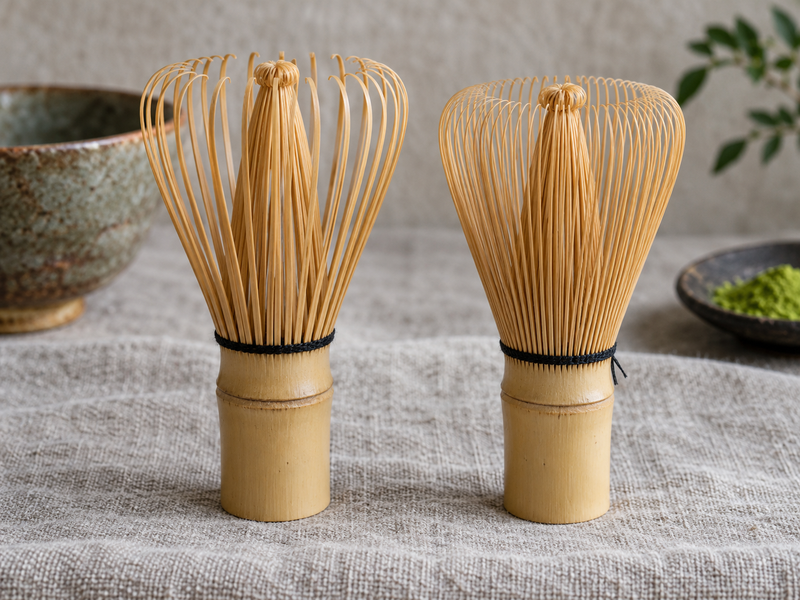
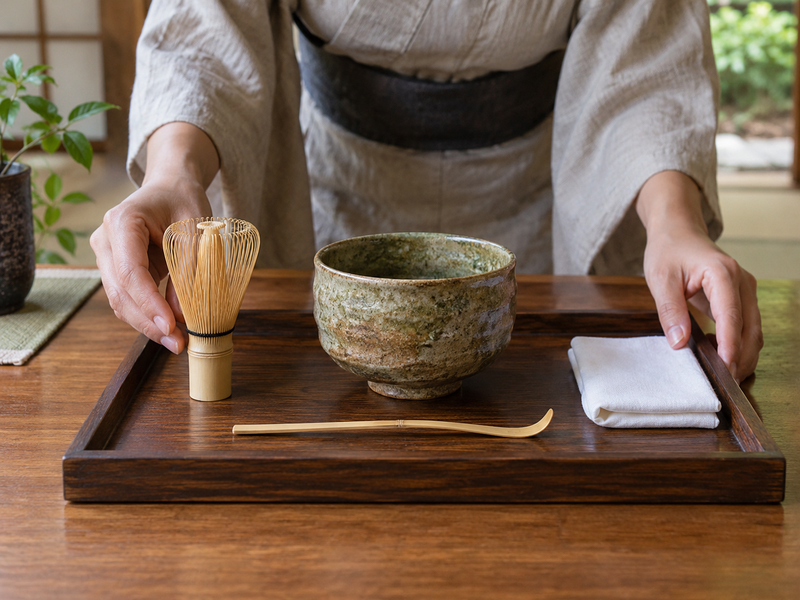
A fine, flexible head may suit an aerating usucha motion, while a sturdier design may feel more controlled with a dense mixture. Tezumi’s chasen guide describes traditional designs associated with thin and thick tea. It also shows why nominal tine count cannot stand in for the whole head. The bowl’s interior width matters just as much. A whisk that taps the wall on every stroke can slow training and wear early, even if it is sold for the right preparation.
Put candidate tools in service bowls and make both drinks. Record whether the head moves freely, leaves paste, splashes, or changes grip. A café without koicha need not stock its specialist whisk. A venue offering both can begin with one general model and add another only if trials show a repeatable difference. Record the bowl pairing. Test packaged retail components together.
| Fit check | Usucha | Koicha |
|---|---|---|
| Head movement | Allows light, fast strokes | Moves through dense paste without strain |
| Bowl clearance | Avoids wall contact | Reaches powder at bowl edge |
| Tine condition | Remains sound after trial | Does not split under normal kneading |
6. What should the finished texture look like?
Approve a drink, not a stopwatch
Usucha should look evenly mixed, with a light surface that fits the venue’s style. Some tea-school approaches prefer less foam than others, so do not call a bowl defective solely because it lacks a thick cap. Taste matters: powder that remains dry on the side can lead to a gritty mouthful even when the center looks attractive. For koicha, the target is a cohesive, dense texture without a foam objective. It should move and pour as the house recipe intends rather than contain dry pockets or loose water around a paste lump.
Set a photograph and tasting note for each style using the approved lot. Compare cups promptly; a settled bowl tells less about handoff. Have two trained staff make each recipe and taste without identifying the maker. Record specific differences: grit, bitterness, thinness, bubble size, or aftertaste. “Looks right” can mask a dose error.
7. Which mistakes cause clumps or harsh taste?
Diagnose powder, water, and motion separately
For usucha, common clump causes include powder that has compacted in storage, an uneven initial pour, or a whisk movement that never reaches the bowl’s edge. Check the scale and water measure before asking staff to whisk harder. For koicha, adding too much water at once can leave islands of dry powder or make the mixture looser than intended. Work a small initial addition through the powder and observe whether the paste becomes even. Neither problem is fixed reliably by choosing a higher tine count without a recipe test.
Harsh thick tea may reflect matcha selection rather than operator fault. Ichizen advises choosing matcha recommended for koicha. Taste candidate lots at the same dose and water addition, then document the accepted flavor range. If bitterness follows a temperature change, test water practice too. A shift fault log can point toward training, tool replacement, or powder selection.
| Symptom | Likely check | Trial correction |
|---|---|---|
| Dry pockets in usucha | Sifting, water pour, edge coverage | Repeat with the same measured recipe |
| Koicha too loose | Water added too quickly | Use staged additions |
| Harsh thick tea | Powder suitability, dose, water | Taste another recommended lot |
| Damaged tines | Bowl contact, handling, storage | Replace and retest tool fit |
8. How can a café train two repeatable methods?
Give each drink its own station card
Write two cards with dose, water, bowl, movement, visual target, and cleanup. Put a clear image of an accepted finished drink on each card. The usucha card can show the brisk stroke and a fine surface; the koicha card should show staged water and slow kneading. Do not put “whisk until foamy” on a shared card. Demonstrate both once with the actual powder and let trainees make each style under observation. Their second attempt is more useful than repeating a verbal description.
Keep the correct bowl and chasen accessible for each order. Review a cup at the normal handoff time. Record changes in powder lot or equipment so managers can trace variation. Ippodo advises prompt rinsing and open-air drying of bamboo chasen; follow maker guidance and local food-service requirements across the station.
9. How should operators test matcha lots?
Keep the method stable while comparing powder
When a supplier sends new matcha samples, prepare each with the same approved bowl, water, dose, temperature, and trained operator. Test usucha and koicha separately if the menu carries both. A powder that performs well under milk may not taste balanced in plain tea, and a pleasant usucha sample may not make the desired dense koicha. Use coded cups where practical so tasters can describe flavor and mouthfeel without a brand cue. Record clumps, color, aftertaste, and whether staff needed an unusual amount of work.
Test two or three lots per sitting so cups remain comparable. Ask Matcha Village for samples matched to the intended drink and market, then judge them by the same station card. A broad grade label is not automatic approval. Keep the winning lot’s ID and recipe result together; a later blend change can alter whisking behavior.
| Lot test field | Record for both styles | Decision use |
|---|---|---|
| Sample ID | Supplier and batch code | Repeatable reorder |
| Dose and water | Exact house measures | Fair comparison |
| Texture | Clumps, body, surface | Preparation fit |
| Flavor | Tasting notes at handoff | Menu approval |
10. When should a menu offer both styles?
Match training and powder supply to the promise
Offer both when staff can explain the difference, prepare each consistently, and source matcha that tastes good under each method. Koicha needs a clear description because a guest expecting a light foamy tea may mistake its dense texture for an error. Describe the serving size and mouthfeel on the menu. Price from the actual powder dose and preparation time, not from a vague label such as “premium.” A small pilot with trained staff can show whether the style fits the venue’s demand and service pace.
If koicha sells rarely, decide how staff will keep the motion practiced and powder fresh. A special tasting service may suit it better than a permanent menu line in some venues. Usucha also needs a stable recipe and handoff standard; it is not merely a simpler fallback. Review customer feedback for specific comments on bitterness, texture, and explanation. The koicha vs usucha whisk technique choice becomes manageable when the two drinks have separate recipes and visible acceptance criteria. Build those cards before launch, then revisit them whenever the powder or bowl changes.
When testing either tea style, keep the matcha whisk prong count guide beside the recipe record; count is only one design variable.
FAQ
Q1. Is koicha just extra-strong usucha? No. It uses a denser mixture and a kneading method aimed at smoothness rather than foam.
Q2. Should usucha always have thick foam? No. Surface style varies; approve a consistent result that suits the venue’s service.
Q3. Can one chasen make both styles? It can if the actual model and bowl pass trials for both motions without damage or uneven drinks.
Q4. What water ratio should a café print? Print its tested house recipe. Named tea sources provide starting points, but powder and service style vary.
Q5. Why does koicha sometimes taste too harsh? Check powder suitability, dose, water practice, and temperature before blaming the whisk.
Put the two methods on separate cards
Train usucha for even dispersion and its chosen surface. Train koicha for a dense, smooth texture built through staged water additions. Weigh ingredients, approve a bowl and chasen pairing, and keep a photograph of each finished drink at the station. That gives every shift a clear target and gives buyers a way to test a new powder lot.