
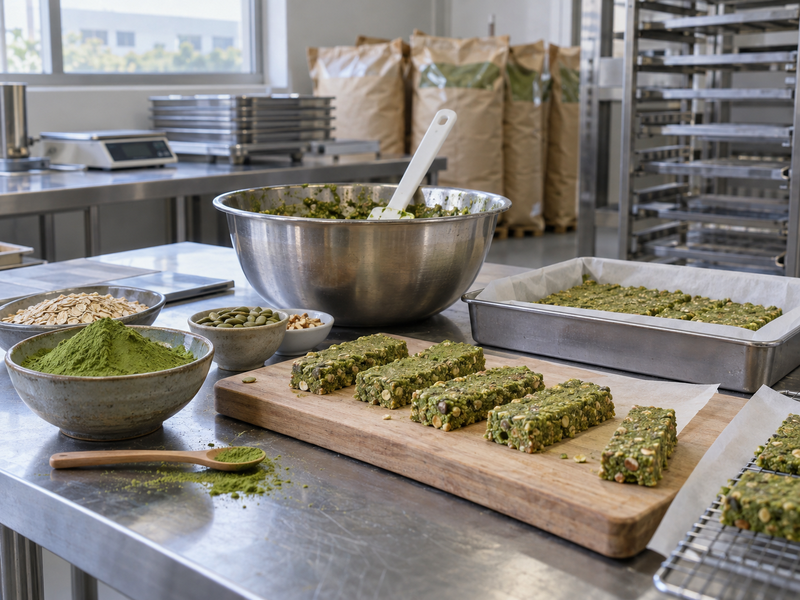
Matcha for protein bars has a harder job than matcha in water. It must remain noticeable beside protein, sweetener, fats and flavors, distribute through a dense mass, and retain an acceptable color and texture during the bar’s commercial life. A powder that makes a fine latte might vanish in a high-protein recipe. A controlled bar trial is the best starting point. This guide shows food developers and buyers how to choose a production powder and write a useful purchase specification.
Test the bar, not the spoonful. Start with the actual protein system and process. Compare a small set of matcha powders at controlled doses, then evaluate bars after forming and through the intended storage period. Tie each result to a product and lot code. That way, the first commercial shipment can be checked against a known reference rather than a vague description such as “bright, premium matcha.”
1. Which matcha properties matter in a protein bar?
Prioritize a tea flavor that fits the bar, color that survives processing, even distribution and a texture customers accept. Check the powder’s ingredient identity and lot documentation. “Culinary grade” can be a useful starting category, but supplier definitions vary. A stronger powder may work well against pea protein while a delicate one is better in a lightly flavored oat bar. Ask for representative lots and test them in the finished formulation. A dry-powder tasting cannot predict interaction with protein and binder.
Choose evaluation criteria before seeing prices. If the bar promises a noticeable matcha taste, a faint green tint is not enough. If matcha plays a background role beside chocolate, the target may be subtler. Write both targets separately. Preserve an approved reference bar and powder sample according to validated storage instructions. These references help distinguish a supplier-lot change from normal variation in protein, syrup or processing.
| Property | Bar test | Why it matters |
|---|---|---|
| Flavor | Blind taste of finished bar | Protein can mask tea |
| Color | Cut surface under fixed light | Customers see interior |
| Distribution | Samples across batch | Prevents green streaks |
| Texture | Chew and grit check | Repeat purchase |
2. How do protein sources change the matcha decision?
Whey, pea, soy and other proteins have different tastes, colors and water-binding behavior. Pea protein can contribute earthy notes that interact with matcha. Dairy protein can soften some tea notes while adding its own texture. Keep the protein system fixed when comparing matcha candidates. If the brand plans both plant and dairy versions, run separate trials. A powder that wins in one may not win in the other. Do not attribute every bitter or dry note to matcha before testing the plain protein base.
Make a control bar without matcha. Compare it with the matcha versions for texture and aftertaste. If all versions are dry, reformulate the base rather than asking for a different tea powder. If only one matcha version creates a harsh finish, ask whether dose or powder selection is responsible. This simple control can save weeks of unnecessary supplier switching.
3. How should matcha dose be set?
Use a dose ladder with the same base, binder and forming process. Increase only matcha mass between small batches. Rate tea flavor, bitterness, color, mouthfeel and cost per bar. A high dose may deepen color but make the bar dry or overly bitter. A low dose might disappear beside chocolate or vanilla. Choose the smallest dose that meets the intended product target, then repeat with a production-representative lot. Record grams per batch, grams per bar and any adjustment to liquid or binder.
Watch the full formula. Adding powder changes the dry-to-wet balance. If a developer compensates with extra syrup or fat, record that change and compare finished nutrition and cost. Do not claim a particular matcha dose has health effects without product-specific substantiation and legal review. The decision here concerns product performance and honest ingredient use. Ask a small panel which bar they would buy again, not just which one looks greenest.
| Trial dose | Question | Record |
|---|---|---|
| Low | Is tea still noticeable? | Flavor and color |
| Target | Is balance acceptable? | Preference and cost |
| High | Does bitterness or dryness rise? | Texture and finish |
4. How can matcha be mixed evenly?
Test the order of addition and mixing time with normal plant equipment. Dry matcha can form concentrated streaks if added to a dense binder late. Premixing with another dry component may improve distribution, but the method must work at commercial batch size. Sample bars from the beginning, middle and end of the run. Compare cut surfaces and, where needed, analytical or color measurements. A beautiful bench batch says little about a mixer loaded at full capacity.
Record dust, wall deposits and cleanup. Fine powder may cling to equipment; agglomerated powder can create spots. A mixing change that fixes distribution but damages bar texture is not a solution. Keep the protein base and process conditions fixed while testing matcha and addition methods. If the powder supplier offers a premix, compare its ingredient list and cost with a pure-matcha process before changing the label.
5. What happens during baking or other processing?
Some protein bars are baked, while others are cold formed or use different thermal steps. Heat can change matcha color and flavor; a cold-formed bar still faces moisture and ingredient interactions. Test the exact process planned for sale. A powder chosen in a no-bake kitchen trial may underperform after a factory oven. Compare finished bars after cooling and packing, not only during mixing. Keep time and temperature records so a later lot issue can be distinguished from a process change.
Never alter a validated food safety step merely to protect green color. Let the plant’s quality team approve any change in addition stage or processing. If the formula needs a greener result, compare matcha candidates and permitted formulation options within the approved process. The matcha color guide explains how to judge dry and finished-product color under consistent light. A color promise should be based on the product customers open.
| Process | Check | Common issue |
|---|---|---|
| Cold forming | Mix uniformity | Streaks or clumps |
| Baking | Post-heat color and flavor | Dull green |
| Coating | Tea visibility after coating | Flavor masked |
| Packing | Seal and oxygen barrier | Quality drift |
6. How should flavor be balanced against protein and sweetener?
Make a small matrix: one matcha powder, a limited set of doses, and the intended flavor system. Compare plain, vanilla, chocolate or fruit accents only if they are realistic menu options. Too many simultaneous changes make the winning combination impossible to explain. Matcha can add pleasant tea depth but also bitterness when the protein base is already harsh. Sweetener may mask that note initially, then leave it in the aftertaste. Taste the complete bar slowly and after a sip of water.
Use words that help formulation: “pea note lingers,” “tea fades after chewing,” or “bitter finish appears as the coating melts.” A single broad score does not direct a useful change. The selected matcha should work with the brand’s desired sweetness, not force it into an entirely different product. Compare cost only after the sensory target is clear, then calculate cost per accepted bar. Give panelists water between samples and change tasting order, since a strongly flavored bar can make the next sample seem weaker than it is. Preserve the score sheets with the batch formula.
7. What storage trial should a bar pass?
Evaluate the bar over its planned commercial life under the conditions supported by the business’s shelf-life program. Watch for color drift, flavor loss, texture hardening and package effects. A newly formed green bar may not look or taste the same after distribution. Test packaged samples, because barrier and headspace can influence the result. Compare with a no-matcha control to separate matcha-related change from a base-formula issue. Record each evaluation date and storage condition.
Keep claims tied to evidence. Do not assign a shelf life from a supplier’s powder certificate alone. The finished bar needs its own validation. If the brand uses a windowed wrapper, consider whether light exposure changes appearance during a normal sales period. A pilot in actual distribution can reveal issues that a lab shelf misses. Use the result to choose pack format and stock rotation before scaling.
| Storage observation | Compare with | Possible response |
|---|---|---|
| Dull color | Fresh bar and control | Review pack and formula |
| Weak tea flavor | Approved reference | Review powder and barrier |
| Hard texture | Plain base bar | Review binder and moisture |
| Off odor | Ingredient and package lots | Hold and investigate |
8. Which documents should a buyer request?
Request a product specification, ingredient declaration, lot-specific quality record, traceability information and certificates relevant to the intended market and claims. Match documents to the exact SKU and carton lot. Ask whether the powder is pure matcha, a blend or a premix. For a protein bar, allergen controls for the whole plant matter; matcha documentation does not replace a review of protein, nuts, dairy or shared equipment. Keep the supplier’s change-notification terms in writing.
The matcha COA guide provides a receiving checklist for lot, method, units and missing results. Do not treat a passing COA as proof that a bar will taste good or retain color. Keep safety, identity and application approval as related but separate records. At the first commercial shipment, compare the actual powder with the sample that won the development trial.
9. How should cost be compared across powders?
Use delivered cost per accepted bar at the tested matcha dose. Include powder loss during mixing, packaging size, freight and any extra binder or flavor ingredient needed to keep texture and taste. A low-cost powder can be poor value if its flavor needs a higher dose or if it causes more rejects. A premium powder can be justified when it creates a perceptible customer benefit at a lower dose. Compare quotes under the same pack and delivery terms.
Watch minimum order quantity against the launch forecast. A new bar may take time to establish demand, so an oversized matcha order can age before use. Smaller sealed bags can be rational even when their price per kilogram is higher. Ask the supplier about normal lead time, lot consistency and how it handles shortages. Reliable delivery has value when a bar is already printed and scheduled for production.
| Cost item | Measure | Decision use |
|---|---|---|
| Matcha dose | Grams per accepted bar | Normalize quotes |
| Line loss | Powder and rejects | True yield |
| Formula change | Binder or sweetener added | Full product cost |
| Inventory | Usable pack volume | Aging risk |
10. What should be approved before full production?
Approve the matcha SKU, powder specification, full bar formula, process instructions, package and finished-product reference. Run a representative production batch and check distribution, sensory quality and line performance. Connect matcha lot codes to finished-bar batches. Define when a new powder lot needs a short recheck and what supplier changes require full reapproval. Monitor the first commercial shipments for customer feedback and store conditions, then use those records to refine the target.
Matcha Village can discuss matcha samples for bar and snack manufacturing through its B2B contact page. Share the protein system, process, target flavor, pack need and forecast volume. The best matcha for protein bars is the one that stays appealing after mixing, packing and storage while remaining practical to buy again. A small, controlled pilot gives the buyer a reason to trust the next pallet.
FAQ
Q1. Can ceremonial matcha be used in protein bars?
Yes, but test whether its finished-bar benefit justifies its cost.
Q2. Why can a matcha bar taste bitter?
Matcha dose, protein base and sweetener can all contribute. Compare a plain-base control and dose ladder.
Q3. How can green streaks be reduced?
Test controlled premixing and addition order in the production mixer, then sample across the batch.
Q4. Does a powder COA establish bar shelf life?
No. The finished packaged bar needs its own shelf-life validation.
Q5. What is the best way to compare supplier prices?
Use delivered matcha cost per accepted bar at the dose that meets flavor, color and texture targets.