
A matcha whisk holder, often called a kusenaoshi, supports a bamboo whisk between uses. At a café, it also has to fit a crowded drying area, stay reasonably stable, and avoid becoming a place where water pools. A holder cannot make a damaged whisk new again or replace a cleaning procedure. Buy it as one part of a defined rinse, dry, inspect, and store routine. These ten checks show how to choose the shape and build a routine staff can repeat.
Contents
- 1. What does the holder need to do?
- 2. Does its profile fit the whisk?
- 3. Is the holder stable on the drying surface?
- 4. What material suits the workspace?
- 5. Where will rinsing and drying happen?
- 6. Can staff clean the holder itself?
- 7. How many holders does a station need?
- 8. What should a retail set include?
- 9. How do you assess supplier samples?
- 10. What training prevents avoidable damage?
1. What does the holder need to do?
Define the gap between uses
The holder supports the whisk’s tine shape while the whisk is put away; it is not a substitute for rinsing or adequate drying. Map the full sequence at your station: whisk a drink, rinse the chasen, shake off excess water gently, place it on the holder, and inspect it before its next use. If a whisk is used every few minutes, the holder may mainly organize tools between rounds. If it rests overnight, drying position and airflow deserve closer attention.
The Matcha Byron Bay explanation of a whisk holder describes its supporting role. For commercial use, add a station-specific hygiene procedure. The Ippodo whisk care guide advises careful treatment of bamboo tines. Do not claim a holder “restores” bent or broken tines; inspect worn whisks and replace them when they no longer work as intended.
2. Does its profile fit the whisk?
Test the actual chasen, not a product photo
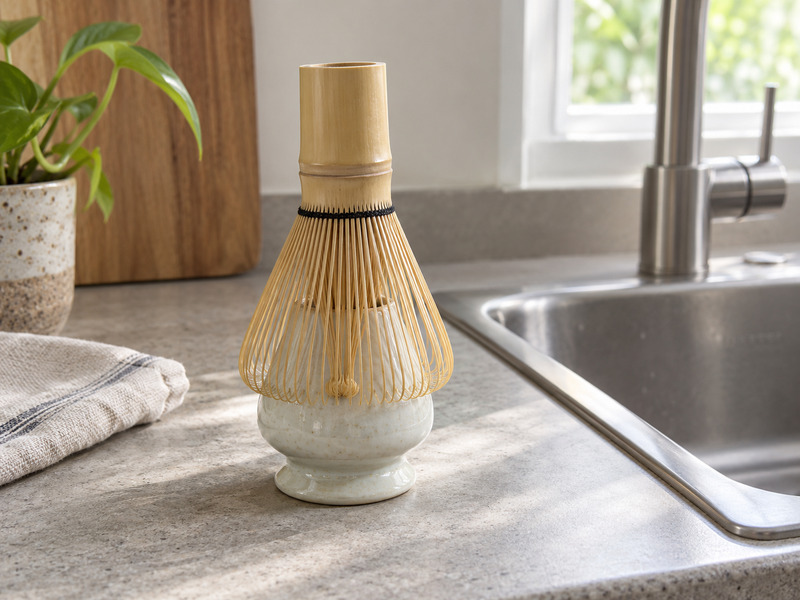
Whisk holders vary in shoulder width, cone height, and top shape. Try the holder with the exact whisk model used at the café or included in the retail set. Lower the clean whisk gently over it. The tines should be supported without forcing them outward sharply or pressing the inner knot against a point. Lift the whisk off and check for snagging. Repeat with a new and a well-used whisk, because tine spread changes with use.
Some suppliers pair a holder with a particular tine count. Treat that pairing as a starting suggestion, not a universal fit rule. A whisk with the same advertised count may have a different diameter or knot profile. If a multi-site business uses several whisk types, either select a holder that works for all through testing or label different holders clearly. Ordering by matching color alone can create a costly mismatch.
| Fit point | Sample test | Concern if it fails |
|---|---|---|
| Shoulder width | Place whisk without pressure | Tines splay or collapse |
| Top shape | Inspect inner knot contact | Whisk snags or sits high |
| Lift-off | Remove with one hand | Tines catch on glaze |
| Used-whisk fit | Repeat after normal wear | Holder works only with new whisks |
3. Is the holder stable on the drying surface?
Check the base with a damp counter
Set the holder on the real drying shelf, mat, or tray. Put the rinsed whisk on it, then touch the station as staff normally do when reaching for cups. A narrow or uneven base may tip, especially if a towel bunches underneath. Measure its footprint if space is tight, and note whether several holders can sit apart without the whisk heads touching. Leave room for airflow and for staff to pick up a whisk without brushing neighboring tools.
Inspect the base for glaze drips or sharp ceramic points that might mark a counter. If the holder is very light, a non-slip mat might help, but the mat itself must be part of the cleaning routine. Do not solve a poor base by leaning the holder against a wall where it can trap water. A stable, easily cleaned location is more useful than an ornate display at the edge of a busy bar.

4. What material suits the workspace?
Compare finish and care requirements
Ceramic holders are common, but their glazes, foot rings, and wall thickness differ. Other materials may be offered. Ask the supplier what the holder is made of and how it should be washed and dried. A smooth finish can be easy to wipe; an intricate relief may hold droplets and matcha residue. A heavy holder may sit securely but be awkward when staff rearrange a crowded tray. Choose from trial observations rather than assuming one material is always better.
The holder normally does not contact the drink, yet it touches a food-preparation utensil. Keep it clean and in sound condition. If the maker describes a decorative finish or a non-washable surface, decide whether it belongs in a commercial station at all. For retail, the finish should survive the care instructions on the product card. Test a sample through repeated normal washing before making a machine-wash claim.
| Material question | Why ask | Sample action |
|---|---|---|
| Surface finish | May hold residue or chip | Wipe and inspect after use |
| Base construction | Determines stability | Test on intended shelf |
| Care instructions | Sets cleaning method | Obtain written guidance |
| Batch variation | Changes whisk fit | Try several production units |
5. Where will rinsing and drying happen?
Put the holder in the workflow
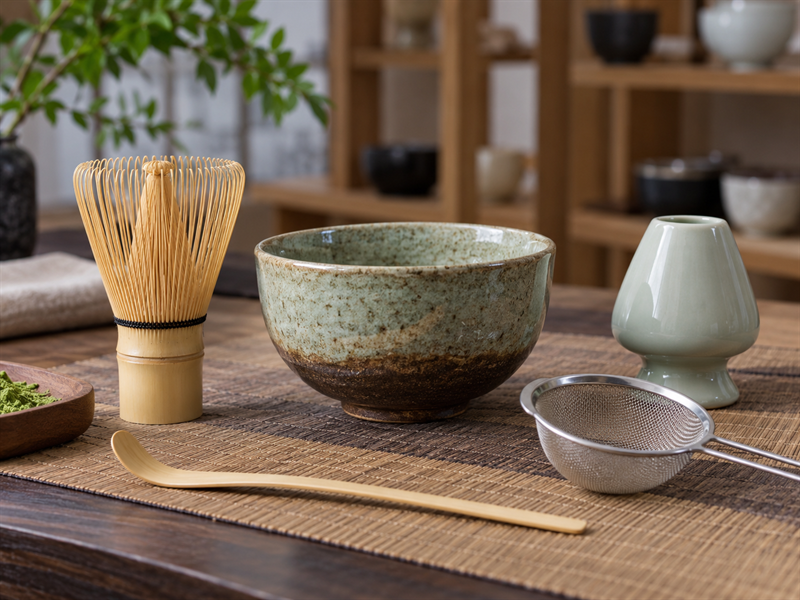
The best holder still fails if staff have no clear place to put a wet whisk. Draw the station layout: sink, rinse point, drying space, clean storage, and service pickup. Keep the holder where a rinsed whisk can stand without dripping onto powder containers, cups, or electrical equipment. Avoid a sealed box while the whisk is still damp. The holder should make correct storage the easy movement after rinsing, rather than an extra walk across the bar.
Observe the station during a rush. Do staff return the whisk to the holder or leave it inside a wet bowl? If the latter, the problem may be placement or insufficient holders rather than staff indifference. The Ippodo care instructions discuss preserving a chasen’s shape; adapt the placement to your actual service and local hygiene requirements. Write a short routine that distinguishes a clean, drying whisk from a whisk waiting to be washed.
6. Can staff clean the holder itself?
Include it on the cleaning list
A holder can accumulate splashes and drips even when a whisk is rinsed first. At the end of a normal shift, lift it and inspect the shoulder, narrow top, and foot. Wash it by the maker-approved method, then allow it to dry before the next use. If a deep groove retains green residue and cannot be reached with the established cleaning tools, select a simpler design. A glossy glaze is no guarantee that all corners are accessible.
Ask whether the holder is suitable for the operation’s approved warewashing process. The FDA Food Code is a useful US model for maintaining utensils and equipment; local rules govern a particular café. Do not extrapolate from a home dishwasher symbol to a commercial machine. Add the holder to a visible cleaning checklist so it is not overlooked because it does not directly hold a drink.
| Location | Inspect for | Response |
|---|---|---|
| Shoulder | Matcha film | Wash and rinse |
| Narrow top | Trapped water | Dry and recheck |
| Foot ring | Residue on shelf | Clean both surfaces |
| Glaze edge | Chips or roughness | Remove damaged unit from use |
7. How many holders does a station need?
Count simultaneous whisk rests
The answer follows the number of whisks that may be rinsed and resting at once, not the number of drinks on the menu. Observe a busy interval and count how often a whisk is in use, waiting to be cleaned, or drying. If several operators share a single whisk, a holder may create a queue. If each has a whisk, each needs a clear place to return it. Add a small spare allowance based on observed breakage and cleaning rotation rather than a generic ratio.
Mark holders or stations if multiple whisk types are used. This prevents a used whisk from being placed on a clean holder designated for a different stage. Check that the chosen shelf can hold the full number without crowding tine heads together. Purchasing ten inexpensive holders that cannot fit the drying area is not an operational solution. Trial the intended count with actual whisks before a chain-wide order.
8. What should a retail set include?
Make compatibility visible to the buyer
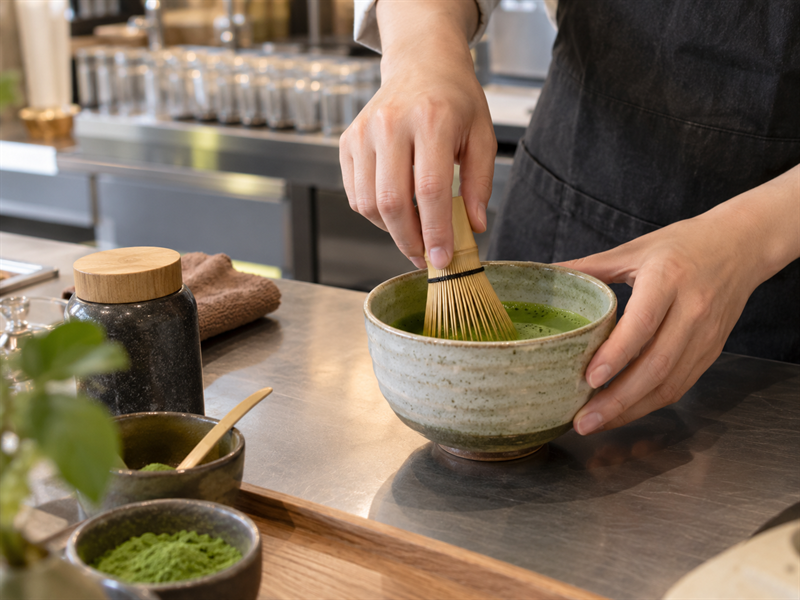
If a retailer sells a whisk holder beside a chasen, test that exact pair and photograph them together. State whether the holder fits a specific whisk model or a measured range. Avoid broad claims such as “fits all 80-prong whisks,” because advertised counts do not define outer diameter. The product card can show how to lower the rinsed whisk onto the holder without pulling at the tines. A short care note should explain that damaged whisks still require replacement.
Package the holder and whisk separately so a hard ceramic edge cannot hit bamboo in transit. Check the height of the combined set inside its box. For online retail, list holder dimensions, material, care method, and whether the whisk is included. Customers often confuse a holder with a whisk when photos show both; clear contents reduce avoidable returns. Keep the description practical rather than promising a ceremonial transformation from one accessory.
| Listing field | Clear information | Common ambiguity |
|---|---|---|
| Included items | Holder alone or set | Whisk shown but not included |
| Compatibility | Tested whisk model or dimensions | “Universal fit” |
| Care | Maker-approved wash method | Unverified dishwasher claim |
| Use | Support between uses | Claim to repair bent tines |
9. How do you assess supplier samples?
Test several, then record a specification
Ask for multiple units from normal production. Check overall height, shoulder width, base diameter, surface finish, and wobble. Fit each with the chosen new whisk and a used whisk. Wash, dry, and inspect the holder as staff would. A sample that looks good alone may be too tall for the chosen shelf or too broad for the packaging insert. Photograph the approved holder with a ruler and the intended whisk.
For a ceramic holder, ask how glaze variation is handled and what counts as a chip or pinhole defect. For any material, request the maker’s cleaning instructions and replacement terms. Avoid making food-contact, antibacterial, or durability claims without product-specific evidence. Keep the approved unit as a reference at receiving. If a later lot changes shoulder profile, the fit test should be repeated before distribution.
10. What training prevents avoidable damage?
Teach one short movement sequence
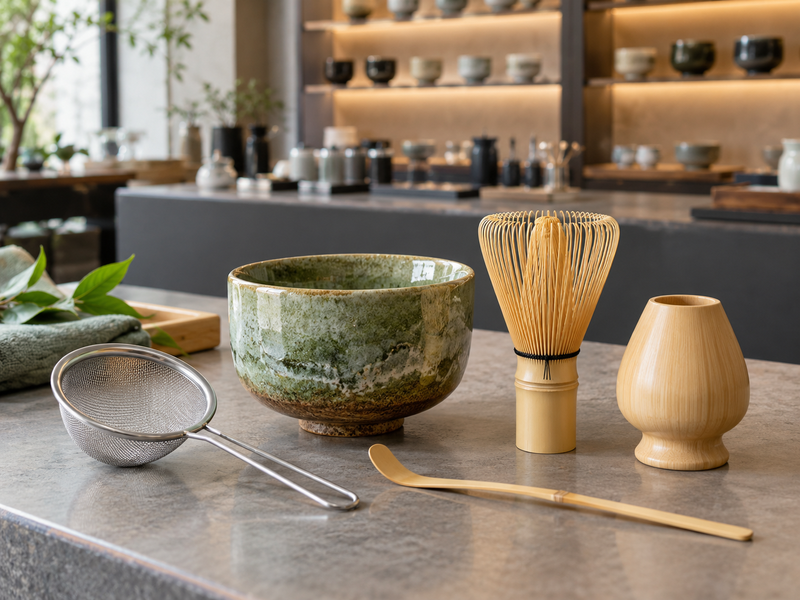
Demonstrate rinsing the whisk according to its maker’s guidance, removing excess water gently, lowering it onto the holder, and lifting it without snagging. Show where the holder goes after cleaning and which shelf is for clean tools. Staff should inspect for broken or badly bent tines before use. A holder is an aid to storage, not a reason to keep a whisk that no longer prepares the drink properly.
Train on the actual purchased model. A differently shaped holder can change how far the whisk is lowered. Put a small photo by the station rather than a long manual page no one reads during service. Revisit the process if whisks are repeatedly found in wet bowls or holders show residue. The useful measure is whether the routine is followed and the tools remain serviceable, not whether staff can recite the accessory’s Japanese name.
| Training step | Demonstration | Check during service |
|---|---|---|
| Rinse | Follow whisk care guidance | No visible powder left |
| Place | Lower without forcing tines | Whisk sits evenly |
| Dry/store | Use assigned open location | No wet bowl storage |
| Inspect | Look for damaged tines | Worn whisk removed |
FAQ
Q1. Is a matcha whisk holder essential? It is useful for supporting a bamboo whisk between uses, but the full rinse, drying, inspection, and storage routine matters more than owning the accessory.
Q2. Does one holder fit every chasen? No. Test the actual whisk’s diameter and knot against the holder’s profile.
Q3. Can a holder straighten a broken tine? No. It supports shape but cannot repair broken bamboo; replace a whisk that no longer works properly.
Q4. Should the holder be washed? Yes, under the maker’s instructions and the operation’s applicable cleaning process. Inspect its shoulders and base for residue.
Q5. How many should a café buy? Count the whisks simultaneously in use and drying during a busy interval, then test that number in the available space.
Give the whisk a practical place to rest
Choose a matcha whisk holder that fits the specific chasen and the station, then make it part of a visible care routine. The best holder is one staff can use and clean without slowing service or damaging the tool it supports.