
A strawberry matcha latte often sells first on its red, white and green layers. It earns a repeat order only if the berry tastes fresh, the purée pours at the same rate each shift and the matcha remains noticeable once the customer stirs the cup. For a café searching “strawberry puree for matcha latte,” the ingredient is a prep system rather than a decorative spoonful. These ten questions help set a recipe that baristas can reproduce and purchasing can cost.
A top-ten result, Strawberry Matcha Latte, uses a strawberry purée layer in a home recipe. A café has different problems: varying fruit quality, batch records, service speed and waste. This guide concentrates on that fruit layer. The site’s strawberry syrup guide covers a smoother, more pourable ingredient; a purée keeps more fruit body and may need a wider opening or different dose.
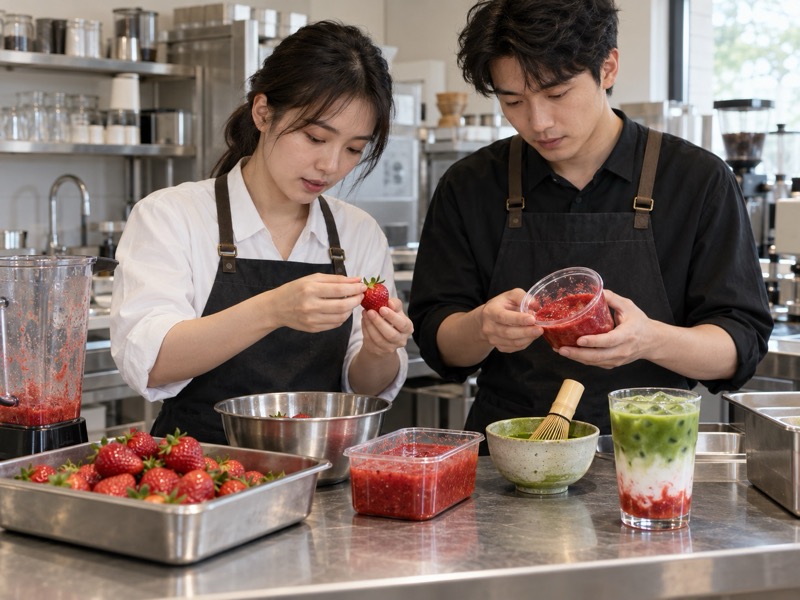
1. Does the café actually need purée instead of syrup?
Choose by the cup you want customers to drink
Purée brings pulp, fruit body and a more visible berry layer. Syrup is usually easier to pump and mix, but it can read as sweet flavour rather than fruit. Neither is automatically better. Make a cup with each at the intended serving size and ask tasters to stir before judging. A thick purée may look impressive at the bottom while delivering little berry flavour through the first sips. A thin syrup may colour the entire drink and erase the layered effect that attracted customers.
Decide how the drink is ordered. For a sit-down cup with a wide straw, small fruit pieces may work. For a narrow lid opening or delivery seal, those pieces can block the straw or remain in the cup. If the café uses a purchased fruit base, read its fruit percentage, sweetener and other ingredients. A label that says “strawberry” does not tell you whether it behaves like a purée. Build a simple sensory standard: visible fruit texture, accepted sweetness, easy pour and balanced flavour after mixing.
| Fruit layer | Strength | Watch for |
|---|---|---|
| Fresh purée | Fruit texture | Batch variation |
| Frozen-fruit purée | More predictable supply | Thawing and water release |
| Prepared purée | Fast service | Ingredient and cost differences |
| Syrup | Easy dispensing | Less fruit body |
2. Which strawberries give a repeatable result?
Buy for flavour and yield, not appearance alone
Fresh berries can be excellent when ripe and in season, but their sweetness and water content change. Frozen berries can make purchasing and batching steadier, though the thawed fruit may release more liquid. Test both with the same base recipe, then note how much usable purée each kilogram produces after sorting and trimming. Price per kilogram of berries is less useful than price per accepted serving. Ask a supplier about variety, size, origin and delivery condition only to the extent those details help predict the cup.
Reject fruit with decay or an off smell. Keep a written receiving check so the prep cook can decide consistently. For frozen stock, record the product and lot that made the approved batch. If the café switches fruit source, make a small trial before changing the main production batch. A fruit layer that is suddenly sweeter can make the same matcha seem weak, and a watery berry lot can blur the cup. The bar should not be left to correct every change with an extra pump of syrup.
3. How sweet should the purée be?
Balance the berry against matcha, milk and ice
Start by tasting the fruit before adding sweetener. Make a small test batch, then add measured sugar or syrup in steps until the berry remains recognizable after the cup is stirred. A very sweet layer can make a vivid photograph but flatten the matcha. If the café already uses a sweetened plant drink, the purée may need less added sugar than it would with unsweetened dairy milk. Write the sweetener amount as a weight or measured volume per batch. “Sweeten to taste” is too loose for two shifts with different fruit.
Test the drink at service temperature and after normal ice melt. Cold dulls some flavours, while melting ice changes the balance later. Ask a panel to judge both the first sip and the mixed cup. If customers are offered a lower-sugar version, do not promise the same texture without testing it; sugar can affect perceived body as well as taste. Menu language should describe the actual recipe. “No added sugar” applies only if none is added to the whole drink, not merely to the matcha layer.
| Test cup | What it reveals | Decision |
|---|---|---|
| Layered, unstirred | First-sip experience | Fruit dose |
| Fully stirred | True drink balance | Sweetness |
| After normal wait | Dilution and settling | Ice and texture |
| Alternate milk | Base-flavour effect | Menu option |
4. What texture should the prep team target?
Set a pour standard that works with the bar tools
Blend long enough to remove hard chunks, then decide whether to strain. A fully smooth purée is easier to dispense; a lightly textured purée makes the fruit more visible. The right choice depends on the bottle opening, cup lid, straw and service speed. Test the actual container the bar will use. A recipe that pours from a wide prep jug may clog a narrow squeeze bottle during a rush. If the purée separates into fruit and liquid, stir the batch before portioning and consider a different blend or fruit source before changing the matcha recipe.
Measure a serving by weight during development even if the final bar method uses a marked scoop or bottle. This reveals whether staff are delivering the same fruit amount. Describe the texture in plain operational terms: pourable from the chosen bottle after a brief shake, with no pieces that block the opening. Keep an approved photo and a sample video for training. Avoid a vague instruction such as “blend until smooth”; the team needs to know what counts as smooth enough for your cup.
5. How should fresh fruit be handled before blending?
Make produce safety part of the prep card
Begin with sound fruit and clean hands, utensils and work surfaces. The US FDA’s produce guidance recommends washing produce under running water before preparation and keeping perishable strawberries refrigerated. It also advises against washing fruit with soap. A café should follow the food-safety requirements in its own location, with a documented process for receiving, washing, sorting and handling fruit intended for a ready-to-drink beverage.
Use a clean blender and food-safe container, and keep the fruit-prep area separate from tasks that could contaminate ready-to-eat ingredients. Label the batch with product, maker and preparation time under the café’s local procedure. Do not invent a multi-day shelf life from a home recipe. The business should set a holding rule appropriate to its ingredients, process and local code, then train staff to discard product outside that rule. Keep fresh and frozen-fruit versions as separate approved recipes if they need different handling or yield.
6. How large should each purée batch be?
Size prep to demand and control waste
Forecast the expected cups for a service period, multiply by the measured purée grams per cup and add a small operational allowance. Compare that with the fruit yield from a trial batch. A large batch may feel efficient at prep time but become expensive if it cannot be used under the café’s approved holding procedure. Small batches take more labour and equipment time. Test one busy day and one quiet day, then set a batch size for each pattern rather than making the same quantity every morning.
Record batch inputs and output weight. That lets purchasing see whether a change in fruit quality, trimming or water addition is changing cost per serving. Keep a retained taste reference or written standard for the shift lead to compare before service. If the purée is purchased ready-made, calculate the same usable servings after opening and account for any remainder the café discards. The goal is not the lowest fruit price; it is a repeatable, safe and profitable drink.
| Batch record | Why keep it |
|---|---|
| Fruit weight and lot | Trace supply changes |
| Sweetener and water | Repeat the taste |
| Finished yield | Cost each portion |
| Prepared and discarded | Manage the holding plan |
7. How should a strawberry purée matcha latte be built?
Design the visual layer for a drink that still tastes good
Place the measured purée in the cup, add the tested amount of ice and milk, then pour a smooth matcha concentrate according to the desired layer. Use the same cup shape in testing as in service; a wide glass and a narrow takeaway cup display layers differently. Matcha should be dispersed before it meets cold milk or purée. Dry powder dropped directly into a fruit-heavy cold cup leaves lumps that no red layer can hide. Give the customer a straw or a clear stir instruction if the first sip otherwise contains mostly berry.
Test the finished drink at the counter and after a normal delivery delay. Look for purée stuck to the bottom, fruit pieces in the straw and diluted matcha on top. If the cup fails after ten minutes, adjust the dose, texture or build order and retest. Do not optimize the photograph alone. A café can keep a layered presentation while ensuring that a stirred cup tastes balanced from top to bottom. The prep and bar teams should agree on one pour sequence so service does not drift between shifts.
8. Which matcha and milk can stand up to the berry layer?
Test the full recipe, not the components in isolation
A delicate matcha can disappear beneath fruit and sweetener. A powder with a stronger tea note may work better in this drink even if it tastes less refined as plain tea. Compare coded samples at the accepted dose in the final strawberry cup. Judge flavour after stirring and after the ordinary handoff delay. Keep one matcha lot as the reference and review a new lot before it reaches every store. A change in bitterness or colour may require a recipe adjustment, but that adjustment should be deliberate and costed.
Milk also changes the result. Dairy, oat and coconut bases bring different body and sweetness; choose a default and test any offered alternative. If the menu offers dairy-free or low-sugar versions, check all ingredients and use a separate approved build. Do not assume a customer gets the same visual layers and cost with every milk. The drink’s fruit, milk and matcha should work as a trio. Trying to rescue a poor match with extra purée may hide the tea and increase the serving cost.
| Component | Approve by | Retest when |
|---|---|---|
| Matcha | Stirred cup flavour | Lot or grade changes |
| Milk | Body and sweetness | Brand changes |
| Purée | Berry taste and pour | Fruit source changes |
| Ice | Handoff dilution | Cup size changes |
9. How should baristas be trained to serve it?
Give staff a fast method and a visible standard
Post a recipe card showing the exact purée portion, matcha grams, water, milk, ice and sequence. Use a measured bottle or portion tool; a casual squeeze is difficult to reproduce. Train each barista to make three cups at normal speed and compare the finished texture and colour with the reference. Ask them to stir and taste one cup, too. Layer appearance does not reveal whether the drink is too sweet or the matcha has vanished.
Keep the purée container and its batch record easy to identify at the bar. If the bottle is too cold to pour, separates during service or clogs repeatedly, change the prep method rather than asking staff to struggle. Clean tools and work surfaces under the café’s procedure, especially when the fruit prep area is shared. At opening, check that the available batch is within the approved holding window and tastes right. At closing, record unused product and remakes. Those notes tell purchasing whether the recipe or batch size needs adjustment.
10. What is the real cost per strawberry matcha latte?
Count fruit yield, labour and remakes
Calculate the berry cost from usable purée yield, not raw fruit weight. Add sweetener, matcha at the accepted dose, milk, cup, lid and prep labour. Include a realistic allowance for discarded purée and remade cups. A purée that looks cheap when berries are in season may change cost and taste later; plan an approved frozen or purchased alternative before the seasonal switch. If the bar uses a premium matcha that the fruit largely hides, compare a suitable less expensive grade in a blind finished-cup test.
Track the drink’s sales against the amount of purée made each week. If the café prepares far more than it sells, reducing batch size may improve margin more than raising menu price. If the drink is popular but staff keep remaking it, diagnose the dispensing bottle, texture and recipe card. Review customer comments about too much fruit, too little tea and difficult drinking. A successful strawberry purée is one that brings a clear berry flavour, supports the matcha and can be made consistently at the margin the menu requires.
| Cost line | Use in calculation |
|---|---|
| Fruit | Cost per usable purée gram |
| Matcha | Accepted grams per cup |
| Other ingredients | Milk, sweetener and ice |
| Operating loss | Discarded prep and remakes |
Frequently asked questions
Q1: Is strawberry purée the same as strawberry syrup?
No. Purée usually keeps more fruit body and texture; syrup is typically easier to pump and blend. Test each in the final cup.
Q2: Can a café use frozen strawberries?
Yes, if the product and handling meet the café’s food-safety plan. Test thawed-fruit water release and final yield before replacing fresh berries.
Q3: How much purée belongs in one matcha latte?
Set a measured portion by tasting the layered and stirred drink. The right amount depends on cup size, fruit sweetness, matcha and milk.
Q4: How long can purée be held after blending?
Use the holding procedure set for your ingredients, process and local requirements. Do not copy a home-recipe storage time into commercial service.
Q5: Why does the fruit stay at the bottom of the cup?
Purée body and the layered build encourage settling. Give a stir instruction or adjust texture and portion after testing the actual cup.