
A matcha latte machine can make a café faster, or it can add one more piece of equipment that staff avoid during a rush. The deciding factor is rarely the demonstration video. It is whether the machine produces the drink on your menu, at your busiest hour, with the powder and milk you actually buy. A countertop maker built for whole tea leaves, a powder whisk, and a syrup dispenser solve different problems. Treating them as interchangeable is an expensive mistake.
This guide is for café owners and beverage managers who need to choose a preparation method, test a machine with staff, and calculate what it will cost to run. Ideal Home’s first look at an all-in-one matcha latte maker shows the appeal of a compact appliance. In a commercial setting, the questions extend to cleaning, service access, repeatability, and throughput.
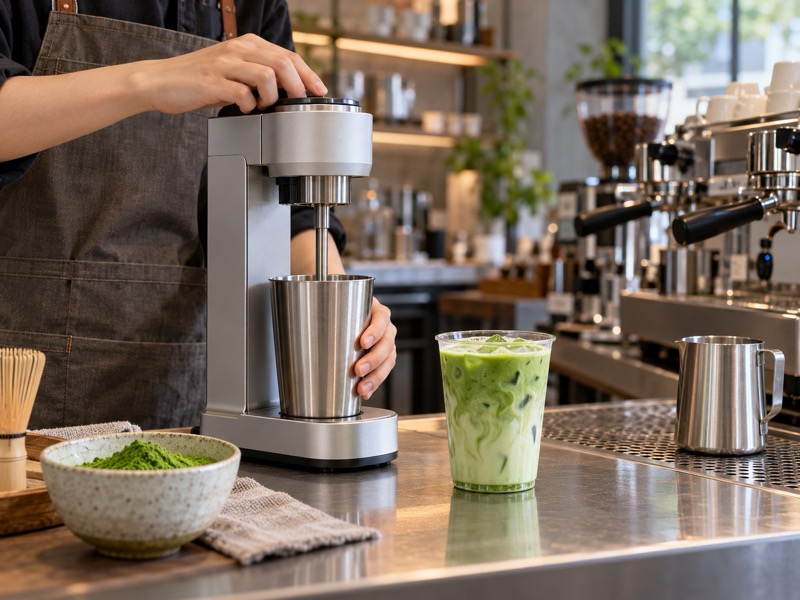
1. What job should the matcha latte machine actually do?
Start with the failure you want to fix. A café that sells twenty matcha drinks each day may lose more time to measuring powder than to whisking. Another café may already portion powder well but struggle to dissolve it in cold milk. A third might want a visible preparation ritual because guests watch the bar. Write down the bottleneck before looking at appliances.
List your top three matcha drinks, average hourly orders, peak fifteen-minute orders, cup sizes, and whether you serve both hot and iced versions. A machine that prepares one beautiful 12-ounce hot latte but cannot handle the iced 16-ounce drink that drives sales is the wrong machine. If you use matcha in a coffee and matcha blend, test that recipe too; the espresso station may remain the practical center of the workflow.
Decide whether the device must dose powder, mix a slurry, heat milk, froth milk, or do several of those jobs. An automatic machine can save a hand movement while creating a new refill or wash task. The goal is a shorter reliable sequence at the bar, measured from order ticket to handoff.
| Service problem | Useful capability to test | Evidence to collect |
|---|---|---|
| Powder portions vary | Repeatable dosing | Weigh ten consecutive portions |
| Cold drinks have dry flecks | Consistent wetting and agitation | Inspect cup wall and last sip |
| Hot line backs up | Parallel prep beside espresso | Time a peak-hour sequence |
| Staff avoid cleanup | Few removable, accessible parts | Time and observe full cleaning |
2. Which equipment format suits your menu?
“Matcha latte machine” describes several unlike tools. A handheld electric whisk is inexpensive, easy to replace, and flexible with recipes, but still needs measured powder and a vessel. A countertop powder mixer can standardize agitation and free a hand, provided its bowl is quick to rinse. An automatic fresh-leaf maker grinds and mixes its own tea system; it may produce a distinct drink but may not accept your existing powder. An espresso machine steam wand heats and textures milk, not matcha powder. A café usually needs a short chain of tools rather than one magical box.
Compare devices against your actual recipes, not a generic latte. Ask the supplier to demonstrate your powder in water first, then with your dairy and plant milks. Do not assume a whisk attachment that looks powerful will disperse a high dose in cold liquid. Check the manufacturer’s instructions on permitted ingredients; putting powder, syrup, or milk into an unsuitable reservoir can damage equipment and complicate sanitation.
| Format | Best use | Important limitation |
|---|---|---|
| Handheld electric whisk | Small menus and recipe changes | Operator technique affects results |
| Countertop powder mixer | Repeatable slurry at moderate volume | Cleaning and bowl capacity matter |
| Automatic leaf-to-cup maker | Dedicated drink and guest theater | May lock you into a tea format |
| Espresso machine plus matcha station | Shared milk steaming in a coffee bar | Matcha still needs separate mixing |
3. How should you measure speed during real service?
Ask a staff member who has not rehearsed the demonstration to make the drink. Time the complete sequence: retrieve powder, dose, mix, prepare milk, pour, finish, and restore the station. Then repeat it while an espresso order is underway. A device can shorten mixing by ten seconds yet add thirty seconds of walking, refilling, or rinsing. Record both active hands-on time and total elapsed time. These are different measures.
Run a five-drink sequence using the flavors and cup sizes you sell most. Note whether the second drink must wait for the first vessel to be washed, whether the machine overheats or pauses, and whether a clean cup is available. Observe the barista’s reach: a short mixing cycle will not help if cups, powder, and milk sit on opposite sides of the counter.
Do not turn a test result into a universal capacity claim. A device that handles five small drinks during a quiet afternoon may behave differently when the same worker also takes payment and steams milk. Retest during a live shift before basing staffing or marketing promises on it.
4. Will your matcha powder work in the machine?
Matcha powders differ in particle behavior, blend composition, and serving dose. Some café blends contain sugar or other ingredients; others are unsweetened pure matcha. A dosing system calibrated for one powder may deliver a different weight when the material settles or humidity changes. The only useful check is to weigh repeated outputs with your chosen product.
For a powder system, test the current lot and a fresh lot if possible. Inspect the chute for buildup after ten drinks, not just one. Ask how the machine stores powder and how long it may sit there according to the manufacturer’s instructions. At closing, check whether staff can empty and clean the chamber without tools. Matcha exposed to moisture can clump, and a warm bar adds another reason to keep storage controlled.
If a leaf-to-cup maker needs proprietary tea cartridges or whole leaves, compare that supply arrangement with your existing wholesale plan. Ask about pack sizes, delivery lead times, and what happens if the machine’s tea is unavailable for a week. That dependency belongs in the purchase decision, even if the sample tastes excellent.
5. How do you test texture, taste, and color?
Serve a blind comparison between the current method and the new machine. Use the same matcha dose, milk, sweetener, cup, and ice. Keep the water temperature and mixing sequence documented. Evaluate immediately and after ten minutes, because a drink that looks smooth on the counter may leave sediment at the bottom. For iced service, inspect the underside of the lid and the last two sips.
Have two or three trained tasters record sweetness, matcha intensity, bitterness, milk integration, and visible clumps separately. “Better” without a reason is hard to use in a buying decision. A device may improve foam while muting the tea flavor; another may yield a more vivid green drink but leave dry powder on the cup wall. Choose the tradeoff your customers will notice.
| Test | How to run it | Pass condition to set before testing |
|---|---|---|
| Cold slurry | Mix the standard dose in measured water | No visible dry pockets after pouring |
| Hot latte | Use normal milk and service cup | Acceptable flavor and pour texture |
| Ten-minute hold | Leave drink undisturbed, then taste | Settling stays within your quality limit |
| Plant milk | Repeat with top-selling alternative | No avoidable separation or residue |
6. What cleaning burden can your team manage?
Ask the vendor to show the entire close-down procedure, including parts that touch powder, milk, or sweetener. Then ask a barista to do it without coaching. Count removable pieces, drying space, and the number of steps requiring a brush or tool. A removable bowl may be simple to wash; a narrow tube that traps residue may not be. Follow the device manual for cleaning agents and frequency.
Milk-contact parts need particular care. A powder-only mixer still needs regular removal of residue and a plan for splashes. The FDA Food Code is a useful reference for equipment design and cleaning principles, while the applicable local health authority and equipment instructions govern your operation. Check with that authority if a new machine changes how your bar stores or dispenses ingredients.
Cleaning affects labor cost and taste. Old sweetener in a line can change the next unsweetened drink; powder trapped around a seal can contaminate later batches. Make a written opening and closing checklist, name who completes it, and verify that the machine can be inspected after reassembly.
7. Will it fit the bar, electrical setup, and service path?
Measure more than the machine’s advertised width. Include clearance for opening a hopper, removing a bowl, plugging it in, and cleaning around it. Put a cardboard footprint on the bar for one shift. If staff must reach across the espresso grinder to fill the matcha machine, the station may be slower even when the device itself is fast.
Confirm voltage, outlet type, power draw, water requirements, and any need for drainage from the manufacturer’s written specification. Do not use a casual extension-cord arrangement as the installation plan. If service or repair requires moving heavy equipment, check that it can be disconnected and reached without dismantling the bar.
Think about noise and visibility. A loud grinder might be acceptable in a back prep area but awkward beside a guest-facing counter. If the guest experience depends on seeing the green powder whisked, an enclosed unit can take away a moment that helps explain your menu price.
8. What is the true cost per drink?
Compare the machine with your current method over a reasonable planning period. Include purchase price, consumables, service contract, replacement parts, cleaning supplies, electricity where material, and staff minutes. Add product loss from incorrect doses and any proprietary tea requirement. Divide by the number of drinks you realistically expect to sell, not the device’s maximum advertised output.
For a trial calculation, suppose a café expects 40 matcha drinks a day over 300 trading days: 12,000 drinks a year. A $1,200 machine spread evenly over two years adds $0.05 per drink before maintenance or labor. That arithmetic is illustrative, not a price quote or forecast. If the machine saves only five seconds of active work per drink, estimate what that time is worth in your actual schedule. Savings appear only if they change labor deployment or service capacity.
| Cost line | Question for supplier or operator | Where to record it |
|---|---|---|
| Machine and installation | What is included at delivery? | Upfront cost sheet |
| Tea and compatible consumables | Can you use your current wholesale matcha? | Ingredient cost per cup |
| Cleaning and parts | What must be replaced, and how often? | Annual operating budget |
| Downtime | What is the repair response and backup plan? | Service-risk note |
9. Can every shift make the same drink?
A machine should reduce the number of judgment calls, not hide them. Write one recipe card for each core drink: grams of powder, water amount, milk volume, sweetener dose, ice, cup size, and sequence. If the device has programmable settings, label them with the drink name and version date. Keep a manual backup recipe in case it stops working.
Train three people with different levels of experience. Let each make the same drink three times, weigh key inputs, and compare the cups. If only the manager produces a good result, the workflow is not ready. Watch how staff recover from a wrong powder dose or a half-filled milk jug. Errors during a busy shift reveal more than a polished demonstration.
Record the reasons for deviations. A lighter green drink may come from under-dosing, a new powder lot, more milk, or residual water in a mixing bowl. The machine may be blameless. Train staff to check the measurable inputs first, then adjust a recipe deliberately rather than adding powder by eye.
10. What should a purchase trial include?
Request a trial that covers your busiest service period, not only a short supplier visit. Agree beforehand on recipes, cups, staff, and acceptance criteria. Ask for written information on warranty, replacement parts, training, cleaning, permitted ingredients, and service response. Photograph the installed station before and after service so you can see whether it crowds the bar.
Use a small scorecard. Measure order-to-handoff time, active labor, drink defects, cleaning time, and staff comments. Keep taste separate from speed. The fastest process should not win if customers receive a gritty cup; the best tasting cup should not win if the machine takes longer to clean than the old method takes to prepare drinks.
| Trial measure | Current process | Machine process | Decision rule |
|---|---|---|---|
| Median ticket-to-handoff time | Measure live orders | Measure comparable live orders | Improvement without more defects |
| Drink consistency | Blind taste and visual check | Same recipe and panel | At least as acceptable as current cup |
| Closing time | Time full station clean | Time full station clean | Fits rostered closing shift |
| Operator acceptance | Ask every shift | Ask every shift | No recurring workaround needed |
If the trial passes, place a small initial order for compatible powder and consumables and keep the current whisking setup ready during the first weeks. Recheck dose weights after staff have used the device for a while. A purchase is successful when the machine keeps producing the intended cup without extra attention from the owner.
Frequently Asked Questions
Q1: Can an espresso machine make a matcha latte?
An espresso machine can steam milk for a hot matcha latte. It does not usually mix dry matcha into a smooth slurry by itself. Whisk the powder separately, then combine it with the textured milk.
Q2: Is a matcha latte machine worth buying for a small café?
It can be if it solves a measured bottleneck and the cleaning routine fits your team. At low volume, a measured powder dose and a reliable electric whisk may be simpler and cheaper.
Q3: Can I put matcha powder in a coffee machine hopper?
Only if the manufacturer explicitly approves that ingredient and use. Coffee grinders and beverage hoppers are designed for specific materials; powder can clog or contaminate unsuitable equipment.
Q4: How do I know whether a machine works with oat milk?
Test your actual oat milk and recipe. Compare texture, separation, cleaning residue, and service speed with your current method. Brand and formulation changes can alter the result.
Q5: What should I ask the vendor before ordering?
Ask for ingredient compatibility, written cleaning steps, replacement part prices, warranty terms, power and space requirements, training, and a service response commitment. Request a trial with your own matcha and staff.