
A café can replace cow’s milk with a plant drink and still disappoint the customer: the matcha disappears, the texture becomes thin, or a shared pitcher makes a confident “dairy-free” answer hard to defend. If your team is searching “matcha latte dairy free,” the real task is to choose a recipe and a service method that work together. These ten checks help a coffee shop test the cup, train the bar and describe the drink accurately.
The top-ten article Non-Dairy Milk options for Matcha Latte introduces the milk choices. This guide goes further into café purchasing, drink performance, communication and daily service. “Made without dairy ingredients” is a recipe description; it should not be used as an unqualified allergy guarantee when staff cannot control shared equipment and other ingredients. Ask about the customer’s needs and follow your local food-safety procedures.
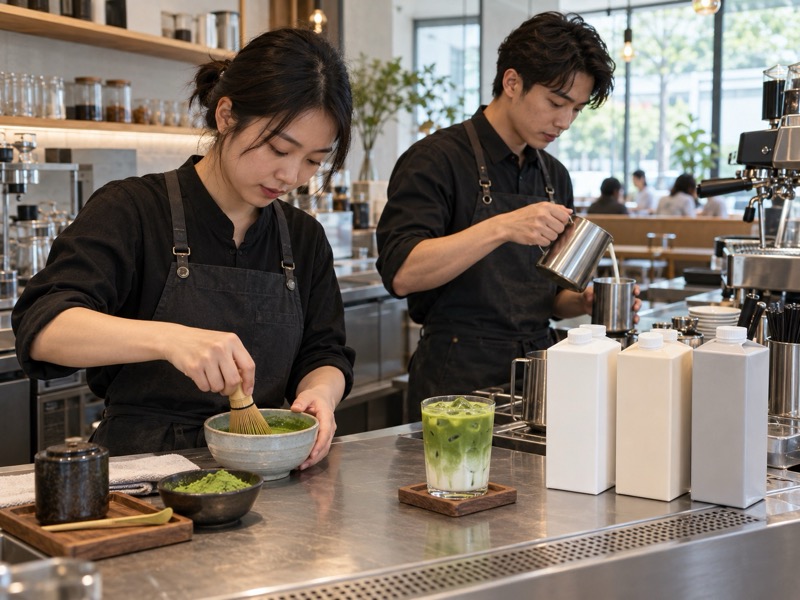
1. What does “dairy-free” mean in your café?
Define the recipe and the promise separately
Start with a plain description: this drink is made with matcha, water and a specified non-dairy beverage, plus any listed sweetener or topping. Check the matcha product itself; pure tea powder and a prepared latte blend are not interchangeable. A blend can contain ingredients beyond tea, including dairy-derived components. Keep an ingredient record for every item that enters the cup. If the menu uses “dairy-free,” the bar team should be able to name the ingredients and explain the shared-equipment situation without improvising.
A customer may avoid dairy for preference, dietary practice, intolerance or allergy. Staff should not assume those requests mean the same thing. If someone asks about a milk allergy, follow the café’s escalation procedure and give an honest account of the ingredients and preparation area. The US FDA identifies milk as a major food allergen, and its guidance discusses accidental allergen transfer. Use the rules that apply to your café’s location, and avoid a guarantee that your kitchen has not verified.
| Customer question | Staff can check | Do not guess |
|---|---|---|
| Is the recipe non-dairy? | Current ingredient cards | What is in a premix |
| Which plant drink? | Carton and menu | Substitutions at rush time |
| Is it safe for an allergy? | Approved service protocol | Zero cross-contact |
| Can I change milk? | Available tested options | Same taste and price |
2. Which non-dairy beverage makes the best matcha latte?
Taste in the finished cup and check the carton
Oat, soy, almond and coconut drinks each change the cup. Oat can give body, soy often has a stronger base flavour, almond may make the drink seem lighter, and coconut may become a main flavour rather than a neutral background. These are tasting tendencies, not promises about every brand. Barista versions also differ from ordinary retail cartons. Ask suppliers for samples, then test each with the same matcha, water, cup size and sweetener. Choose one default milk and only add alternatives that the bar can make consistently.
Read each current carton for ingredients, allergens, storage directions and whether it is sweetened. An “unsweetened” label can still leave a drink tasting different from another brand. Measure the matcha dose that produces an accepted cup with each option. If a plant drink needs an additional gram of matcha, include that in pricing. Keep a sample cup at normal serving temperature and check its appearance after a few minutes; a separation issue that seems minor at the bar may be obvious at the customer’s table. For a deeper comparison of one option, see the site’s oat milk matcha latte guide.
3. How much matcha should go into the dairy-free cup?
Choose the dose by flavour and cost
There is no universal gram target for all powders and plant milks. Begin with the café’s existing matcha recipe, then test small measured adjustments. Whisk the powder with a controlled amount of water before adding the plant drink. Record the final matcha mass per cup, not “one scoop”; scoop volume changes with packing and powder texture. A bright green cup can still taste weak if a strongly flavoured milk or syrup masks the tea. Look for a clear tea note, balanced bitterness and a finish your customer would order again.
Run the test blind if comparing suppliers. Code the matcha samples, use the same milk and judge the finished drink before seeing price. Then calculate cost at the accepted dose. A cheaper powder that requires more grams may cost more in service. Do the same calculation when changing the milk: a reformulation can change the dose even if the tea is unchanged. Keep the result on a recipe card with water volume, mixing time and cup size so it can be repeated on a Saturday rush, not just during a tasting meeting.
| Variable | Hold constant first | Change only after tasting |
|---|---|---|
| Matcha | Measured grams | Dose in small steps |
| Water | Volume and temperature | Concentrate strength |
| Plant drink | Brand and sweetness | One option at a time |
| Serving | Cup and ice | Final dilution |
4. How should an iced dairy-free matcha latte be assembled?
Build a drink that survives the handoff
First disperse matcha into a smooth concentrate. Dry powder tipped onto cold milk often leaves visible lumps. Add measured ice and plant drink, then pour or mix the concentrate according to the café’s chosen appearance. A layered cup may photograph well but taste uneven unless the customer stirs it; decide whether staff will give that instruction. If the drink is for delivery, test it after the normal travel delay, not just at the moment it leaves the bar.
Use a fixed ice fill and cup size. Changing either alters perceived sweetness and tea strength. Some plant drinks show separation or flecks when they meet matcha concentrate, especially after sitting. Test the chosen product in the actual sequence and temperature used in service. If it separates, adjust the mixing process or choose another milk before adding a stabilizer or syrup simply to hide the problem. Keep one approved photo of the final cup for staff, with a note of what normal settling looks like. That gives a useful standard without pretending every cup will be identical.
5. What changes in a hot dairy-free matcha latte?
Milk texture needs its own trial
A plant drink that tastes good cold may foam poorly or develop a flavour the team dislikes when warmed. Test hot and iced versions separately. Use the manufacturer’s handling directions for the chosen product and the café’s normal temperature control; do not copy a dairy steaming routine without checking the result. Prepare the matcha concentrate first, then add the heated plant drink. A short service test should show whether foam holds long enough for the customer and whether the matcha remains noticeable through the added body.
Clean the steam wand and pitcher according to the café’s approved procedure between different milks. If the bar serves dairy alongside plant drinks, a dedicated pitcher or clearly controlled preparation sequence may make staff practice easier to maintain. Do not treat a quick rinse as proof that allergen transfer cannot occur. The FDA’s retail food-surface research explains why cross-contact controls deserve more thought than a casual wipe. A café should set its own documented method under local requirements and train staff to use it every time.
| Hot-drink check | Observe | Record |
|---|---|---|
| Warming | Flavour change | Accepted setting |
| Foam | Texture at handoff | Milk brand and method |
| Matcha | Tea note in final cup | Measured dose |
| Equipment | Cleaning step | Staff sign-off |
6. Which other ingredients can quietly add dairy?
Read the whole build, not just the milk
Review prepared matcha mixes, sauces, chocolate, caramel, whipped toppings, foams, powders and garnishes. A barista can choose plant milk and then add a dairy-containing topping without noticing the contradiction. Keep an ingredient card for each stocked product and update it when a vendor changes the formula. Do not infer ingredients from a flavour name or colour. If a topping cannot be verified, leave it off the dairy-free version until purchasing can confirm it.
Sweeteners also change the cup even when they contain no dairy. A vanilla syrup may cover a delicate matcha; a small amount of another syrup can improve balance but raise cost and sweetness. Test the complete recipe and name the default syrup in the menu or staff guide. If a customer asks for no sweetener, know whether the plant drink itself is sweetened. For a seasonal drink, use a separate approved recipe card rather than telling staff to “make the regular latte dairy-free.” That vague instruction makes substitutions and ingredient mistakes more likely.
7. How can a shared bar reduce dairy cross-contact?
Make the safe sequence a service habit
Map every contact point: milk carton, scoop, whisk, bowl, pitcher, steam wand, blender, shaker, counter and garnish tools. Decide which items can be dedicated and which need an approved cleaning procedure. Train staff to fetch the correct container and use clean tools before making the drink. If the same scoop touches a dairy premix and pure matcha, the cup has a problem before the milk is poured. Store ingredient containers so labels and lids remain clear during a rush.
Document what the café can and cannot promise. Staff should pause and ask a manager or follow the established allergy procedure when a customer raises an allergy concern. The right answer may depend on how the drink is made and the customer’s needs; a confident script is useful only when the underlying process is real. Review the workflow whenever equipment moves, a new topping is introduced or service volume rises. Cross-contact controls are an operating practice, not a claim that can be fixed by changing one line on the menu.
| Contact point | Practical control | Verify on shift |
|---|---|---|
| Matcha scoop | Keep with one product | Container and scoop match |
| Pitcher | Dedicated or approved clean | No unplanned reuse |
| Steam wand | Documented cleaning | Step completed |
| Garnish station | Separate utensils | Correct topping |
8. How should staff learn the recipe and the customer conversation?
Train with both a cup test and a question test
Give each barista a one-page card with the approved matcha dose, water amount, plant drink, syrup, cup size and order of assembly. Ask them to make three cups at normal speed and compare them with the reference cup. A supervisor can correct clumps, over-dilution or weak flavour before the drink goes on the menu. Recheck when a new carton brand arrives. The staff member needs to know that a “plant milk” button on the till does not automatically change the topping or make a prepared mix suitable.
Practice the customer questions: Which plant drink is used? Is it sweetened? What other ingredients are in this flavour? What equipment is shared? Provide an honest route to escalate questions about allergies. A scripted “yes, it is safe” is no substitute for checking ingredients and the bar process. Keep the current ingredient records easy to find, not in a forgotten launch folder. If the café cannot verify a claim during a shift, staff should say so and offer a choice that the business can support.
9. What should the menu and ordering screen say?
Use words that match the actual cup
State the default plant drink and any automatic syrup or topping. If a customer can swap milks, show the options and any price difference. Do not bury a dairy-containing sauce in a “dairy-free” seasonal listing. A simple menu can say that a recipe is prepared without dairy ingredients while giving staff a separate, accurate answer about shared equipment. Have the responsible manager review wording against local rules and the café’s real controls before using a stronger allergen claim.
Check the ordering app, printed menu, staff screen and delivery listing together. A change made only to the counter board can leave an old description online. Use one version-controlled recipe name and update all channels when an ingredient supplier changes. If the plant drink is unavailable, specify what substitution staff may offer; do not make an untested swap without telling the customer. Review customer feedback for the words they use. Complaints about a drink being “too thin” may point to a milk or dose issue rather than a need for more syrup.
10. How should the café price and monitor the drink?
Measure cost at the accepted recipe, then watch waste
Calculate matcha cost from actual grams used, plant drink cost from the measured pour, and syrup or topping cost from the approved build. Add packaging and likely spoilage for a realistic margin. If a dairy-free option is a milk swap on the main latte, check whether the new milk changes the accepted matcha dose. A surcharge should reflect the café’s costs and menu decision, not the assumption that every plant drink costs the same.
Track weekly cups sold by milk choice and how much opened stock is discarded. A slow-moving fourth option may produce more waste than sales. Watch for remakes caused by clumps, wrong milk, forgotten topping changes or flavour complaints. These are training and procurement signals. Revisit the recipe when the matcha lot or plant drink brand changes, and keep the old reference cup for comparison. The best dairy-free matcha latte is one the customer likes and the bar can describe and make accurately on its busiest day.
| Weekly measure | Why it matters | Action |
|---|---|---|
| Accepted cups | Real demand | Set stock level |
| Matcha grams | Cost per drink | Check dose drift |
| Opened milk waste | Menu complexity | Adjust options |
| Remakes | Service errors | Retrain the step |
Frequently asked questions
Q1: Is a matcha latte with oat milk automatically dairy-free?
Check the matcha mix, syrups, toppings and preparation method. Changing the milk alone does not verify every ingredient or shared-equipment risk.
Q2: Which plant drink tastes most like a dairy latte?
There is no universal winner. Blind-test the options with your actual matcha, dose and serving temperature.
Q3: Can a café promise a dairy-free latte is safe for a milk allergy?
Only make a claim the business can substantiate under its local procedures. Staff should review ingredients and cross-contact controls and escalate allergy questions.
Q4: Why does a plant-milk matcha latte separate?
The milk, concentrate, temperature and mixing order all matter. Test the complete service sequence and a held cup before changing the recipe.
Q5: Should the dairy-free version cost more?
Price it using the accepted matcha dose, measured plant drink, extras and waste. Explain any milk-swap charge clearly on the menu.