
Strawberry syrup for matcha looks like a simple add-on until two stores make visibly different drinks from the same recipe. Fruit content, viscosity, sweetness and dispensing method all change what ends up in the cup. A buyer needs a syrup specification that works with the chosen tea and survives ordinary bar service. This guide is for café chains, beverage brands and ingredient buyers selecting a strawberry component for matcha drinks. It focuses on repeatability, honest menu language and commercial supply rather than a one-off kitchen recipe.
1. What should strawberry syrup do in a matcha drink?
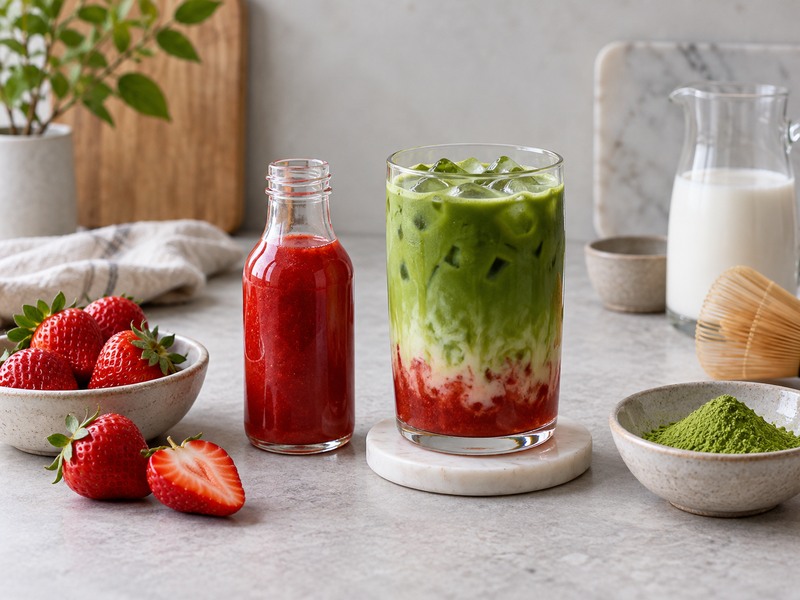
The syrup should provide a recognizable strawberry note at a dose that leaves room for tea. It may also create a red layer in an iced latte, sweeten the milk or add fruit body. Those jobs compete. A thick puree-style syrup may hold a strong layer but clog a pump. A thin flavored syrup can dose easily while giving little fruit texture. Write down the drink’s priority before choosing a product. If the menu promises visible fruit, judge a stirred cup as well as the initial layers. Customers eventually mix and drink it; a striking handoff photograph cannot rescue an unpleasant final third.
Which application is the team developing?
A clear iced drink, a milk latte and a ready-to-drink bottle need different strawberry inputs. A café can use refrigerated puree if its staff can control storage and waste. A national chain may value a sealed ambient syrup pack with calibrated pumps. A bottle requires processing and stability work for the full finished formula. Match the ingredient to the route, then test its flavor in that route. Avoid selecting a supplier from an undiluted spoon taste; high sweetness can seem impressive alone and become cloying when combined with milk and matcha.
| Syrup role | Target observation | Likely tradeoff |
|---|---|---|
| Flavor | Strawberry remains clear after mixing | Strong flavor may mask tea |
| Sweetness | Full cup tastes balanced | Sugar limits recipe flexibility |
| Visual layer | Distinct at handoff | Layer can shift during delivery |
| Fruit body | Noticeable texture | Pulp may affect pumps and straws |
2. How do fruit syrups differ from flavor syrups?
A fruit syrup may contain strawberry puree or juice, while another product may rely mainly on flavoring and color. Neither category guarantees better performance. A puree-heavy product can taste fresh yet vary by fruit lot; a formulated syrup can dose consistently but may not support a “made with strawberries” message. Ask for the complete ingredient statement, fruit percentage where relevant, soluble-solids range, acidity range, and any preservative or color information. Compare supplier terms in the finished matcha drink. A low price per bottle is meaningless if the approved flavor needs twice the recommended dose.
What should the buyer ask before tasting?
Request a specification, commercial sample, unopened and opened storage instructions, shelf-life basis, pack dimensions and dispenser compatibility. Ask whether seeds or pulp settle in the container. If a syrup must be shaken before use, that step belongs in the operating procedure. Confirm whether the sample formula matches the offered production formula. Record the actual lot ID and do not assume that a seasonal strawberry harvest will behave identically. A retained reference makes later supplier or lot comparisons far more reliable than someone’s memory of a launch sample.
3. Which syrup attributes deserve a specification?
Sweetness, acidity, viscosity, fruit character and color should be stated as ranges or sensory references that the supplier can reproduce. The exact numerical limits depend on the chosen formula; inventing universal limits would be unhelpful. For café service, the pump must deliver a repeatable portion from a cold or room-temperature pack, whichever the operation uses. Test how much syrup remains inside a pouch or bottle when staff consider it empty. That trapped product affects unit cost. Ask for a notification commitment when fruit source, flavor, stabilizer or pack changes.
How can incoming lots be checked?
Check the delivery against the purchase specification and compare a small finished drink with the approved reference. Record pack integrity, lot identification, appearance, aroma and pump output. If a new lot is thicker, the pump may underdose even when staff use the same number of strokes. A matcha latte is an effective application test because both flavor and color differences become visible. Quality teams can use an agreed sensory panel and supplier documents rather than rely on a single staff member’s opinion. Hold suspect stock while the difference is investigated.
| Incoming check | Practical method | Reason |
|---|---|---|
| Identity and lot | Match label with purchase order | Traceability |
| Pump output | Weigh repeated strokes | Portion consistency |
| Sensory | Prepare standard matcha drink | Finished flavor |
| Pack condition | Inspect seals and leakage | Usability and hygiene |
4. How should a team build the first recipe?
Fix cup size, milk or water base, matcha dose and ice before changing syrup. Then test a small series of syrup amounts. Taste blind if possible and ask people to describe the drink rather than rate it from its name. The best dose gives strawberry character while keeping tea recognizable. Disperse matcha separately so clumps do not confound the syrup trial. If a drink uses a bottom fruit layer, test it both before and after stirring. A customer who drinks through a straw may encounter a concentrated syrup pocket before tasting any tea.
What belongs on the recipe card?
Record the syrup brand and SKU, grams or calibrated pump strokes, matcha grams, mixing water, milk, ice, cup and pour order. Add the intended appearance and a concise flavor target. The card should say whether staff serve it layered and whether customers need a stir instruction. Test it during a busy shift with the actual dispenser. If employees compensate for a weak strawberry note by adding unmeasured syrup, the formula or equipment needs revision. Retraining alone will not fix a poor syrup-to-tea balance.
5. Which matcha works with strawberry syrup?
The fruit component can hide delicate tea notes while its acidity may make a rough finish more apparent. Select matcha in the final drink, not from a grade label. Screen pure matcha powder in water to identify stale or coarse candidates, then compare coded samples with the chosen syrup and milk. Hold syrup dose constant. A powder that costs more per kilogram may use fewer grams per cup; another may be cheaper but fade completely behind fruit. Finished cost and lot consistency matter more than the label on either ingredient.
How should tea and fruit be balanced?
Run a two-variable tasting only after each ingredient has a plausible range. Change matcha dose in one series and syrup dose in another. Score tea identity, strawberry identity, sweetness, bitterness, color and finish. Repeat after ice melts or the cup travels for the normal takeaway period. If the fruit dominates, first test a lower syrup dose; simply adding tea can raise cost and create bitterness. If tea dominates, check whether the syrup is too weak in fruit flavor rather than increasing sugar without purpose.
| Sensory result | Likely question | Next controlled test |
|---|---|---|
| Strawberry hides tea | Is syrup dose high? | Reduce syrup at fixed tea dose |
| Tea tastes rough | Is powder suitable? | Compare coded matcha lots |
| Drink tastes flat | Is fruit character weak? | Compare syrup formulas |
| Last sip is sweet | Does syrup pool? | Test stirring and viscosity |
6. Does the syrup behave differently hot and iced?
Yes. Warm milk can release strawberry aroma but may also make an artificial note more obvious. Ice reduces perceived sweetness at first, then dilution changes the balance. A layered iced drink may lose its clean boundary during transport. Test the exact syrup in both formats before offering both on the same card. Some fruit-containing systems can behave differently in milk depending on acidity and process; observe the actual drink rather than assuming a syrup marketed for coffee will work in matcha. Record whether any curdling, separation or pulp settling occurs during the expected service window.
What should a takeaway test include?
Close the actual cup and lid, carry it for a realistic interval, then inspect appearance and taste. Test with a straw and after stirring. A visually dramatic fruit layer may be suitable for in-store use but disappointing in delivery. If a syrup is served from a chilled pack, check how its viscosity changes during a busy day at the bar. Staff should know whether to shake the pack and whether opened stock has a defined discard time. Set that time from supplier instructions and the operator’s food safety procedures, not from guesswork.
7. How do storage and food safety affect purchasing?
Syrup packaging and preservation determine where it can be stored before and after opening. A shelf-stable sealed bottle may require refrigeration once open. A refrigerated fruit puree has different receiving and handling needs. Confirm these instructions on the exact commercial product. A café chain should check whether every location has room for the pack and whether turnover is high enough to use it within the approved period. For a manufactured beverage, the syrup’s own shelf life does not establish the finished drink’s shelf life; that requires a process-specific evaluation.
Which records should operations keep?
Record receipt lot, opened date where the procedure requires it, storage location and discard date. Train staff to avoid topping up old containers with new syrup, which breaks traceability. If a pump is transferred between packs, define cleaning and sanitation. Quality should keep supplier specifications and certificates relevant to the ingredient and market. A chain that receives different lots across regions can compare them in the same standard matcha recipe. Early detection is cheaper than discovering a flavor shift through customer complaints.
| Risk point | Control at a café | Control at a manufacturer |
|---|---|---|
| Opened pack | Date and storage rule | Ingredient staging procedure |
| Lot change | Standard cup comparison | Change review and incoming test |
| Dispenser | Clean and calibrate pump | Metering validation |
| Finished life | Defined service window | Product-specific shelf-life study |
8. What can the menu and label claim?
Describe ingredients as they actually appear in the formula. “Strawberry syrup” is broad; “made with strawberry puree” requires puree and a statement that fits local rules. A garnish cannot substantiate a claim about the syrup. Packaged beverages need review of ingredient order, allergens, nutrition and any fruit-content language. In the United States, the FDA food labeling guide is a starting reference, while the final review depends on the destination market. Avoid health or wellness claims attached to the strawberry-matcha pairing unless they are properly supported.
How should marketing work with procurement?
Approve menu wording after the syrup and matcha SKUs are locked. Keep a copy of the supplier ingredient statement with the recipe version. If procurement switches to a flavor-only syrup, review a former “real fruit” message before stock reaches stores. If the drink uses dairy, plant milk or an allergen-containing topping, include those components in the review. Clear copy protects customers’ expectations and saves staff from explaining a mismatch at the counter. A product can still be appealing with plain language about its taste and ingredients.
9. How should the syrup be costed?
Calculate syrup cost per finished saleable drink using the actual dose, not a supplier’s suggested number. Add matcha, milk, ice, packaging, labor and expected waste. Pump calibration affects cost directly: an extra few grams repeated across a chain can matter more than a small bottle-price discount. Include syrup left in containers and discarded after opening. Compare at least two pack sizes against realistic store sales. A large pack is not economical if a quiet location throws away half of it each week.
Which commercial terms matter besides price?
Ask for minimum order quantity, lead time, availability through the season, lot-change notice and return policy for damaged packs. For a beverage factory, compare handling losses and batch yield. If the selected syrup is proprietary, consider a qualified alternate before rollout; a menu built around one difficult-to-source component is vulnerable. The alternate must pass the same application test. Do not silently substitute it because both products are called strawberry syrup. Matcha and fruit interactions can reveal differences that a purchase description misses.
| Cost input | Data to collect | Decision supported |
|---|---|---|
| Dose | Weighed drink trials | Unit cost and sweetness |
| Pack yield | Empty-pack observation | True usable quantity |
| Waste | Store discard log | Pack size |
| Supply | MOQ and lead time | Rollout timing |
10. What should a supplier brief request?
Send a short brief stating application, destination market, target strawberry character, fruit-content requirement if any, sugar range, pack, dispensing method, expected volume and documentation needs. Include the approved matcha drink as the test method. Ask suppliers for commercial-line samples and a clear statement of formulation and pack changes that would trigger notification. Compare quotations on the same finished-cup basis. A bulk matcha supply discussion should use the same recipe and sensory target so tea and syrup decisions remain connected.
When is the ingredient ready to approve?
Approve it after a second production lot meets the accepted cup, the pump doses consistently, storage fits stores and the cost model works at realistic sales. Run a short pilot across locations with different volumes. Record remakes, customer comments and syrup discard rather than looking only at launch sales. The purchase agreement should reference the approved specification and change-control process. That gives the business a way to protect the drink customers liked when the next shipment arrives.
Frequently asked questions
Q1: Can strawberry jam replace syrup? It may work in a small prototype, but seeds, viscosity, dosing and storage need separate tests for commercial service.
Q2: Is a fruit-rich syrup always better? No. It must suit the desired cup, dispenser, cost and label; test it in the finished drink.
Q3: Should syrup be poured under or over matcha? Either can work. Choose based on the intended appearance and taste after stirring.
Q4: Can one syrup serve hot and iced menus? Possibly, but approve each format because aroma, texture and dilution differ.
Q5: What is the first supplier document to request? Start with the ingredient specification and statement, then review storage, lot, quality and change-control information.