
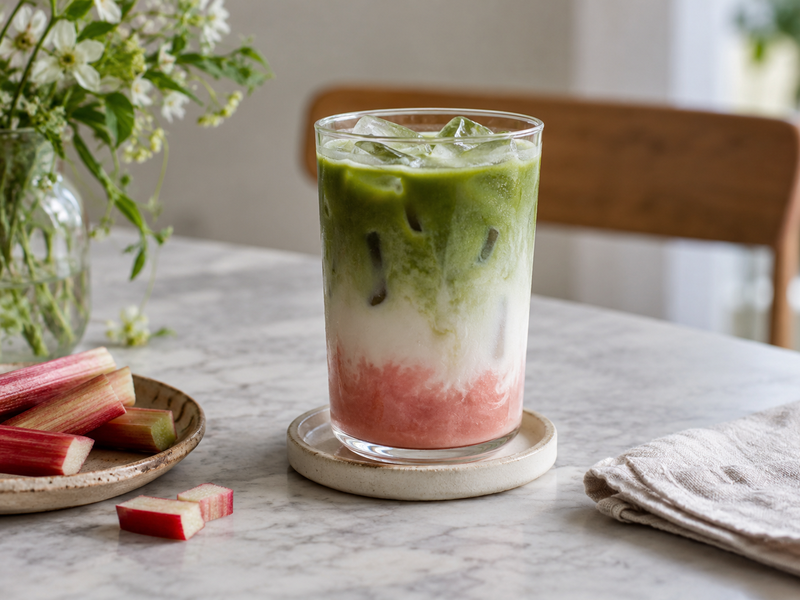
A rhubarb matcha latte gives a spring menu a tart fruit note, but a sharp coulis can clash with milk and overwhelm the tea. Staff may also produce three different drinks from the same vague instruction to “add a spoonful.” Set a weighed rhubarb base, test its contact with the chosen milk and record a pour sequence that works at the counter. The Lana’s Garden reference recipe puts rhubarb coulis below milk and whisked matcha. This guide treats that combination as a starting point for a controlled café trial.
Contents
- 1. What should the drink deliver to a guest?
- 2. How should a café source and prepare rhubarb?
- 3. How can the coulis be formulated by weight?
- 4. How should tartness and sweetness be balanced?
- 5. Will rhubarb destabilize the milk?
- 6. Which matcha powder and dose should be tested?
- 7. How can layers survive café service?
- 8. What should prep-ahead trials measure?
- 9. How do you cost and describe the drink?
- 10. What belongs on the final recipe card?
1. What should the drink deliver to a guest?
Decide whether tartness or tea leads
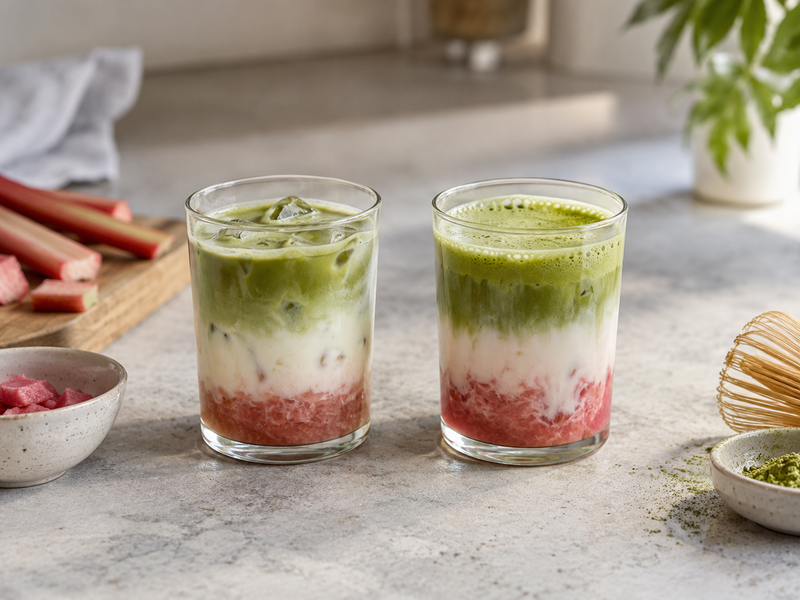
The reference drink pairs a measured rhubarb coulis with milk, matcha and optional honey. That composition can be refreshing, but the café still needs a sensory target. Should rhubarb arrive in the first sip and matcha finish the drink, or should the tea lead with a tart accent at the end? Taste through a straw before stirring and again after mixing. A beautiful layered glass can produce an unbalanced drink if nearly all the coulis remains at the bottom.
Write a short pass description, such as “noticeable rhubarb, clear matcha, smooth milk, no grainy separation.” Have a panel score each feature without seeing the formula. Photograph the cup at the pass and five minutes later. Include the service temperature and glass size on the record, since both influence the tasting. Taste the last third. If the final sips are syrupy or too sharp, adjust deposit or assembly instead of calling the layering successful. A drink only earns a seasonal menu slot when its mixed flavor and service appearance both pass.
| Drink attribute | Check at handoff | Check after stirring |
|---|---|---|
| Tartness | Bottom sip | Full cup |
| Matcha | Top sip | Full cup |
| Milk texture | Visible grain or curd | Mouthfeel |
| Layer | Boundary photograph | Color after mixing |
2. How should a café source and prepare rhubarb?
Specify edible stalks and usable yield
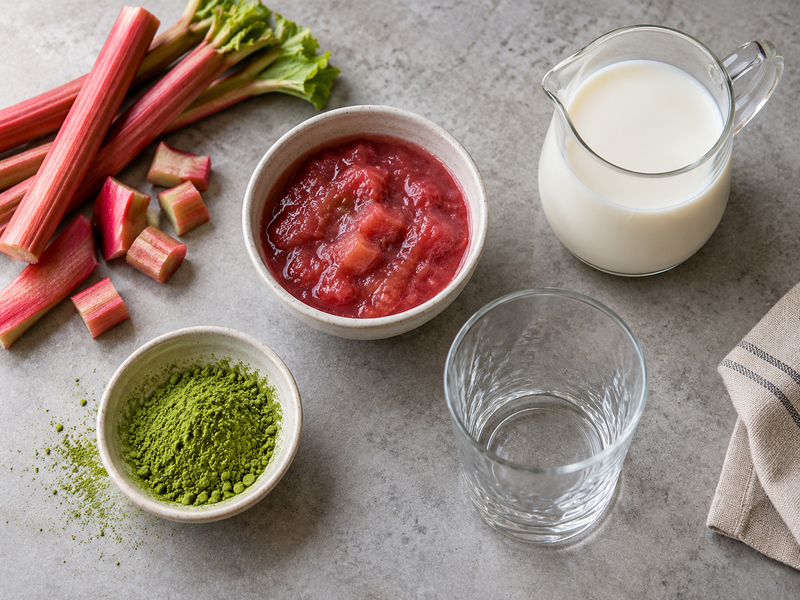
Buy culinary rhubarb stalks or an approved prepared rhubarb product and record supplier, lot, received weight and usable weight after trimming. The University of Minnesota Extension states that rhubarb leaves are toxic and only the stalks are edible. Keep leaves out of the preparation area. Wash fresh stalks according to the kitchen’s procedure; the FDA advises washing produce under running water before preparation.
Rhubarb stalks vary in red color and tartness. Record whether the supplier sends deep red or greener stalks, then judge the cooked base rather than promising one color from the raw produce. Weigh trim waste and cooked yield. For a short spring run, compare fresh stalks with a prepared purée or coulis if local supply fluctuates. Check every prepared product’s ingredient list for sugar and other fruit; those inputs change both naming and flavor. Record the yield. The price per kilogram of raw stalks cannot describe the cost of a strained café base.
| Buying check | Fresh stalk | Prepared base |
|---|---|---|
| Supplier details | Variety or lot | Manufacturer and lot |
| Usable yield | After trimming and cooking | After opening |
| Ingredient control | Sugar added by café | Full supplier declaration |
| Color | Cooked batch photo | Opened product photo |
3. How can the coulis be formulated by weight?
Set a repeatable reduction point
The reference starts with two tablespoons of rhubarb coulis per latte. In a café, weigh that amount in the chosen spoon, then replace the spoon measure with grams. Prepare a pilot base by weighing rhubarb, water and sweetener separately. Cook until the stalk softens, blend or crush according to the desired texture, and record final yield after any straining. A timed cook alone cannot account for changing pan width or batch load, so use final mass and appearance together.
Make two small versions: a smooth, strained coulis and a thicker version with more fruit body. Add the same finished weight to identical drinks. Watch whether the thick version clings to the cup and whether the smooth version disappears in the milk. If spices or vanilla appear in the base, weigh them and test separately; a strong spice can make the rhubarb less recognizable. Label each trial with recipe version and date. Set the deposit. Staff can reproduce 25 g of an approved base far more reliably than “one generous spoonful.” That example dose remains a trial setting until a tasting selects it.
4. How should tartness and sweetness be balanced?
Test the complete drink rather than the pan
Rhubarb’s tartness may feel pleasant in a spoon of coulis yet harsh under milk and ice. Prepare three coulis variants that differ only in sweetener weight. Dose each into the same matcha and milk formula. Have tasters score fruit clarity, sweetness and aftertaste after stirring. A sweeter base may make the drink approachable, but it can also bury matcha. If the café offers an unsweetened milk option, test that option separately because its lower sweetness changes the balance.
Use a kitchen scale to record fruit, sugar and final cooked yield. Brix or pH readings can help compare batches if staff have calibrated instruments and a defined method, but neither number alone predicts whether the latte tastes right or stays smooth. Do not treat a low pH as a storage permission. Draw a small tasting grid that pairs two coulis deposits with two matcha doses. Change one axis at a time. This shows whether an overly sour drink needs a different coulis or simply less of it.
| Trial axis | Lower setting | Higher setting | Evaluate |
|---|---|---|---|
| Coulis dose | Weighed small dose | Weighed large dose | Fruit and tartness |
| Sweetener | Weighed low dose | Weighed high dose | Balance after ice melt |
| Matcha | Fixed for this test | Change in next test | Tea finish |
5. Will rhubarb destabilize the milk?
Test contact time and visible separation
Acid can change milk-protein behavior. A Journal of Dairy Science study observed casein changes as skim milk was acidified under controlled conditions. A café latte is a different system, so that paper does not supply a safe ratio or predict a visible result for every milk. Use it as a reason to test the actual rhubarb base, dairy milk and plant alternatives. Prepare small cups with the planned coulis deposit and milk volume, then inspect them immediately, after five minutes and after stirring.
Look for fine flecks, graininess or a split appearance. Compare the chosen brand of dairy milk with any plant drink the menu will offer. Plant drinks differ in formulation, so record exact products. Keep the coulis at the bottom and pour milk gently for one test, then deliberately mix another cup to mimic a guest. If separation appears, try a smaller coulis dose or a different base texture; do not claim that a layered appearance guarantees stability. Mix one cup on purpose. A customer will, and the drink should remain pleasant when they do.
6. Which matcha powder and dose should be tested?
Select tea against tart fruit and milk
Sift and whisk the matcha with a measured amount of water before adding it to the cup. The reference recipe uses a teaspoon of matcha and a small water volume. Convert the powder to grams for commercial work. Test at least two doses with the same coulis and milk. Score tea flavor immediately and after the drink has mixed. A powder may look vivid on top but taste weak once rhubarb and milk enter the same sip.
Compare supplier samples by lot and ask for ingredient and product information required by the buying market. Photograph the mixed drinks under the café’s normal light. A color change from pink and green to a muted shade may be acceptable if the menu sells flavor rather than a permanent two-tone effect. Calculate matcha cost per finished cup at the dose that wins the tasting. Our best matcha powder for lattes guide offers wider buying checks; this tart-fruit formula still needs its own test. Taste past the color. A striking layer cannot compensate for a flat tea finish.
| Matcha check | Method | Decision |
|---|---|---|
| Dose | Grams per cup | Tea remains clear |
| Dispersion | Inspect whisked base | No clumps |
| Color | Photo before and after mixing | Fits menu image |
| Cost | Powder per saleable drink | Fits price plan |
7. How can layers survive café service?
Control order, ice and pour height
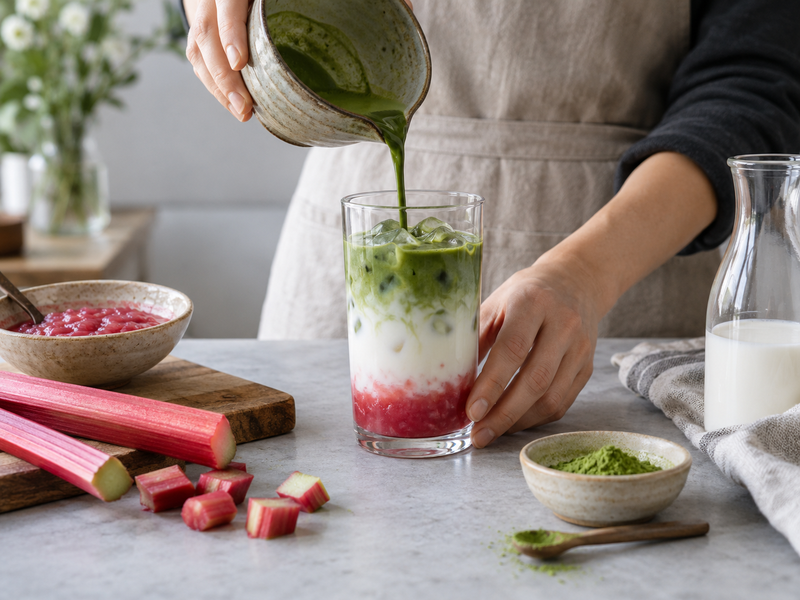
Put a weighed coulis portion into the cup, then add a measured ice weight. Pour milk slowly, followed by the whisked matcha. The Lana’s Garden recipe uses this basic order. Trial it in the exact cup, lid and straw intended for service. A wide glass may show a striking band of fruit, while a narrow takeaway cup can hide it. Ice size and fill change how the liquids meet, so record them along with total liquid volume.
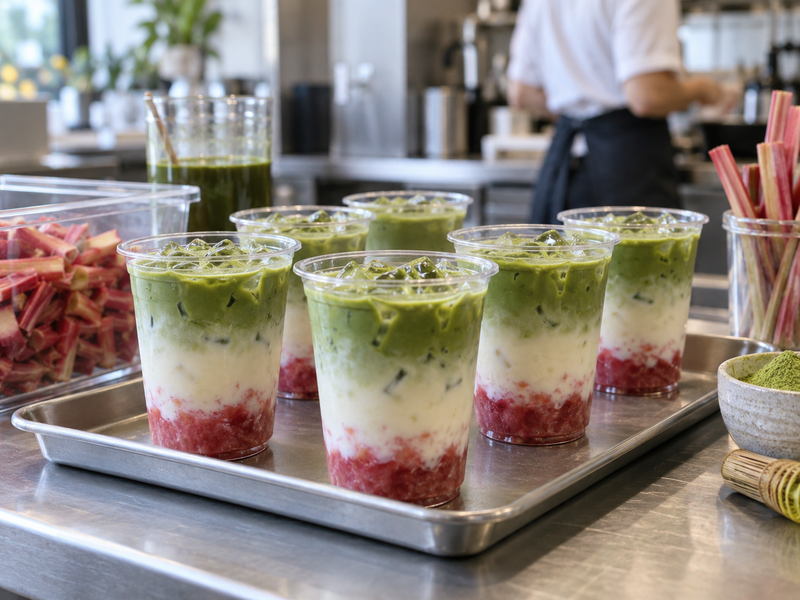
Have three staff members build the drink during a timed practice. Photograph each cup at handoff, after a short wait and after a customer-style stir. If the layers blur, compare pour height and milk temperature before changing coulis concentration. If the coulis remains stuck in the bottom corner, add a clear stir instruction. Do not rely on a staged photograph that requires a different serving vessel from the one sold. Test with a lid. A drink can lose its best visual feature as soon as the lid goes on, yet the mixed flavor still has to justify the price.
8. What should prep-ahead trials measure?
Keep fruit-base quality and safety separate
Prepare a small rhubarb batch using the approved kitchen process. Label recipe version, ingredient lots, final yield, preparation time and responsible staff member. Cool and hold it under the business’s food-safety plan. The FDA Food Code is a US retail model for cooling and holding; local rules and the actual product determine the site’s requirements. A cooked fruit base is not automatically safe at room temperature.
At the planned service checkpoints, inspect color, aroma, flow, visible separation and flavor. Note whether staff have to stir the base and whether the dose changes as the container empties. Make a full latte from an early and a late sample. The comparison reveals quality drift that a spoonful of coulis alone may not show. Record discard under the site plan rather than extending a batch because it appears fine. Check the last bottle. A spring special that works only with fresh prep is difficult to run during a busy weekend.
| Prep record | Quality question | Control owner |
|---|---|---|
| Final yield | Does dose remain consistent? | Prep lead |
| Storage | Does product follow site plan? | Food-safety lead |
| Service sample | Has flavor or flow changed? | Shift lead |
| Discard | Was the batch handled as approved? | Shift lead |
9. How do you cost and describe the drink?
Price usable coulis and a real service build
Use the finished coulis yield to calculate fruit cost per cup. Add matcha, milk, ice, sweetener, cup, lid and any garnish. Include time for trimming, cooking, straining, filling containers and washing equipment. A prepared coulis may have a higher invoice price but lower prep labor; compare both using the same finished-cup cost basis. Record waste from a short pilot before committing to a long promotion.
Describe the flavor accurately. “Tart rhubarb with matcha and milk” tells a guest more than a vague promise of spring freshness. If the cup has a conspicuous fruit layer, staff should explain that stirring balances the drink. Do not use a nutrition or health claim without appropriate review. For another fruit-and-matcha service example, our matcha fruit guide covers pairing questions, though rhubarb’s tartness and milk contact need separate checks. Cost the final cup. Raw stalk price and a pretty sample cannot tell the purchasing team whether the special earns its place.
10. What belongs on the final recipe card?
Give every shift the same decisions
Record the approved rhubarb source, edible-stalk preparation, weighed coulis formula, final cooked yield, texture and straining choice. Add the matcha supplier and dose, water volume, milk brand and volume, ice weight, cup size, pour order and intended stir instruction. Include photographs at handoff and after the standard wait. The card should name failure signs such as grainy milk, heavy sediment or a weak tea finish and tell staff whom to alert.
Ask a second shift to prepare the drink with the card and no verbal coaching. Compare its cup with the approved sample, then revise any ambiguous step. If Matcha Village supplies matcha for the menu, send the actual fruit-and-milk formula with the sampling request so powder candidates face the same acidity and sweetness. Maintain supplier lot records and approved ingredient information for labeling or staff questions. Run a service rehearsal. A smooth, balanced cup made by more than one operator gives the café a sound basis for a seasonal launch.
FAQ
Q1: What is a rhubarb matcha latte? It combines a rhubarb fruit base, milk and whisked matcha, often served over ice.
Q2: Why does the milk look grainy? Acidic fruit may affect milk texture. Test the actual coulis dose and milk brand after stirring.
Q3: Can the café use green rhubarb stalks? Yes, if they are edible culinary stalks. Judge cooked flavor and color in the finished drink.
Q4: Can the coulis be prepared ahead? Use the site’s approved cooling and storage process, then test quality at planned service checkpoints.
Q5: How much matcha belongs in each cup? Weigh the dose and select it by tasting against the approved coulis and milk.