
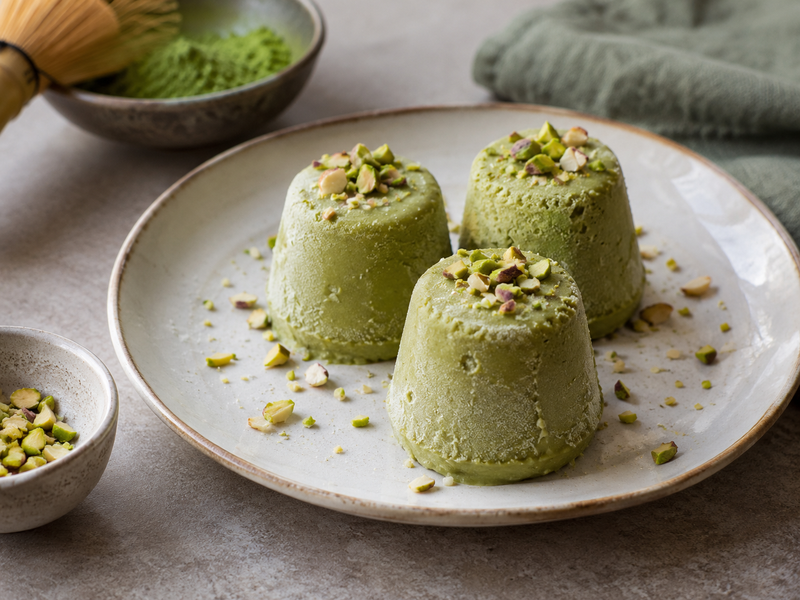
Matcha kulfi can look vivid in the mold and disappoint on the plate. The tea fades under concentrated milk, a mold sticks at service or the portion softens before the guest receives it. Start with a measured milk reduction, compare matcha in the cold finished base and rehearse release from the exact mold. Parsi Dairy Farm’s matcha kulfi article describes slowly reduced whole milk, matcha mixed into the base and molded freezing. That is a product example, not a tested formula for another kitchen. The method here sets up a commercial trial without claiming a universal recipe or storage period.
Contents
- 1. What defines a good matcha kulfi portion?
- 2. How should the milk base be reduced?
- 3. When should matcha enter the base?
- 4. How do you choose a suitable matcha powder?
- 5. How should sweetness and density be tested?
- 6. Which molds and portion sizes work in service?
- 7. How can freezing and release stay consistent?
- 8. What happens between freezer and guest?
- 9. How should food safety and labeling be handled?
- 10. What belongs in a production and buying brief?
1. What defines a good matcha kulfi portion?
Set the cut, bite and tea target
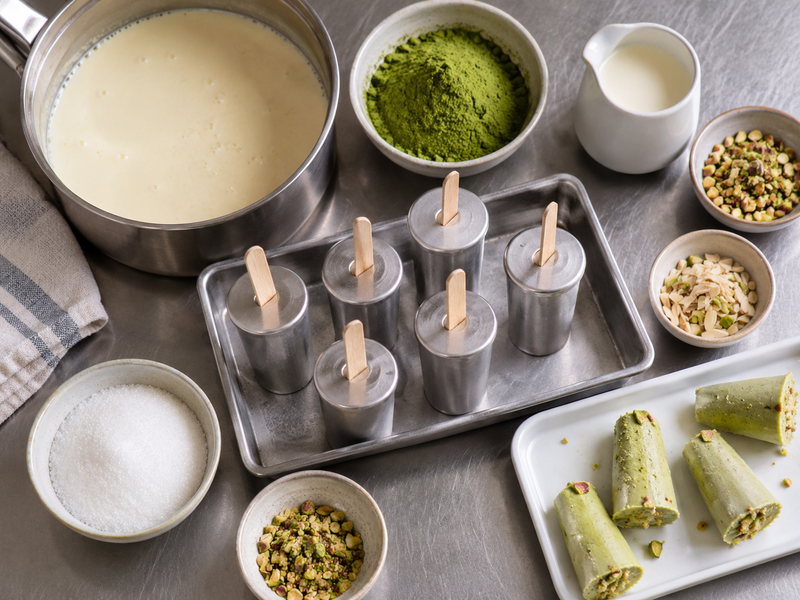
Kulfi is a dense frozen milk dessert commonly served from a mold. The Parsi Dairy Farm example uses slow-simmered whole milk and describes a short wait after removal from the freezer before eating. A new kitchen should define its own target: clean mold shape, clear matcha flavor, a firm but biteable texture and a portion that can be served without a long delay. Taste after the same short wait a guest will experience, not only when the product is rock-hard.
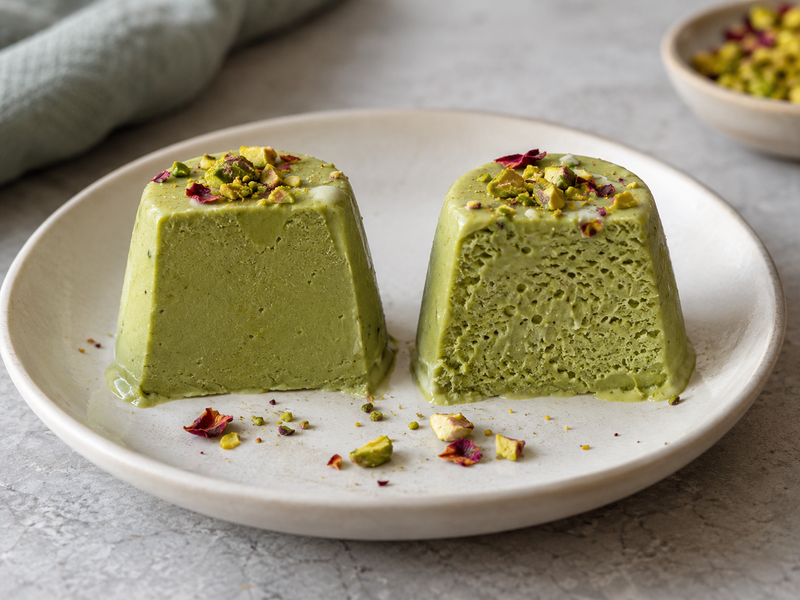
Make three portions from the same base and record appearance immediately after unmolding, after the planned plating time and at the first bite. Photograph the surface and a cut face under consistent light. The center should show even color, without tea streaks or unmixed milk solids. Score aroma, sweetness, tea finish and mouthfeel separately. A dense texture can be pleasant, but a chalky or icy bite signals a process issue. Start at the plate. The formulation should produce a piece that staff can release and hand to a guest during real service.
| Finished portion | Trial measurement | Reason |
|---|---|---|
| Weight | Grams after release | Portion control |
| Shape | Edge and surface photo | Release quality |
| Color | Cut-face photo | Matcha distribution |
| Bite | Score at service time | Guest texture |
2. How should the milk base be reduced?
Measure reduction rather than guessing by time
The Parsi Dairy Farm article describes slowly simmering whole milk until it thickens. A production kitchen should begin with weighed milk and record the weight after reduction. Pan width, heat input and batch size change evaporation, so a fixed clock time alone gives uneven solids concentration. Use the same pan or kettle for each comparison and stir according to the equipment’s needs to prevent scorching. Note the final color and flavor before matcha enters the base.
Set up two small trials with different end weights, keeping the initial milk and sweetener the same. Cool both under the kitchen’s approved food-safety procedure, then freeze equal portions in identical molds. Compare body, ice perception and tea clarity. A deeper reduction may give a denser, cooked-milk flavor but could also overshadow matcha. Weigh residue left on the pan and strainer to understand yield. Do not treat an attractive thick base as permission to cool it slowly. Use the scale. Recording starting milk and finished base weights lets another operator reproduce the reduction endpoint without copying a vague visual cue.
| Reduction record | Enter | Compare after freezing |
|---|---|---|
| Starting milk | Grams and supplier lot | Base consistency |
| Final cooked mass | Grams | Density and yield |
| Cook time | Minutes | Labor and scorching risk |
| Pan residue | Grams | Real portion yield |
3. When should matcha enter the base?
Disperse tea without creating dark flecks
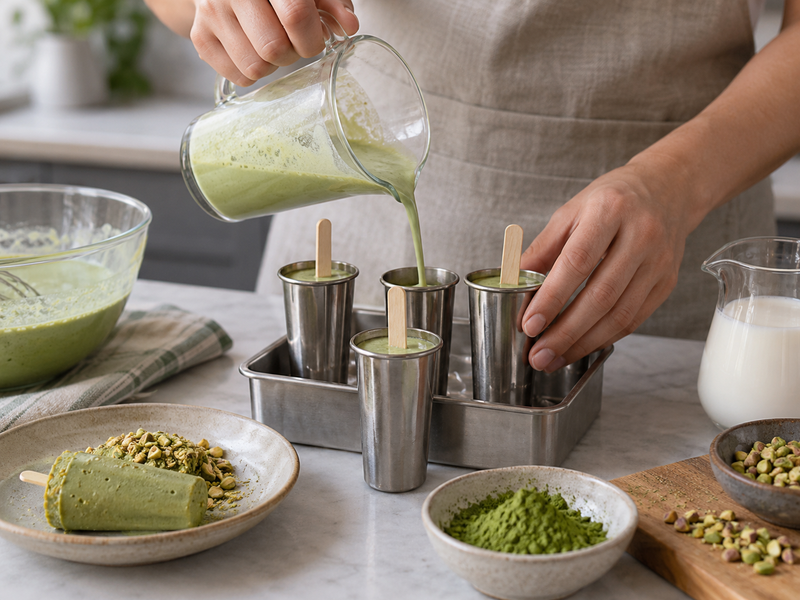
The reference says its matcha is whisked into the kulfi base at a stage selected to protect flavor and color, but it does not publish a temperature or formula. A trial should compare defined addition points rather than assume that one stage suits every kitchen. Sift matcha, then blend it with a small measured portion of cooled base or another formula liquid to make a smooth dispersion. Count any added liquid within the recipe. Mix that dispersion into the larger batch and inspect it before filling molds.
Divide one reduced-milk batch and add the same matcha dose at two recorded base temperatures or stages. Freeze matched portions. Compare tea flavor, visible green, clumps and any cooked note after the same service wait. Keep light, mold, freezer position and portion size as consistent as possible. If powder clumps, improve dispersion before increasing the dose. A larger dose can make the dessert harsher while leaving flecks intact. Cut through the center. A smooth exterior may conceal uneven matcha mixing inside the frozen portion.
4. How do you choose a suitable matcha powder?
Sample in the actual frozen base
Ask powder suppliers for the lot proposed for purchase, ingredient declaration, pack size and application guidance. Test at least two powders in the same milk reduction and at the same dose. Taste the frozen portions blind. A powder that appears bright in water can seem mild beneath cooked milk and sugar. Another may look less striking dry yet leave a clearer tea finish in the frozen dessert. Color should be judged after freezing and release, in the light where the menu item will be served.
Calculate powder cost per saleable portion, not only per kilogram. Include broken or poorly released pieces in the first cost model. If the formula uses nuts or a topping, taste the plain kulfi before pairing; pistachio, sesame or syrup can change how strongly matcha registers. Matcha Village offers grades for different applications, but the selection should follow this finished-product trial. Our matcha for ice cream manufacturers guide covers broader frozen-dessert buying questions. Keep the powder codes hidden. Blind tasting reduces the pull of grade names and price expectations.
| Supplier sample | Record | Decision basis |
|---|---|---|
| Lot and pack | Traceability | Repeat purchase |
| Dose | Grams per base kilogram | Flavor and color |
| Cold taste | Panel score | Clear tea finish |
| Unit cost | Per saleable portion | Menu economics |
5. How should sweetness and density be tested?
Separate milk concentration from sugar dose
Reduced milk contributes body and a cooked dairy flavor; sweetener changes the perception of both milk and matcha. Do not change reduction endpoint and sugar level in the same test. Make a base at one approved reduction, divide it and vary only sweetener by a small weighed amount. Freeze equal volumes and taste after the same service wait. Next, hold sweetener constant while testing a different reduction endpoint. A two-step trial shows which variable caused a denser or sweeter result.
Record finished base mass, fill weight and frozen portion weight. Compare the bite near the surface and center. If the kulfi seems icy, review the actual base yield, mixing and freezing conditions before adding ingredients at random. If it tastes cloying, check whether a topping contributes extra sugar. A sauce can be offered separately so the plain portion remains balanced. Taste plain first. The production team needs a passing base before building a plated variation. This is a proposed sensory method, not a claim that any one sugar percentage gives the correct kulfi texture.
6. Which molds and portion sizes work in service?
Test equipment against the planned menu
Choose a mold shape that suits plating or takeaway service, then weigh how much base it holds. A narrow mold can give an attractive traditional form but may take longer to fill and release. A wider mold may portion faster yet occupy more freezer space. Test the actual material, lid, stick if used and serving vessel. Record fill mass and headspace for every sample. Uneven filling can make identical molds produce visibly different portions.
Run ten trial pieces from each candidate mold and count intact releases, broken edges and pieces with trapped air marks. Time filling, covering, freezing-space setup and unmolding. Check whether staff can handle the mold with normal gloves and whether cleaning meets the operation’s procedure. A piece intended for a plated dessert can tolerate a different shape from a wrapped retail unit. Count the intact pieces. The most photogenic mold may create too many rejects for daily production. Price the mold choice using usable yield and staff time, not only purchase cost.
| Mold test | Record | Pass question |
|---|---|---|
| Fill mass | Grams per cavity | Same serving size? |
| Release | Intact pieces out of ten | Acceptable yield? |
| Space | Freezer footprint | Fits production plan? |
| Cleaning | Minutes and method | Fits site procedure? |
7. How can freezing and release stay consistent?
Document freezer position and release method
Fill molds from one mixed base, label the batch and place them in the freezer according to the kitchen’s food-safety plan. Record freezer setting and actual product placement. Different locations may freeze at different rates; compare center and edge positions in a full load. A food thermometer and site procedure should guide any safety checks. For quality, note surface texture, firmness and whether the stick or mold wall releases cleanly after the chosen freeze interval.
Test one controlled release method, such as a brief warming of the mold exterior with an approved technique, and time it. Avoid water entering the product or packaging. Release each sample onto the same chilled plate and photograph broken edges. If the piece sticks, verify fill, mold cleanliness and full freezing before changing the recipe. Repeat the release test with another operator; hand pressure can account for failures that appear to be formula problems. Use the loaded freezer. A single mold on an empty shelf tells little about a full service batch.
8. What happens between freezer and guest?
Rehearse the complete service route
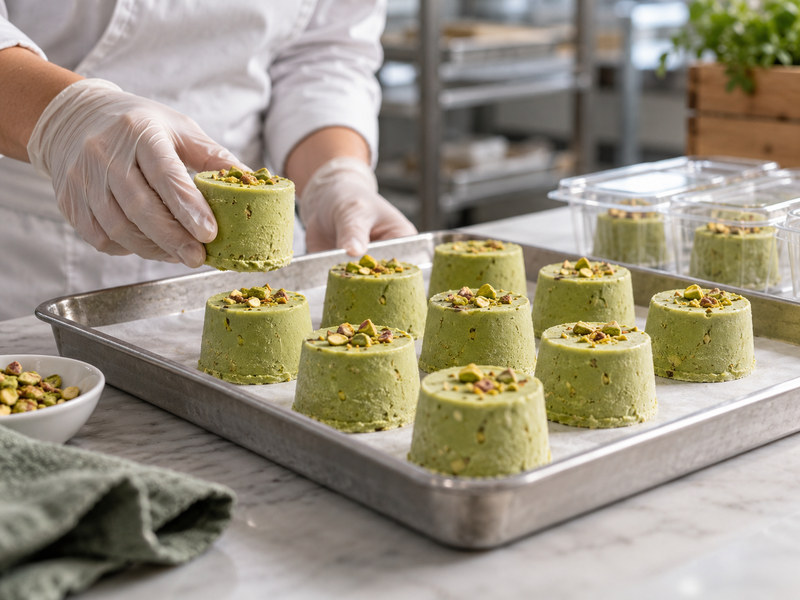
Parsi Dairy Farm suggests a short wait after taking its own kulfi from the freezer. Another kitchen must test its mold, base and room conditions before setting a wait time. Time each step from freezer door to release, plating, topping, runner handoff and guest table. Photograph the piece at release and after the planned route. Record whether the edges soften, whether condensation obscures color and whether the first bite is comfortable.
If a topping is offered, add it at the moment staff will use in service. Honey or sauce applied early can hide a clean mold shape and raise sweetness. For takeaway, test the actual wrap and insulated handling process under the business’s approved temperature-control plan. The FoodSafety.gov cold storage chart lists freezer storage guidance for foods generally; it does not validate a quality window for this specific product. Walk the route. A kulfi that unmolds perfectly in the test kitchen may arrive half-softened after a long pass and payment queue.
| Service stage | Time stamp | Quality observation |
|---|---|---|
| Freezer removal | Start | Firmness |
| Mold release | Elapsed time | Edge condition |
| Plating or wrap | Elapsed time | Condensation or smears |
| Guest handoff | Elapsed time | Bite and shape |
9. How should food safety and labeling be handled?
Treat dairy handling as a controlled process
Use milk and any other dairy inputs from approved sources, and record ingredient lots. Cooking, cooling, filling and freezing should follow a documented procedure reviewed for the operation and market. The FDA Food Code is a US model for retail-food handling, including cooling and cold holding; local rules and the exact formula take precedence. Do not infer a safe period from high sugar, a firm freeze or pleasant aroma. Document equipment cleaning and separation from raw-food tasks.
Milk is a declared allergen in many markets. If pistachio, sesame or another topping becomes part of the marketed unit, update ingredient and allergen records accordingly. The FDA’s major allergen list is useful for a US review, while other markets have their own labeling requirements. Keep plain and topped versions distinct on production sheets so staff can answer questions accurately. Review every garnish. A small sprinkle can change both the allergen statement and the eating experience.
10. What belongs in a production and buying brief?
Preserve the passing trial in measurable terms
Record milk source and starting mass, reduction endpoint, sweetener amount, matcha supplier and lot, tea dispersion method, mixing stage, finished base yield, mold model, fill weight, freezer position, release method and service wait. Add photographs of passing color and shape. Keep a reject log for streaks, icy texture, broken edges and portions that soften too quickly. A cost sheet should divide total batch cost by intact saleable pieces and include reduction and unmolding labor.
Ask a second operator to repeat the formula using the written brief. If results differ, compare scale records and process conditions before changing ingredients. For a wholesale or foodservice program, send Matcha Village the desired frozen flavor, dose range, order volume and required market documents when requesting matcha samples. A supplier can then propose powders for the actual reduced-milk application. Repeat the full batch. A clean second run with consistent release and a stable handoff gives product and purchasing teams the evidence needed for a menu decision.
FAQ
Q1: What is matcha kulfi? It is a dense molded frozen milk dessert flavored with matcha.
Q2: Why does matcha taste weak after freezing? Milk concentration, sugar and cold service can affect the perceived tea note. Test the powder in the finished portion.
Q3: Why does the kulfi stick to the mold? Check fill, full freezing, mold condition and release method in a controlled trial.
Q4: Can kulfi be made for takeaway? Test the intended wrap and service route under the business’s temperature-control plan.
Q5: Which matcha grade should a buyer choose? Compare supplier lots at the same dose in the approved base, then judge flavor, color and cost per intact portion.