
The best matcha powder for lattes depends on the drink being sold. A café’s unsweetened oat latte, a sweet bottled drink, and a powdered retail mix ask different things of the tea. Buyers can still make a defensible selection: set the finished-drink target, compare coded samples at equal doses, review documents, and price the approved recipe. This guide lays out that process without pretending one brand wins every application.
Contents
- What does “best” mean in a matcha latte?
- How should buyers compare grades and labels?
- Which sensory traits matter after milk is added?
- How should a powder sample be tested?
- Do hot and iced lattes need the same powder?
- How do pure matcha and premixes compare?
- What documents should travel with every sample?
- How can buyers test shelf life and lot consistency?
- How should the approved powder be costed?
- How do buyers write a useful supplier brief?
1. What does “best” mean in a matcha latte?
Define the drink before ranking powders
“Best” needs an application. One operator wants a gentle unsweetened latte; another wants matcha to remain obvious under vanilla syrup. A chain may value a powder that disperses with its current equipment and arrives in manageable packs. A retail brand may prioritize a particular origin, certified organic supply, or private-label presentation. Those are legitimate but different purchase decisions. A consumer taste ranking can suggest products to sample, but it cannot substitute for a test in the buyer’s actual formulation.
Write a target cup description before opening supplier samples. Include served volume, milk SKU, tea dose range, sweetness, hot or iced format, intended color, and acceptable bitterness. Assign weights to these criteria before the team sees supplier names or prices. Otherwise price or packaging can bias sensory judgments. The Yamamasa Koyamaen processing guide explains that tea is evaluated and blended for balance, which reinforces a basic buying point: lot and sensory quality require assessment, not only a grade word on the pouch.
2. How should buyers compare grades and labels?
Treat grade terms as supplier descriptions
“Ceremonial,” “premium,” and “culinary” can be useful shorthand within a supplier’s range. They do not create a shared, independently measured ladder across suppliers. Ask each producer what its grade means for raw material, processing, color, flavor, and intended use. A higher-priced straight-drinking powder may give a lovely whisked bowl yet show little extra value once it enters milk and syrup. A lower-priced foodservice powder may have the tea presence a latte needs. The only fair comparison uses the same finished drink and a documented score.
Ask whether the sample is pure matcha, blended tea powder, or a complete latte premix. Check the country where leaves were grown and where powder was milled or blended. Those details affect claim wording, logistics, and import documents. A name like “ceremonial” cannot establish origin, organic status, or allergen profile. For organic claims in the U.S., the USDA Organic labeling guidance identifies distinct labeling categories. Buyers should verify that the offered SKU and handling chain support the intended claim.
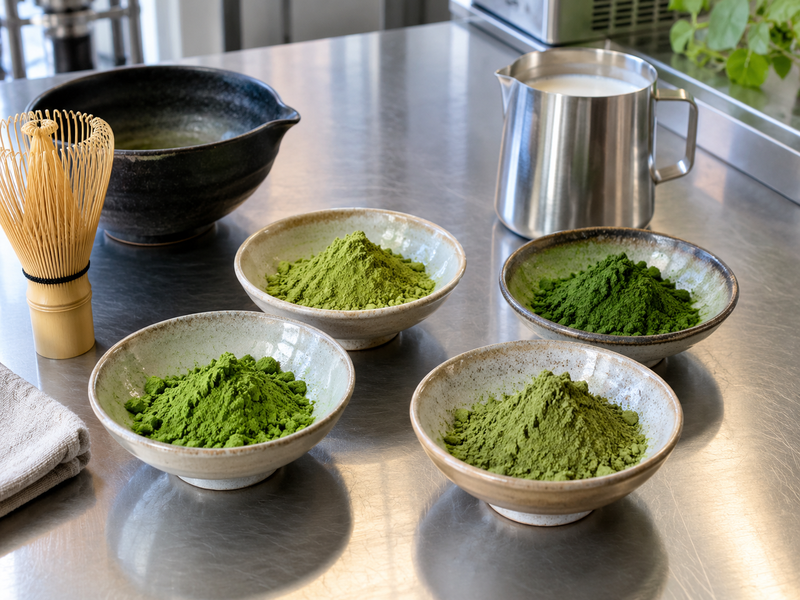
| Label or claim | What it may communicate | What to verify |
|---|---|---|
| Ceremonial | Supplier’s straight-drinking positioning | Sensory value in target latte |
| Culinary | Supplier’s food or beverage positioning | Color, flavor, and consistency |
| Organic | Certification claim | SKU, certificate scope, transaction records |
| Single origin | Sourcing claim | Leaf traceability and lot records |
| Latte mix | Convenience formula | Full ingredients, tea content, sweetness |
3. Which sensory traits matter after milk is added?
Score the finished drink at more than one moment
Color draws attention, but flavor decides whether a customer orders again. Rate the tea aroma, distinctness under milk, bitterness, astringency, mouthfeel, and aftertaste. Judge color immediately after mixing and after a realistic wait. A green dry powder can make a dull-looking latte if the dose is too low or the milk dominates. A strong tea powder can read harsh in an unsweetened drink while working well with a sweet syrup. Keep those observations separate rather than assigning one vague “quality” score.
Use a small panel with a defined scale and coded cups. Ask tasters to describe what they perceive before discussing preference. One taster may say “grassy,” another “marine,” and a third “roasted”; the differences are more useful than a single average number. Include a reference cup made with the powder currently in use if there is one. Note whether the powder settles, clumps, or leaves a chalky finish. These are operational traits as well as sensory traits, especially for takeaway cups and bottled beverages.
4. How should a powder sample be tested?
Hold every other variable steady
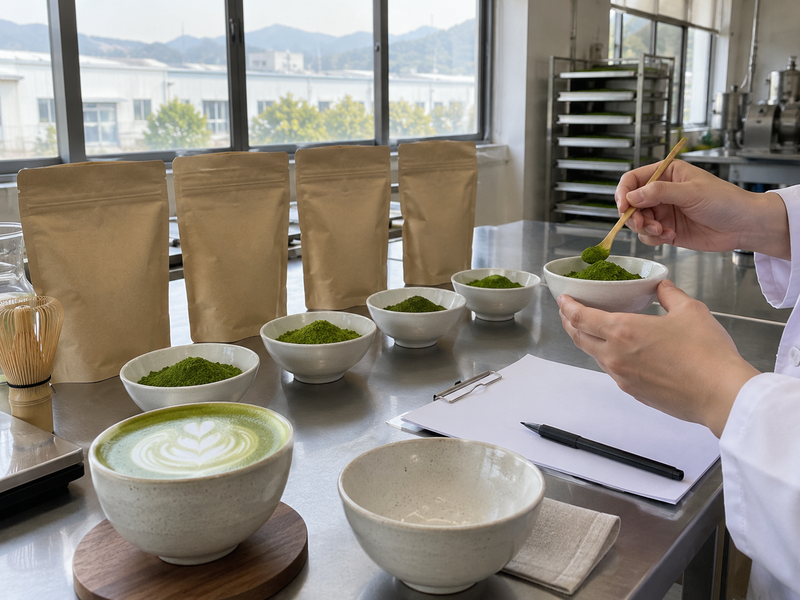
Start with the same weighed matcha dose, measured water, milk brand, milk volume, sweetener, cup, and mixing tool for each candidate. Prepare coded drinks in randomized order. If a candidate seems promising, run a second round that adjusts its dose to find the lowest amount meeting the target. A powder should not win merely because it was served stronger. Use a plain whisked tea check to identify off-notes, then let the finished latte decide the application result. Record actual weights and temperatures in the trial sheet.
At least one operator who was not part of product selection should repeat the recipe. This exposes whether the powder requires unusually careful handling. For foodservice, test peak-period speed and a five- or ten-minute wait. For a packaged beverage, a simple café cup trial is only an early screen; the manufacturer still needs stability and process validation in its own system. Keep samples with lot codes and photograph any visible sediment against a consistent background. Small operational observations often explain why a theoretically attractive powder fails in practice.
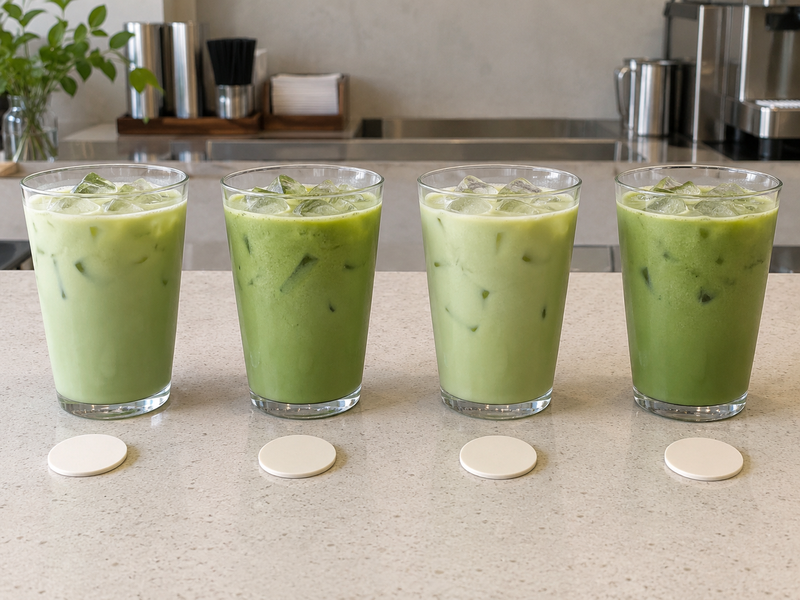
| Test round | Variables held constant | Decision |
|---|---|---|
| Equal-dose screen | Tea mass, milk, water, cup | Which powders merit more work? |
| Dose curve | Milk and cup, several tea masses | Minimum acceptable tea dose |
| Service test | Final recipe, real staff and tools | Can sites repeat the result? |
| Lot check | Same recipe, later lot | Does supply stay within range? |
5. Do hot and iced lattes need the same powder?
Test both before consolidating a SKU
One powder may work in both formats, which simplifies purchasing. It should earn that role in testing. Hot milk releases aroma and changes perceived bitterness. Ice dilutes a drink as it sits, while cold preparation can make dry specks harder to disperse. If the café prepares a warm matcha slurry for an iced latte, record that step and its food-safety handling. A powder that looks strong at the counter may fade after ice melts. Test the actual cup and expected customer wait for each format.
Separate specifications can be justified when menu volumes support them. For example, a powder that gives excellent hot aroma might not hold color in the chain’s iced presentation, while another performs well under cold milk but tastes too sharp when heated. The decision also depends on inventory complexity and training. Compare savings from one SKU against sensory loss or extra waste. If one SKU wins, keep distinct hot and iced recipes rather than assuming the same tea mass works in both cups.
6. How do pure matcha and premixes compare?
Convenience has a formula cost
Pure matcha gives the operator control over tea, milk, and sweetness. A premix can reduce steps and make service easier, but it fixes some flavor and ingredient choices upstream. Compare the tea content per serving, added sugar, dairy or other ingredients, and the ability to adjust sweetness. A lower unit price for premix may hide a higher cost per gram of tea or a larger serving dose. Conversely, reduced labor and fewer remakes can make a premix sensible for a high-volume site. Measure both sides.
The ingredient list matters for menu claims. Milk and soy are major allergens under the FDA’s U.S. guidance. Some premixes may contain them; some do not. Request the exact SKU’s ingredient and allergen statement and assess local rules for the destination market. If a brand promises an unsweetened or plant-based drink, check the powder before relying on the milk choice. Product development should sign off formula and label together, not after the pouch has been ordered.
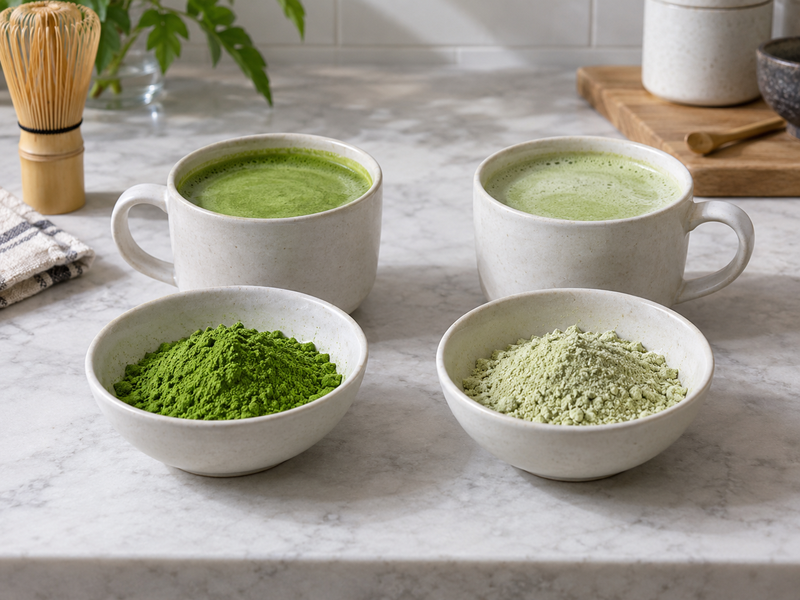
| Question | Pure matcha | Latte premix |
|---|---|---|
| Tea strength | Operator sets dose | Depends on formula and dose |
| Sweetness | Added separately | May be included |
| Operational steps | Slurry and sweetener control | Often fewer steps |
| Label review | Tea origin and quality | Every ingredient and allergen |
| Best comparison | Approved cup cost | Approved cup cost plus labor |
7. What documents should travel with every sample?
A good cup still needs a traceable lot
Request the product specification, ingredient statement, allergen declaration, sample lot number, certificate of analysis, storage instructions, shelf-life basis, pack format, and supplier contact for quality questions. Depending on destination and product, buyers may also need pesticide residue, heavy-metal, or microbiology information and specific certificates. Ask which documents apply to the exact SKU, not simply which certificates the factory holds. A sample without a lot code may be pleasant to taste but weak evidence for approving commercial shipments.
If a supplier presents organic, halal, kosher, or other claims, verify the current certificate, site, products covered, and validity period. For U.S. organic labeling, consult the USDA guidance. Importers in other markets should review their destination rules with qualified advisers. Keep the approved specification with the purchase order and define what change requires advance notice. A lot can remain within basic lab limits yet vary enough in taste to disrupt a signature latte, so documents and application tests both belong in the approval file.
8. How can buyers test shelf life and lot consistency?
Follow the powder through real handling
Heat, moisture, light, and odors can affect matcha. Yamamasa Koyamaen’s handling guidance describes those sensitivities for its products; a buyer should still obtain shelf-life and storage instructions for the supplier’s own packaging. Test powder just after opening and after the planned in-use period at a typical site. Record changes in color, aroma, and drink flavor. A large economy pack may be poor value if a small café cannot use it promptly enough under its handling conditions.
Ask for at least one additional lot during approval if available. Compare it under the same recipe with the retained reference sample. Establish acceptable sensory and visual ranges; a simple written reference can prevent disputes later. For chains, warehouse and store conditions both matter. Put opening date, resealing method, and storage place in the SOP. If the powder clumps or absorbs nearby odors, investigate the local handling before blaming the supplier. Supplier change control should cover shifts in raw material source, milling, blending, or packaging that could affect the approved cup.
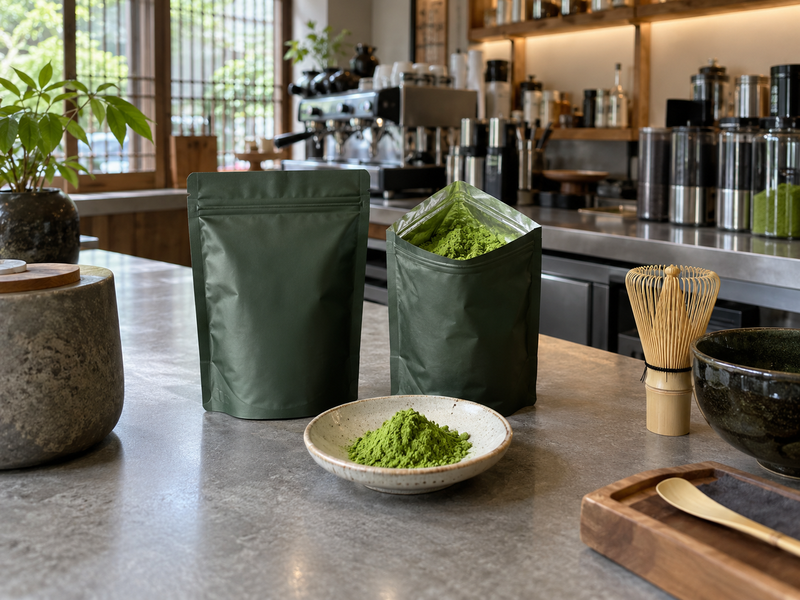
| Check | When | What it reveals |
|---|---|---|
| Closed-pack reference | On receipt | Baseline color and aroma |
| In-use pack | After planned opening period | Handling and pack-size fit |
| Second lot | Before scale-up | Supplier consistency |
| Final drink | At handoff and after wait | Customer-facing performance |
9. How should the approved powder be costed?
Use cost per accepted serving
Calculate tea cost from the dose that passed tasting, not a generic two-gram assumption. Add milk, sweetener, cup, lid, labor or machine time, normal waste, import charges, and delivered freight as relevant. A premium powder may yield a better cup at a smaller dose. A cheaper powder may require more grams and still leave bitterness. Compare the complete approved drinks side by side, with the same customer price and margin assumptions. Keep the sensory threshold fixed while testing costs.
Packaging deserves its own line. A retail tin, foodservice pouch, and bulk bag have different material costs and different consequences after opening. A chain may choose smaller pouches for slow stores and larger packs for busy sites. Ask for price breaks at realistic quantities, lead times, minimum order quantities, and the expected frequency of fresh production. Then model a range of sales volumes rather than one optimistic forecast. A supplier’s quotation is useful only after the buyer knows which material and pack actually fit the menu.
10. How do buyers write a useful supplier brief?
Give Matcha Village a target, not a vague request for “best”
State whether the powder will be used in hot café lattes, iced lattes, RTD drinks, or a dry consumer mix. Give target serving size, milk base, sweetness, intended price tier, expected purchasing volume, pack format, destination country, and claims under consideration. Ask Matcha Village for candidate pure matcha and premix samples only where both fit the concept. Request each sample’s lot number, technical specification, ingredient and allergen statement, and quotation for the relevant pack. The supplier can then recommend options against an actual decision frame.
Agree on the acceptance score before commercial discussion: flavor under milk, color at handoff, sediment after waiting, site preparation time, documents, and delivered cost. Repeat the trial with a production lot before committing broad distribution. A buyer looking for the best matcha powder for lattes will get a stronger answer from that evidence than from a top-ten list. Send the finished-drink brief and ask for a sample set designed around it.
| Brief field | Example of useful detail | Decision it supports |
|---|---|---|
| Application | 300 ml iced oat latte | Relevant sample choice |
| Sensory goal | Clear tea flavor, moderate bitterness | Blind score criteria |
| Operations | Electric mixer, 30-second target | Dispersion trial |
| Market | U.S. retail or foodservice | Label and document review |
| Volume | Pilot and forecast range | Pack and lead-time quote |
The buying decision should end with one approved formula, a named sample lot, a technical specification, and a cost per accepted serving. Ask Matcha Village for a matched sample set, then test it in the milk and service format your customers will actually receive.
FAQ
Q1: Is ceremonial matcha always best for lattes? No. Compare powders in the finished latte. Grade labels are supplier descriptions and may not predict performance under milk.
Q2: What color should latte matcha be? Set a visual target for your recipe and cup, then test color at preparation and after a normal wait.
Q3: Should an iced and hot latte use one powder? They can, if the same powder passes separate hot and iced trials at acceptable cost.
Q4: Is a premix cheaper than pure matcha? Compare approved serving cost, labor, waste, and ingredient requirements. Price per kilogram alone can mislead.
Q5: Which documents are needed before bulk purchase? At minimum, request a lot-linked sample, specification, ingredients, allergen statement, COA, storage guidance, and relevant destination-market documents.