
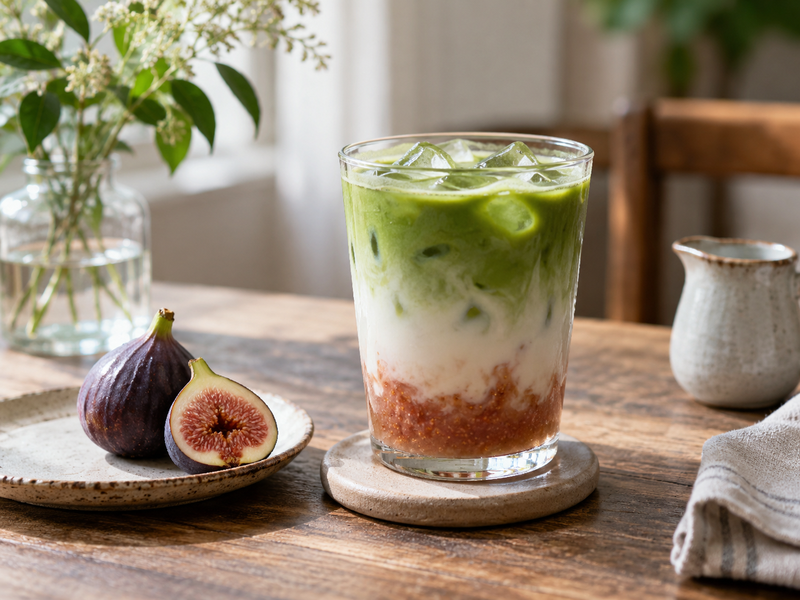
A fig matcha latte can taste like a good seasonal idea and serve like a poor one. Fruit seeds clog a squeeze bottle, syrup settles beneath the ice and the fig disappears under sweet milk. A café can solve those issues with one measured fruit base, a clear straining choice and a timed assembly test. The ispillice fig latte recipe uses fig syrup, vanilla, milk and whisked matcha; it also describes fresh and dried fig options. The steps below translate that home drink into a practical café trial.
Contents
- 1. What should a fig matcha latte taste like?
- 2. Should a café buy fresh or dried figs?
- 3. How can fig syrup be made consistently?
- 4. When should the café use purée instead?
- 5. How should fig solids be strained?
- 6. What matcha and milk balance fits the drink?
- 7. How can staff build repeatable layers?
- 8. How should a café test prep and holding?
- 9. How do you cost a seasonal fig drink?
- 10. What belongs in the launch recipe card?
1. What should a fig matcha latte taste like?
Define the fruit note before adjusting sugar
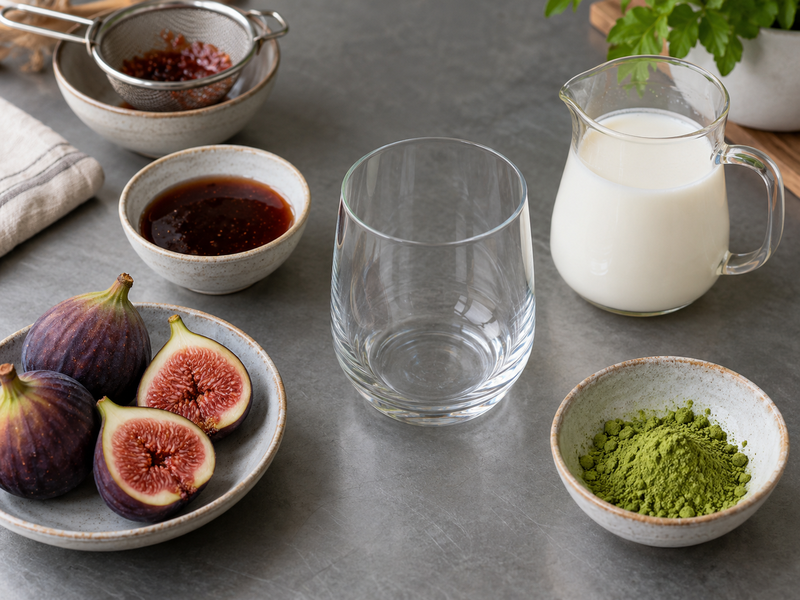
The reference recipe describes a fig-vanilla latte with a subtle fig note. That is one valid style, but a café should choose its own target before writing a menu description. Decide whether the drink should taste primarily of matcha with a fig finish or present fig clearly in the first sip. Taste a freshly stirred drink, then taste it through a straw after five minutes. Syrup that sits below ice may produce a sweet opening and an almost plain matcha finish.
Ask a small panel to score fig, matcha, milk sweetness and texture on a simple five-point scale. Give them samples without identifying the syrup dose. A named flavor can influence the answer. Photograph the drink after assembly and after a normal customer wait. Note whether the fruit base forms a distinct layer or breaks into unattractive streaks. Sip from the bottom. A layered drink must still taste coherent after a guest stirs it. Define the intended appearance and the fully mixed flavor as two separate pass conditions.
| Sensory check | At handoff | After stirring |
|---|---|---|
| Fig note | Present or hidden | Present or hidden |
| Sweetness | Bottom sip score | Whole-drink score |
| Matcha | Visible top color | Clear tea flavor |
| Texture | Smooth or seedy | Smooth or gritty |
2. Should a café buy fresh or dried figs?
Compare supply and flavor in the finished cup
The reference article presents dried figs as deeper and jam-like, while fresh figs give a lighter fruit impression. Test both in the same glass with the same matcha and milk. Fresh fruit can vary by ripeness and may introduce more water and seeds into a base. Dried fruit needs hydration and careful blending or straining. Neither format automatically gives the stronger café drink once milk dilutes it.
Buy a small representative sample of each form and record supplier, variety or product description, pack weight, unit cost and usable yield after trimming or straining. Weigh the fruit entering the pan and the finished strained base. Taste at equal finished drink sweetness, not at equal raw fruit mass, because concentration differs. Photograph both layers under counter lighting. Check the purchasing calendar. A seasonal fresh fig special may suit a short promotion; a dried fig base may be easier for a longer run if its flavor passes the tasting. Make no storage claim until your own process and local food-safety requirements support one.
| Fruit form | Trial advantage | Trial concern |
|---|---|---|
| Fresh | Lighter fruit character | Ripeness and trimming variation |
| Dried | Concentrated jam note | Hydration and seed removal |
| Prepared purée | Fast portioning | Ingredient list and consistency |
3. How can fig syrup be made consistently?
Weigh the base before and after cooking
The reference simmers figs, sugar and water to make a syrup. For a café, “simmer until thick” leaves too much room for shift-to-shift variation. Write a starting weight for fruit, sugar and water, then weigh the pan contents after cooking and straining. Record the cook time and final mass. This gives the next shift a better target than color alone. Use an approved, clean pot and a thermometer appropriate for the process; the kitchen’s food-safety plan controls handling and cooling.
Build three pilot syrups with the same fruit and different final concentrations. Dose each into a fixed milk-and-matcha drink. A syrup that looks rich on a spoon may taste weak in cold milk; another may be so concentrated that a small measuring error changes the whole drink. Mark the dose in grams or milliliters and use the same unit on the recipe card. If vanilla is part of the flavor, weigh it separately and test whether it obscures the fig. Taste in milk. The pan sample cannot tell you how the syrup performs after dilution and ice melt.
4. When should the café use purée instead?
Choose the texture the menu promises
A purée keeps more fruit body than a strained syrup and can make the drink appear generously fruited. It can also settle, feel pulpy through a straw and create inconsistent bottom sips. Trial purée when the menu explicitly wants fruit texture or when the café can blend the drink to order. A clean layered latte usually benefits from a smoother base. Compare the two forms with equal perceived sweetness and record the finished volume, not merely the spoonful added.
Use a clear glass and photograph the base immediately, after five minutes and after stirring. Note the height of any sediment and whether the purée sticks to the glass. Test the straw diameter that the shop will actually give customers. A purée that passes a wide tasting spoon but blocks a standard straw needs reformulation or a different service format. Supplier purées also require ingredient and allergen review; some include sugar or stabilizers that change the dose. Keep the menu honest. Call it fig syrup when it is strained and fig purée when a substantial pulp remains. The name sets a customer’s texture expectation.
| Format | Best menu use | Measure before approval |
|---|---|---|
| Fine syrup | Smooth layered latte | Seed count and dose consistency |
| Purée | Fruit-forward blended drink | Settling and straw flow |
| Jam dilution | Limited test or backup | Added sugar and texture |
5. How should fig solids be strained?
Make seed control a defined step
Fig seeds and fibers can be pleasant in a spoon dessert but distracting in a milk drink. The reference suggests passing syrup through a fine mesh or cheesecloth for a smoother latte. For a café trial, record the strainer type, number of passes, time required and mass retained. A very fine filter may give the cleanest drink while removing enough fruit solids to weaken the flavor. That tradeoff belongs in the tasting, not only in a visual inspection.
Prepare one cooked batch and split it between a coarse sieve and a fine sieve. Add equal finished syrup weights to otherwise identical drinks. Have tasters compare flavor and mouthfeel without knowing the method. Inspect a filled squeeze bottle after several doses for seed accumulation near the nozzle. Clean the bottle according to the café’s established procedure, and do not top up old syrup without a defined batch record. Inspect the last pour. The first glass may look clean while solids collect in the container and emerge late in the shift.
6. What matcha and milk balance fits the drink?
Keep fruit and tea visible after dilution
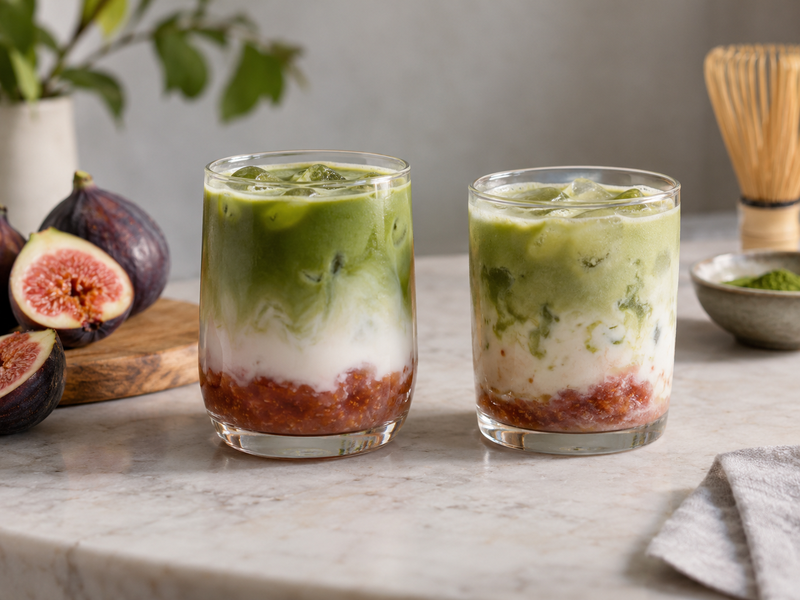
Sift and whisk matcha with a measured amount of water, then taste it in the complete drink. Choose a powder based on its flavor and appearance with the selected fig base. A bright tea that works in plain water may seem thin with a creamy milk; a powder with more assertive flavor may pair better with a darker dried-fig syrup. Trial two matcha doses while holding milk, syrup and ice constant. Photograph the mixed drink as well as the layered version.
Compare dairy and one planned plant-based milk only if both will appear on the menu. Their sweetness, body and color can change the fig impression. Record exact brands because “oat milk” is not one formulation. Our matcha latte ratio guide offers a baseline for tea and milk; use the fig tasting to set this drink’s final ratio. Check ingredient and allergen information for milk alternatives before menu launch. Keep one base constant. If staff change syrup, milk and powder together, they cannot explain why a trial improved.
| Drink variable | Hold constant | Compare |
|---|---|---|
| Matcha | Milk and fig dose | Two weighed tea doses |
| Milk | Matcha and fig dose | Approved dairy and plant option |
| Ice | Glass and liquid volume | Melt and layer behavior |
7. How can staff build repeatable layers?
Specify pour order and vessel
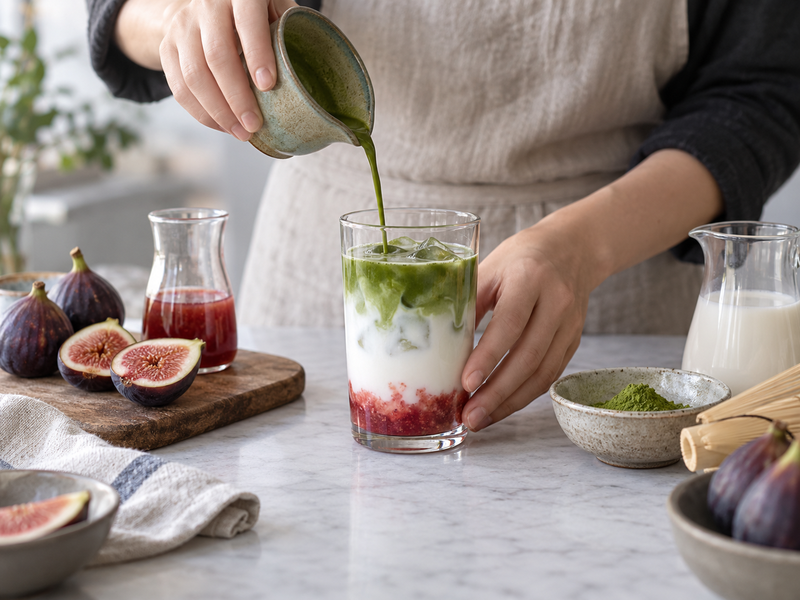
The reference places fig syrup and ice in a glass, adds milk and tops it with whisked matcha. A café should test that order in its actual cup size. Syrup density, milk temperature, ice geometry and pour speed all affect the visible boundary. Weigh ice into the cup, dose syrup, add milk against the side and pour the matcha mixture gently over the ice or a spoon. Record which method creates a clear layer without taking too long at a busy station.
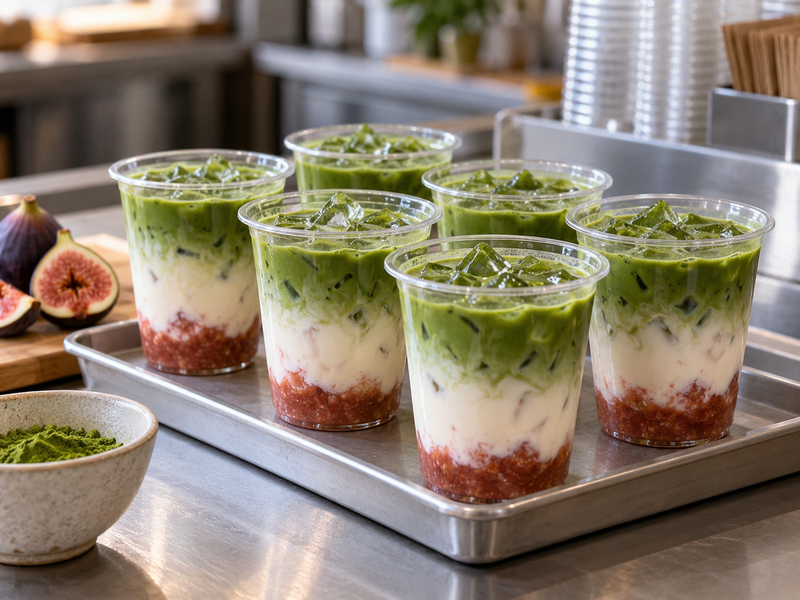
Time three staff members making the same drink from stocked ingredients. Photograph each cup at handoff and five minutes later. If one staff member gets a muddy drink, examine pour height and ice fill before changing the formula. Include a stir instruction on the menu or at handoff if the bottom layer tastes too sweet alone. Layering is visual theater, but the drink should pass a fully mixed taste test. Time the build. A delicate technique that takes two extra minutes per order may be unsuitable for a high-volume menu.
8. How should a café test prep and holding?
Separate quality checks from safety approval
Prepare the fig base in a small batch, label it with recipe version, preparation date, supplier lots and the person responsible. Cool and store it under the café’s approved food-safety procedure. The FDA Food Code gives a US retail model for cooling and cold holding; local requirements and the actual recipe govern the operation. A sweet syrup is not automatically shelf stable, and a home recipe’s storage estimate should not become a commercial claim.
For quality, taste the base at preparation and at planned service checkpoints. Record color change, aroma, sediment, flow through the bottle and how much stirring restores uniformity. Run the same checks on a finished drink made late in a shift. Keep milk and matcha preparations separate until assembly unless an approved process specifically covers a mixed base. Discard batches according to the site plan even if they still look fine. Check the late drink. A recipe that performs only with freshly strained syrup will fail as soon as the café serves a full day of orders.
| Batch record | Purpose | Staff action |
|---|---|---|
| Fruit and syrup lot | Trace ingredients | Enter before cooking |
| Final yield | Dose planning | Weigh after straining |
| Storage condition | Site food-safety control | Follow approved plan |
| Service checkpoint | Quality review | Inspect and taste |
9. How do you cost a seasonal fig drink?
Price the usable fruit and actual build
Fresh figs can lose weight during trimming; cooked bases lose weight during reduction and straining. Begin cost calculations with the finished usable syrup. Divide total batch cost by usable grams, then multiply by the measured dose per cup. Add matcha, milk, ice, cup, lid, straw and any garnish. A fresh fig slice that looks attractive in a photograph may be expensive and inconsistent in a takeaway cup, so test whether it adds value in the real format.
Record labor for fruit preparation, cooking, straining, bottle filling and cleanup, plus assembly time per drink. Forecast by the café’s own seasonal traffic and use that forecast only as a planning assumption. Calculate leftover syrup at the end of each service period during the pilot. If a prepared base produces high waste, a smaller batch or a prepared ingredient may serve the business better even with a higher purchase price. Cost the residue. The fruit trapped in a sieve and unsold syrup in a bottle belong in the unit cost.
10. What belongs in the launch recipe card?
Make the cup reproducible across shifts
List the approved fig source and form, syrup batch formula, straining method, finished yield, storage procedure, matcha lot and dose, milk brand, water volume, ice weight, cup size and pour sequence. Show a passing photograph at handoff and after five minutes. Set a clear instruction for stirring and a sensory description staff can use when a guest asks about the fig. Include allergen and ingredient information from the current supplier labels.
The recipe card should also say what to do when a bottle has visible sediment or a substitute milk changes the layers. A trial with two operators and at least one busy service period can expose steps that sound clear on paper but fail under pressure. Matcha Village can provide matcha samples for a beverage application; ask to test them in the actual fig base rather than in plain water alone. Our latte powder buying guide covers broader sourcing questions. Make the next shift repeat it. A measured cup, approved ingredients and one clear photo can turn a seasonal idea into a reliable menu item.
FAQ
Q1: Should a fig matcha latte use fresh or dried figs? Test both in the finished milk drink. Fresh fruit may give a lighter note; dried fruit may give a deeper jam flavor.
Q2: Why does the fig settle? Purée and unstrained solids can settle. Compare a finer strain or a blended service format.
Q3: Can a café use fig jam? It can be a trial shortcut, but account for its sugar, texture and ingredient list before adopting it.
Q4: Which milk works best? Use the milk that passes flavor, layer and allergen checks with the chosen syrup; brands vary.
Q5: How long can fig syrup be stored? Set the period through the café’s approved food-safety process and local requirements, not a home recipe estimate.