
Matcha fruit describes drinks or desserts that combine powdered green tea with fruit. It is a broad menu idea rather than one recipe. Strawberry puree, mango juice and citrus syrup can all change the tea in different ways. The first cup may look bright while the last sip is sour, weak or full of settled powder. Aiya America’s fruit-pairing article suggests consumer combinations. A café or beverage producer should choose fruit by what it does to taste, texture, service and supply in the finished product.
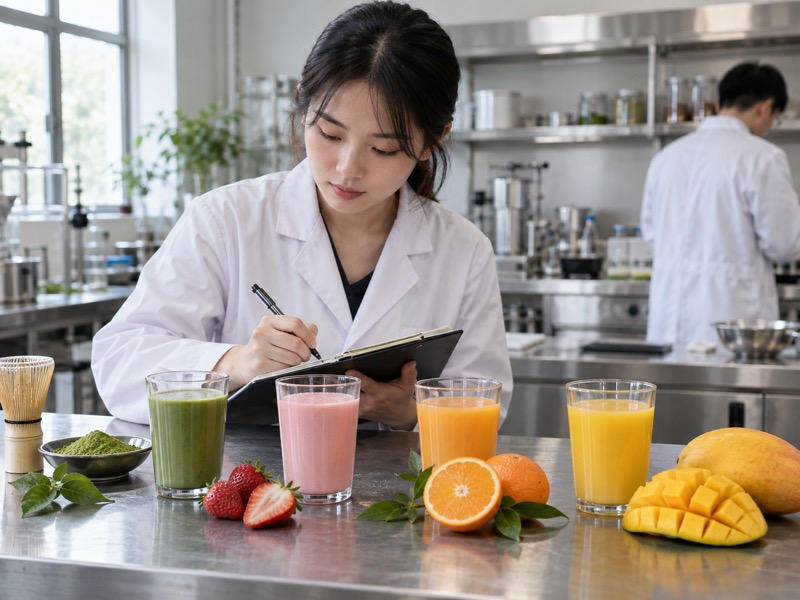
For: beverage developers, café buyers, dessert shops and ready-to-drink teams. Decision: which fruit format produces a clear, stable tea-and-fruit experience at a workable cost.
1. What should the drink taste like?
Set the tea-fruit balance
Choose whether tea leads, fruit leads, or both have equal weight. Write that target in plain words before picking ingredients. A strawberry-led drink can still be a good matcha product if the tea is recognizable at the end. A tea-led drink may use only a small citrus lift. Test coded samples and ask tasters to name the flavors without seeing the recipe. If they cannot identify tea, the menu may need a different name or a stronger tea base.
Taste the whole serving. Layered drinks can deliver fruit first and tea last, or the reverse. Decide whether customers are expected to stir. Sample the first, middle and last sips with the actual straw or spoon. A product should not be judged only by a photograph of two colored layers. Record the intended cup size, sweetness, tea dose and fruit level so the same balance can be tested again.
| Product direction | First note | Finish to check |
|---|---|---|
| Tea-led | Matcha | Fruit lift, not syrup |
| Balanced | Tea and fruit | Neither disappears |
| Fruit-led | Fruit | Recognizable tea |
2. Which fruit format fits the product?
Compare like-for-like servings
Fresh fruit, puree, juice, concentrate and syrup bring different amounts of water, sugar, acid, pulp and aroma. A puree can make a drink thick and visually layered. A juice can dilute it. A syrup can make service easy but may taste less like the named fruit. Request ingredient specifications and prepare each candidate at a measured dose in the same final cup volume. Compare taste and handling, not only the name on the carton.
Keep label claims in view. If a menu says “real mango,” the commercial formula and supplier records should support that wording. A fruit flavoring can make a good drink but should be described honestly. For packaged products, review the full ingredient and nutrition statements under the applicable market rules. A recipe that changes from puree to syrup for easier service may also need a new menu description and photograph.
3. How does fruit acidity affect matcha?
Taste acid as a formulation variable
Acid can make a drink feel fresh, but it can also sharpen perceived bitterness and change the visual color of a green tea base. Build a measured trial with one matcha lot, one sweetener level and several fruit doses. If using a naturally variable puree or juice, check the supplier’s specification and the lot being tested. Do not assume all berries or all citrus products have the same acid profile. Taste both immediately and after a realistic service hold.
Use the finished cup. A small spoonful of fruit mixed into tea is not the same as a full iced drink with milk, syrup and melting ice. Test the actual assembly. If the concept includes dairy or a plant base, observe whether the fruit and base stay pleasant together. Where the formula is packaged, use the intended process and have the responsible technical team determine stability and safety requirements. A home recipe cannot establish those conditions for a commercial drink.
| Acid observation | Possible response | Retest |
|---|---|---|
| Tea seems harsh | Adjust fruit or tea dose | Full-cup taste |
| Color looks dull | Check ingredient and hold | Fixed-light photo |
| Base separates | Review formula and process | Timed samples |
4. What happens to sweetness when fruit is added?
Count every sweet source
Fruit puree, syrup, milk and sweetener can all add sugar. Make a low, standard and high fruit-dose ladder while keeping tea and final volume constant. Then adjust sweetness separately if the ingredient permits. A syrup that supplies both fruit flavor and sugar can be hard to reduce for “less sweet” orders. A puree may bring natural sweetness but vary between lots. Taste at the temperature served; ice can make the drink seem less sweet at first and watery later.
Write a staff rule. If the café allows custom sweetness, define which ingredient changes and whether the fruit identity remains clear. Do not tell staff to remove half the fruit syrup and expect the same flavor. If the formula is a retail product, the nutrition statement should come from the commercial recipe and verified data, not from a rough home calculation. Sensory balance and accurate information should be developed together.
5. How should tea powder enter a fruit drink?
Pre-disperse it
Matcha is suspended powder, and fruit pulp can make clumps harder to see until they reach the last sip. Weigh the tea and blend it into a measured amount of compatible liquid before combining it with fruit. If a layered drink is intended, make the tea layer smooth first. Trial the actual shaker, whisk or mixing tool used in service. A high-speed laboratory blender may create a cup that ordinary staff cannot reproduce.
Inspect distribution. Make several cups in sequence and check the bottom of each. If powder settles or collects against fruit pulp, change the method or the serving window. For larger production, sample from different points in the vessel and through filling. Record order of addition, mixing time, hold and remix steps. A pleasant first cup does not prove that every cup in the batch receives the same amount of tea.
| Mixing defect | First check | Practical trial |
|---|---|---|
| Dark tea flecks | Dry addition | Pre-dispersion |
| Heavy bottom | Settling with pulp | Mixing and hold |
| Uneven cups | Batch agitation | First/last fill samples |
6. How should color and layers be judged?
Observe the normal wait
Green matcha and red or yellow fruit can make a clear visual contrast. That contrast may blur as the cup waits, and the mixed color may be less appealing than the first image. Photograph the actual serving immediately, after the expected pickup delay and after stirring. Use the shop’s normal light. If the drink is sold for takeaway, test the lid and travel route. A layer that vanishes before the customer sees it should not be the main promise in menu photography.
Keep the image honest. Do not over-saturate the green or imply a fruit quantity the recipe does not contain. A garnish should match the named ingredient. If a fruit puree leaves streaks on the cup or a thick residue at the bottom, include that in the quality decision. The drink should be pleasant to finish, not only to photograph. A clear reference image helps staff catch recipe or supplier drift during the season.
7. Which fruit supply is reliable enough?
Buy to a usable specification
Ask the fruit supplier for format, ingredient statement, pack size, storage, handling after opening, lot identification and lead time. For fresh fruit, account for ripeness and seasonal variation. For puree or concentrate, compare color, sweetness and acidity across available lots. A flavor that works with one sample may shift when the next harvest or manufacturer batch arrives. Keep an approved reference and a short incoming taste check.
Plan a backup. If a seasonal fruit is unavailable, a substitute may change the name, label, sweetness and appearance. Trial it before launch or choose to pause the item. Matcha supply matters too: a new tea lot can alter bitterness and color. A two-ingredient hero product has two sources of variability. Record both lot codes so a complaint can be traced to the right material.
8. How should a packaged matcha fruit drink be tested?
Use the intended process and pack
A ready-to-drink product faces processing, filling, storage and transport that a café cup does not. Fruit particles and matcha powder can settle; color and aroma may change. Fill the actual package and run the technical team’s approved safety and shelf program. Sample early and late fills, then inspect at points through the intended life. A clear bottle may show an attractive layer at first but expose unattractive sediment later. A label cannot fix a physical stability problem.
Separate sensory and safety. A drink can look acceptable while failing a safety requirement, or remain safe while tasting poor. Both need their own validated checks. Do not borrow shelf life from a fruit juice or plain matcha drink with a different formula. Packaging, process and distribution determine the tests. Keep any “shake before drinking” instruction aligned with what a real shake can restore.
| Route | Main check | Evidence |
|---|---|---|
| Fresh café cup | Service wait | Timed tasting |
| Batch for same-day service | Uniformity and handling | Top/bottom samples |
| Packaged drink | Process and shelf | Validated product study |
9. What does the accepted recipe cost?
Include fruit loss
Cost tea, fruit, sweetener, base, cup or pack, labor and waste at the recipe that passes tasting. Fresh fruit trimming and spoilage can matter more than a small difference in tea quotes. A concentrate may cost more per kilogram but need less per cup. A puree may be easier to sell as a real-fruit concept but slow service. Compare the options by sellable serving and by expected daily volume, including opened-pack waste.
Measure staff portions. Fruit scoops and syrup pumps can vary. Weigh or measure several normal drinks to see how closely staff follow the formula. If a product is priced on a specific fruit content, portion drift can affect both margin and truthfulness. Choose tools and packs that make the accepted recipe easy to repeat. A buyer’s cost sheet should show the actual formula and likely loss, not an ideal batch with zero waste.
10. What pilot proves the pairing is ready?
Test more than the first cup
Shortlist a few pairings and make coded drinks at the intended tea dose and final volume. Taste at handoff, after the normal wait and at the last sip. Include actual ice, milk if used, fruit format and serving cup. Observe color, layers, pulp, tea sediment and preparation speed. Let ordinary staff make several drinks during a real shift. For packaged products, the pilot must use the proposed process and package before a launch decision.
Approve a specific recipe. Keep tea and fruit codes, lot standards, amounts, mixing order, service photo, claim wording and retest triggers together. The next step is a measured in-store or production trial with a clear pass standard for both tea and fruit. Matcha fruit works when both ingredients stay recognizable and the drink remains enjoyable through the final sip.
| Pilot point | Pass question | Evidence |
|---|---|---|
| Flavor | Can tasters name tea and fruit? | Blind tasting |
| Handoff | Does it look like the menu? | Fixed-light photo |
| Wait | Does separation remain acceptable? | Timed sample |
| Cost | Is the serving repeatable? | Portion and waste log |
Ask the team to record why a sample fails, not just whether they like it. A sour finish may call for a different fruit lot; a dull green layer may call for a shorter hold time. That record will help the next trial change one cause at a time.
A team testing citrus notes can review the passion fruit matcha guide.
Reference: Best Fruits to Pair with Matcha This Summer is a pairing idea source. The development checks above are independent.
FAQ
Q1: Which fruit works best with matcha? It depends on the tea, fruit format, base and serving style; compare candidates in the final recipe.
Q2: Why does a fruit matcha drink taste bitter? Fruit acidity or an over-strong tea dose may sharpen bitterness; test one variable at a time.
Q3: Is syrup the same as fruit puree? No. They differ in sugar, acid, pulp, labeling and handling.
Q4: Can a café recipe become a bottled drink unchanged? It needs separate process, safety, stability and packaging validation.
Q5: What should be measured in a pilot? Tea and fruit doses, final volume, taste, color, sediment, service time and waste.