
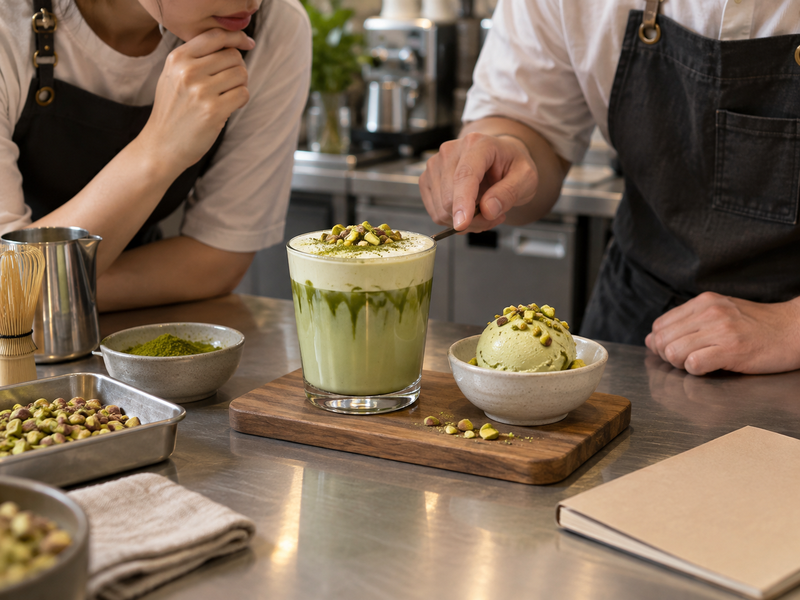
Pistachio matcha can be a good menu idea and a muddled finished drink. A strongly sweetened nut syrup can cover the tea, while a thick pistachio paste can leave grit at the bottom of a cold glass. The Rishi pistachio cardamom matcha latte uses a pistachio milk with matcha. That is one possible format. This guide helps café buyers choose among nut milk, paste and syrup, then test a drink or dessert component for flavor, texture, service time and cost. If you need a step-by-step single drink, see our pistachio matcha latte recipe; here the focus is developing a repeatable menu specification.
Contents
- 1. What should pistachio matcha taste like?
- 2. Which pistachio ingredient should you buy?
- 3. How should you choose the matcha?
- 4. What belongs in a controlled test matrix?
- 5. How do you avoid grit and separation?
- 6. How should hot and iced builds differ?
- 7. Can the combination work beyond a latte?
- 8. What allergen and handling checks are needed?
- 9. How do you calculate a sellable serving cost?
- 10. What should a launch trial prove?
1. What should pistachio matcha taste like?
Give both ingredients a job
The product brief should say what the guest will notice first, what follows and which texture is acceptable. Pistachio can bring a mild roasted nut note and body; matcha can bring green tea aroma and a slightly savory finish. Those descriptions are targets to test, not promises that every supplier lot tastes identical. A version in which only syrup sweetness survives is not meeting a pistachio and tea brief. A version with so much matcha that the nut disappears has the opposite problem. Taste the proposed drink before adding garnish, because chopped nuts can mislead a tester into perceiving more pistachio than the liquid actually contains.
Set a target cup and a target serving temperature. Ask tasters to score nut presence, tea presence, sweetness, body and aftertaste in the same order. Taste the first and last sips; layered drinks can change as they mix or settle. Write a short standard for staff: “both nut and tea identifiable, no paste grain, no oily ring, and no syrup-dominated finish.” The words should describe a guest’s cup, not the appearance of separate ingredients at the bench.
2. Which pistachio ingredient should you buy?
Compare milk, paste and syrup on their own terms
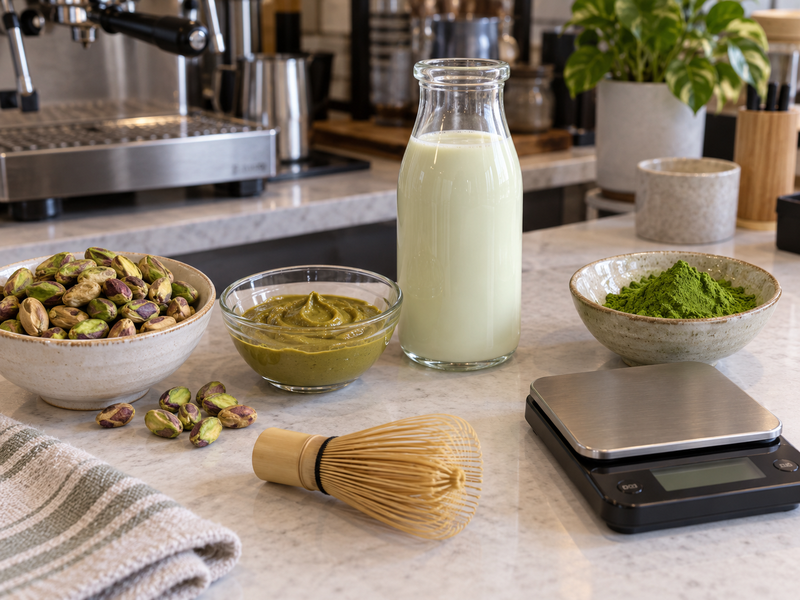
Pistachio milk, pure nut paste, flavored syrup and a ready-made cream bring different concentrations and ingredients. The Rishi recipe makes a pistachio cardamom milk from nuts and water. That may suit a small café trial, but an operation with several locations needs to assess preparation labor, yield, consistency and an approved handling plan. A purchased pistachio milk may be easier to portion, yet some products have little nut and added sweetener. Read the ingredient statement and taste the product unsweetened if possible.
Pure paste can give a stronger nut signal with a smaller dose, but it must be dispersed. Syrup is fast during service and easy to measure, though its flavor may be more confectionery than nutty. Ask for nut percentage where the supplier provides it, pack size, allergen statement, lot identification and storage directions. Keep any roasted nut garnish separate in the trial; it affects cost and allergen exposure but should not be used to rescue a weak base.
| Ingredient form | Operational advantage | Question to test |
|---|---|---|
| Pistachio milk | Easy to pour | Is nut flavor clear enough? |
| Pure paste | Concentrated nut input | Does it disperse smoothly? |
| Pistachio syrup | Fast measured service | Is it too sweet or artificial-tasting? |
| House nut milk | Custom flavor | Is preparation repeatable and safe? |
3. How should you choose the matcha?
Test tea at the sweetness you intend to sell
Ask the supplier for a current lot sample, ingredient statement, pack size and storage guidance. Measure a fixed powder mass for each trial. A tasting in plain water can reveal a harsh or stale note, but the decision should be made in the completed pistachio product. Nut fat and sugar alter the perceived tea flavor. A powder that is delicate in water may vanish beside a rich paste; one that seems assertive in water may provide the best balance after milk and ice are added.
Compare candidate powders at one gram dose first, then adjust the promising ones to an accepted serving dose. Record the cost at that dose. A cheaper powder by weight may need a larger input. Also check clumps and settling during the service window. Do not infer caffeine content or health benefits from the presence of matcha. Our matcha grades guide gives buyers terminology to discuss powder samples, but a grade label cannot guarantee performance in this nut-rich recipe.
| Matcha test | Keep fixed | Record |
|---|---|---|
| Water screen | Dose and water | Obvious off notes |
| Drink trial | Pistachio input | Tea presence |
| Texture check | Mixing method | Flecks or sediment |
| Cost comparison | Cup size | Grams and price per serving |
4. What belongs in a controlled test matrix?
Change one dimension at a time
Start with one cup size, one milk base and one matcha lot. Compare two pistachio forms or two dose levels. Then keep the preferred nut base fixed while you adjust the tea. A matrix sounds formal, but it can be a single sheet with sample codes, ingredient weights and a five-point sensory score. The purpose is to separate cause from impression. If a drink improves after changing both pistachio syrup and matcha powder, you cannot tell which change helped.
Include service conditions in the sheet: water used for a matcha concentrate, cup size, ice mass, milk volume and topping. A barista should be able to make the same coded drink again without hearing the developer’s opinion. Serve samples in random order and ask tasters to write notes before discussion. Include someone who will prepare the drink and someone who will cost it. A single favorite from an attractive photograph is not sufficient evidence that a café can execute it during a busy hour.
| Trial code | Nut input | Matcha input | Evaluation |
|---|---|---|---|
| A | Measured nut milk | Fixed powder dose | Flavor and body |
| B | Measured paste | Same powder dose | Grit and balance |
| C | Chosen nut base | Lower powder dose | Tea visibility |
| D | Chosen nut base | Higher powder dose | Cost and finish |
5. How do you avoid grit and separation?
Disperse each concentrated ingredient
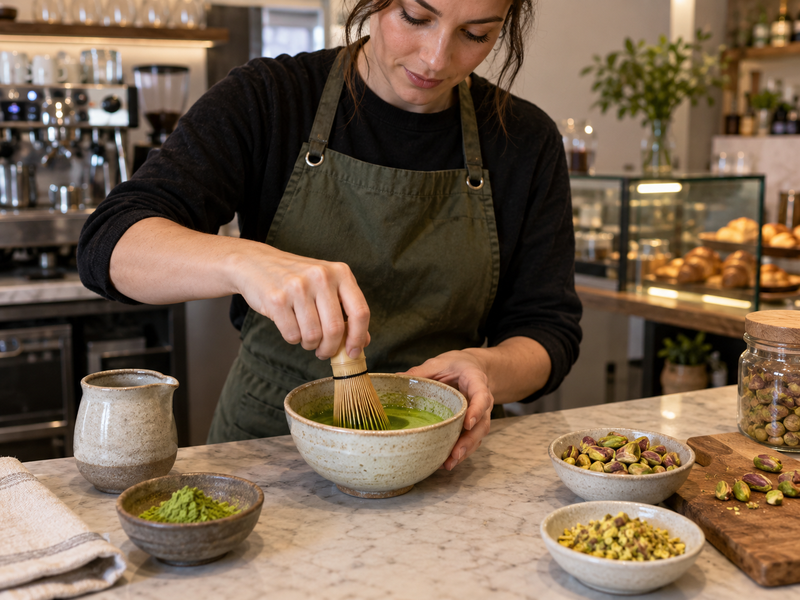
Matcha powder and pistachio paste both need a mixing method. Sift and wet the powder with a measured small volume of water or recipe liquid to make a smooth concentrate. Separately, loosen paste with some milk before pouring it into the full cup. Test a whisk, shaker or blender using the equipment staff will actually have. If the drink contains oil-rich paste, inspect for an oily ring and a dense deposit after several minutes. A drink that looks homogeneous in the first second may separate during handoff.
Do not hide a texture fault with more sugar. Compare the first sip and the last, then inspect the glass. If paste remains on the blender wall, the actual delivered nut dose is lower than the recipe states. If matcha clumps on ice, add it as a prepared concentrate rather than sprinkling dry powder over the finished drink. A commercial stabilized pistachio base may behave differently from house-made milk; document its exact product and mixing sequence. The target is a drink that is pleasant to drink without constant stirring.
6. How should hot and iced builds differ?
Keep the same flavor brief, then test two processes
A hot build can make nut aroma feel stronger; an iced build can mute it and add dilution. Do not simply pour a hot recipe over ice. Write separate amounts and service steps. For a hot cup, prepare the matcha concentrate, warm the nut base according to its product directions and combine at a controlled serving volume. For an iced cup, use a chilled nut base, weighed ice and a concentrate volume that accounts for melt. Taste each at the temperature customers receive it.
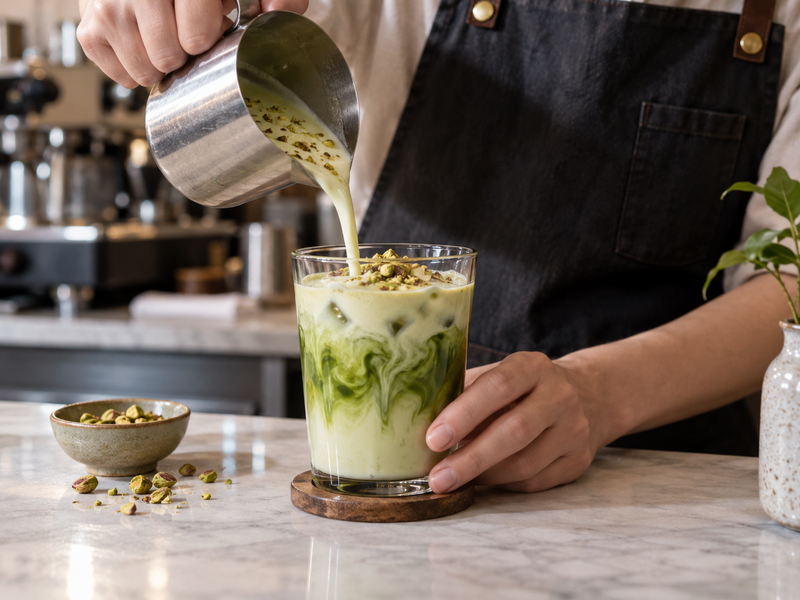
The layered look of an iced drink can be attractive, but it should still taste balanced after the guest stirs or drinks from the bottom. If the pistachio component sits beneath the matcha, the first sip through a straw may be mostly nut and sugar. Test the cup with the supplied straw and lid. A hot drink needs a foam and surface check: paste can leave specks or an oily film. If one format consistently fails, sell the one that works instead of forcing both onto the menu.
| Format | Main process check | Guest-facing risk |
|---|---|---|
| Hot latte | Heating and foam | Oily film or muted tea |
| Iced layered drink | Ice and mixing | Uneven first and last sips |
| Blended version | Jar load and cycle | Grit or over-dilution |
7. Can the combination work beyond a latte?
Test a small menu family, not every idea at once
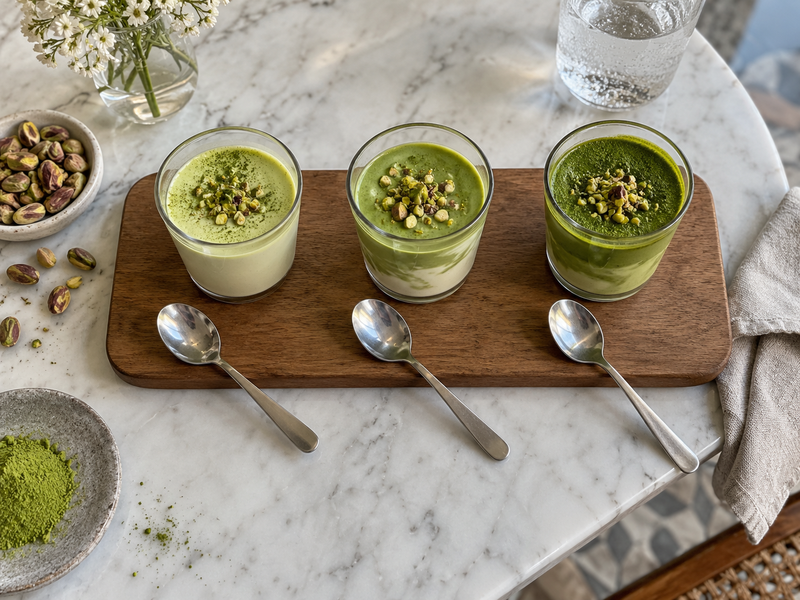
Pistachio matcha can also appear in a dessert cream, soft serve, cookie filling or cake glaze. Each use changes the balance. A sweet cream may need a lower pistachio dose if the nut paste makes it heavy; a frozen item may need a stronger tea signal because cold serving can soften flavor perception. Do not approve a powder for a latte and assume the same dose works in a baked or frozen product. Make a separate application trial with an accepted sample and portion cost.
Start with one adjacent item that shares ingredients and equipment. For example, a café could use its tested nut base in an iced drink and a small dessert topping, while keeping allergen handling and pack labeling clear. Record where each component is used so staff do not substitute a sweet syrup for pure paste in a dessert formula. Cross-use can reduce waste, but it can also spread a tree-nut allergen across more equipment. The operational benefit only counts if recipes and cleaning procedures remain manageable.
8. What allergen and handling checks are needed?
Treat pistachio as a real menu commitment
Pistachio is a tree nut. In the United States, tree nuts are among the major food allergens identified by the FDA. Check every bought component, including pistachio milk, paste, syrup and topping, for its actual ingredient and allergen statement. If the same blender, whisk or scoop serves drinks sold without tree nuts, review cross-contact controls with the business’s food safety lead. A menu item cannot be made “nut-free” by omitting a garnish while using a pistachio base.
House-made nut milk needs an approved preparation and storage process. The Rishi recipe soaks and blends nuts, but a commercial kitchen must decide how it receives nuts, sanitizes equipment, stores prepared liquid and marks batches under local requirements. Do not use a guessed shelf life. Train staff to know which cups contain pistachio and to explain ingredients without promising the absence of cross-contact unless the business has verified that claim.
9. How do you calculate a sellable serving cost?
Use the accepted dose and include labor
Calculate grams of matcha, grams or milliliters of pistachio input, milk, sweetener, garnish, cup, lid and any packaging. Add preparation and cleaning time. A house nut milk has a yield: dry nut input does not all become sellable milk, and straining leaves a by-product that should be handled deliberately. A syrup has a different cost structure but may require more volume to achieve a clear nut cue. Compare options at the flavor level accepted by tasters, not at the same nominal spoonful.
Record waste from the pilot: leftover nut milk, paste on tools, remade drinks and garnishes discarded at closing. The most expensive component may be service time during a rush rather than raw tea. If a drink requires two separate concentrates and a carefully staged pour, measure whether staff can make it at the expected order rate. Set the selling price from the accepted cup and required margin. A cheaper powder that needs more syrup or more nut paste may not lower the total cost.
| Cost line | Measure | Hidden waste |
|---|---|---|
| Matcha | Grams per cup | Powder left in prep bowl |
| Pistachio | Accepted dose | Paste on tools or milk yield |
| Other liquid | Volume served | Overfill |
| Garnish | Actual mass | End-of-day discard |
| Labor | Minutes per cup | Mixing and cleaning |
10. What should a launch trial prove?
Give staff a specification they can follow
Ask a barista who did not develop the drink to make it from the written card. Observe whether they can identify the right pistachio product and powder lot, weigh or measure each input, mix the concentrates, fill the cup and describe the allergen correctly. Taste the first and last sips of several cups, including one made during a busy period. Inspect for grit, oil and settling at the time the guest would receive it. If the drink only works under the developer’s close supervision, it is not ready.
The release card should include ingredient versions, approved lot substitution process, measurements, mixing order, hot or iced variation, cup, topping, quality faults, allergen information and cost. Keep a photo of the accepted drink beside a short flavor description. After launch, review remakes and customer comments. If staff routinely increase syrup to make the nut obvious, the approved formula may be underflavored; revise it through a controlled test rather than leaving the shift to improvise. If the tea disappears, reconsider the nut form before assuming more matcha is always the answer.
FAQ
Q1. Is pistachio milk or paste better for pistachio matcha? Compare both at an accepted nut flavor level. Milk is easier to pour; paste needs a reliable dispersion method.
Q2. Can the same build be served hot and iced? Make separate trials because ice and heat change dilution, texture and aroma.
Q3. Does garnish prove the drink contains pistachio? No. Evaluate the liquid without garnish and describe the actual base.
Q4. What allergen should the menu flag? Pistachio is a tree nut. Review every ingredient and your market’s rules for declarations and cross-contact.
Q5. How do you compare powder suppliers? Use weighed doses in the finished drink and compare tea flavor, texture, pack details and cost per accepted cup.