
Matcha grades are supplier labels used to organize powders by intended application and quality positioning. They can help a buyer start a conversation, but the words alone do not specify taste, color, origin, safety, or performance in a finished product. This guide explains common labels and gives importers, cafés, and food manufacturers a repeatable way to compare samples and approve supply.
Contents
- What are matcha grades?
- How is matcha made before it is graded?
- Is ceremonial grade an official standard?
- What does culinary grade mean in practice?
- Which grade fits each application?
- How should buyers compare color and flavor?
- What documents should accompany a sample?
- How can teams test consistency between lots?
- How should buyers compare price and use rate?
- What should go into a matcha purchase brief?
1. What are matcha grades?
Supplier categories for different uses
Matcha grades group powders into a supplier’s product range. Common retail terms include ceremonial, premium, and culinary. They generally signal a proposed use or market position, but the precise definition can differ between suppliers. A “premium” powder from one company cannot be assumed equivalent to another company’s “premium” powder. For a commercial buyer, the grade name is the beginning of a sample request, not a substitute for a specification.
Ask what the supplier means by each label. Is the powder intended for whisking with water, milk drinks, baking, ice cream, or a dry blend? What flavor, color, particle-size, packaging, and price differences distinguish the options? Those answers can be tested. A label such as “top series” or “ceremonial” cannot be tested until the supplier ties it to an identified product code and current documentation.
Work backward from the finished product. A café may need a tea flavor that remains noticeable in milk. A bakery may value stable color after baking. An importer selling retail tins may prioritize the aroma of a bowl whisked with water. One grade need not serve all three businesses.
2. How is matcha made before it is graded?
Know the underlying tea process
The Japanese Ministry of Agriculture, Forestry and Fisheries describes matcha in its Uji tea overview as powder made from tencha. The leaves are grown under cover, steamed, dried without rolling, and prepared for grinding after stems and veins are removed. The Japan Tea Central Public Interest Association’s English brochure likewise explains the tencha route and shaded cultivation. Those sources give buyers a clearer process description than a grade word alone.
Origin, leaf material, shading, processing, grinding, blending, and storage can affect a finished powder. Buyers should ask what process applies to the particular sample, then verify any origin or production claim with the supplier’s documents. The word “matcha” on a product listing does not disclose all of those details. A powder intended for an industrial application may have a different sensory profile from one prepared as a plain tea, even when both are sold under a familiar grade label.
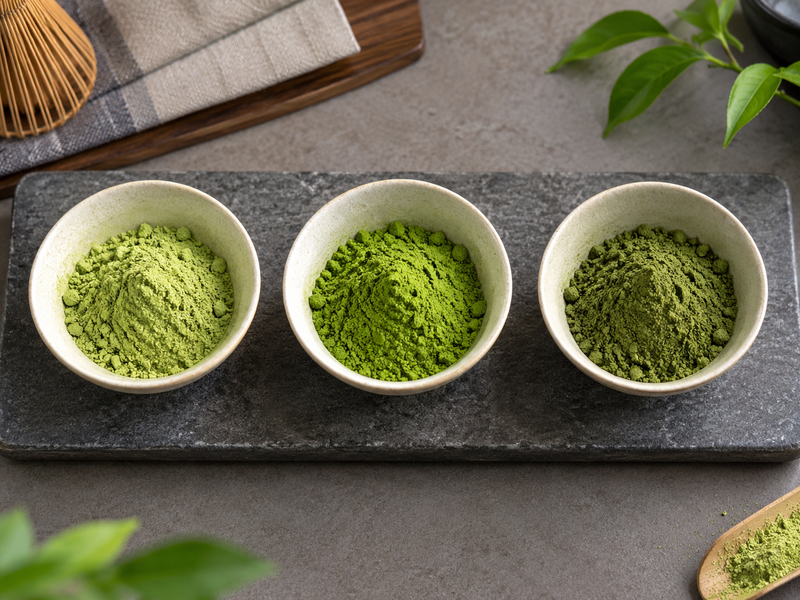
Trace the sample. Record product code, lot, packing date if supplied, and declared origin. That helps compare later deliveries with the tea that passed the application test. Do not infer specific farming methods or geography from a photograph of a green powder.
3. Is ceremonial grade an official standard?
Treat the term as supplier language
“Ceremonial grade” is widely used in overseas marketing, yet it is not a single official Japanese grading rule. Ippodo Tea says it does not use the term, calling it vague and created for Western marketing. A JETRO feature also notes the absence of official regulations defining the label. This does not mean every product sold as ceremonial is poor. It means the label alone cannot settle a purchasing decision.
| Label | Useful starting interpretation | Question that still needs an answer |
|---|---|---|
| Ceremonial | Often positioned for plain drinking | Which exact sensory and quality targets apply? |
| Premium | Higher position within one supplier’s range | Premium relative to which other code? |
| Culinary | Positioned for recipes and processing | Does it perform in this recipe? |
| Organic | Claim about certified production | Which certificate covers the lot and market? |
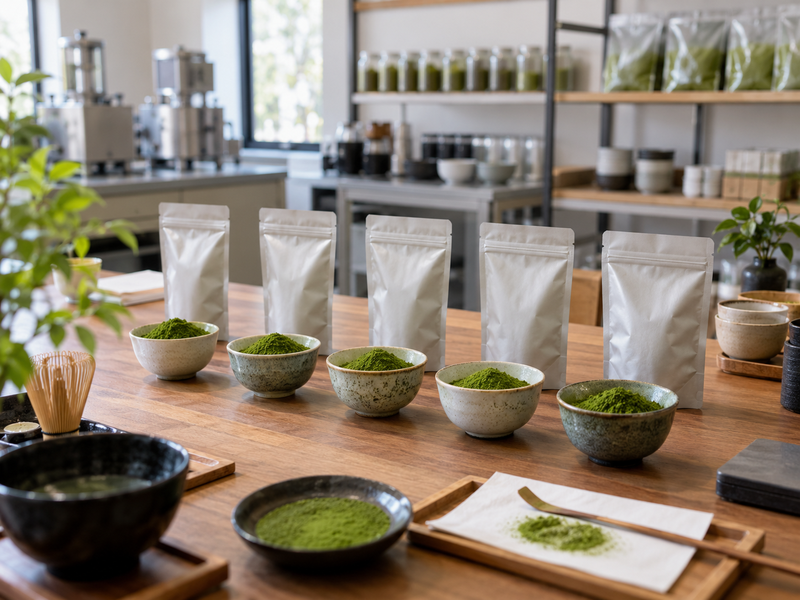
Compare named products, not adjectives. Request samples with codes and lot numbers. Prepare them under one controlled method, then assess flavor and appearance against the buyer’s own brief. A supplier’s grade system can be helpful once its internal differences are documented.
4. What does culinary grade mean in practice?
An application proposal, not a low-quality verdict
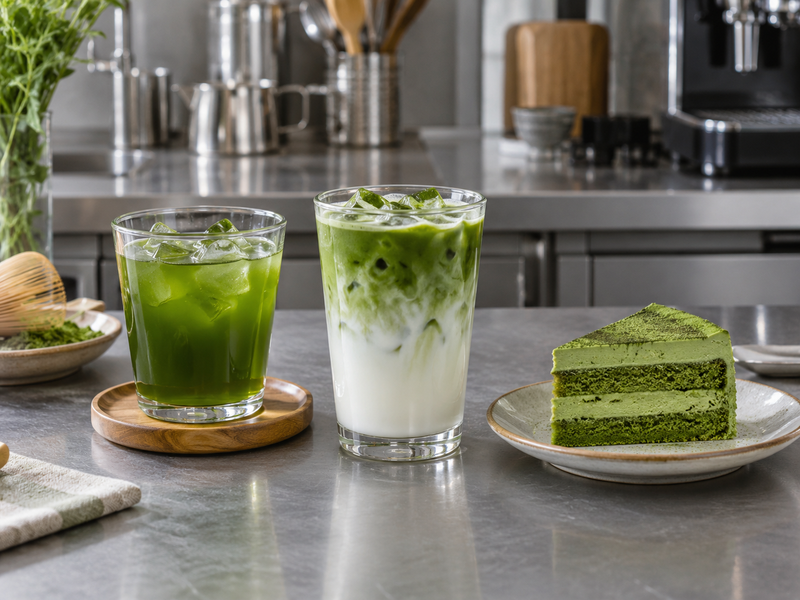
Culinary matcha is commonly offered for baking, desserts, dairy products, and beverages with other strong ingredients. A formulation may need a more assertive tea note so it remains evident after sugar, milk, flour, or heat. That does not make every culinary powder interchangeable. One may work in a cold latte and taste too bitter in a lightly sweetened cake; another may color icing well but be too mild after baking.
Define a realistic test. A manufacturer developing matcha cookies should compare powders in the finished cookie after cooling and packaging. A frozen dessert developer should taste the frozen product at its serving temperature, not only the mix before freezing. A café should test powder in the exact milk or plant-based base it sells. Powder-only tasting can screen samples, but it cannot replace application testing.
| Application | What to test | Common procurement error |
|---|---|---|
| Plain whisked tea | Aroma, balance, mouthfeel | Buying by a ceremonial label alone |
| Milk drink | Tea clarity after dilution | Judging only a water sample |
| Baked cake | Flavor and color after baking | Judging only dry powder color |
| Ice cream | Flavor at serving temperature | Judging only liquid mix |
Use the recipe as the test instrument. Fix the formula and process before comparing candidates, or differences in sugar, oven time, and milk will obscure the powder comparison.
5. Which grade fits each application?
Match the grade to the buying brief
A plain tea program may select a powder that tastes balanced with water. A café’s latte may need stronger tea flavor after milk and syrup. A bakery might favor a culinary option that keeps enough color and flavor at the approved dose. A packaged beverage manufacturer will also look at dispersion, stability, processing, and the product’s shelf-life plan. Grade names can direct the first samples, but each buyer must test the finished product.
Matcha Village lists culinary, premium, ceremonial, organic, and other options in its portfolio. Buyers should ask which exact product codes are available for the target market and use. Request no more than a practical shortlist at first, such as one value candidate and one higher-positioned candidate. Too many unlabeled samples make a tasting panel less reliable and can delay a clear decision.
Separate application fit from price. If a powder passes a water tasting but disappears in milk, it may remain a good product for the wrong format. If a lower priced powder performs well in a chocolate cake, it may be the appropriate purchase even if its grade label sounds modest. The decision is whether the product meets the approved brief.
6. How should buyers compare color and flavor?
Use a blind, controlled sample session
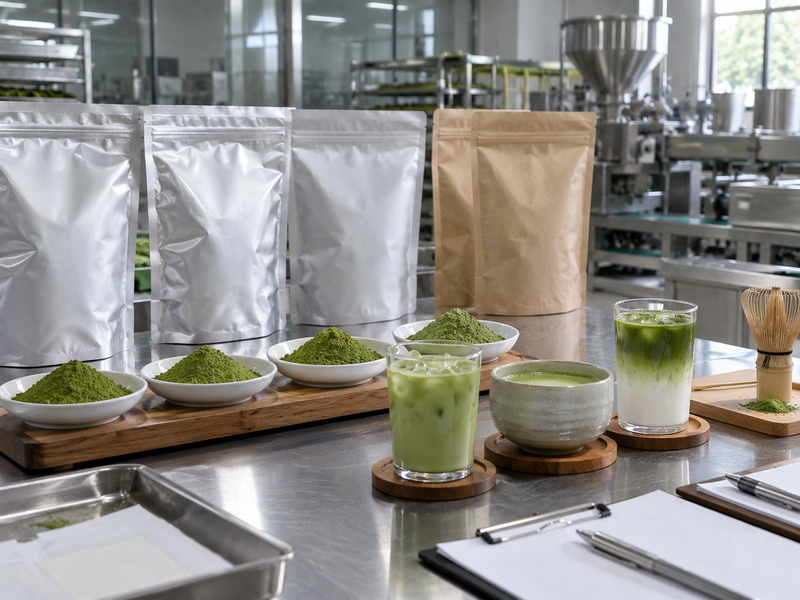
Prepare each powder at the same measured dose, water volume, temperature, and time. Use identical cups and lighting. Code samples so tasters cannot see the supplier name or grade label. Record aroma, sweetness, astringency, bitterness, texture, and aftertaste in plain language. Then repeat the comparison in the intended application. A blind test reduces the chance that a costly label or vivid product photo decides the result.
For color, observe dry powder and prepared product separately. Take photographs under fixed light as a reference, but do not use a phone image as the sole acceptance criterion. If color is crucial to a packaged product, agree a more controlled measurement method with the supplier. Note whether the product must stay green after processing, in a transparent bottle, or under retail lighting; these are different tests.
| Attribute | Screen in plain tea | Confirm in finished product |
|---|---|---|
| Aroma | Smell prepared bowl | Check after processing or mixing |
| Tea flavor | Note balance and finish | Judge against milk, sugar, or flour |
| Color | Compare under fixed light | Check after bake, chill, or display |
| Texture | Check for grittiness | Check in final serving |
Retain an approved reference sample. A later lot should be compared with the accepted powder under the same preparation method, not with a memory of what “premium” tasted like months earlier.
7. What documents should accompany a sample?
Request documents for the exact product and market
At minimum, buyers usually need a current ingredient specification, lot identifier, pack description, storage instructions, and available test or quality documents. Depending on the product and destination market, they may need declarations or certificates for organic status, contaminants, microbiological criteria, allergens, or other customer requirements. Do not assume that a company-wide certificate automatically covers the exact product, plant, date, and importing market. Ask the supplier to explain the scope.
For food sold in the United States, labeling and allergen rules apply to the finished food as relevant. The FDA’s food allergen guidance is a starting source for U.S. packaged products. A buyer should have its own regulatory team review the finished formula and label. Matcha documentation is one input to that review, not approval of the final product.
| Document | What to verify |
|---|---|
| Specification | Product code, revision date, relevant parameters |
| Certificate of analysis | Lot matches the supplied sample or shipment |
| Certification | Scope, validity, and destination-market relevance |
| Pack details | Material, unit size, seal, storage guidance |
| Commercial quote | Grade code, volume basis, lead time |
Link every file to a code and lot. A folder of unnamed PDFs does not establish traceability.
8. How can teams test consistency between lots?
Move beyond one attractive sample
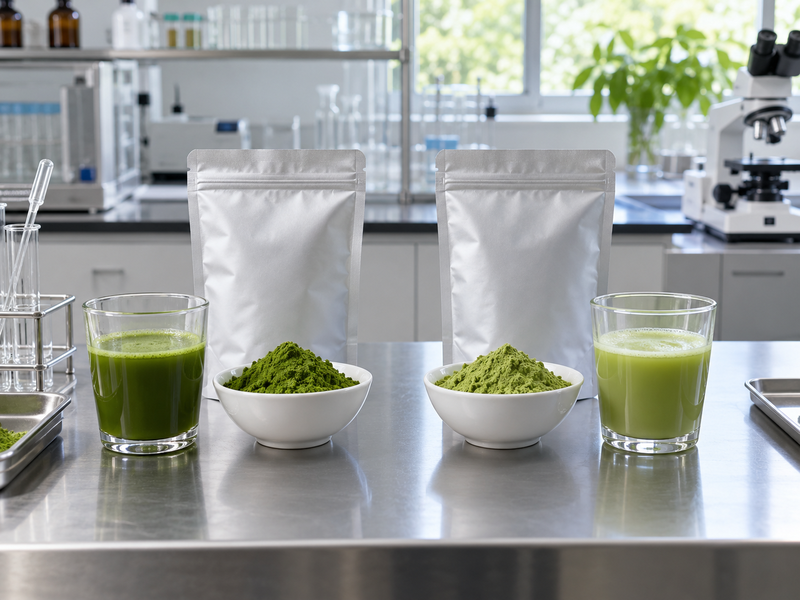
Once a powder passes development, request another production lot when available. Compare both lots using the same preparation and application recipe. Record color, flavor, dispersion, and any parameters specified in the purchase agreement. Keep retained samples under suitable conditions and document the date they were opened. Changes can arise from storage or handling as well as from the tea itself, so the test conditions matter.
Define an acceptance range in terms the team can apply. “Bright green” is vague; an approved visual reference under fixed light plus a sensory scorecard is more useful. For high-volume manufacturing, instrument readings may help, but establish how instruments will be calibrated and what samples they will measure. If a lot differs, the first step is a documented comparison, followed by a supplier discussion.
Agree a change-notice process. If the supplier changes the product code, pack, origin declaration, or key processing characteristics, the buyer may need to repeat testing. A stable relationship depends on knowing which powder will arrive, not merely ordering another carton labeled “culinary.”
9. How should buyers compare price and use rate?
Calculate cost at the approved sensory target
Compare prices on the same delivery terms, pack size, and order volume. Then measure how much of each powder the finished product needs. A less expensive powder can cost more per serving if the dose must rise to make the tea noticeable. A higher priced powder can be economical when its flavor survives a lower use rate, but that must be demonstrated in the recipe rather than assumed from the grade label.
Include waste from handling, pack size, shelf-life limits after opening, and rejected production units. A small café may use a pack slowly and value a suitable smaller format. A large manufacturer may prioritize bulk packaging that fits its line and inventory system. The lowest kilogram price is not always the lowest cost in the delivered product.
| Comparison item | Calculation or check |
|---|---|
| Ingredient per serving | Price per gram × approved grams used |
| Processing loss | Powder or finished units discarded |
| Pack fit | Time to use one pack after opening |
| Freight and duty | Delivered cost under quoted terms |
| Quality variation | Cost of rework or rejected output |
Price the approved grade code. If procurement switches to a different code to save money, the development team should repeat the product test and label review where relevant.
10. What should go into a matcha purchase brief?
Give suppliers a testable target
State the application, market, estimated volume, expected pack, target tea character, color expectations, and any required documents. Include the process: whisked in water, mixed into cold milk, baked, frozen, or filled into a ready-to-drink product. State whether an organic claim or particular origin is required, and distinguish firm requirements from preferences. Give the supplier a realistic sample quantity and review schedule.
Ask for two or three clearly coded options and a concise explanation of differences. Run a controlled screening, select a finalist, test another lot, and write the accepted product code into the purchasing specification. Matcha Village can recommend options across its range against this application brief, subject to sample results, available documents, and current supply terms.
Close on evidence. Record the finished-product result, the approved sample, specification revision, target use rate, and receiving checks. This makes the next purchase more reliable than a request for “your best ceremonial matcha” and gives both buyer and supplier a concrete standard to maintain.
FAQ
Q1: What are matcha grades? Supplier categories such as ceremonial, premium, and culinary that help organize products by intended use or position.
Q2: Is ceremonial grade an official Japanese standard? No single official rule defines the term. Buyers should assess a named product and its documents.
Q3: Is culinary matcha unsuitable for drinks? No. Test the particular powder in the intended drink; labels alone cannot determine fit.
Q4: Can two suppliers’ grades be compared by name? No. Compare coded samples under the same recipe, dose, and conditions.
Q5: What should a buyer request before a bulk order? The exact product specification, lot-linked sample, relevant quality documents, commercial terms, and a successful application trial.