
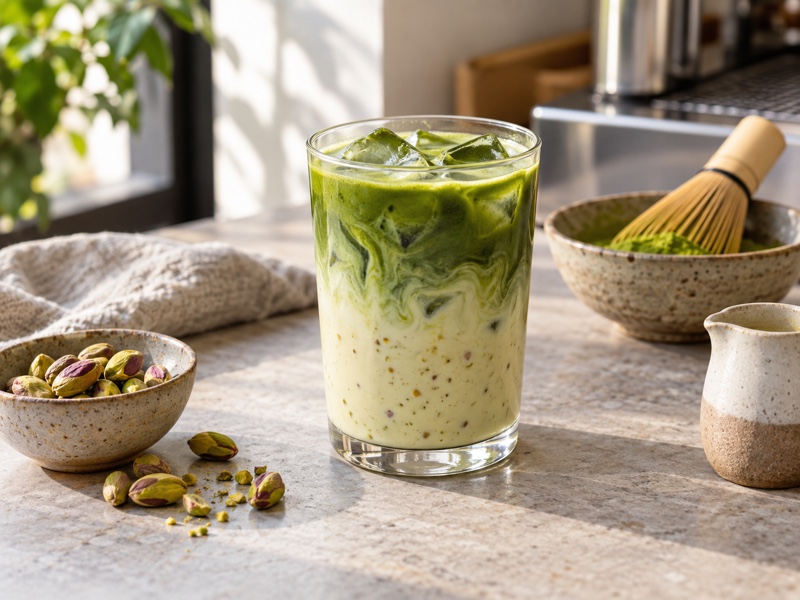
A pistachio matcha latte can command a premium price, but pistachio paste, matcha, milk, toppings, and extra bar time can quickly consume that premium. Product teams should compare a real-nut version with a syrup-led version, then test the cup customers will receive after a short wait. The pistachio matcha latte example from Dash of Jazz illustrates the consumer idea. The ten checks here help cafés and chains select ingredients, control allergens, and decide whether a hot or iced format earns its menu space.
1. What is the promised pistachio experience?
Write down whether the drink should taste of roasted nut, sweet pistachio dessert, or a balanced nut-and-tea latte. These are distinct products. A syrup may deliver a recognizable aroma but little nut substance. A paste can add authentic flavor and body while creating sediment, oil separation, and higher cost. The menu name should match the ingredients and sensory result. If the brand wants a bright green photo, decide whether the color should come from matcha alone or another ingredient; do not let photography dictate a misleading formula.
Set a finished-cup standard
Ask tasters to score nut identity, tea identity, sweetness, mouthfeel, and aftertaste. Taste a full serving, not just a spoonful. A rich first sip may become heavy halfway through. Compare the cup immediately and after the wait typical of mobile orders. A nut layer that looks neat at the counter may streak, settle, or stick to the cup wall. Define which changes are acceptable before trying to optimize price.
| Target | Test question | Failure signal |
|---|---|---|
| Pistachio | Does it taste like the named nut? | Generic sweet aroma |
| Matcha | Can tea be identified? | Nut flavor masks it |
| Texture | Is the cup smooth? | Paste grit or oil ring |
| Sweetness | Would a guest finish it? | Dessert-like fatigue |
2. Should the café use paste, butter, or syrup?
Obtain ingredient declarations and specifications for every candidate. “Pistachio sauce” might contain nuts, sugar, oils, dairy, color, and stabilizers in different proportions. A pure paste behaves differently from a sweetened spread. Test each at the amount needed for an acceptable pistachio taste, then compare cost per served cup rather than cost per kilogram. A cheap syrup used at a high dose may not save money. A pure paste may need a sweetener and stronger mixing method.
Test under service conditions
Dispense ten portions using the proposed pump, spoon, or squeeze bottle. Weigh each portion to see whether staff can hit the target. Thick paste can be slow at a cold station; syrup can vary with pump calibration. Check whether the ingredient must be refrigerated after opening and how quickly it is used. Opened-container waste belongs in the cost model. If a supplier changes a sauce formula, retest flavor and allergens before using the same menu wording.
3. Which matcha performs beside nut and milk?
Pistachio and milk soften some tea bitterness but can bury delicate aroma. Test at least two tea grades in the finished latte, both hot and iced if both are sold. Keep nut ingredient, milk, sweetness, and portion fixed. Evaluate whether the tea remains identifiable without becoming harsh. A powder that looks excellent in plain water may not justify its premium in a rich latte. Conversely, a lower-cost grade may produce a dull green or rough finish that the nut cannot hide.
Buy by application
Use Matcha Village’s bulk wholesale matcha page to frame a request for samples and supply documents. Ask for the exact grade, lot, and specification proposed. Test a replacement lot against the approved cup before a chain-wide switch. The product brief should say whether color, flavor, or caffeine consistency carries the greatest weight. Do not assume a company-level certification automatically describes every shipment; verify the documents tied to the product being purchased.
| Matcha candidate | Hot latte | Iced latte |
|---|---|---|
| Grade A | Tea aroma after steaming? | Tea after ice melt? |
| Grade B | Bitterness with nut? | Powder ring or grit? |
| Control lot | Known color and taste | Baseline for substitutions |
4. How should nut paste be dispersed?
Pure pistachio paste can separate into oil and solids. Stir the source container to its supplier’s instructions, then measure the intended dose. Compare mixing paste into warm milk, mixing it with a small liquid preblend, and layering it at the bottom. Taste the top and bottom of each cup. A dramatic bottom layer may leave the guest with a sweet nut concentrate at the end. If a paste needs a blender, count the wash and handling time as part of service cost.
Watch residue and equipment
Inspect jugs, steam wands, shakers, and cup walls after ten drinks. Nut residue is both a quality and allergen-control issue. A paste can clog pumps or leave oil films that complicate cleaning. Ask operations whether the drink can share a station with other beverages under their allergen procedure. If the procedure requires dedicated tools, build those into launch costs. A syrup may be operationally easier but still needs its own ingredient and allergen review.
5. Which milk keeps the intended balance?
Dairy milk, oat beverage, and other plant bases bring different sweetness and body. Some plant products may contain nuts or soy; check each label and its supplier documentation. Make a small matrix with the two most likely milks and the two leading pistachio ingredients. Keep the matcha dose fixed. Assess nut clarity, tea clarity, foam, and sweetness. A milk that produces excellent foam can still mute the named flavors. The best choice is the one that fits the menu promise and the chain’s existing inventory.
Test the hot cup separately
Heat can release nut aroma while exposing oil separation. Steam the milk with the nut ingredient only if equipment and cleaning controls permit. Record whether the drink splits, forms an oily surface, or coats the pitcher. A hot version may need a different assembly from iced. Rather than forcing one build card on both, approve separate specifications and costs. If the café offers milk substitutions, define which produce an acceptable drink and show any price difference clearly.
| Base | Potential benefit | Check in latte |
|---|---|---|
| Dairy milk | Familiar creaminess | Tea and nut masking |
| Oat drink | Body and foam | Added sweetness |
| Almond drink | Nut alignment | Allergen complexity |
| Water-based tea | Strong tea clarity | Thin mouthfeel |
6. Does layering help service or merely the photo?
A green matcha layer over pale milk and a pistachio base can look attractive. It can also separate the flavors until the guest stirs. Build one fully mixed control and one layered version. Taste both from the first sip to the last without staff intervention. If the layered cup needs a stir, provide a clear cue. For takeaway, test a lid and a brief walk. Visible stripes may vanish during transport, so the delivered product should still taste balanced when the image does not survive.
Control the pour
Specify liquid temperature, ice mass, cup size, and pour order. Density differences between syrup, milk, and tea concentrate affect layers. A new syrup with a different sugar content can change the visual result. Train two staff members, then compare their drinks at handoff and after five minutes. If the results vary widely, simplify the build. A predictable mixed latte may sell better than a fragile layered version that causes remakes during a rush.
7. How should allergen controls shape the launch?
Pistachio is a tree nut. In the US, the FDA says major-allergen labels must identify the specific tree nut, and food businesses need controls against allergen cross-contact. Local rules determine the exact obligations in other markets. Record pistachio in the ingredient and allergen matrix for every approved sauce or paste. Check milk, toppings, and the base drink too. A “pistachio-flavored” syrup may or may not contain pistachio; staff should not guess.
Map the work station
Follow the ingredient from storage to scoop, mixer, pitcher, cup, and cleaning sink. Decide whether dedicated utensils are needed. Train staff on the approved allergen response when a guest asks if a drink can be made nut-free. A nut-free request cannot be answered from the recipe alone if shared tools or airborne handling create cross-contact risk. Review printed menu and app wording so ingredient information matches the actual store build. An allergen mistake is a larger cost than any topping saving.
8. What does a complete cup cost?
Build a cost sheet from measured servings: matcha, pistachio product, milk, sweetener, garnish, cup, lid, and expected waste. Add labor for extra blending, station cleanup, and training. Track yield from the opened pistachio container. If an expensive paste remains unused after its permitted hold, its actual cost per sold cup rises. Price the hot and iced builds separately if they use different portions. Avoid quoting a margin from an ideal bench recipe when staff naturally dispense more sauce during service.
Include remake rates
Run a short service simulation and count cups remade for separation, poor layering, or dosing errors. Compare that loss with a simpler version. A product that takes too long during peak periods can displace other orders even when its ingredient margin looks healthy. If a garnish is essential to the price story, check its portioning and waste too. Use saleable cups as the denominator in the margin calculation.
| Cost line | Source of evidence | Common omission |
|---|---|---|
| Matcha | Weighed dose and quote | Extra powder used for color |
| Pistachio | Actual dispensed mass | Opened-container waste |
| Milk | Cup-level volume | Substitution differences |
| Labor | Timed service trial | Cleaning between drinks |
9. What should a short holding trial reveal?
Hold the final cup under the conditions of a mobile pickup order. Inspect oil rings, sediment, layer changes, foam collapse, and flavor after five and ten minutes. Taste the top and bottom separately. An iced cup also changes as ice melts; weigh or measure dilution if a recipe becomes weak quickly. For a hot cup, track whether the nut aroma remains pleasant after cooling. Use the actual takeaway lid because it can trap aroma and expose an oily surface differently from an open cup.
If a refrigerated bottled latte is proposed, use a separate food-safety and shelf-life program. Milk and nut ingredients change the product’s hazards and process needs. The FDA Food Code offers a US retail safety model, but a manufactured beverage needs its own validated controls and market-specific label review. A café trial cannot assign a retail shelf life.
| Launch control | Check at store trial | Owner |
|---|---|---|
| Nut dose | Cup-to-cup variance | Bar lead |
| Tea dose | Flavor after milk mixing | Product team |
| Allergen tools | Cleaning and storage route | Operations |
| Contribution margin | Saleable cups per ingredient pack | Finance |
10. What belongs in the final specification?
Lock approved pistachio ingredient, tea grade, milk, measured doses, equipment, build order, cup, and garnish. Put allergen handling and cleaning on the same staff card as the recipe. Include visual standards for a mixed or layered drink, plus a rule for when to remake it. Procurement should retain the ingredient declarations and alternative-supplier approval path. Finance should retain the cost sheet with waste and labor assumptions. All three teams need the same version number when the menu launches.
Before a wider rollout, test the recipe at a store that did not develop it. Watch ordinary staff use the card. If they repeatedly add extra syrup or take an extra minute to mix paste, the bench specification is incomplete. Revise the build and recalculate margin. A premium menu drink earns its place when its flavor, allergen controls, and contribution margin survive a real shift.
FAQ
Q1: Is pistachio paste always better than syrup? No. Paste can deliver more nut character but may cost more and require harder mixing and cleaning.
Q2: Can the drink be called pistachio if it uses flavor only? Naming rules vary by market. Review the actual ingredient and menu wording before launch.
Q3: Does oat milk solve allergen concerns? No. Pistachio remains a tree-nut allergen, and the oat product needs its own ingredient review.
Q4: Why weigh syrup or paste? Pumps and spoons vary; a small overpour affects taste and cup margin.
Q5: Should hot and iced drinks share one recipe? Test them separately. Heat, ice dilution, foam, and nut separation can require distinct builds.
Choose a pistachio ingredient for the taste it produces per saleable cup, then prove that staff can make the drink safely and consistently. A side-by-side paste and syrup test, followed by a timed service run, gives the café a defensible launch decision.