
Matcha wholesale for bakeries involves selecting a commercial ingredient for a specific recipe and production method. Attractive dry powder can perform differently in dough, fillings or finished cakes. Use controlled trials from mixing through cooling and display, then write a purchase brief around the result your bakery intends to sell.
Table of contents
- What should a bakery define before requesting matcha?
- How should the bakery select products for a trial?
- What should a bakery control when mixing matcha?
- How can recipe trials separate dose from product choice?
- What should be checked after baking and cooling?
- How should fillings and unbaked components be assessed?
- What changes when a recipe moves into production?
- How should the bakery calculate usable ingredient cost?
- What should be observed during storage and display?
- What should the final bakery purchase specification contain?
1. What should a bakery define before requesting matcha?
Describe the finished product
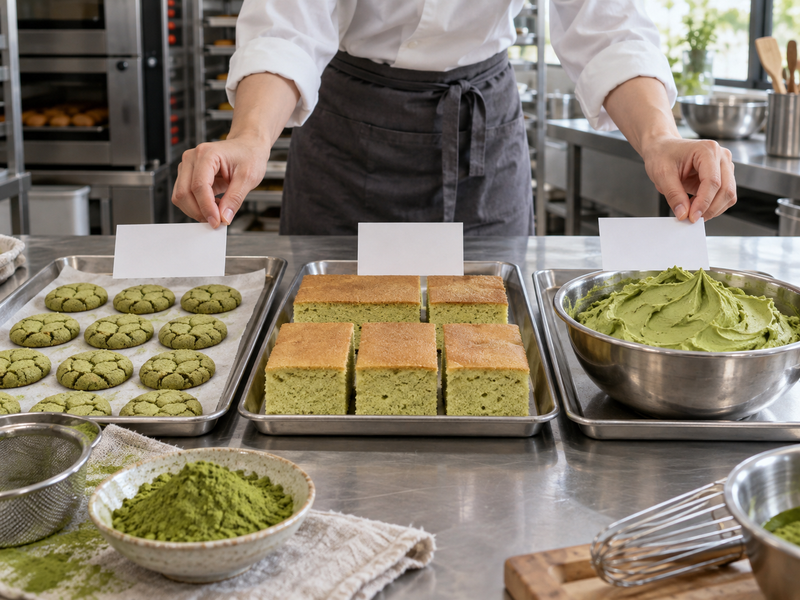
Name the bakery application in practical terms. A cookie, sponge cake, cream filling and chocolate coating expose the ingredient to different processes. State where matcha enters the recipe, what the customer should taste and what appearance the bakery wants after production. Include the normal batch size and sale format. These details help a supplier propose a relevant product and help your team design a trial that answers the buying question.
Decide which result would be acceptable before comparing samples. A subtle tea note may suit one item while another requires a more pronounced flavor. The desired green appearance should be assessed in the finished product under a defined light source. Avoid using one powder color as a universal buying standard. A hypothetical bakery developing a matcha cream bun should describe both the baked shell and the unbaked filling process. Its request for matcha wholesale for bakeries will be more useful when it specifies the actual application rather than asking for the best culinary grade.
2. How should the bakery select products for a trial?
Compare candidates against the same brief
Ask for proposed products with a clear identity and application rationale. Request the specifications and product information relevant to your bakery and destination. Use grade names as seller descriptions that need confirmation through trial. Keep the sample identity connected to its proposed commercial pack. If a seller suggests separate powders for a cake and filling, assess those as separate products rather than forcing one candidate across both applications.
Plan a manageable number of comparisons. Too many powders, doses and process changes can make the results difficult to interpret. Begin with a controlled recipe using each candidate, then adjust a promising product in a separate trial. Record which variable changed. The matcha powder for baking guide provides application context. Your bakery still needs its own recipe evidence, since the same powder can produce different results across products and processes. Select candidates that answer a specific development question and retain the reasons for accepting or rejecting them.
| Trial candidate | Confirm | Compare in |
|---|---|---|
| Cookie ingredient | Product identity | Approved cookie recipe |
| Cake ingredient | Proposed application | Cooled cake |
| Filling ingredient | Handling information | Finished filled item |
3. What should a bakery control when mixing matcha?
Record a method staff can repeat
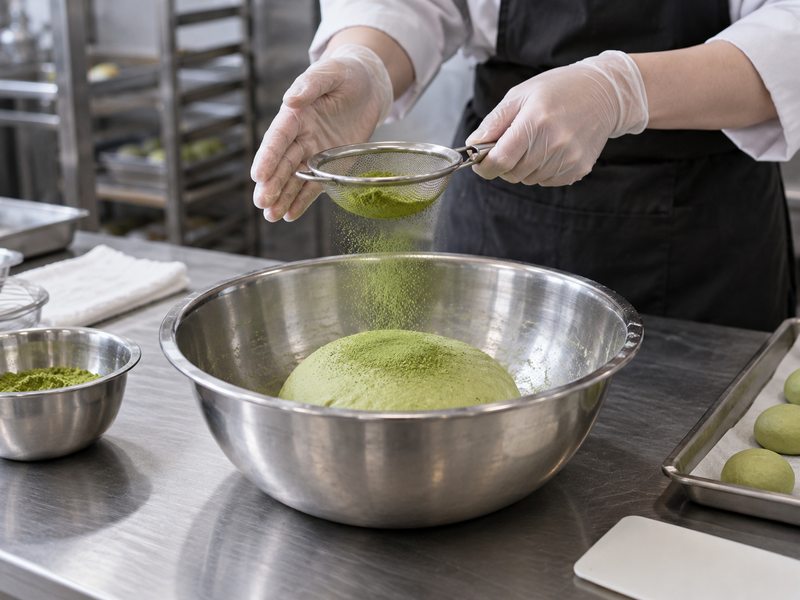
Document when matcha enters the recipe and how it is dispersed. The method may involve dry blending, sifting or mixing with a compatible liquid phase, depending on the formula. Trial the method in your own process and equipment. Keep ingredient quantities and mixing sequence fixed when comparing powders. If visible pockets or uneven color appear, review incorporation and dosing before deciding that the product itself caused the problem.
A hypothetical bakery might compare adding a measured powder portion with the dry ingredients against another defined incorporation method. It should assess uniformity, texture and preparation work in the resulting product. Record bowl size, mixer setting or mixing duration where they affect repeatability. Do not turn a successful small-bowl trial into an assumption about a larger machine. Ask staff to repeat the selected method and compare the output. A practical matcha wholesale for bakeries brief includes the process the ingredient must fit. That gives the supplier more useful context than a request for powder that never clumps in any recipe.
4. How can recipe trials separate dose from product choice?
Change one decision at a time
Use the same starting dose for a controlled product comparison. Once a candidate looks promising, run dose adjustments as a separate sequence. Measure powder by weight and keep the remaining formulation consistent. Record how each change affects flavor, color, texture and saleable yield. A stronger color at a higher dose does not describe the powder’s performance at the original dose, and a darker product may not match the bakery’s intended appearance.
Keep the selected dose linked to the current recipe version. A hypothetical cookie trial might compare several measured portions after selecting a candidate, then evaluate cooled cookies with the same review method. Label every variation clearly in the trial record. Use blind or coded samples where workable to reduce the influence of a product name. The bakery can choose the result that meets its own requirements without claiming the dose is a universal recommendation. When buying matcha wholesale for bakeries, the approved recipe gives purchasing the consumption figure needed for costing and stock planning.
| Trial step | Variable changed | Variables held steady |
|---|---|---|
| Product comparison | Powder candidate | Recipe and starting dose |
| Dose comparison | Powder weight | Candidate and process |
| Process comparison | Incorporation method | Approved product and dose |
5. What should be checked after baking and cooling?
Judge the product at its sale condition
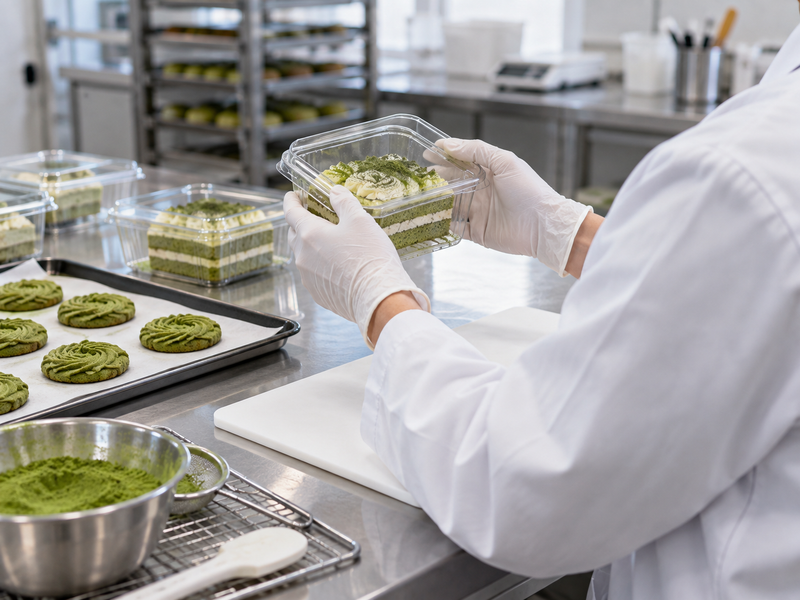
Evaluate the finished product after the bakery’s defined cooling period. Record the baking method, equipment and batch conditions that produced it. Compare appearance under the same lighting and assess flavor using the same serving condition. Dry powder appearance and fresh dough appearance are useful observations, but the buyer’s acceptance should be based on the item customers receive. Include the normal cut surface or portion if that is how the product is presented.
Look for differences the bakery would treat as a release concern, such as uneven color, an unwanted finish or a changed texture. Record them in descriptive language. Avoid assuming that a culinary label guarantees green color through every process. A hypothetical cake trial can compare the outer surface and center separately, then note which result matches its specification. Repeat the promising recipe before scaling. Use the cooled product your bakery actually produced as the approval evidence. Repeat observations under the same method before releasing a larger batch. That record can support future comparisons when a new lot or process change is introduced.
6. How should fillings and unbaked components be assessed?
Follow the complete item through assembly
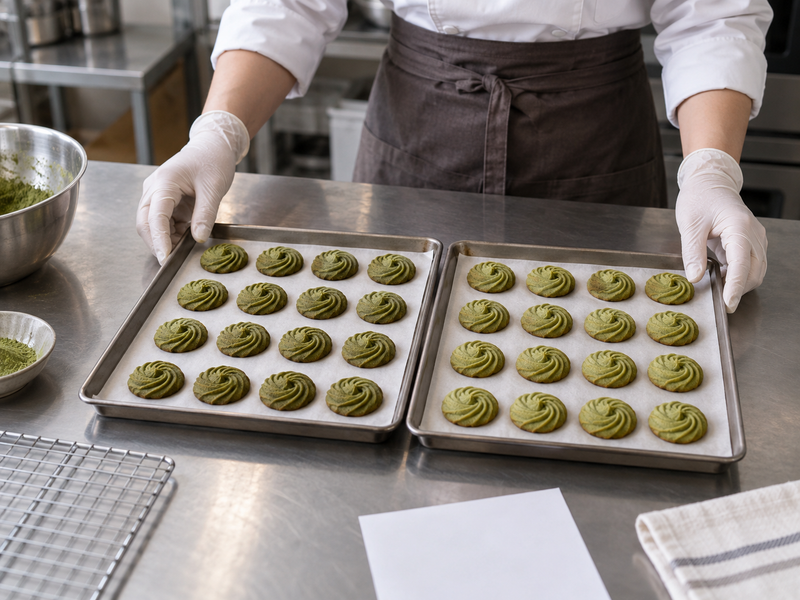
A filling or icing may enter the product after baking, so its trial needs a different route from dough. Define mixing, holding, assembly and serving conditions. Check whether the tea flavor remains appropriate when the component is eaten with the rest of the item. A filling tasted alone can appear satisfactory while producing an unbalanced finished product. Assess the assembled portion the customer receives and record any change in texture or appearance.
Keep food handling and product shelf-life decisions with the bakery’s qualified team and established process. A matcha sample trial does not validate a new shelf life or make a filling safe under a different storage condition. For a hypothetical cream-filled item, the bakery could assess an approved formulation at defined points within its existing trial protocol. Record the result and the conditions without claiming longer stability. The matcha wholesale for bakeries comparison should show which component was tested and which process remained outside scope. That makes the approval usable by production staff and prevents a dough trial from being applied to an unrelated filling.
| Component | Assess with | Boundary to retain |
|---|---|---|
| Dough | Baked and cooled item | Specific bake process |
| Cream filling | Assembled portion | Existing handling protocol |
| Coating or icing | Finished surface and bite | Tested formulation |
7. What changes when a recipe moves into production?
Repeat the trial on the real line
A production batch can change mixing, dosing, waiting time and how material moves through equipment. Record these conditions during a scale-up trial. Confirm that the approved powder is used and that staff follow the selected incorporation method. Observe the process and saleable output rather than assuming that a larger batch reproduces a bench result. If a difference appears, investigate the changed variables before revising the ingredient specification.
A hypothetical bakery moving from a small mixer to a larger mixer should review uniformity and the portioning behavior of its actual dough. It might need a revised process, but that revision should be tested and recorded. Avoid claiming that a minor powder difference will necessarily stop a production line. Ask the supplier about the relevant specification and compare lots using the bakery’s method. The matcha incoming inspection article provides context for receipt checks. Connect those checks with production approval so an accepted shipment still has a clear route into the bakery’s controlled recipe.
8. How should the bakery calculate usable ingredient cost?
Use saleable portions from the approved batch
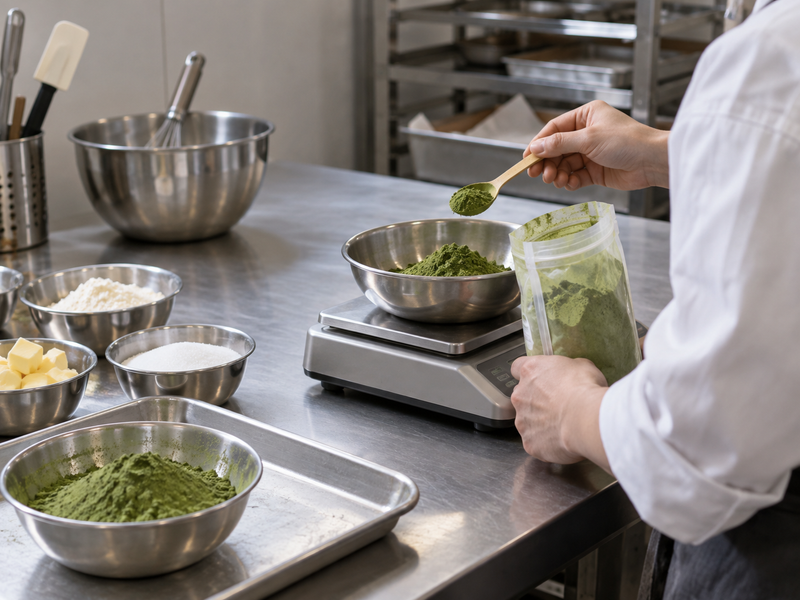
Cost matcha within the full formulation. Use the delivered powder cost, approved recipe quantity and saleable batch output. Include other ingredients and packaging when calculating the complete product. Record rejects, trimming or other output differences in categories your bakery can investigate. A lower powder price does not automatically produce a lower finished-unit cost if the approved result requires a different dose or creates more rejected portions.
Use trial data for yield when available. If the bakery has only a small test, mark its output as preliminary and repeat the measurement in production. A hypothetical bakery comparing two candidates can calculate the cost of the portions that meet its acceptance criteria, then examine the cause of any difference. Keep the formulation version beside the calculation. Do not adopt a seller’s claim that one grade is always most economical. Matcha wholesale for bakeries should be compared through the actual recipe the buyer intends to sell, including the portion and packaging customers will receive.
| Cost input | Source | Link to maintain |
|---|---|---|
| Powder cost | Current commercial proposal | Approved product |
| Recipe consumption | Weighed trial formula | Recipe version |
| Saleable output | Batch observation | Acceptance method |
9. What should be observed during storage and display?
Use the bakery’s defined review period
Observe the finished item through the storage and display conditions your bakery intends to use. Record the pack, exposure, temperature controls where relevant and assessment timing. Compare appearance, flavor and texture using the same method each time. Keep this evaluation within the bakery’s approved food handling and shelf-life process. Ingredient appearance trials alone cannot establish a new product’s safe sale period.
A hypothetical bakery could compare a packed cake with an item on its ordinary display route, using a defined assessment protocol. If a difference appears, identify the handling or formulation variable that needs another trial. Avoid claiming a powder guarantees stable color or taste indefinitely. The MatchaSourcing culinary applications article identifies baking and manufacturing concerns, while its heat and consistency promises are seller claims. Your bakery should retain observations from its own item. A documented display check helps the team decide whether a candidate fits the intended sales routine and where the approval’s limits should be stated.
10. What should the final bakery purchase specification contain?
Translate trials into a repeatable buying brief
Write the approved product identity, application, recipe version and acceptance method into the purchase brief. Include the commercial pack, planned usage and handling requirements. Identify which documents and lot information the buyer needs for review. Specify how changes to the proposed product or format will be communicated. Keep observations such as acceptable cooled color tied to a method rather than turning them into an undefined promise of premium quality.
Ask Matcha Village to propose a product for the bakery’s actual recipe and process. Matcha Village supports product selection for baking and other food applications. Ask the commercial team to identify the product proposed for your trial. Confirm the approval with the production and purchasing owners. Keep a retained sample or relevant reference material under a recorded method where suitable. When another lot arrives, use the agreed receipt and application checks before routine use. The final brief should tell a supplier what to propose and tell the bakery what evidence must be reviewed before that product reaches a saleable batch.
| Specification field | Record | Responsible owner |
|---|---|---|
| Product and application | Approved powder and bakery item | Development |
| Process and acceptance | Recipe and review method | Production |
| Commercial supply | Pack, quantity and change route | Purchasing |
Select one bakery item and write its mixing, baking or assembly conditions. Request a Matcha Village sample for that application, then assess the finished product through the bakery’s normal review process. Approve the purchase brief using the recorded recipe, result and commercial pack.
FAQ
Q1: Is a culinary grade label enough for bakery approval?
No. Test the proposed powder in the actual recipe and production method.
Q2: Should dry powder color decide the purchase?
Assess the finished item, including cooling, assembly and the planned presentation.
Q3: Can one matcha work in both dough and filling?
Possibly, but approve each application through its own trial.
Q4: Does a sample trial validate shelf life?
No. Follow the bakery’s qualified shelf-life and food handling process.
Q5: What should be sent with a sample request?
The bakery item, formulation context, process, desired result, destination and proposed commercial pack.