
Matcha incoming inspection determines what your warehouse may accept, what quality must hold and when production may use a delivered lot. The receiving team needs instructions before the truck arrives, especially when cartons, lot codes or documents do not match the order. Build a receiving record that follows the material from the loading bay to an authorized stock decision.
Contents
- 1. What should matcha incoming inspection decide at the dock?
- 2. Which instructions belong in the pre-arrival packet?
- 3. How should staff document the condition of the delivery?
- 4. How do you reconcile lot codes and quantities?
- 5. Which documents must quality review before release?
- 6. How should the site plan sampling?
- 7. How can the warehouse prevent use of held material?
- 8. What should an exception investigation contain?
- 9. How do you close a release or rejection decision?
- 10. How should the next delivery improve the receiving routine?
1. What should matcha incoming inspection decide at the dock?
Separate receipt from release
Receiving staff can confirm that a delivery arrived without authorizing its use in food production. Define the actions they may take, the conditions that require a hold and the person they must contact. Put these instructions where the team works. A signature on a carrier document should not automatically change the ingredient’s quality status in the stock system.
Review the expected delivery before unloading. Confirm the supplier, purchase order, product description, planned lot information and any agreed handling conditions. If the shipment contains several products or lots, plan separate identification from the start. Untangling mixed records after bags have been shelved creates avoidable uncertainty about which material quality reviewed.
| Receiving decision | Immediate action | Authority needed |
|---|---|---|
| Expected shipment arrives | Record receipt and preserve identity | Receiving staff |
| Product or lot is unclear | Place affected material on hold | Quality review |
| Release evidence is complete | Change stock to approved status | Named release authority |

2. Which instructions belong in the pre-arrival packet?
Give the warehouse a usable reference
Send receiving a concise packet with the purchase order, approved product code, expected pack format and the route for obtaining lot documents. Identify the required records without asking warehouse staff to interpret technical reports outside their role. If the supplier will send final lot details shortly before dispatch, assign someone to check that they arrive before the delivery.
Include instructions for unusual events such as a split shipment, an alternative carrier or a delivery outside the staffed receiving period. State who can approve unloading into controlled holding space and who can authorize an exception. Keep contact details current so the warehouse does not rely on a salesperson who may be unavailable when the truck arrives.
Ask purchasing to communicate agreed commercial acceptance procedures, including how visible delivery damage should be documented. Quality should separately define product hold and release controls. A supplier’s claims deadline, the carrier’s delivery record and the factory’s food-safety decision are related records, but they serve different purposes. Keep all three available without treating a completed carrier form as evidence that the ingredient meets specification.
3. How should staff document the condition of the delivery?
Record observations before moving the evidence
Inspect the delivery according to the approved receiving procedure and photograph relevant damage while its location remains clear. Record which pallet, carton or bag is affected, along with time and staff identity. Use factual descriptions such as torn outer carton or visible wet area. Leave possible causes for the investigation team rather than writing an unsupported conclusion on the receipt.
For facilities within its scope, the current U.S. 21 CFR 117.80 addresses sanitary receiving and inspection, ingredient handling and protection against contamination. This reference was checked on September 27, 2026; the applicable food-safety program should determine site procedures.
| Observation | Evidence to preserve | Initial warehouse response |
|---|---|---|
| Outer-carton damage | Position and photographs | Identify affected units |
| Unclear inner-pack condition | Sealed pack and inspection notes | Hold for authorized review |
| Unexpected shipment condition | Delivery records and agreed handling data | Notify quality promptly |
Avoid opening ingredient packs in an uncontrolled loading bay to settle uncertainty quickly. Move any approved sampling activity to the designated area and follow its hygiene procedure.

4. How do you reconcile lot codes and quantities?
Make each received unit traceable
Compare the product identity and lot marking on the delivered material with the order and supplier documents. Record how outer cartons relate to inner packs. If several lots share one pallet, keep the quantity for each lot separate in the receiving record. A pallet count alone does not tell production which lot it later consumed.
Investigate missing or inconsistent codes before relabeling anything. Ask the supplier to provide a documented explanation that connects the original markings to the correct product and lot. Preserve photographs of the original labels. Creating an internal sticker can help warehouse handling, but it should not erase the evidence needed to verify the supplier’s identity information.
Reconcile accepted, held and visibly affected quantities so finance and purchasing know what physically arrived. Record any sampling deduction separately when the site requires it. If an outer carton contains a different number of units from the packing list, keep the discrepancy open until someone checks the relevant containers and documents. Assign one owner to close the discrepancy so it does not remain an unexplained difference at the next stock count.
5. Which documents must quality review before release?
Match evidence to the delivered lot
Create a release checklist from the approved specification and supplier agreement. It may include the lot certificate, product identification, required declarations and any order-specific evidence. The checklist should tell reviewers which document revision applies and how to handle a missing item. Do not add a generic test panel that no one has connected to the ingredient, process or destination.
Check the lot number, product description, units, methods and result status on the documents that support release. The matcha certificate of analysis guide provides a separate framework for reading the analytical report. Incoming inspection adds the connection between that report and the stock physically received.
| Document | Connection to verify | When to keep the hold |
|---|---|---|
| Lot report | Delivered product and lot | Report covers different material |
| Supplier declaration | Product, site and current revision | Scope or revision is unclear |
| Order-specific evidence | Requirement named on the order | Required evidence is absent |
Keep a record of who reviewed each item. A folder full of attachments does not identify which version supported the release decision.
6. How should the site plan sampling?
Define the decision and the sample together
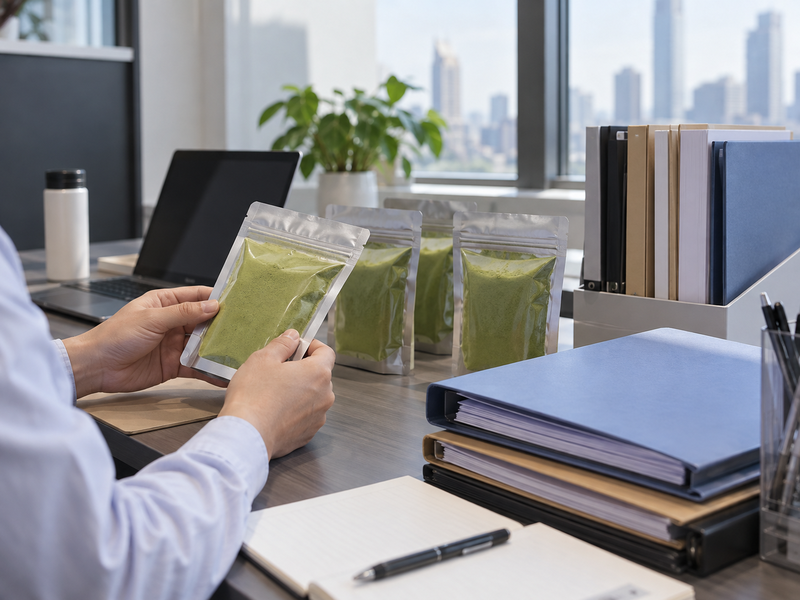
Let qualified staff set the sampling plan for the delivery and intended checks. Identify the lot, sampling locations, amount needed, hygienic method, containers and record requirements. Decide whether portions are intended for laboratory analysis, an application comparison or retained evidence. These purposes may require different handling, so avoid treating every jar collected at receipt as interchangeable.
NIST describes a lot acceptance sampling plan as a sampling scheme with decision rules. That general principle supports documenting both how a sample is selected and how its findings will be used. It supplies no universal matcha sample count or safety guarantee.
Train authorized staff in the site procedure and make the necessary equipment available before sampling begins. Record the containers opened and resealed, and identify any units no longer suitable for their original commercial use. Keep sample custody and dispatch records when material goes to an outside laboratory. If the planned sample cannot be obtained safely or representatively, record the limitation and ask quality to decide the next action.
7. How can the warehouse prevent use of held material?
Align physical location and stock status
Give held material a clearly controlled location and a status that the stock system recognizes. Decide how labels, access permissions and production picking instructions work together. The site should be able to explain how it prevents a held bag from being picked during a busy shift. A colored tag alone is weak if the system still lists the stock as available.
Make the hold specific to the affected material. Record product, lot, quantity, reason and responsible reviewer. If only part of a delivery is involved, quality must decide whether the rest can be separated and reviewed independently. Warehouse staff should not infer that undamaged cartons are released merely because the visible problem appears elsewhere.
| Stock status | Permitted activity | Control to verify |
|---|---|---|
| Awaiting review | Storage and authorized sampling | Excluded from production allocation |
| Approved | Use within approved scope | Release authority recorded |
| Rejected or return pending | Controlled disposition only | Movement and quantity tracked |
Review the physical and digital records together when a status changes. Removing a hold label without updating the system, or the reverse, leaves the next shift with contradictory instructions.

8. What should an exception investigation contain?
Keep observation, explanation and decision separate
Open one investigation record for the discrepancy and connect all supporting evidence to it. Describe the issue in observable terms, identify the affected stock and list what information is missing. Ask the supplier focused questions with the lot codes and photographs attached. Keep commercial requests for credit or replacement visible without allowing them to substitute for the technical decision.
If additional testing is proposed, document what question it will answer and how the result could change disposition. A repeat analysis should follow an agreed investigation method. Testing another convenient sample until a passing result appears does not explain the original discrepancy or establish the condition of all affected stock.
Record interim instructions while the investigation is open. Production may need a different approved lot, and planning needs to know the quantity still unavailable. If a controlled concession is proposed, identify its application, quantity and approving authority. Any safety or legal concern requires the appropriate qualified review; a commercial concession cannot turn unsuitable material into an approved ingredient. Preserve the reasoning behind the final decision for later supplier performance review.
9. How do you close a release or rejection decision?
Reconcile records with physical stock
The release record should identify the reviewed lot, quantity, specification revision, evidence and approver. Record any restrictions on application or handling. Warehouse staff need a clear instruction they can carry out, while quality needs enough detail to reconstruct the decision. Keep the timestamp so the team can check whether any stock moved before authorization.
For rejected material, agree the disposition route and document the final movement. A supplier credit does not confirm that the material left the site. If stock will be returned, destroyed or otherwise handled, follow the applicable site procedure and retain the supporting record.
| Closure outcome | Record to complete | Practical check |
|---|---|---|
| Full release | Lot approval and available quantity | Picking system reflects approval |
| Restricted release | Scope, quantity and restrictions | Production instructions match |
| Rejection | Disposition authorization and movement | No rejected stock remains available |
Reconcile sampled, released and disposed quantities before closing the receipt. Assign unresolved differences to a named owner, with the stock kept under the appropriate control until the discrepancy is explained.

10. How should the next delivery improve the receiving routine?
Fix the recurring handoff problem
Review exceptions by the step where they occurred. Missing advance documents call for a purchasing and supplier handoff change. Mixed lot identities may require different packing information. A delay between quality release and warehouse availability calls for an internal status update. Avoid combining these issues into one vague supplier quality score that gives neither party a clear action.
Ask the receiving team which instructions were difficult to use during the delivery. Revise the form where it asks staff for information they cannot obtain or leaves them uncertain whom to contact. Have quality approve changes affecting holds, sampling or release. Keep the prior version available when investigating earlier receipts.
Before the next shipment, send the supplier the agreed pre-arrival document list and ask purchasing to verify the expected lots. Walk the warehouse team through the receipt, hold and release statuses using an empty example record. Assign the person responsible for closing quantity discrepancies and confirm the contact route for a delivery that arrives outside the normal receiving window.
FAQ
Q1: Can production use a lot while its paperwork is pending?
Follow the site’s approved release program. Purchasing urgency should not silently remove a hold. Any proposed exception needs the responsible authority and a documented basis within applicable requirements.
Q2: Should every carton be opened at arrival?
Use the approved inspection and sampling plan. Unnecessary opening can change pack condition, while inadequate inspection leaves gaps; the site should define the appropriate checks for the delivery.
Q3: Does a sealed bag guarantee an acceptable ingredient?
Seal condition is one receiving observation. Product identity, required documents, relevant checks and the authorized release decision remain necessary parts of the site’s acceptance process.
Q4: How should a distributor handle direct delivery to a customer?
Agree who performs receiving checks and sends the evidence. Keep the delivered lot and customer’s release responsibilities explicit rather than assuming that bypassing your warehouse removes the receiving decision.
Q5: Can a receiving photograph replace a retained sample?
A photograph records visible condition at a moment. A retained portion can support different investigations. Quality should define whether either is required and the limitations of the available evidence.