
Matcha wholesale vs retail compares two purchase arrangements with different pack sizes, services and commitments. A business may need a small retail pack for an early trial and a commercial arrangement for repeat supply. Choose using consumption, usable cost and responsibilities rather than assuming the largest pack will always suit the operation.
Table of contents
- What separates wholesale and retail purchases?
- When can a retail pack make sense for a business?
- When should a business seek a wholesale arrangement?
- How can pack size affect freshness and usable stock?
- How should cost per usable serving be compared?
- What support can a commercial buyer request?
- How do handling and repacking responsibilities differ?
- What cash does each purchase route tie up?
- How can a business move between purchase routes?
- Which route should the buyer approve now?
1. What separates wholesale and retail purchases?
Compare the transaction rather than the label
Retail purchases generally present a ready-to-buy item for an end customer. A wholesale arrangement may involve commercial quantities, account terms, product support or a negotiated format. The seller’s actual terms define what you receive. A product called bulk might be available through a normal retail checkout, while a commercial account might offer several small sealed packs. Read the arrangement instead of relying on the heading above the product page.
For a business, useful differences include quantity conditions, available documentation, repeat-order support and the person responsible for shipment or repacking. The same powder may appear in different formats, but confirm product identity rather than assuming equivalence. Likewise, purchase route alone cannot establish product quality. In a matcha wholesale vs retail comparison, start with your task. A small test needs a manageable way to evaluate the product. Ongoing service needs a repeatable supply and handling arrangement. The transaction that supports one stage may need revision when your business moves to the next.
2. When can a retail pack make sense for a business?
Use a small purchase for a defined question
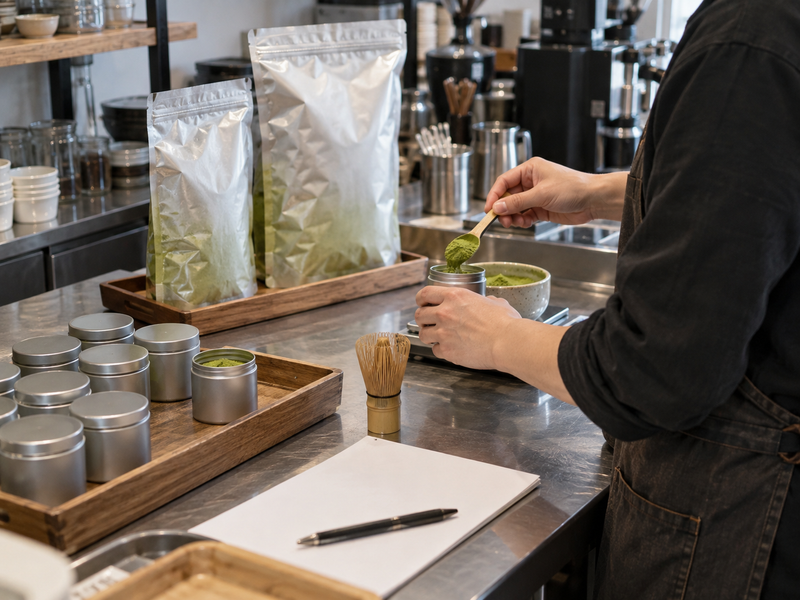
A retail pack can support early recipe research when the product identity is clear and the quantity suits the trial. It can help a team compare preparation methods or check whether an application deserves further work. Treat the purchase as an evaluation expense with a defined purpose. Record the item, seller, pack and date so the result can be traced. If the product is later proposed for commercial use, confirm the wholesale item separately.
A hypothetical bakery may buy one small pack to test whether matcha fits a new filling. That test can establish a direction without committing to production supply. It cannot confirm future allocation, commercial documentation or a repeat price. Ask the seller whether the product can be supplied in a suitable business format. Keep the retail sample as a starting reference until the commercial product is approved. The matcha wholesale vs retail decision changes once the question moves from recipe feasibility to regular purchasing. Make that transition deliberate so a successful kitchen trial does not create an unsupported launch commitment.
| Purchase purpose | What a small pack can support | What remains open |
|---|---|---|
| Recipe exploration | Initial application direction | Production supply |
| Preparation test | Method comparison | Commercial format |
| Buyer demonstration | Product discussion | Repeat terms and allocation |
3. When should a business seek a wholesale arrangement?
Match recurring use with recurring support
Seek a commercial proposal when you can define the product use, likely order pattern and required support. That proposal can cover pack format, repeat-order terms, documentation and communication. It should fit the workload your business can manage. A café with steady use may need regular ingredient deliveries. Retailers may need finished packs. A manufacturer may need a product specification connected to scheduled runs. Each arrangement requires different information from the buyer.
A wholesale route can be worth considering even when the first order remains small. The value may include defined responsibilities and repeat supply rather than a large immediate discount. Ask which services are included and which cost extra. The wholesale matcha guide offers context for commercial purchasing. Matcha Village supplies bulk matcha and supports application selection. Ask for a proposal identifying your product and format. Compare that offer with the present retail route using the same usage estimate. A label saying wholesale should begin the review, not settle it.
4. How can pack size affect freshness and usable stock?
Plan the opening cycle
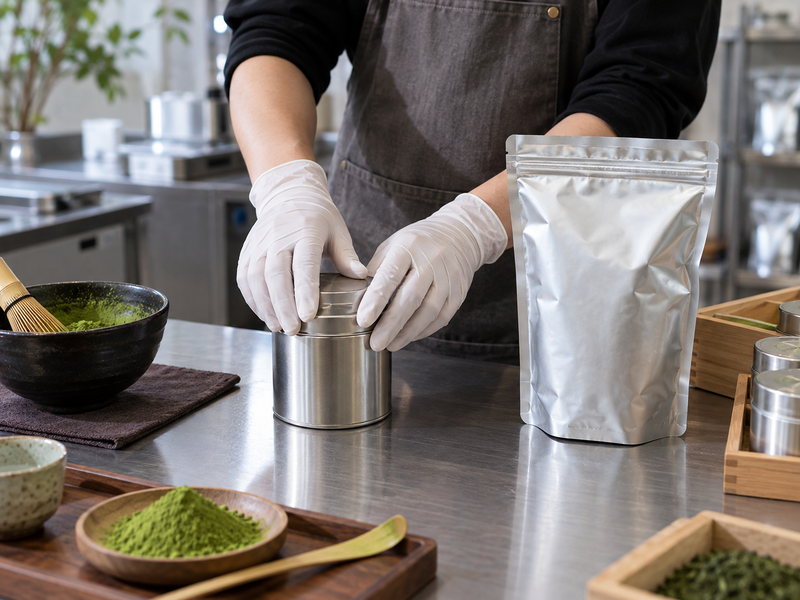
A sealed pack and an opened working container face different handling conditions. Compare the proposed pack with how quickly the operation consumes it after opening. Ask the supplier for product-specific storage and date information, then plan a handling routine that staff can follow. A larger purchase can consist of several sealed packs, so total order size and opening size should be considered separately. Avoid assuming one large bag is the only commercial option.
A hypothetical slow-moving café might prefer smaller sealed packs within a commercial order. Faster operations might use a larger format without prolonged opening time. Those choices need actual consumption records. Record when packs are opened, how powder is handled and whether rejected servings or quality changes occur. The matcha reorder point article can help connect usable stock with ordering decisions. In a matcha wholesale vs retail comparison, count stock you expect to use in the approved condition. A lower purchase cost has limited value when the chosen format exceeds the operation’s handling or turnover plan.
| Pack question | Information needed | Decision affected |
|---|---|---|
| Opening size | Ordinary consumption rate | Working pack format |
| Storage | Product-specific instructions | Handling routine |
| Sealed balance | Available product dates | Purchase quantity |
5. How should cost per usable serving be compared?
Calculate the whole item
Start with the actual delivered cost and net weight of each proposed purchase. Add handling or repacking costs your business owns. Then connect the powder to the approved recipe and saleable output. A retail pack and a wholesale format can have different packing costs while containing a similar powder. Conversely, they may contain different products that require separate trials. Resolve that identity question before comparing recipe cost.
Use a labeled hypothetical example to test the method. If one route has a lower cost per gram but leads to more unused stock in the planned period, include that unused stock in the purchase decision. For another route that includes finished retail units, compare the costs avoided and the responsibilities retained. Do not state a universal wholesale saving percentage. Your invoices, quantities and application results determine the comparison. A matcha wholesale vs retail worksheet should show purchase cost, usable quantity and remaining stock separately. Those fields explain why the preferable route can change as demand becomes more regular.
6. What support can a commercial buyer request?
Identify the service and its scope
Ask for support tied to the proposed product. This can include application selection, samples, specifications, packing discussion and order coordination. Confirm which information is available, when it will be provided and who answers follow-up questions. A commercial relationship does not automatically include every service. Retail sellers may also provide useful product information, while a wholesale quote may exclude development work. List the actual support rather than assigning it by channel name.
Documentation should be reviewed for purpose and scope. A product sheet can describe the item; a lot report can relate to a specific batch; a company document can relate to a business or facility. None substitutes for all the others. If a buyer requires a specific claim or destination review, identify it in the brief before ordering. A hypothetical food brand comparing routes should ask which party controls its finished pack information. In the matcha wholesale vs retail decision, support has value when it resolves a task your team must perform and its ownership is clear.
| Buyer task | Support to request | Scope check |
|---|---|---|
| Product selection | Application recommendation | Proposed item |
| Technical review | Specification or lot information | Product or batch |
| Order planning | Format and repeat conditions | Commercial arrangement |
7. How do handling and repacking responsibilities differ?
Follow the product after delivery
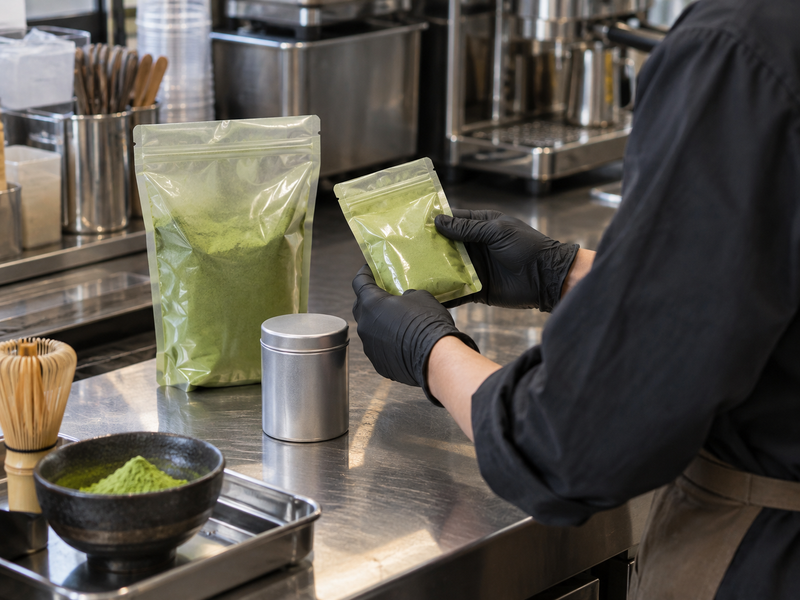
Trace what your business must do before the product can be sold or used. A retail pack may be ready for consumer sale when its information meets your requirements. Commercial ingredients may need dosing, internal transfer or repacking. Each step creates work, materials and a product-control responsibility. Ask who performs those steps and which records are needed. Keep the finished item in view instead of ending the comparison at the receipt of powder.
For a hypothetical brand, buying a large ingredient bag and filling small pouches locally requires a suitable process and ownership of the finished pack. Buying finished branded units creates a different arrangement that still needs review. For a café, moving powder into a working container should preserve product identity and the handling instructions staff need. Review cleanliness, closure and stock rotation with the operational owner. The matcha wholesale vs retail choice should account for these tasks. A route that appears cheaper may require work your team has neither priced nor arranged.
8. What cash does each purchase route tie up?
Compare total commitments and timing
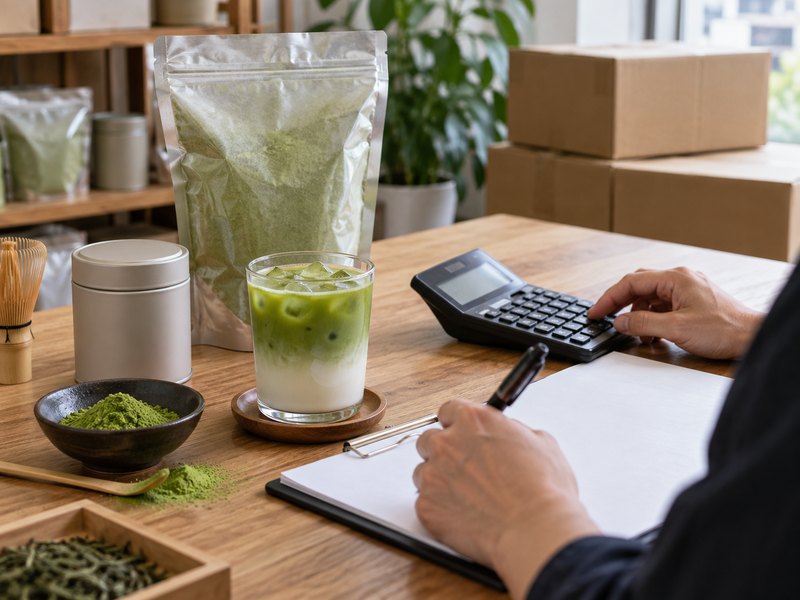
A smaller retail purchase can limit initial stock exposure. Wholesale arrangements may involve an order minimum, deposit or custom component commitment. Ask what becomes payable and when. The full amount can differ from the first shipment value if product or packaging remains with a partner. Record the complete obligation and compare it with available cash. The route with the lower unit cost can still require the larger cash commitment.
Use your expected sales or consumption period to assess remaining stock. A hypothetical new café may prioritize a modest commercial trial while demand is uncertain. Once repeat use is observed, a different quantity could become sensible. Show that decision as a staged plan rather than buying the largest option at the start. A forecast should remain distinguishable from a binding purchase obligation. In a matcha wholesale vs retail review, cash timing deserves its own line beside cost per serving. It tells the owner whether the business can fund ordinary operations while waiting for the product to be used or sold.
| Cash item | Retail route check | Wholesale route check |
|---|---|---|
| Initial payment | Checkout total | Deposit and balance |
| Remaining obligation | Additional committed orders | Product or component balance |
| Stock exposure | Unused small packs | Unsold commercial quantity |
9. How can a business move between purchase routes?
Reapprove the item that changes
Identify what changes when moving from retail to wholesale or back to smaller purchases. Confirm product identity, net weight, pack material, preparation instructions and commercial conditions. Run another application comparison if the powder or relevant process changes. A larger pack with the same description may need handling review even if the product is confirmed equivalent. Keep a record of the old and new arrangements so operations can see which instructions apply.
The Ujicha article comparing wholesale and retail discusses price and pack differences. Its seller-specific minimums and broader quality assurances should not replace your own checks. Use a bounded transition order to observe receipt, preparation and pack turnover. Ask staff whether the new format changes dosing or closing routines. Keep your previous approved sample where appropriate and record the reason for switching. A transition succeeds when the new route preserves the approved product result and creates a purchasing arrangement the business can maintain.
10. Which route should the buyer approve now?
Choose for the current operating stage
Set a decision period and compare the routes against the task your business needs to complete. During exploration, the task may be answering a recipe question. The pilot may test a paid customer and repeat process. Regular operations may require keeping an approved item available at a usable cost. Use the evidence appropriate to that stage and list what must be confirmed before the next one.
Write a recommendation naming the product, format, quantity and responsibilities accepted. Explain which advantage supported the choice: manageable trial exposure, suitable opening size, support for repeat orders or complete finished-pack service. Keep any unresolved condition visible. Matcha Village can discuss commercial formats based on your application and destination; request an offer for the stage you are in. Review the route again when demand, product or handling changes. This approach gives the buyer a clear current decision while leaving room to revise quantities and services when operating evidence supports it.
| Operating stage | Current task | Approval evidence |
|---|---|---|
| Exploration | Test product direction | Identifiable sample and method |
| Paid pilot | Test commercial use | Product, format and order terms |
| Repeat supply | Maintain approved output | Consumption and supply records |
Compare one retail option and one commercial proposal using the same product task and review period. Record opening size, usable cost, cash exposure and responsibilities. Send Matcha Village your application and ordinary usage so its proposed format can be evaluated on that basis.
FAQ
Q1: Can a business use retail matcha for an early trial?
Yes, when the item is identifiable and the trial quantity suits the question being tested.
Q2: Is wholesale matcha always higher quality?
No. Product quality requires evidence and application assessment, regardless of purchase route.
Q3: Does buying more always reduce usable cost?
No. Handling, unused stock and product performance can change the result.
Q4: Can a wholesale order contain smaller sealed packs?
Ask the supplier. Total purchase quantity and individual opening size are separate decisions.
Q5: Should the product be rechecked when changing routes?
Confirm identity and review any changed powder, pack, preparation or handling condition.