
Matcha procurement manages a purchase from the internal request through product approval, ordering and receipt. Buyers lose time when technical requirements, commercial terms and release decisions sit in separate conversations. Use a shared brief and named checkpoints so each team reviews the right evidence before the order moves forward.
Table of contents
- Who should own a matcha procurement request?
- What belongs in the purchase brief?
- How should procurement routes be assessed?
- What should happen between sample receipt and approval?
- How should commercial offers be reviewed?
- Which evidence should be checked before ordering?
- How should the purchase order preserve approvals?
- What should procurement track before shipment?
- How should receipt and release be coordinated?
- What should be reviewed before the next order?
1. Who should own a matcha procurement request?
Assign a buyer and the required reviewers
Name the person responsible for the purchase record. That person coordinates the request, tracks missing answers and keeps the current approved version available. Technical staff own application assessment. Finance reviews the commercial commitment and payment plan. Operations checks the format and receiving needs. One person can hold several roles in a small business, but the decisions should still be explicit. A supplier needs to know who can answer a product question and who can approve an order change.
Set a route for disagreements. If the technical team approves a product that exceeds the budget, record both positions and assign the decision to someone with authority over the trade-off. Avoid asking the supplier to infer which internal preference should prevail. A hypothetical café group might use a purchasing lead to collect store needs while a development lead approves the recipe. The matcha procurement record should show that arrangement. Clear ownership reduces repeated questions and allows a delayed answer to be directed to the person who can resolve it.
2. What belongs in the purchase brief?
Define the application and the transaction
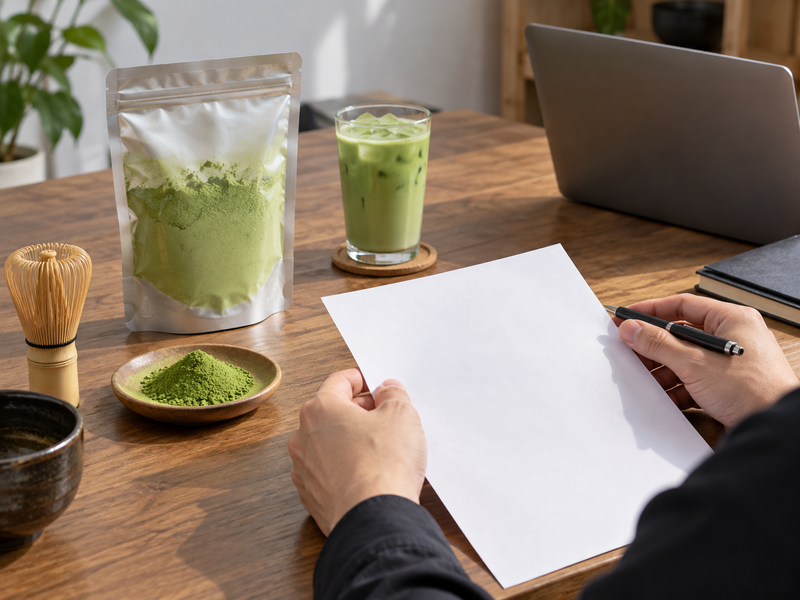
Describe the product use, destination and desired commercial format. Include the likely quantity, expected repeat pattern and the information required for review. Distinguish requirements from preferences. An approved application criterion belongs in the requirement field. A preferred pack color may remain optional. If a requirement is unresolved, name the person who will decide it and the evidence needed. Sending an unfinished preference list as a final specification can produce quotations for different assumptions.
Keep the brief concise enough for a supplier to answer directly. A hypothetical ingredient request could name an iced beverage application, target pack format and trial method without claiming a guaranteed annual volume. Manufacturing requests could describe the production process and relevant specification needs. Update the brief when an internal decision changes. Save the old version and identify which supplier responses must be revised. Matcha procurement works more smoothly when each quotation and sample can be connected to a known request, rather than to scattered messages from several departments.
| Brief field | Record | Owner |
|---|---|---|
| Application | Product and process use | Technical team |
| Commercial format | Pack and purchase quantity | Purchasing |
| Open requirement | Evidence and decision date | Assigned reviewer |
3. How should procurement routes be assessed?
Review the work each partner performs
A producer, distributor, broker or packing partner can perform different tasks in the purchase. Ask what the proposed seller controls and what remains with another party. Useful questions concern product identity, documentation, stock, packing and delivery responsibility. Do not assign quality or reliability from the business category alone. A distributor may provide clear product information, while a producer may need export support. The buyer should assess the actual arrangement.
The Aki Matcha sourcing guide discusses several purchasing channels. Its statements about seller services and channel advantages should be treated as that company’s perspective. Your matcha procurement review can use the channel list while checking responsibilities directly. A hypothetical brand considering a broker should ask who issues the quote, who supplies the product and who resolves a shipment problem. Keep those roles on the purchase record. The route is ready for consideration when the team knows which party can provide the required evidence and honor the proposed commercial terms.
4. What should happen between sample receipt and approval?
Keep the trial connected to the proposed product
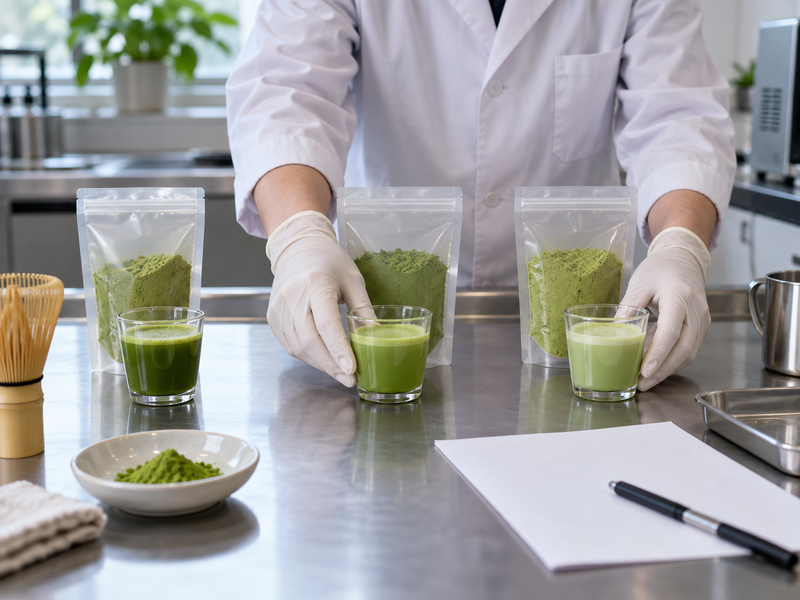
Log each sample on receipt with its seller, product identity and relevant dates. Give the technical reviewer the current application brief and a trial sheet. Record preparation, recipe and observations under a consistent method. If the reviewer changes a dose or process, identify that version separately. The resulting approval should state which product and application it covers. A favorable tasting with no recorded method leaves purchasing unable to define the commercial item it should order.
Confirm whether the proposed shipment matches the approved sample identity and how changes will be communicated. Retain the approval record and relevant reference material under a suitable handling method. The matcha reference sample article explains why identity and comparison method belong together. Procurement should keep trial findings separate from missing documentation or commercial terms. A sample can pass the application review while the purchase remains on hold for another reason. Labeling those checkpoints separately tells each team what has been completed and what still needs an answer.
| Sample checkpoint | Evidence | Decision |
|---|---|---|
| Receipt | Identifiable sample record | Ready for trial |
| Application trial | Method and observations | Approve or revise use |
| Commercial match | Shipment identity confirmation | Ready for quote review |
5. How should commercial offers be reviewed?
Compare scope and complete obligations
Connect each quotation to the brief and approved product. Check quantity, pack, currency, validity, payment terms and delivery scope. Ask for missing charges and record unresolved costs as unknown. A price comparison should include responsibilities the buyer retains, such as repacking or destination handling. Keep alternative products or formats on separate lines. Their prices cannot replace the approved item without a corresponding product and process decision.
Prepare a commercial recommendation that explains the proposed commitment. Show what is paid now, what remains payable and any component or future quantity obligation. Review those amounts with finance and the stock plan. A hypothetical brand may choose a more manageable first order over a lower price tier that requires excessive inventory. Record the reason. Matcha procurement should produce a clear approval object: a named product, quantity, format and commercial scope. That allows the authorized person to accept a specific transaction and prevents an informal comment about price from becoming approval for broader terms.

6. Which evidence should be checked before ordering?
Use separate gates for separate questions
Build pre-order checkpoints from the actual purchase requirements. The product needs application approval. Required documentation needs review for identity and scope. The commercial offer needs an authorized commitment. Receiving and logistics need a workable plan. Avoid one broad quality-approved label that hides which of these tasks occurred. Each checkpoint should state the evidence reviewed, reviewer and date. Missing evidence remains open rather than being given a passing score.
Use proportional controls. A standard replenishment of an unchanged product can reference its current approval and confirm order-specific information. New blends or retail formats may require more review. Ask the relevant team which changes reopen an approval. If the proposed product has a destination or labeling issue, route it to the qualified reviewer before release. Matcha procurement should not promise regulatory compliance based on a general certificate or a seller’s reassurance. Its role is to collect the relevant information and make the decision path visible. A gate is effective when a person can identify both the passed item and the remaining condition.
| Purchase gate | Reviewer | Evidence retained |
|---|---|---|
| Application | Technical owner | Product and trial approval |
| Commercial commitment | Authorized buyer or finance | Quote and obligation |
| Order readiness | Logistics or operations | Delivery and receipt plan |
7. How should the purchase order preserve approvals?
Carry the agreed version into the transaction
Use the product identity, pack, quantity and commercial conditions that were approved. Include the relevant specification or reference version where the parties have agreed to use it. Identify the destination, required documents and communication route for changes. Ask the supplier to acknowledge the order against those conditions. If the acknowledgment differs, resolve the difference before treating the order as confirmed. Keep the accepted version with the quote and approval record.
Assign a change owner for the period between order confirmation and shipment. A proposed substitution, pack change or revised delivery plan may require technical, commercial or operational review. The seller should know how to request that decision. A hypothetical manufacturer might approve a revised shipment schedule without accepting a different powder. Record the scope of that approval so it cannot be read more broadly. Matcha procurement maintains the connection between the original product decision and the goods expected at receipt. A clear order and acknowledgment reduce the chance that a later change becomes an unrecorded assumption.

8. What should procurement track before shipment?
Monitor the stages that can affect receipt
Track the agreed preparation and shipment milestones rather than asking only whether the order is done. Depending on the arrangement, useful checkpoints may include product readiness, packing approval, required document preparation and transport booking. Ask what each status means and who confirmed it. Stock being available is different from packed goods ready to dispatch. The milestone record should tell operations what remains before the expected receipt date.
When a stage changes, review the affected customer or production plan. Identify whether the change alters delivery timing, cost or product approval. Ask for a revised proposal where needed and route it to the appropriate owner. Do not convert an estimated shipment date into a guaranteed arrival date. For a hypothetical café group, a delay could require a stock review and an approved interim purchasing decision. That response should use known options rather than an untested substitute. Matcha procurement can maintain a short exception log with the event, consequence, owner and next check date, keeping attention on decisions rather than repeated status messages.
| Status | Meaning to confirm | Buyer action |
|---|---|---|
| Product ready | Which material is available? | Check identity |
| Packed ready | Which order is complete? | Check shipment preparation |
| Dispatch planned | What booking is confirmed? | Update receipt plan |
9. How should receipt and release be coordinated?
Compare the delivery with the accepted order
Give the receiving team the expected product, pack, quantity and relevant document list. Record what arrives, visible condition and any mismatch against the acknowledged order. Keep affected goods identifiable while questions are reviewed. The responsible team should decide whether further technical assessment or commercial clarification is needed. Receiving staff should have a route for escalation rather than guessing whether a changed label or pack is acceptable.
The matcha incoming inspection guide offers context for product receipt and release records. Your process should connect those records with the specific order and current product approval. A hypothetical bakery might receive the correct quantity but identify a pack change that requires handling review. That issue should be resolved before routine use. Separate physical receipt from authorization to use or sell the goods. Matcha procurement closes this handoff by recording the release decision, reviewer and any remaining claim against the supplier, so accounting and operations can work from the same accepted transaction.

10. What should be reviewed before the next order?
Use purchase evidence to improve the next cycle
Close the order with a comparison between what was agreed and what occurred. Review product suitability, delivered scope, communication, receipt findings and costs. Keep specific exceptions visible instead of assigning an unexplained overall rating. A delay caused by late buyer artwork needs a different response from a supplier packing issue. Record the cause where established and leave unresolved causes marked as such. The next purchase should address the actual event.
Update only the parts of the brief that evidence supports. If the format worked and consumption is clearer, revise the quantity plan. When the application changes, obtain the needed technical approval. Matcha Village provides sample, product selection, quality document and logistics support. Ask how those services apply to the proposed purchase. Keep the selected product and responsibilities in the current record. Before releasing another order, confirm that previous open issues have an owner and that the current terms remain valid. This gives the buying team a usable repeat cycle built from completed purchases rather than assumptions about the supplier relationship.
| Post-order finding | Update | Next decision |
|---|---|---|
| Clearer consumption | Quantity plan | Reorder size |
| Changed application | Technical brief | New approval |
| Delivery exception | Responsibility and milestone record | Corrective purchasing action |
Create one purchase record with the request, reviewers, sample decision, accepted quotation and receipt plan. Send Matcha Village the current brief and name your contact for each review. Release the order after the product and commercial checkpoints have recorded decisions.
FAQ
Q1: What does matcha procurement cover?
The request, product assessment, commercial review, order, shipment follow-up and receipt decision.
Q2: Can an approved sample release the purchase by itself?
No. Required documentation, commercial terms and delivery readiness need their own review.
Q3: Must procurement buy from a producer directly?
No. Review the responsibilities and evidence of the actual purchasing route.
Q4: Who should approve a product substitution?
The owner of the affected technical, commercial or operational decision, before the change is accepted.
Q5: What should be kept after receipt?
The order, product and document records, release decision and any unresolved supplier issue.