
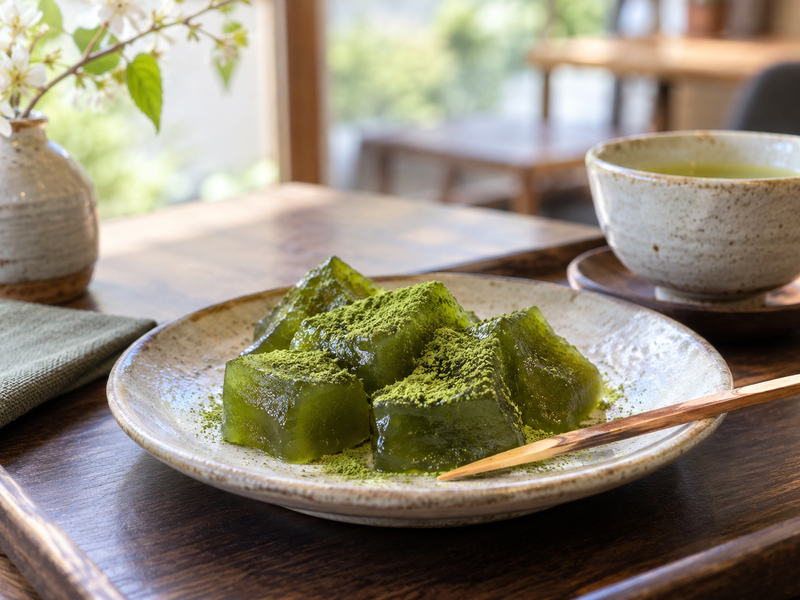
Matcha warabi mochi looks simple until a café tries to portion it at speed. A weak gel smears across the tray, a firm one loses its tender bite and matcha dusting can turn damp before service. The useful approach is to specify the starch blend, cooking endpoint, cut size and dressing at the same time. Japanese Cooking 101’s recipe cooks a matcha-starch mixture and serves it with a matcha-kinako coating. That home method suggests the key texture, but commercial service requires measured yield, ingredient clarity and a tested chilled presentation.
Contents
- 1. What is matcha warabi mochi for a café menu?
- 2. Which starch should a buyer specify?
- 3. How can the gel texture be defined?
- 4. Where should matcha enter the recipe?
- 5. How should a batch be cooked and portioned?
- 6. What do kinako and syrup add?
- 7. How should chilled service be tested?
- 8. What ingredient and allergen records are needed?
- 9. How can a café calculate usable yield?
- 10. What belongs on the menu and prep card?
1. What is matcha warabi mochi for a café menu?
Describe the gel accurately
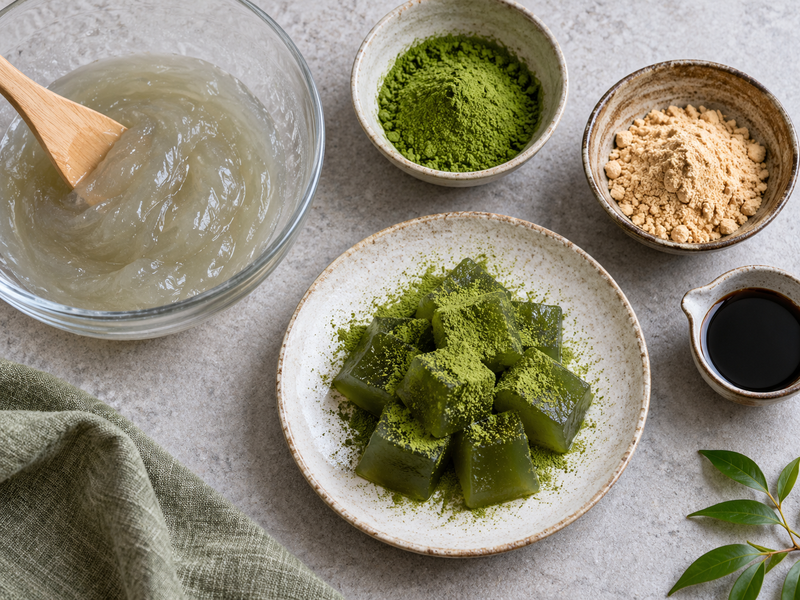
Warabi mochi is a soft, translucent starch confection. Despite “mochi” in the name, the texture differs from a typical chewy glutinous-rice mochi. Japanese Cooking 101 describes warabi starch and notes that commercial products may blend it with sweet-potato or tapioca starch. A café should name the product accurately based on its actual starch ingredient rather than assuming every bag contains pure warabi. Matcha can flavor the gel, the coating or both. The menu description should tell customers whether the pieces arrive with roasted soybean powder, syrup or another topping.
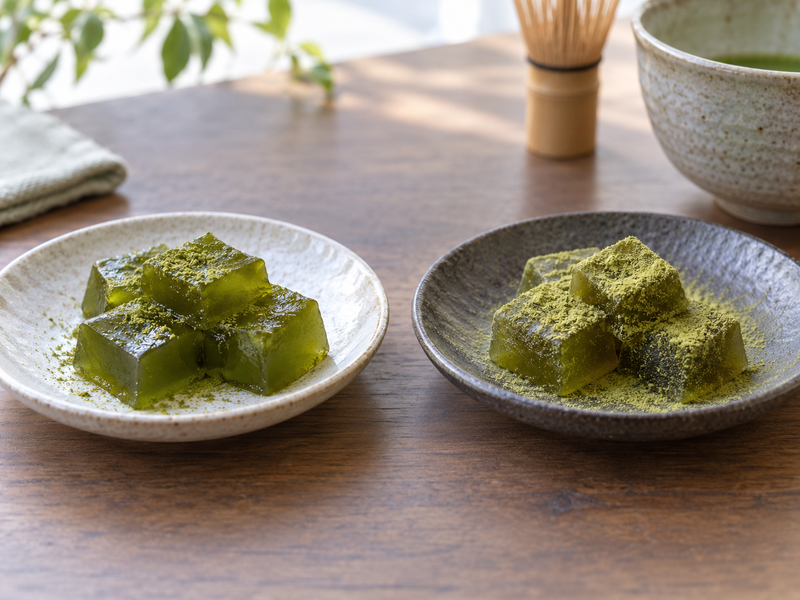
Define an accepted bite: soft enough to yield to a spoon, firm enough to lift as a piece, smooth rather than grainy, and carrying tea flavor after the topping is added. Serve the first test in the actual dish with the planned spoon. A neat square on a cutting board can feel awkward in a shallow takeaway cup. Photograph a portion at pickup and after a normal customer delay. This turns a vague “jiggly” instruction into a standard that staff can reproduce and a buyer can evaluate.
2. Which starch should a buyer specify?
Read the ingredient declaration before judging texture
Starch labels may use the warabi mochi name for products containing different proportions of bracken-root, sweet-potato, tapioca or other starches. Ask suppliers for the full ingredient declaration, country of origin where relevant, pack size, storage guidance and lot identification. Compare starches in the same water and sugar formula. Do not choose by package name alone. A blend may be perfectly suitable for a café if it makes the desired gel consistently and the menu language is accurate. Pure warabi starch, where available, brings a separate cost and sourcing decision.
Run a small cooked test from each sample and record mixing behavior, time to visible thickening, cut quality after cooling and eating texture. Reheat or hold only under a method approved for the specific formula; starch gels can change as they sit. A supplier change needs another finished-product test because a different blend may require a different water ratio. If the café plans multiple stores, supply continuity and clear batch documents may matter more than a subtle difference seen only in an immediate kitchen tasting.
| Starch check | Ask or measure | Why it matters |
|---|---|---|
| Ingredient declaration | Exact starch sources | Accurate menu and purchasing |
| Sample lot | Code and pack size | Repeatable trial |
| Mixing | Clumps and dispersion | Cook consistency |
| Gel after chilling | Spoon and cut texture | Service fit |
| Price | Cost per accepted portion | Fair supplier comparison |
3. How can the gel texture be defined?
Use a simple three-point kitchen score
Make a control batch with one starch, one pan and one set of ingredient weights. Divide it into portions and assess at the temperature customers will eat it. A useful internal score can cover lift, bite and surface: does a piece lift without tearing, yield without feeling rubbery, and stay smooth rather than weeping? Record the score at initial service and after the planned delay. These are house trial criteria, not universal food standards. Take a short video of a spoon lifting a piece; it can train staff more clearly than an adjective.
If the gel is too soft, check starch-to-liquid ratio, dispersion and cooking endpoint before adding extra starch at random. If it is tough, compare cooking and cooling method. Keep sugar and matcha amounts fixed while diagnosing structure. Ask several tasters to compare blind-coded samples rather than letting the cook who made the batch judge it alone. Texture is the product here. A bright green color cannot save a gel that smears across packaging or resists the spoon. Record the accepted batch in grams so it can be repeated at a larger scale.
| Texture attribute | Pass observation | Common fault |
|---|---|---|
| Lift | Piece holds on spoon | Tears or smears |
| Bite | Tender, smooth release | Rubbery or grainy |
| Surface | Slight sheen, no puddle | Weeping |
| Cut | Similar piece weights | Ragged edges |
| Delay | Meets target at sale | Hardening or collapse |
4. Where should matcha enter the recipe?
Compare gel flavor with coating flavor
Matcha inside the gel gives color throughout; matcha in the dusting gives a stronger first impression. Japanese Cooking 101’s recipe uses tea in both locations and mixes matcha with kinako for the coating. A café should compare three treatments: gel only, coating only and a modest amount in each. Keep sugar and piece size steady so testers can identify whether matcha actually improves the bite. Sift powder before mixing to reduce dry flecks, then record the lot and weighed dose.
Taste without syrup and again with the intended syrup. Dark sugar notes can hide a light tea dose; more powder may add bitterness before it adds clarity. A fine dry coating can also become pasty when it meets surface moisture. Dress some pieces just before service and others earlier, then compare at pickup. Our matcha sifting article explains practical powder-handling checks. Choose a matcha sample by finished dessert performance, not by its dry aroma or a broad grade label. Keep a reference portion for staff training.
5. How should a batch be cooked and portioned?
Make the pan process repeatable
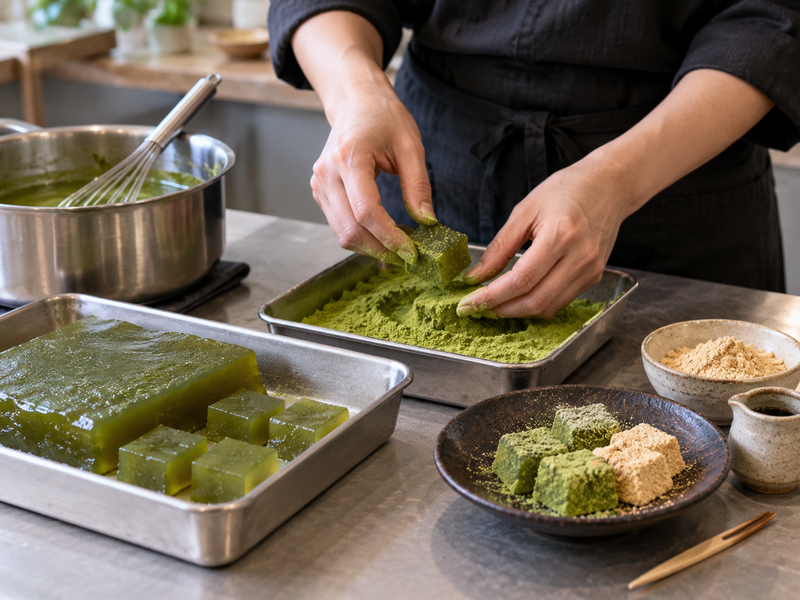
Weigh dry starch, matcha, sugar and liquid for the chosen formula. Mix thoroughly before heat and use the same pan size and stirring tool in each trial. Record the visible transition from thin liquid to thick, cohesive gel; staff need an observable endpoint rather than an unsupported universal cooking time. The reference method stirs the mixture while heating and portions it into cool water. A commercial kitchen may use a tray-and-cut method instead, but should validate the result for its equipment and batch size.
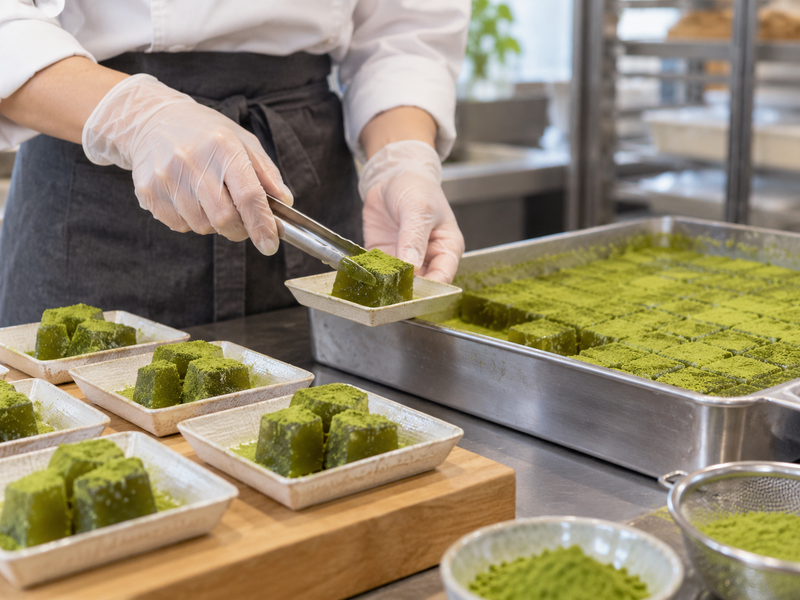
Portion by weight. Compare spoon-dropped pieces with cut squares for shape, labor and customer eating experience. Water used during setting or handling must follow the site’s approved food-safety procedure. Record cooked yield, number of accepted pieces and sticking or tearing losses. If the café scales from a small saucepan to a large kettle, repeat the texture trial; heat distribution and stirring change. The approved method should say exactly how staff know the gel is ready, how it cools and how a rejected batch looks.
| Process stage | Control | Record |
|---|---|---|
| Dry mix | Weighed starch and matcha | Lot and batch size |
| Liquid addition | Measured weight | Clumping |
| Heating | Pan, stirring and endpoint | Texture change |
| Portioning | Tool and target piece weight | Accepted count |
| Cooling | Approved method | Service texture |
6. What do kinako and syrup add?
Give each topping a job
Kinako is roasted soybean powder. It adds a nutty flavor and dry coating that can keep pieces more distinct on a plate. A dark sugar syrup brings sweetness and moisture. Matcha dusting adds a sharp tea note at the surface. Decide which components belong to the standard portion and which are optional. Too many toppings can bury the gel’s gentle texture. Weigh coating and syrup for the trial, then taste one whole serving. If guests leave a pool of syrup, the dose may be too high or placed badly.
For takeaway, test whether a separate syrup cup preserves presentation better than pouring at the counter. A dry topping packet may travel well but can create uneven coating when customers apply it. Inspect both options with real packaging. Kinako contains soy, which changes allergen communication and utensil control. The FDA’s food allergy page provides US context; buyers and operators must apply rules for their market. Name toppings plainly on the menu, and train staff to use dedicated serving tools where cross-contact is a concern.
7. How should chilled service be tested?
Taste at the customer point, not the prep bench
Prepare a batch under the intended process and place portions in the actual chilled case or service containers. Evaluate at opening, midservice and the end of a proposed period. Note gel firmness, surface water, matcha color, coating texture and syrup migration. A cold, smooth bite may become tough or watery during a long display. Use a separate food-safety review to set the approved holding period; sensory quality and microbiological safety are different questions. Do not copy a home recipe’s timing into a commercial label.
If the item will be delivered, send a boxed portion over a realistic route and open it at the destination. Pieces can stick together, dusting can smear onto the lid and syrup may leak. Compare a deep cup with a shallow tray; packaging affects how a soft gel looks and eats. Our matcha storage guide addresses powder storage, while this dessert needs its own prepared-food controls. A café may decide to dust and sauce at pickup rather than during morning prep. That decision should come from the trial, not habit.
| Service point | Sensory check | Operational check |
|---|---|---|
| Prep finish | Smooth gel and even cut | Batch record complete |
| Chilled case | Firmness and surface water | Approved conditions maintained |
| Counter pickup | Coating and syrup balance | Fast dressing |
| Takeaway arrival | Shape and leakage | Container fit |
8. What ingredient and allergen records are needed?
Keep starch, tea and toppings traceable
Record the starch blend’s ingredient list, matcha lot, kinako or other coating source and syrup ingredients. If the formula changes, review menu and packaged-label language. A piece made with a sweet-potato and tapioca blend should not be described as pure bracken-root starch. Soy in kinako is a major allergen in some markets; verify local labeling rules and the actual recipe. Avoid broad “allergen-free” language without a controlled program and appropriate evidence. Staff should know which utensils touch soy powder and how the station is cleaned.
The FDA Food Code is a model for US retail-food handling. Apply the business’s approved preparation, cooling and holding controls to this ready-to-eat dessert. A starch gel made in one pan and a packaged retail cup distributed to several shops may require different validation. Keep batch dates and ingredient lots with production records. When a customer asks what the product contains, staff should be able to answer from a current specification rather than guessing from its Japanese name or color.
9. How can a café calculate usable yield?
Count portions after dressing
Calculate cost from starch, matcha, sugar, toppings, syrup, container and labor. Start with the cooked batch weight, then count accepted pieces and saleable portions. Gel left in the pan, pieces torn during cutting and portions rejected after chilling all affect yield. If the café sells a six-piece cup, weigh several finished cups rather than assuming a spoonful equals one piece. Compare the time required for hand-formed pieces and tray-cut squares. A slightly less elegant shape may suit a busy counter if customers receive a more consistent texture.
Test matcha powders at equal finished flavor and record grams per portion. A more costly powder may need less, while a weaker one may require a heavy coating that customers dislike. Include unsold product in the pilot cost and do not infer demand from the number of attractive photos taken during tasting. The objective is a portion the team can make, sell and repeat. A one-page cost sheet with actual invoice prices gives buyers a clearer decision than the price of a starch bag or matcha tin in isolation.
| Cost line | Unit to capture | Possible loss |
|---|---|---|
| Starch | Grams per cooked batch | Pan residue |
| Matcha | Grams in gel and coating | Overdusting |
| Syrup and kinako | Deposit per cup | Uneven portions |
| Serviceware | Cup, lid, spoon | Package change |
| Labor | Cooking and dressing time | Slow peak service |
10. What belongs on the menu and prep card?
Describe the dessert customers will receive
The menu should identify matcha warabi mochi as a soft starch confection and name prominent toppings, especially soy-based kinako. Avoid promising a particular starch source unless the supplier document supports it. The prep card should show formula weights, pan and stirring method, observable cooking endpoint, cooling route, target piece weight, coating and syrup deposits, and an accepted finished photograph. Add a version and date. Food-safety and allergen records should be linked from the card rather than rewritten from memory.
Run a final trial with a worker who did not develop the recipe. Have that person prepare, portion and dress a batch, then compare it with the acceptance sample at the planned selling time. If the gel or coating changes markedly, revise the instructions before launch. Send the chosen starch and matcha suppliers a clear application brief, sample quantity and documentation list. Repeat the finished-cup test when either ingredient changes; the same words on a menu should correspond to the same texture and tea taste every time.
FAQ
Q1. Is warabi mochi the same as rice mochi? No. It is a starch gel with a softer, more translucent texture. Check the actual starch blend before writing the menu.
Q2. Must matcha be in the gel and dusting? No. Compare both locations and choose the finished serving with the clearest, balanced tea flavor.
Q3. Can kinako be omitted? Yes, but update the sensory target and ingredient information. Kinako contributes roasted soybean flavor and a dry coating.
Q4. How long can a café hold it chilled? Set an approved period from the actual recipe, handling method, packaging and local requirements; a tasting alone cannot establish safety.
Q5. What should a buyer request from a starch supplier? Ask for full ingredient declaration, lot code, storage guidance, sample size and a consistent commercial pack.