
Matcha palmiers offer a bakery a compact pastry, but their apparent simplicity hides several losses. A loose roll opens in the oven, sugar browns before the center dries, and a crisp cookie softens in an attractive but poorly chosen bag. The best starting point is a repeatable sheet size, filling deposit, fold, slice and bake trial. Food Network Kitchen’s matcha palmier recipe uses puff pastry and a matcha mixture inside the fold. A bakery can use that format as inspiration while setting its own commercial standard for tea flavor, caramelization, yield and pack performance.
Contents
- 1. What should a matcha palmier deliver?
- 2. Which puff pastry sheet should you buy?
- 3. How should matcha and sugar be balanced?
- 4. What folding method makes even cookies?
- 5. How should palmiers be sliced and trayed?
- 6. What should the bake achieve on both sides?
- 7. How can crispness survive display and packs?
- 8. What food and allergen records belong here?
- 9. How should a bakery calculate accepted yield?
- 10. What goes into a production approval?
1. What should a matcha palmier deliver?
Set a bite standard before choosing green color
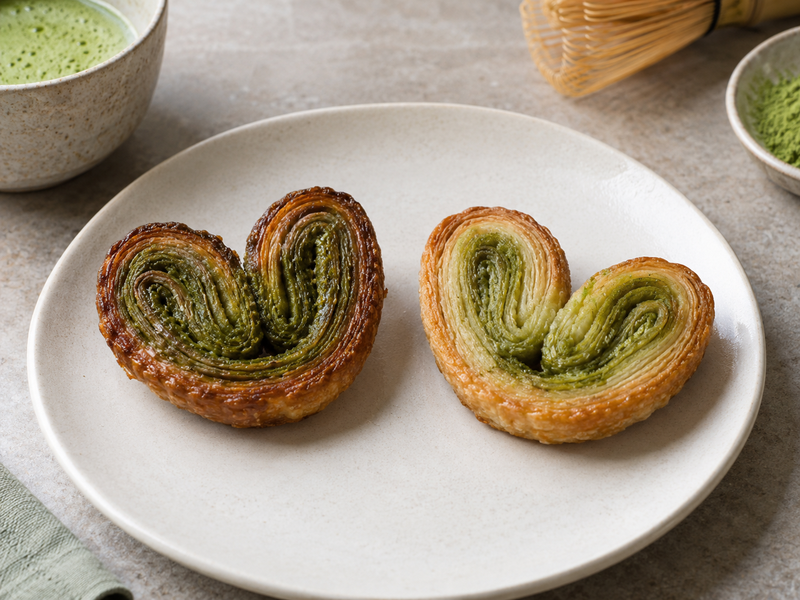
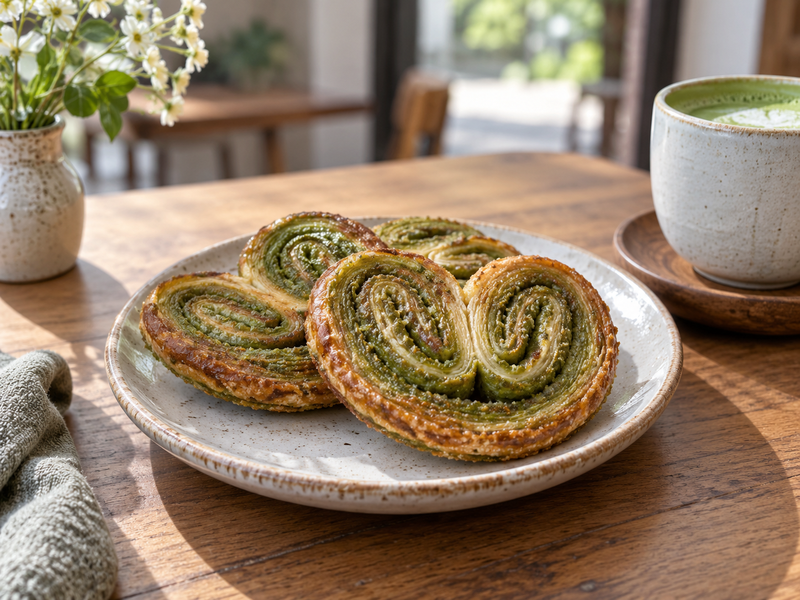
A palmier is a folded puff-pastry cookie with caramelized sugar and a recognizable curled shape. Matcha should contribute a clear tea note without turning the pastry dusty or overly bitter. Define the finished item by weight, width, symmetry, browning and snap. Break a test cookie in half; its center should feel baked, and the sugared surface should crack cleanly. Taste it after cooling, when customers will eat it. A cookie that seems fine warm may show a greasy or soft center later.
Use a control made from the same pastry and sugar without matcha. Compare both blind. If the matcha version loses crispness while the plain one does not, examine the matcha filling or deposit. If both fail, the pastry or bake is more likely at fault. The Food Network example shows a two-sided folded form; this article focuses on a commercial pastry that keeps that shape through packing and service. Photograph accepted and rejected cookies beside a simple ruler so staff can judge more than an isolated attractive sample.
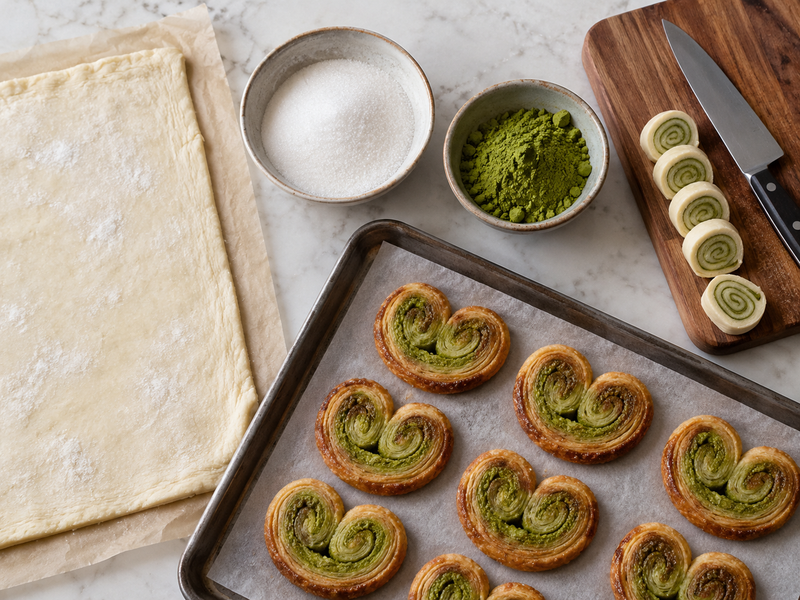
2. Which puff pastry sheet should you buy?
Compare handling, expansion and usable area
Purchased puff pastry can vary in thickness, fat formulation, sheet dimensions and thawing instructions. Ask suppliers for ingredient and allergen documents, pack configuration, storage instructions and lot identification. Run each candidate through the same fold and bake test. Record how much flat area remains after trimming and whether the sheet cracks when folded or becomes too soft before slicing. A lower sheet price may bring more waste if its edges are irregular or its rise is uneven.
If the bakery makes its own pastry, fix the rolling thickness and rest schedule for the trial. Do not switch between house pastry and purchased sheets midway through matcha-dose testing; that changes too many variables. Inspect both the plain and matcha palmiers at the center and edge of the tray. A heavily expanding sheet may blur the curl while a dense one may lose the light snap. Judge the supplier by accepted cookies per sheet and staff time, not only the label “all butter” or the dimensions printed on the case.
| Sheet check | Record | Buyer question |
|---|---|---|
| Dimensions | Flat usable area | How many slices per sheet? |
| Thickness | Measured trial sheet | Does fold stay even? |
| Handling | Cracks or stickiness | Can staff work at service scale? |
| Oven result | Rise and shape | Does curl remain visible? |
| Documentation | Ingredients and lot | Can it be sold in target market? |
3. How should matcha and sugar be balanced?
Test tea in the finished caramelized pastry
Matcha and sugar can be mixed as a dry layer or incorporated into a spread, depending on the chosen recipe. The Food Network Kitchen version uses a matcha-flavored mixture with a sugared pastry sheet. Test that construction against a simpler dry matcha-sugar layer if it fits your bakery. Keep sheet size and bake conditions fixed. Weigh the total matcha and sugar deposited per sheet, then divide by accepted cookie count. Spoon measures make this comparison unreliable because powder packs differently.
Taste the entire cookie after cooling. If sugar caramelizes heavily, a delicate tea powder may become hard to detect. Adding extra matcha can darken the exposed layer without restoring a clean flavor. Compare powder lots at an equal deposit and ask staff which version they would buy. The result should determine purchase, not a broad grade claim. Our matcha powder for baking guide covers powder selection for heat applications. Record a clear sensory target here: tea is noticeable behind butter and caramel, with no gritty pockets or harsh finish.
| Flavor variable | Trial record | Failure signal |
|---|---|---|
| Matcha | Lot and grams per sheet | Tea hidden or harsh |
| Sugar | Grams inside and outside | Overbrowning or cloying bite |
| Spread | Deposit thickness | Leaks and soft center |
| Finished cookie | Blind taste note | Color without flavor |
4. What folding method makes even cookies?
Give each side the same route to the center
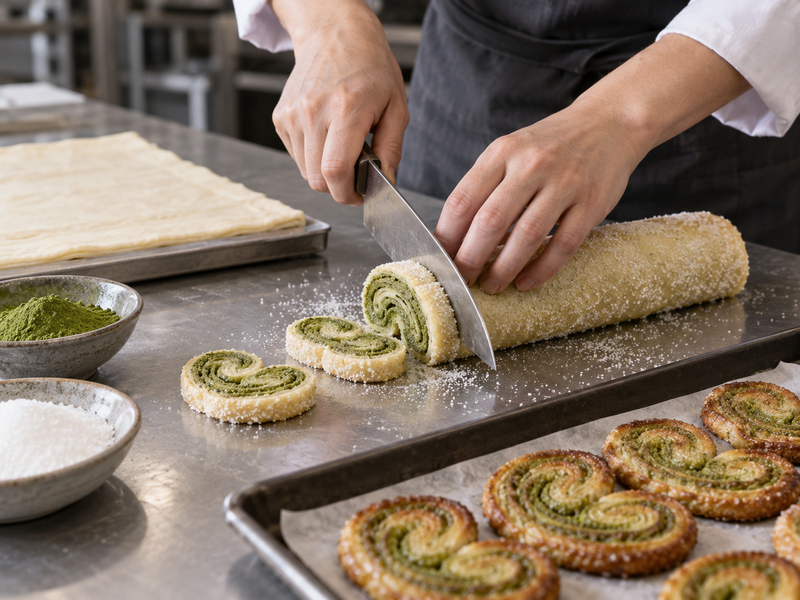
Mark the midpoint of a test sheet and fold or roll both sides toward it using a written sequence. Record the number of folds, width at each stage and whether the pastry needs a short approved chill before slicing. A warm sheet can smear matcha filling and flatten under the knife. A very cold sheet may crack when folded. The correct working condition depends on the pastry and filling the bakery chooses. Make several test logs from one batch and compare their cross-sections before baking.
Ask a second baker to follow the method without watching the developer. If the two sides meet at different heights, add a visual measurement or guide. Do not ask staff to repair a skewed roll by squeezing it hard; pressure can flatten pastry layers. Mark the direction of the final seam and how logs should rest before slicing. The palmier shape itself is part of the sale. Consistent folds also make tray loading and packaging easier because pieces reach a similar width after baking.
5. How should palmiers be sliced and trayed?
Cut by target thickness and count damage
Use a sharp tool and a marked cut guide for trial logs. Compare at least two slice thicknesses using the same dough and bake. Thin pieces may caramelize quickly but break during transfer; thick pieces can retain a soft center. Weigh several raw slices and record the range. Pressing hard with a dull knife can close the layers or push filling out of the sides. Keep the log at the working condition that gave a clean cut, and place slices on a prepared tray with enough space for expansion.
Record tray positions, slice orientation and final width. If cookies fuse or lose their curled shape at one part of the tray, adjust spacing or load before reformulating the matcha. Inspect the underside as well as the visible top. A production team should count accepted pieces from each log and note why others failed: broken during cutting, uneven fold, excessive spread or burn. These losses help set a realistic purchase quantity for pastry and matcha, rather than assuming every nominal slice is sellable.
| Cut and tray check | Measure | Rejection sign |
|---|---|---|
| Slice thickness | Target and range | Uneven bake |
| Raw weight | Sample of ten slices | Large portion drift |
| Transfer damage | Broken pieces per log | Fragile work method |
| Tray spacing | Distance at load | Fused cookies |
| Finished curl | Shape after bake | Fold opens or collapses |
6. What should the bake achieve on both sides?
Use color, texture and center dryness
Caramelization gives a palmier much of its appeal, but dark edges can hide an underbaked center. Run a realistic tray load and record oven settings, rack position, turn or flip procedure if used, and the appearance on both faces. The Food Network recipe flips pastries during its home bake. A commercial oven may call for a different sequence; validate your exact sheet, deposit and load. Cool samples fully before scoring the snap and center texture.
Place plain control palmiers on the same trial schedule. If both versions soften in the middle, investigate baking or pastry. If only matcha pieces fail, examine filling thickness and moisture. Photograph accepted color under the display lighting, because a dark caramelized edge can make the green layer look nearly black. Do not lengthen the whole bake to fix a few crowded tray positions; solve spacing and airflow first. A written endpoint should describe the whole cookie, including underside, rather than an oven timer alone.
7. How can crispness survive display and packs?
Test the container after complete cooling
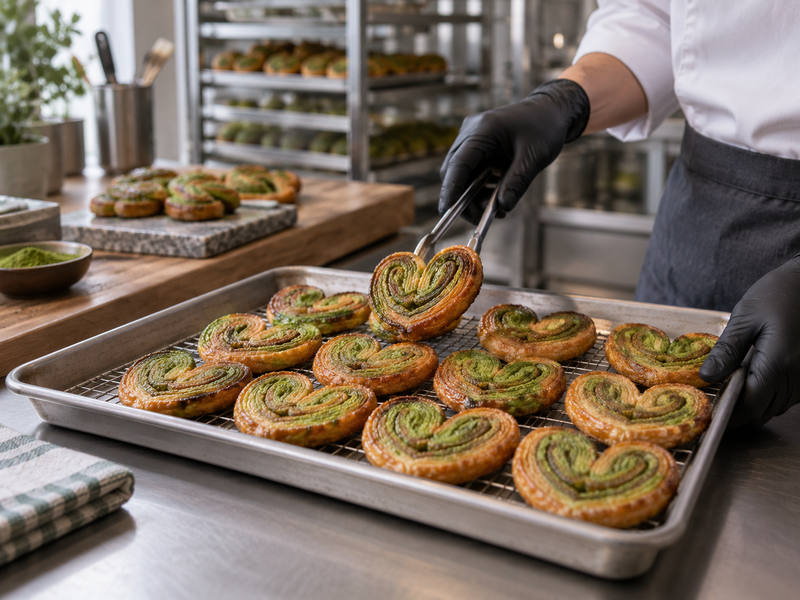
Place completely cooled cookies in the proposed open case, paper sleeve or sealed pack. Sample at the beginning and end of the intended selling period for snap, aroma and surface tackiness. Warm cookies packed too early can trap moisture; even a cooled cookie may soften in a humid display. Compare two packaging options using the same batch. Record any breakage from stacking or transport. Packaging should protect the curled edges without pressing the pastry flat.
For a take-home pack, include a small handling instruction only if it reflects an approved product trial. Avoid a universal shelf-life promise from a recipe website; commercial shelf period depends on formulation, process, packaging and conditions. Let qualified staff validate food-safety and date marking separately from a sensory crispness test. A café that cannot keep a palmier crisp in an open case might wrap it only after a proven cool-down and pack trial. Choose the route that delivers an enjoyable cookie when the customer opens it.
| Service route | Check | Possible change |
|---|---|---|
| Open case | Snap after display | Shorter selling window |
| Paper sleeve | Edge breakage | Different support |
| Sealed pack | Moisture and aroma | Later packing or new material |
| Delivery | Cookie movement | Fitted insert |
8. What food and allergen records belong here?
Document pastry and filling ingredients together
Puff pastry may contain wheat and milk; a matcha spread could add egg or other ingredients. Use the actual supplier statements and finished formula for menu and packaged-label work. The FDA food allergy page provides US context; other markets require their own review. Do not assume a plain pastry’s label covers the matcha variant. Keep matcha lot and pastry lot tied to each bake batch, especially if several stores receive packaged cookies.
Set handling, storage, cleaning and any date marking through the bakery’s approved food-safety program. The FDA Food Code is a model for US retail practice, not a substitute for local rules or product validation. A crispness trial can say when a palmier stops tasting good; it cannot alone establish how long a packaged item is safe. Train staff to use the current recipe card and reject a batch with unrecorded substitutions. Ingredient transparency and repeatable process make seasonal or wholesale orders easier to manage.
9. How should a bakery calculate accepted yield?
Count sellable cookies after packing
Start with the cost of pastry sheets, sugar, matcha, filling ingredients and packaging. Count cookies that pass shape, bake, snap and pack inspection. Breakage while slicing or bagging reduces sellable yield. Divide total batch inputs by accepted packed units, then add labor and overhead using the bakery’s normal method. A pastry may be inexpensive to mix but expensive to fold and pack carefully. Record time for each stage rather than guessing from the shortest bench trial.
Compare powder samples at equal tea flavor in the finished cookie. A higher bag price may be reasonable if dose falls or color and flavor remain consistent across lots. Conversely, a vivid but harsh sample may drive rejects in sensory review. Ask a counter employee to pack ten pieces; the result often reveals damage the production baker did not see. If individual wrapping protects every cookie but doubles work, the price and channel need to support that choice. The cost sheet should show what customers will actually receive.
| Cost line | Capture | Hidden loss |
|---|---|---|
| Puff pastry | Usable sheets | Trim and folded-end waste |
| Tea and sugar | Grams per accepted cookie | Spill and overdosing |
| Baking | Trays and accepted count | Burn or soft centers |
| Labor | Fold, cut and pack minutes | Repairs and breakage |
| Pack | Sleeve or bag and insert | Damage after packing |
10. What goes into a production approval?
Keep one accepted cookie beside the written method
The approval sheet should include pastry supplier and sheet size, matcha lot and dose, sugar or spread deposit, folding sequence, log working condition, slice thickness, tray spacing, oven program and accepted color. Add a photo of the top, underside and broken center. Record the chosen pack and the crispness result at the planned sale point. Give the document a version and date; a quiet change to the pastry sheet can alter every stage downstream.
Run a final pilot with someone who did not develop the recipe. Their questions reveal missing instructions before the bakery scales. Count accepted cookies after packaging and taste one from the last packed group. If results vary, change the work method or supplier input and repeat. Send the matcha supplier the approved application, measured dose and market document needs. That lets a buyer compare lots using a known cookie instead of relying on a marketing grade name or the dry powder’s color.
FAQ
Q1. Can purchased puff pastry make good matcha palmiers? Yes, if its sheet dimensions, fold, bake, ingredient documents and accepted yield meet the bakery’s trial standard.
Q2. Must palmiers contain a matcha cream spread? No. Compare a measured spread with a dry matcha-sugar layer in finished cookies.
Q3. Why does a palmier open during baking? Uneven folding, soft logs or excessive filling can contribute. Check the raw cross-section before changing oven settings.
Q4. How long can packaged palmiers be sold? Validate the exact formulation, process and pack under applicable requirements. A snap test alone sets no safe date.
Q5. What should a powder supplier provide? Ask for a lot sample, ingredient information, pack options and enough tea for a full fold-bake-pack trial.