
Matcha mooncakes need a decision long before the holiday display goes up. A vivid dough can bake dull, a filling can overwhelm the tea and molded designs may blur after handling. Seasonal demand also leaves little time to correct a weak batch. Choose a format and pack first, then test wrapper, filling, mold and travel as one product. The chestnut and salted-egg-yolk matcha mooncakes offer a useful baked reference with matcha in the wrapper. A bakery making matcha mooncakes for retail or gifting needs additional checks for production yield, labeling and pack condition.
Contents
- 1. What should matcha mooncakes promise the buyer?
- 2. Should a bakery choose baked or snow-skin format?
- 3. How should matcha be used in the wrapper?
- 4. Which fillings let the tea remain clear?
- 5. How can portion and mold work be controlled?
- 6. What should the bake or finishing trial measure?
- 7. How should mooncakes be packed for gifting?
- 8. What must buyers check on labels and allergens?
- 9. How can the seasonal order be costed?
- 10. What belongs in a prelaunch approval?
1. What should matcha mooncakes promise the buyer?
Write a product brief before choosing green powder
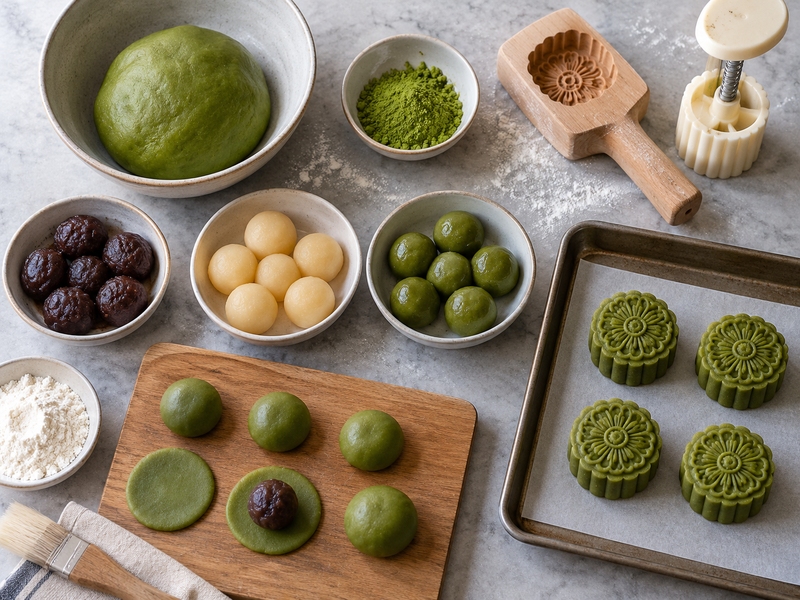
Mooncakes are bought for sharing and gifts as well as eating. Buyers see the box, molded surface and cut face before they judge tea flavor. Define the exact offer: piece weight, wrapper style, filling, inclusion or exclusion of yolk, count per box and target customer. A small café can sell singles, while a distributor may need a four-piece pack that survives handling. Do not let a vague “premium matcha mooncake” description hide a confusing assortment. Name each variant so staff and customers can tell them apart.
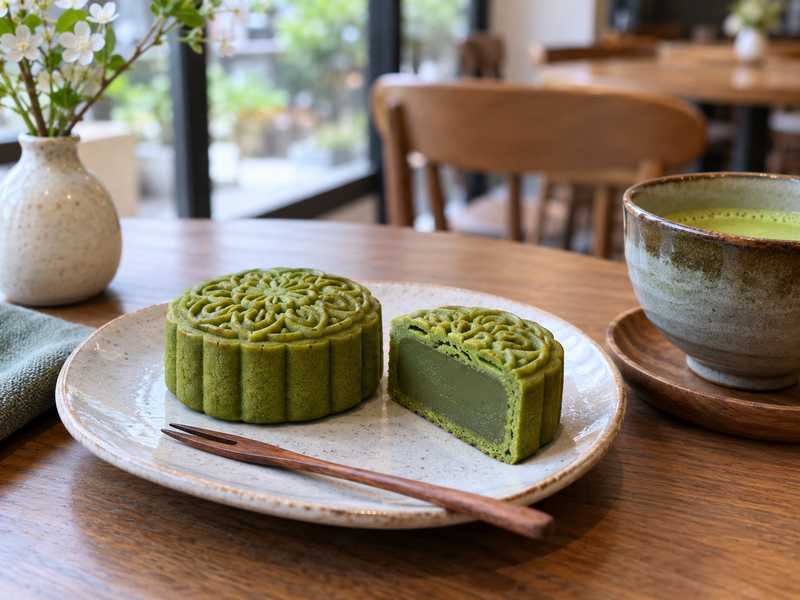
Use a sensory target that covers more than color. The wrapper should taste of matcha, the filling should have a defined texture and sweetness, and the mold design should remain legible after the selected finish. Cut a piece and photograph wrapper thickness on all sides. A green outer layer that disappears beneath a large sweet center can look attractive but deliver little tea flavor. The reference recipe uses chestnut filling and optional salted egg yolk. That is one flavor architecture, not the only valid commercial design.
2. Should a bakery choose baked or snow-skin format?
Compare the full production route
Baked and snow-skin mooncakes have different textures, preparation steps, packaging needs and consumer expectations. Decide by the equipment and distribution route the bakery can manage. A baked matcha wrapper faces oven color changes and pattern retention. A snow-skin version avoids that oven step but needs its own handling and chilled-service validation. Make one pilot of each only if the business can support both routes. Otherwise, commit to the format that suits existing staff skills and sales channels.
Set a decision sheet for appearance at sale, filling compatibility, cutting quality, packaging, labor and approved storage. Do not borrow a household recipe’s shelf-life statement for a commercial pack. Ingredients, process and packaging determine what can safely be sold; qualified staff should validate any date marking under local rules. If the market requires delivery over distance, place a sample through the actual route before ordering boxes. A soft snow-skin piece may distort under stacked packaging; a baked wrapper may crack if its insert allows movement. The best format is the one the team can produce and deliver consistently.
| Format question | Baked trial | Snow-skin trial |
|---|---|---|
| Main texture | Wrapper and filling after bake | Soft wrapper and filling at service |
| Appearance | Color and mold pattern after oven | Surface shape after chilled handling |
| Process | Dough, mold, bake and rest | Dough, mold, finish and chill |
| Pack route | Cracks during travel | Deformation or condensation |
| Approval | Site-specific safety plan | Site-specific safety plan |
3. How should matcha be used in the wrapper?
Measure tea against finished dough
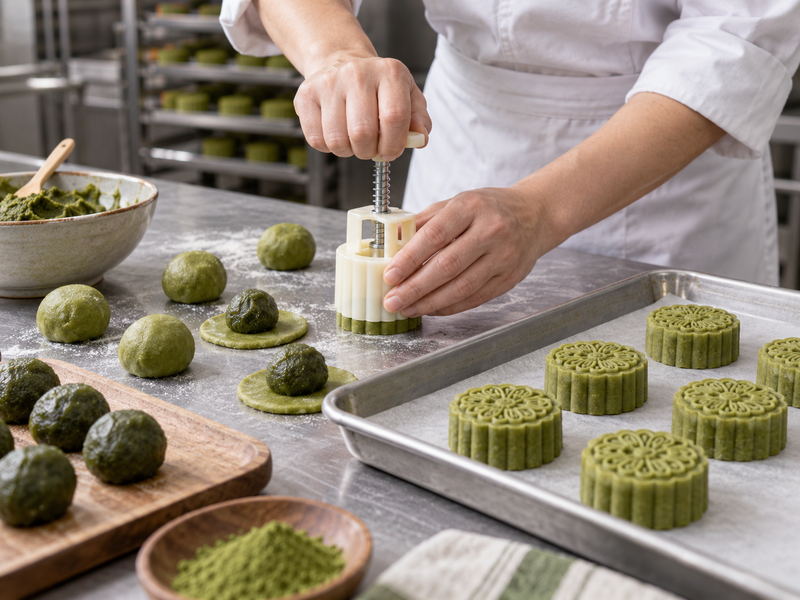
Matcha in a wrapper changes color and flavor but can also alter how the dough handles. Start with an approved plain wrapper formula, split a small batch and test weighed matcha doses. Sift it with dry ingredients or use another documented dispersion method. Record mixing order, dough feel, rest time, mold release and finished cut face. The chestnut mooncake recipe puts matcha in baked dough; a commercial bakery should validate dose for its own flour, syrup and mold size.
Photograph raw and finished pieces under the same light. A powder that looks bright in a mixing bowl may darken in a baked wrapper. Ask tasters to identify tea alongside the filling without seeing the product name. Compare two supplier lots if this is a repeat seasonal item, and request ingredient and market documentation with the sample. Our matcha powder for baking guide supports this application decision. Keep powder storage and batch identification visible, since a late lot switch can change the appearance of a whole gift assortment.
| Wrapper variable | Record | Look for |
|---|---|---|
| Matcha lot | Supplier and code | Consistent color and flavor |
| Dose | Grams per dough batch | Clear tea without harshness |
| Dough condition | Mixing and rest notes | Cracks or sticky mold release |
| Finished color | Same-light photograph | Dull or uneven green |
| Thickness | Cut-face measurement | Thin spots around filling |
4. Which fillings let the tea remain clear?
Match sweetness and texture to the wrapper
Chestnut, red bean, lotus seed and other fillings each bring different sweetness and density. Salted egg yolk adds another strong flavor and an additional handling decision. Choose a limited trial set and use the same wrapper dose and piece weight across each. Taste at the planned point of sale, not only straight after assembly. Ask testers whether tea appears in the first bite and whether the filling texture makes the piece feel heavy or dry. A lower-sugar filling may reveal tea better, but sweetness alone does not determine balance.
Confirm purchased filling declarations and lot documents before approving a commercial pack. If the team makes filling in-house, record cooked yield, texture and portion weight. For a yolk version, specify how the center is prepared, positioned and checked; an off-center yolk changes the cut face and may create a thin wrapper. Avoid offering too many variants in a seasonal run. Each filling adds inventory, allergens, label text and another approval route. A small assortment with clear differences may be easier to sell and easier to produce with low rework.
5. How can portion and mold work be controlled?
Fix weights before training hand pressure
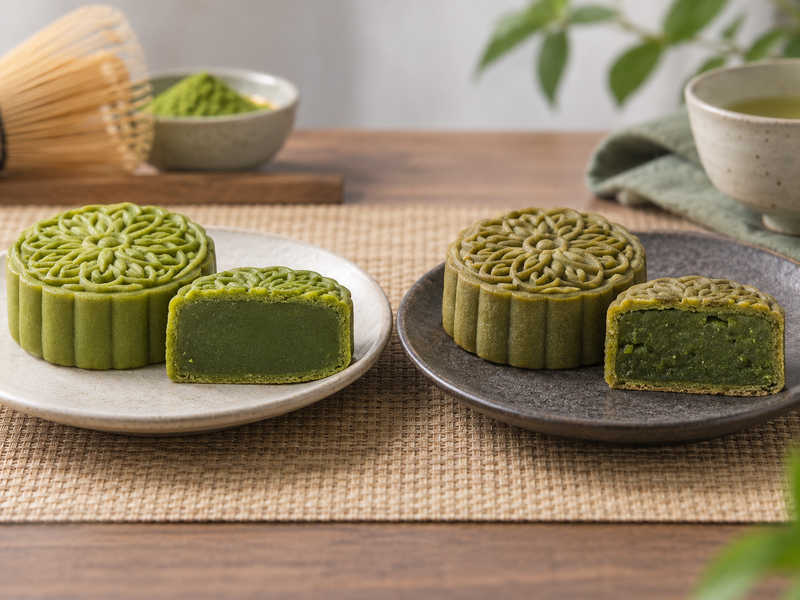
Choose a mold capacity and set target weights for wrapper and filling. Weigh test pieces before pressing, then cut several after finishing to inspect wrapper distribution. Staff should know how to center the filling, close the seam and dust or prepare the mold according to the accepted method. Excess flour or starch can dull green surfaces, while inadequate mold release can tear the design. Record which mold shape and plunger belong to each variant so workers do not swap them during a busy run.
Run a ten-piece test with two operators. Count cracked wrappers, blurred patterns, exposed filling and pieces outside the accepted weight range. If one design fails more often, it may have fine details unsuited to your dough or a cavity that traps the piece. Photograph a passed top and cut face beside rejected examples. The reference article notes that yield depends on mold size; commercial planning should start with the selected mold, not scale a recipe by piece count alone. A fixed weight sheet makes costing and packaging easier too.
| Mold checkpoint | What to measure | Typical failure |
|---|---|---|
| Piece input | Wrapper and filling grams | Uneven thickness |
| Closure | Seam appearance | Exposed filling |
| Release | Pieces damaged per ten | Torn pattern |
| Finished size | Height and diameter | Poor insert fit |
| Cut face | Center placement | Uneven yolk or filling |
6. What should the bake or finishing trial measure?
Look beneath the surface design
For baked mooncakes, trial the selected oven program with a realistic tray load. Record tray position, oven settings, finished color, pattern legibility and wrapper texture after the chosen cooling period. Cut pieces from the tray center and edge. If the molded surface looks acceptable but the wrapper remains uneven around filling, change portioning or shaping rather than only oven time. Any wash or glaze should be measured and tested for whether it hides the green surface. Do not promise a universal bake time without validating the bakery’s exact piece weight and oven.
For snow-skin pieces, replace oven measurements with handling and chilling observations. Check whether surfaces pick up condensation, seams open or patterns flatten after packaging. In both formats, use the business’s food-safety procedures to set safe production and holding rules. The FDA Food Code offers a US retail-food model, while local rules and product composition govern the actual site. A sensory trial can approve taste and appearance; it cannot by itself establish a safe shelf life.
7. How should mooncakes be packed for gifting?
Make the box part of the product trial
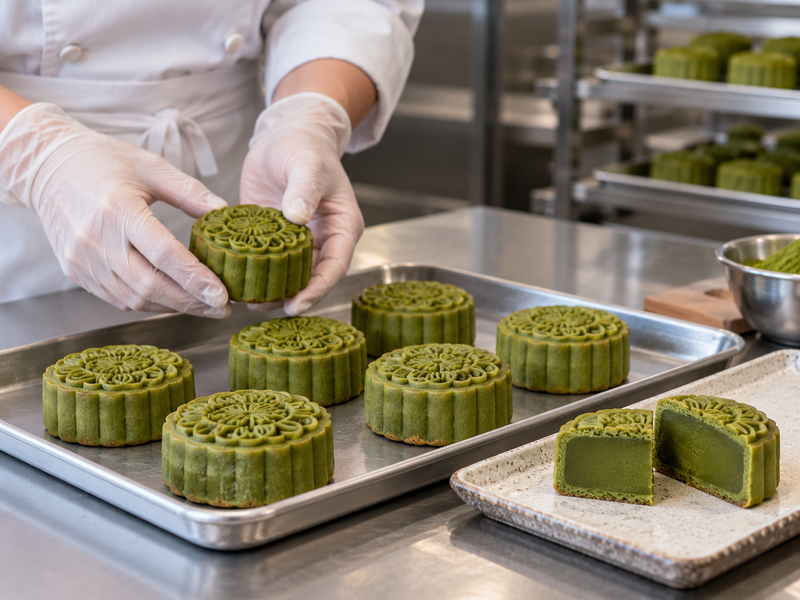
Choose an insert that supports each mooncake without scraping its molded face. Test the exact count per box, closure, outer sleeve and any label. Gently handle a finished sample along the planned packing and delivery route, then open it as a customer would. Record surface damage, movement, crumbs, odors from the pack and whether the cut instructions remain clear. The cost of a beautiful box is wasted if pieces arrive against its lid. A snug fit may protect shape but press a snow-skin surface out of pattern.
Photograph the pack immediately after filling and after transport. If the product requires temperature control under the approved plan, check whether the proposed material and route support it. Avoid a generic gift-box claim such as “stays fresh for weeks” without validation. Give distributors and retail partners specific handling instructions drawn from the approved product process. Ask them where boxes will sit before purchase; a warm shopfront and a chilled case place different demands on packaging. The launch sample should include finished food in the actual box, not an empty mockup.
| Pack element | Trial check | Failure signal |
|---|---|---|
| Individual cavity | Movement and face clearance | Rubbed pattern |
| Wrapper or sleeve | Fit and removal | Torn surface |
| Outer box | Stack and carry test | Crushed corner |
| Label | Readable ingredients and variant | Wrong pack identified |
| Delivery route | Open-box inspection | Crumbs or displacement |
8. What must buyers check on labels and allergens?
Use the complete formula and destination market
Fillings can contain nuts, sesame, milk, egg or other allergens; wrappers and inclusions add more. Confirm every supplier’s current declaration and check substitutions before printing cartons. US buyers can consult FDA food allergy information, while other markets have their own rules. A mooncake with salted egg yolk needs a different ingredient declaration from a plain chestnut version. Color from matcha does not remove the need for clear variant identification.
Keep approved product name, ingredient list, net quantity, batch code, date marking and handling directions aligned with applicable law and the validated product. Do not infer that a certification on the matcha bag covers the finished mooncake. If private label or export is planned, review the pack with a qualified local adviser before production. For in-house staff, use a pack checklist that pairs each filling with the correct printed label. Seasonal runs move quickly, and a wrong sleeve on an otherwise correct piece creates avoidable rework or a serious customer problem.
9. How can the seasonal order be costed?
Count accepted pieces and unsold packs
Build a cost sheet from invoice prices for filling, wrapper, matcha, wash or finish, individual wrap, insert, outer box and labor. Divide by accepted pieces, then by sellable gift packs. Rejects from mold release, cracked wrappers and transit damage belong in the calculation. A powder with a higher unit price can still work if it gives clear flavor at a lower dose; compare cost per accepted mooncake. Do not set retail price only from ingredient cost while ignoring box assembly and seasonal leftovers.
Set pilot quantities from credible demand, production capacity and the available selling period. Track single-piece and gift-box sales separately; they may leave different stock at the end of the season. If a distributor requests a larger batch, confirm its order schedule and handling conditions before purchasing all materials. Keep a reserve for approved remakes but do not equate a broad seasonal forecast with committed demand. The pilot’s usable yield and daily output rate give the buyer a defensible order size for matcha, filling and boxes.
| Cost line | Capture | Often missed |
|---|---|---|
| Dough and filling | Cost per accepted piece | Mold and bake rejects |
| Matcha | Grams per piece | Lot change requiring retest |
| Box set | Insert, wrap, carton | Damage in assembly |
| Labor | Forming and packing time | Variant changeovers |
| Seasonal stock | Ordered versus sold packs | Remaining printed materials |
10. What belongs in a prelaunch approval?
Sign off on the food and the gift pack
The approval sample should contain finished mooncakes from the intended production process, packed in the exact sale box. Record format, piece weight, wrapper and filling formulas, matcha lot and dose, mold, finishing method, accepted color and cut-face photograph. Attach validated food-safety instructions and approved market labels. Put a version and approval date on every specification so bakery, buyer and packaging supplier work from the same product. A note that merely says “green mooncake with chestnut” cannot control a seasonal run.
Run the final pilot with production staff and inspect pieces after the planned distribution route. Count sellable units, note defects and taste a sample at the intended sale point. If the result misses its target, adjust one component and repeat before printing a large quantity of cartons. Send the accepted application, required pack size and lot-document needs to the matcha supplier. The finished sample tells a supplier more than a broad request for ceremonial grade and helps the bakery buy powder for the mooncake it can actually deliver.
FAQ
Q1. Can matcha mooncakes be made as snow-skin pieces? Yes. Treat that as a separate product with its own handling, packaging and validated storage plan.
Q2. Where does matcha go in a baked mooncake? The wrapper is one approach. Test the tea dose in finished pieces with the intended filling.
Q3. Does salted egg yolk have to be included? No. Offer it only if the flavor, handling, allergen and label route suit the product brief.
Q4. How should a bakery choose a mold size? Set piece weight and pack cavity together, then inspect wrapper thickness and design retention in a ten-piece trial.
Q5. What should a gift-pack buyer request? Ask for a finished pack sample, ingredient and allergen documents, batch identification, handling instructions and evidence from a transport trial.