
Matcha vs coffee is a comparison between powdered green tea and a drink made by extracting roasted coffee beans. Neither is automatically the better choice. They differ in flavor, preparation, caffeine variability, menu role, and cost per saleable serving. For a café or beverage brand, the useful question is which ingredient fits a particular customer, recipe, and operating model. This guide compares the two without promising a health outcome. Consumer comparisons such as Nguyen Coffee Supply’s article show the common questions; commercial buyers also need dose records, supplier documents, and finished-product testing.
1. Matcha vs coffee: what are the basic differences?
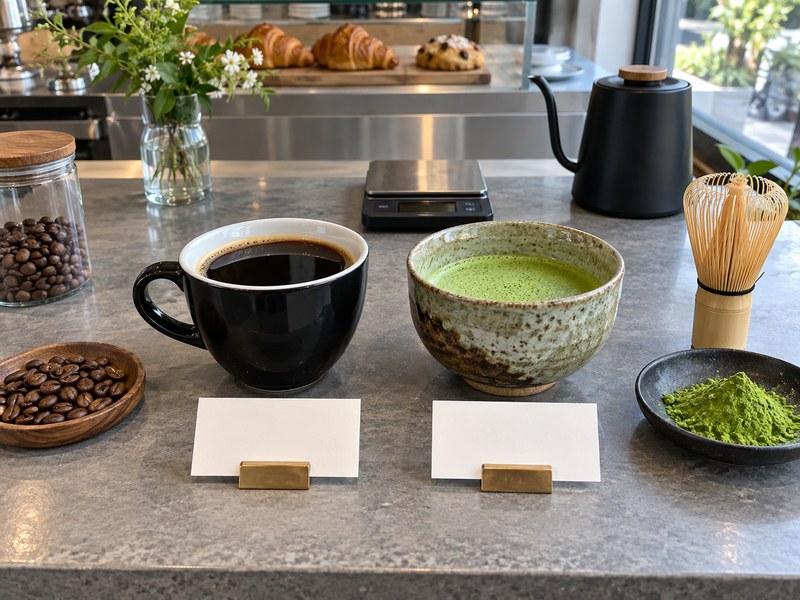
Matcha is finely milled tea leaf dispersed in liquid, so the powder remains in the drink. Coffee is normally brewed by passing water through ground roasted beans and separating the liquid from most solids. The raw materials, processing, and preparation methods differ. Both may be served plain or with milk and sugar. A green matcha latte and a brown espresso latte can be sold in the same size cup, yet their ingredient costs and labor steps may differ considerably. The comparison should start with a defined serving, not a generic ingredient name.
What should a buyer specify before comparing cups?
Fix the recipe first. Write down matcha grams, espresso dose and yield or brewed-coffee ratio, milk volume, cup size, sweetener, ice, and serving temperature. A 2 g matcha cup cannot be fairly compared with an undefined “large coffee.” Taste each plain before adding milk, then compare finished menu recipes. This reveals whether sweetener or milk is driving preference. For procurement, record landed ingredient price and waste as well as purchase price. A familiar coffee station may already have sunk equipment costs, while a new matcha program needs mixing tools and staff training.
| Dimension | Matcha | Coffee |
|---|---|---|
| Starting material | Milled tea leaf | Roasted coffee bean |
| Typical extraction | Powder stays in drink | Grounds usually removed |
| Plain flavor | Green, savory, sometimes bitter | Roasted, acidic, sometimes bitter |
| Service variable | Dispersion and powder dose | Grind, extraction, brew ratio |
2. How do their flavors differ in plain drinks?
Matcha can have vegetal, sweet, savory, and bitter notes, depending on leaf, processing, freshness, dose, and water. Coffee ranges widely by origin, roast, and brewing method, from bright and acidic to deep and roasted. Neither category has one fixed taste. A café should compare products at a realistic serving strength and temperature. Use a blind panel if the choice is commercial; labels and origin stories can bias tasters. Record aroma, texture, sweetness, bitterness, and finish. A cup that wins a plain tasting may not win in milk.
Why test both water and milk?
Milk changes what customers notice. It can soften bitterness but also hide a delicate matcha or a light-roast coffee. A drink sweetened for the café menu should be tasted at the proposed sugar level, not only without sugar. Test hot and iced formats separately because ice dilution and temperature alter aroma. If a team describes a matcha as “coffee-like,” clarify whether it means body, bitterness, or a roasted note; those are different targets. A hojicha powder may provide roast character, but it is another tea product and needs its own sensory test.
3. Which drink contains more caffeine?
There is no reliable category-wide winner without defined serving sizes. Coffee caffeine changes with bean, dose, brewing, and cup volume. Matcha caffeine changes with powder composition and grams used per cup. A sweetened matcha latte mix may contain far less pure tea per scoop than its serving weight suggests. The FDA notes that caffeine amounts vary across beverages and that 400 mg per day is a level generally not associated with negative effects for most adults; individual sensitivity and medical circumstances differ. That statement is not a recommended dose for a menu drink.
How can a brand make a defensible caffeine statement?
Use a tested or otherwise reliable caffeine value for each ingredient lot, multiply by the actual dose, and account for a full serving. If coffee extraction varies, test the prepared beverage under the intended brewing process. For matcha, calculate from powder mass and verified caffeine per gram, then consider lot variation. Be careful with “low caffeine” or “clean energy” claims; rules and evidence needs vary by market. If no reliable value exists, state that the drink contains caffeine rather than giving a precise milligram figure. A customer choosing for pregnancy, medication, or sensitivity needs appropriate professional advice, not a marketing comparison.
| Claim type | Needed evidence | Avoid |
|---|---|---|
| Caffeine per cup | Ingredient or beverage data plus recipe | Generic internet number |
| “Less than coffee” | Defined coffee comparator and serving | Comparing unmatched cups |
| Caffeine-free | Verified absence | Treating tea as caffeine-free |
4. Does matcha provide a different experience from coffee?
People may describe a different subjective experience, but a café should not promise that one drink produces calm focus while the other causes a crash. Caffeine response varies with dose, timing, food, sleep, and the person. Matcha contains other tea compounds, including L-theanine, yet their presence in a specific serving does not guarantee a particular effect. Market the taste, preparation, ingredient origin, and choice of format. If a brand wants to make a physiological claim, it needs evidence for the exact product and review against the rules of each sales market.
What wording is useful on a menu?
Give customers facts they can use. “Powdered green tea whisked with water” explains a plain matcha. “Espresso with steamed milk” explains a coffee latte. Add size, milk option, sweetness, and any verified caffeine information if available. Avoid using “detox,” “crash-free,” or “healthier than coffee” as shorthand. Those phrases are vague and can mislead. Staff can answer questions about taste and ingredients without acting as health advisers. A small tasting flight can let customers choose on sensory grounds, provided the same care is given to each preparation.
5. Which drink is faster to serve?
Speed depends on equipment and training. A café with an established espresso bar may make coffee quickly, but grinding, tamping, extraction, and milk steaming still require control. Matcha needs accurate dosing and complete dispersion; a rushed pour can leave dry clumps. Premeasured portions may help, though they add packaging or preparation labor. Compare the time from order to handoff during a real rush, including cleaning and remakes. An attractive preparation video does not represent a busy shift with several drink types in queue.
What should the operating trial measure?
Make ten consecutive cups of each planned recipe with trained staff. Record build time, temperature, appearance, waste, and customer-ready quality. Include switching between dairy and alternative milk, because cross-contact and pitcher cleaning affect the station. Test the route from prep to pickup. Matcha settling in a held drink and coffee crema fading are quality issues with different time scales. The point is to set a realistic service window, not to declare one category universally faster. A simple recipe card should specify dose, water or brew parameters, cup, and cleaning steps.
| Operating step | Matcha control | Coffee control |
|---|---|---|
| Dose | Powder grams | Bean grams or brew ratio |
| Preparation | Water and mixing method | Grind and extraction |
| Handoff | Clumps and settling | Temperature and freshness |
| Cleaning | Whisk or mixer | Group head or brewer |
6. How do equipment and training needs compare?
Coffee service may require a grinder, espresso machine or brewer, water treatment, calibration, and maintenance. Matcha can begin with a scale, bowl or mixing vessel, sifter, and whisk or commercial mixer. That lower equipment barrier does not remove the need for quality control. Staff must recognize stale powder, measure correctly, and disperse it consistently. A high-volume matcha program may need a dedicated station and defined cleaning schedule. Equipment purchases should follow a forecast of cups per hour and a trial of the actual menu, not an assumption that one category is inherently simple.
Where does training pay off?
Train staff on the sensory endpoint. A coffee shot can be weighed and timed, but it also needs tasting. A matcha base can be timed, but it still needs checking for dry pockets and a rough finish. Use a reference cup and a short troubleshooting card. Record which changes staff are allowed to make during service; silent dose adjustments distort cost and caffeine estimates. New lots of beans and matcha should trigger a comparison against the current standard. When the cup changes, identify whether the ingredient, water, equipment, or operator changed before rewriting the recipe.
7. Which ingredient is cheaper per serving?
Price per kilogram is only a starting point. A matcha drink might use 2–4 g of powder, while a coffee recipe uses a much larger mass of beans and leaves grounds behind. Each product has different prices, yields, waste, and labor. Calculate landed cost per saleable cup for the exact recipe. Include milk, syrup, ice, cups, lids, equipment supplies, and training waste. If a premium matcha costs more but needs a lower dose to meet the sensory target, it may be competitive. Conversely, a cheap powder that needs heavy sweetener can produce a weak product with poor repeat sales.
What is a useful cost comparison?
Make a sheet with ingredient unit price, dose, expected saleable yield, and remake rate. For example, one kilogram at a 2.5 g matcha dose gives 400 theoretical cups, before losses. A coffee calculation should use the actual roasted-bean dose and beverage yield, not green-bean pricing. Evaluate contribution margin at the selling price each audience will accept. A low-cost drink that takes longer to make can consume more peak-hour capacity. Cost decisions are stronger when paired with order data from a pilot rather than a one-day tasting.
| Cost input | Matcha example | Coffee example |
|---|---|---|
| Primary ingredient | Powder grams per cup | Roasted beans per cup |
| Yield loss | Spills and stale opened packs | Dial-in and spent grounds |
| Equipment | Mixer, scale, cleaning | Brewer or espresso machine |
| Other ingredients | Milk, syrup, packaging | Milk, syrup, packaging |
8. How do sourcing and freshness risks differ?
Both ingredients need lot control and appropriate storage. Matcha’s fine powder has high exposed surface area and can lose appealing color and aroma after opening. Roasted coffee changes after roasting and grinding, with a different sensory trajectory. Ask each supplier for origin, processing, packing date or shelf-life basis, storage guidance, traceability, and relevant tests. For international buyers, verify import documentation and label claims. “Single origin” or “ceremonial” means little without a clear specification for the purchased item.
What should be tested on a replacement lot?
Prepare old and new lots side by side at the same dose, water, milk, and service time. Record aroma, color, body, and finish. For coffee, dialing in a grind may be normal; record the change. For matcha, a revised dose may alter cost and caffeine, so approve it deliberately. Keep a sealed reference sample when possible. A product can meet a paper specification yet perform differently in the finished drink. A purchasing file should link the approved sensory result to the quote and lot documents.
9. Should a café sell matcha instead of coffee?
The answer depends on customers and menu space. Matcha can add a distinct flavor and serve guests who do not want coffee’s roasted taste. Coffee may remain the core of an established café. Offering both can be sensible if the team can maintain quality and manage inventory. A short pilot should track sales, repeat orders, build time, waste, and customer feedback by recipe. Avoid claiming that every customer prefers one category based on general trend articles. A chain might test one matcha latte and one plain matcha before buying several flavored powders.
How can the menu stay clear?
Group drinks by what customers will taste, not by a supposed wellness hierarchy. Describe matcha as tea and coffee as coffee. Include caffeine disclosure where required or supported, and provide ingredient answers for sweetened blends. A hybrid matcha coffee drink is possible, but it adds a second caffeine source and a more complex recipe. If the café sells one, calculate the combined dose and test the actual cup. Simpler menus often train faster, but menu breadth should be decided from customer demand and operational capacity.
10. How should a buyer choose a matcha for a coffee-led menu?
Start with the actual drink format. A plain-water offering needs a clean, pleasant tea on its own. A sweetened latte needs enough tea character to survive milk. Request several lot samples at different price points and test them blind in the recipes. Ask for origin, ingredient declaration, shelf-life guidance, packaging options, and available safety documents. Matcha Village can discuss bulk pure powder and blend formats; the café should approve the specific product through a cup test and landed-cost calculation.
What decision should the trial produce?
Choose a recipe, supplier specification, acceptable sensory range, and process that staff can repeat. Keep the caffeine claim conservative unless supported by data. Document the customer-facing description and train staff on the difference between pure matcha and a sweetened latte blend. The immediate next step is a side-by-side service pilot with defined cup sizes and full cost sheets. Matcha and coffee each earn their place through the drinks customers actually order and the quality a store can deliver every shift.
| Approval item | Matcha buyer check |
|---|---|
| Product | Pure powder or formulated blend |
| Sensory | Plain and menu-recipe tasting |
| Documents | Origin, lot, relevant tests |
| Operations | Dose, mixing, service time |
| Economics | Landed cost and real yield |
FAQs
Q1. Does matcha always have less caffeine than coffee? No. Compare defined recipes and verified caffeine data for each serving.
Q2. Is matcha healthier than coffee? Neither category supports a blanket health claim. Individual needs, dose, and the complete drink matter.
Q3. Can coffee equipment prepare matcha? Some bar tools can help, but matcha needs its own dosing, dispersion, and cleaning procedure.
Q4. Why does matcha cost more in some cafés? Powder price, dose, labor, waste, packaging, and positioning all affect the final cost.
Q5. Should a café replace coffee with matcha? Test customer demand and operational fit. Many menus can offer both successfully.