
Matcha coffee combines prepared matcha with brewed coffee or espresso in one drink. For a café, the problem is keeping both flavors clear while controlling sweetness, separation, serving time, and caffeine from two ingredients. A measured build solves more than a dramatic photograph does. The guide below gives a practical test formula and shows what a buyer should ask of a powder supplier. Formula amounts are development starting points; approve the final drink through tasting, yield checks, and applicable local food rules.
1. What does “matcha coffee” mean on a menu?
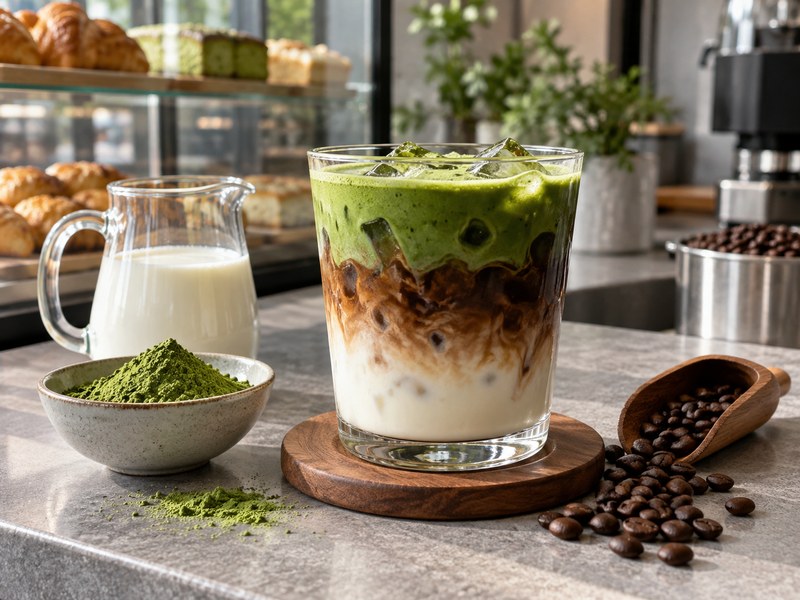
The name covers several drinks: espresso poured over an iced matcha latte, matcha mixed with cold brew, or a blended drink carrying both flavors. Each gives a different balance. A guest ordering matcha coffee should know whether coffee is a minor aromatic note or the dominant taste. The menu should also name the milk and sweetener, especially when those change the finished cup more than the tea does. “Dirty matcha” is familiar in some cafés, but a plain description such as “iced matcha latte with one espresso shot” travels more easily across markets and staff teams.
How should a developer define the drink?
Set the target before the recipe. Write a one-sentence sensory brief: for example, “cool milk drink, tea on the opening sip, espresso in the finish, moderate sweetness.” Then define serving size and whether a layered presentation matters. If customers will stir the glass, judge both the first sip and the mixed drink. A striking layer that tastes like separate, incompatible beverages is a failed formula. Compare a matcha-forward option with a coffee-forward option under the same total volume. This makes a choice between menu concepts much easier than changing ingredients at random.
| Menu style | Typical build | Main development risk |
|---|---|---|
| Layered iced latte | Matcha, milk, ice, espresso | Layers disappear during service |
| Mixed iced latte | Matcha, milk, coffee, ice | One flavor buries the other |
| Blended drink | Both bases with ice and milk | Dilution and inconsistent texture |
2. Which matcha works beside coffee?
Coffee brings roasted, acidic, and sometimes chocolate-like notes. A delicate matcha can vanish under a dark espresso; a very bitter tea can make a lighter roast taste harsh. Judge powder in the finished drink, not only in a plain bowl. A bright green appearance can help when the drink is layered, but color alone does not predict how tea will taste through milk and espresso. Request samples from identified lots and keep each comparison at the same dose. Supplier grade terms are useful starting labels, not universal sensory standards.
What should a purchasing team record?
Prepare each candidate as a plain matcha slurry, then in the target milk and final coffee build. Record aroma, color, graininess, bitterness, aftertaste, and how much sweetener the recipe needs. Repeat with the espresso blend actually used in stores. A powder that tastes polished in water may be too quiet in a 350 mL drink; a less costly application grade may perform well after milk is added. Ask for ingredient declaration, lot specification, origin, relevant testing, and storage instructions. Our pure matcha range can be assessed through the same blind bench test rather than through grade names alone.
3. How should espresso and matcha be balanced?
Start by measuring the ingredients independently. A workable 350 mL iced trial might use 2 g matcha, 30–40 mL water for dispersing it, one espresso shot, 140–170 mL milk, 10–20 mL syrup, and ice to the fill line. This is a pilot, not a universal recipe. Espresso volume and strength vary widely, so record coffee mass in, beverage mass out, and extraction time under the café’s normal procedure. Taste the drink immediately and after five minutes; warming, melted ice, and a longer contact time can change which flavor seems dominant.
What adjustment should come first?
Change one variable at a time. If coffee hides tea, try a smaller coffee dose or a different roast before doubling matcha. More powder raises cost and can add astringency. If the tea overwhelms coffee, compare a shorter matcha dose with a more assertive espresso. If both flavors seem dull, check milk, sugar, and dilution before replacing ingredients. A short staff tasting with coded samples can uncover whether the menu target actually matches customer preference. Write down the winning ratio in grams and milliliters; “one scoop” or “a splash” will not survive a multi-store rollout.
| Trial variable | Hold steady | Observe |
|---|---|---|
| Matcha dose | Espresso, milk, syrup, ice | Tea flavor and dry finish |
| Espresso dose | Matcha, milk, syrup, ice | Roast balance and acidity |
| Sweetener | Both tea and coffee doses | Clarity of each flavor |
| Ice mass | Liquid recipe | Dilution after five minutes |
4. How do you make an iced matcha coffee without clumps?
Matcha is powdered leaf, so it disperses rather than dissolves like sugar. Sift or break apart obvious clumps, then mix the measured powder with a small amount of water until smooth. Use a whisk or a clean mechanical mixer suited to the batch size. Adding dry powder directly to cold milk often leaves green islands against the glass. If the drink needs separate layers, chill the tea slurry before assembly so it does not melt the ice unevenly. Keep the powder container closed between orders; wet spoons and steam around an espresso station can damage its handling quality.
What order works in a busy service line?
Prepare the matcha base in a measured vessel. Add syrup according to the standard build, then add milk and ice in the tested sequence. Pull espresso close to serving time and cool it if the visual specification requires a clean layer. Pour gently over ice or a spoon, using the same cup and fill line used in training. A layer depends on density and pour technique, so it will not hold forever. Set a photo standard and a realistic handoff window. For a mixed drink, skip the theatrical pour and stir thoroughly; a dependable cup is more valuable than a layer that disappears before pickup.
5. What does a hot version require?
Hot milk changes sweetness perception and brings matcha’s aroma forward. Espresso aroma can also dominate quickly in a small hot cup. Develop the hot drink as its own recipe, not an iced formula with the ice removed. Sift and whisk matcha with warm water, add steamed milk, and finish with a measured espresso shot. Keep the drink warm enough to serve pleasantly without using extreme heat to cover a rough tea. Staff should taste at the intended drinking temperature, since very hot liquid can hide balance problems.
Where do hot drinks go wrong?
Watch the texture. A matcha slurry that sits while a queue builds can settle; a pitcher of milk held too long loses its original texture. Standardize the order of tasks so both bases reach the cup fresh. If you use a dairy alternative, test its steam behavior and flavor with the chosen coffee and tea; an oat drink that flatters espresso may mute matcha. Specify the exact product rather than a broad category on the formula sheet. Maintain cleaning procedures for steam wands and mixers, and follow local controls for opened milk. A hot version deserves its own cost card and cup size because the yield changes.
| Hot service control | Written standard | Why staff need it |
|---|---|---|
| Matcha slurry | Powder and water by weight | Prevents weak or lumpy drinks |
| Milk | Brand, amount, steaming endpoint | Controls flavor and texture |
| Espresso | Dose and yield | Keeps coffee contribution stable |
| Handoff | Maximum waiting time | Limits settling and cooling |
6. How much caffeine is in matcha coffee?
Both tea and coffee contribute caffeine, and actual amounts depend on the matcha lot, powder dose, beans, extraction, and serving size. Avoid a fixed number copied from a generic café article. Ask the tea supplier for a caffeine test or specification if a number will appear on a menu or label; calculate coffee contribution from reliable data for the exact brew, or test the finished drink when a claim matters. The US FDA’s caffeine guidance notes that sensitivity varies and that consumers should count all caffeine sources. That makes clear menu disclosure useful, especially where customers might assume matcha replaces coffee.
What should menu and service teams say?
Describe the drink as containing both matcha and coffee. Offer a one-shot default and a decaf-coffee variation if the equipment and demand support it; matcha still supplies caffeine in that variation. Never describe it as caffeine-free. If you quote milligrams, specify the portion and document the testing or calculation behind the figure. Changes in espresso recipe or matcha dose require rechecking the statement. For B2B packaged beverages, caffeine labeling rules differ by market, so the importer or regulatory team must review the intended destination before artwork goes to print. Staff need a plain answer instead of a wellness promise.
7. Which milk and sweetener fit the flavor?
Whole milk gives body and a familiar latte profile. Oat beverages can add cereal sweetness, soy brings its own aroma, and almond drinks may feel thinner. None is automatically best. Use an unsweetened version during early testing, then add sweetness deliberately. Syrup usually disperses more reliably in cold service than granular sugar. Maple, vanilla, or caramel can be appealing but may turn the drink into a dessert with tea and coffee barely visible. Test one neutral build before seasonal variations.
How can teams compare alternatives fairly?
Taste at serving temperature. Prepare equal-size cups with the same matcha, espresso, ice mass, and sweetener level. Record sweetness, tea clarity, coffee clarity, texture, visual separation, and aftertaste. Check ingredient and allergen information for each milk or syrup, including substitutions offered at the counter. A regional chain should test products available in every target market rather than build its core recipe around a specialty milk with uneven supply. If you sell a ready-to-mix powder, review its ingredients separately: a premix may already contain sugar or creamer and should not be treated as pure matcha.
| Base | Likely sensory effect | Procurement check |
|---|---|---|
| Whole milk | Fuller body, dairy sweetness | Cold chain and allergen handling |
| Oat beverage | Cereal note, possible sweetness | Brand consistency and ingredients |
| Soy beverage | Firm body, distinct aroma | Allergen declaration |
| Neutral syrup | Sweetness with limited aroma | Dose control and labeling |
8. How should a café calculate cost and speed?
Cost the drink by measured consumption, not purchase-pack price alone. Tea, coffee beans, milk, syrup, ice, cup, lid, and expected waste all belong on the card. Then observe preparation during a realistic rush. A barista might make an excellent sample at a bench yet lose two minutes to sifting, espresso timing, and cleanup when ten orders arrive. If the result cannot meet service time, simplify the sequence or prepare a permitted, controlled base under a documented holding procedure. Do not assume a premixed wet matcha base can sit at room temperature all day.
Which pilot numbers are worth keeping?
Record ingredient weights before and after service, drink yield, preparation time, rejection rate, and customer feedback by version. Include cost per sale after typical milk substitutions. If an expensive powder needs less syrup and yields a stronger tea identity, the full recipe may cost less than expected. Conversely, a low-priced powder that requires a high dose can erase its price advantage. Keep the tasting score beside the cost sheet. The team can then select a cup that staff can deliver repeatedly and customers would buy again, not the cheapest ingredient in isolation.
9. What should a matcha coffee supplier provide?
Ask for a current specification tied to the sample: ingredient statement, origin, lot identification, packaging format, storage guidance, and the food safety and analytical documents required for your destination market. Discuss how the powder behaves in your intended recipe and whether later lots can be compared against an approved reference. If you want a sweetened matcha latte powder, request its full composition and test it at the actual dose. Matcha Village describes bulk matcha and application options; buyers should still verify every claim against the quoted product and current documents.
How do you approve a repeat order?
Retain a sealed sample from the approved lot, a final recipe, and a one-page sensory specification. When the next lot arrives, compare dry aroma and color, then make the target drink with the same espresso, milk, and cup. A change that looks small in a bowl may be obvious under a dark coffee layer. Set a process for reporting deviations, agreeing on replacement or adjustment, and approving new packaging artwork if origin or ingredient statements change. This gives procurement a usable standard rather than an informal memory of a good launch-day sample.
| Request | Buyer use | Approval evidence |
|---|---|---|
| Lot-specific sample | Recipe trial | Blind tasting record |
| Product specification | Ingredient and quality review | Signed current version |
| Relevant testing | Market and safety review | Report for the offered lot |
| Repeat supply plan | Menu continuity | Lead time and change process |
10. How can a chain launch the drink consistently?
Choose one recipe after sensory and cost trials, then train using weights, photos, and a tasting reference. Validate it in at least two store conditions: a quiet bench and a peak service period. Cup size, ice machine output, espresso calibration, and staff technique can all move the flavor. A shift lead should be able to check a drink against a simple target: tea visible, coffee present, no powder clumps, correct fill level, and acceptable handoff time. Collect complaints by cause rather than treating every “too strong” comment as a powder problem.
What should happen after launch?
Audit the recipe when any major input changes. New beans, a different oat beverage, seasonal ice, or a new matcha lot may call for a quick retest. Keep a written substitution policy so a stockout does not quietly create another product. For menu planning, compare this build with a plain iced matcha or espresso drink to see whether the hybrid earns its space. Review matcha latte powder options if a premix could help service. Share a concise product brief with suppliers and request samples against the final sensory target.
FAQs
Q1. Is matcha coffee the same as a dirty matcha latte? Often, yes. Define the actual coffee dose and milk in menu copy because recipes vary.
Q2. Can a café use decaf espresso? Yes. The drink still contains caffeine from matcha, so it is not caffeine-free.
Q3. Can matcha powder go straight into iced milk? It can clump. Pre-dispersing a weighed dose in a small amount of water gives a more reliable cup.
Q4. Which matcha grade is best with espresso? Judge candidate lots in the final drink. Grade names alone do not predict flavor through milk and coffee.
Q5. Can a layered drink be made in advance? Layers and ice dilution change over time. Develop a defined handoff window and food-safe holding practice for any prepared component.