
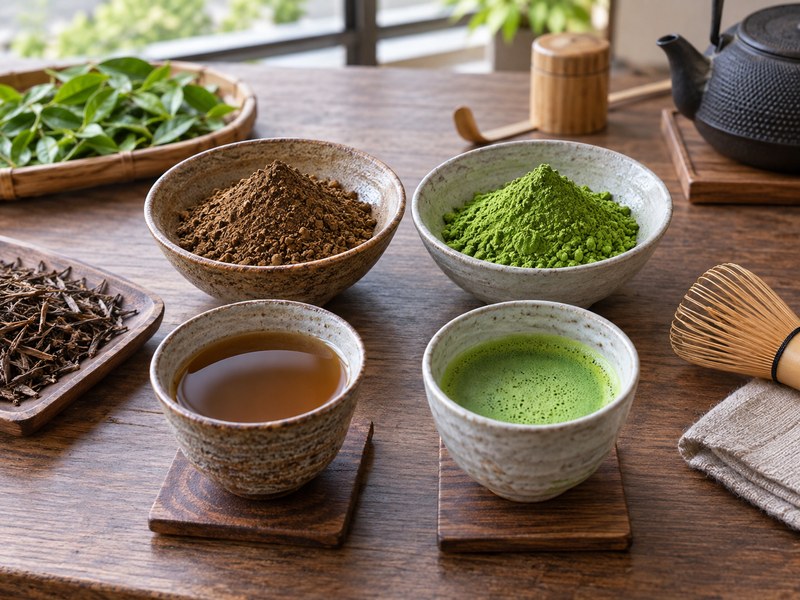
Hojicha is roasted green tea; matcha is a finely powdered green tea associated with shaded leaf production. In powder form, hojicha usually gives a brown, toasted profile while matcha gives a green tea profile with more grassy and savory notes. For a café or food manufacturer, the choice affects recipe sweetness, visual identity, customer expectations, and supplier specifications. Hojicha vs matcha should therefore be tested in the exact drink or food you plan to sell. This comparison focuses on measurable product decisions rather than broad claims about one tea being healthier or universally better.
1. Hojicha vs matcha: what are they made from?
Both start with tea from Camellia sinensis, but the processing paths diverge. Hojicha is green tea that has been roasted; it may be made from different leaf materials depending on the producer. Matcha is ground tea powder, with Japanese matcha traditionally made from shaded tencha. The Japanese Ministry of Agriculture’s Uji tea overview describes tencha and hojicha within distinct tea processing traditions. A buyer should request the actual leaf source and process for each offered product rather than assume every brown or green powder was made identically.
Why does the powder form matter?
Loose hojicha is brewed and the leaves removed; hojicha powder remains in a latte, cake, or ice cream. Matcha also remains in the finished product. That means particle size, dispersion, and dose affect mouthfeel for both. A supplier might offer a hojicha tea intended for infusion and a separate fine powder intended for beverages. Ask which one is on the quotation. If a menu says “hojicha latte,” staff need to know whether it uses brewed tea, powder, or a sweetened blend. The same issue applies to “matcha latte,” which can mean pure tea plus milk or a premix with sugar.
| Attribute | Hojicha powder | Matcha powder |
|---|---|---|
| Main process cue | Roasting | Powdering prepared green tea |
| Typical color | Tan to brown | Green |
| Common sensory note | Toasted, nutty, caramel-like | Grassy, savory, vegetal |
| Product check | Roast level and grind | Tea origin, grind, freshness |
2. How does roasting change hojicha flavor?
Roasting creates aroma that many tasters describe as toasted grain, nuts, or caramel. The exact profile depends on leaf material, roast level, and how the powder is stored. A light roast can retain more recognizable tea character; a dark roast may move toward cocoa or coffee-like notes and risk a burned edge. Buyers should request at least two roast profiles when building a new product. A single aroma description from a supplier cannot show how the powder will perform after milk, sugar, or baking.
What should a roast comparison record?
Taste both neat and in the application. Prepare powders at the same mass and serving temperature. Score dry aroma, brewed or dispersed aroma, roast intensity, bitterness, body, and finish. Then repeat in the chosen milk or base. A strong roast that works in a sweet latte can dominate a delicate pastry cream. A mild roast that seems elegant in water may disappear in ice cream. Keep a reference from the approved lot and note whether later shipments match its roast range. Visual brown shade helps identify variation, but aroma and finish determine suitability.
3. What flavors should a buyer expect from matcha?
Matcha can be grassy, sweet, savory, astringent, or bitter depending on its leaf source and production. A good sample for one application need not have every note. Plain bowl service usually exposes roughness, while a milk drink can soften it. A vivid green shade helps with visual branding, but color alone cannot guarantee a pleasant cup. Some products marketed as “matcha” are sweetened blends, which must be evaluated as formulas rather than pure tea. Ask for the ingredient declaration before comparing a brown hojicha powder with a green matcha latte mix.
How do you compare the two fairly?
Avoid forcing equal dose if the products reach different acceptable intensities. Begin with the same mass for a baseline, then optimize each separately within the product’s cost limit. Hold milk, sugar, cup size, and serving conditions steady. Use blinded codes where possible; green color will reveal identity, but coded tasting still removes brand and price cues. Record which tea tastes clear at a full serving and which needs extra sweetener. The decision should reflect the intended guest, not only a panel member’s personal preference for roasted or vegetal flavors.
| Sensory question | Hojicha trial | Matcha trial |
|---|---|---|
| What leads? | Toast or tea | Green tea or milk |
| What lingers? | Roast bitterness | Astringency or umami |
| Does sugar help? | Can round roast | Can soften bitterness |
| Does milk hide it? | Check roast strength | Check tea intensity |
4. How do color and presentation differ?
Matcha gives green drinks and foods; hojicha gives tan to brown ones. That visual split can make a two-flavor menu easy to understand. It also sets different customer expectations. A customer may expect a matcha latte to look bright green, while a pale brown hojicha latte can resemble coffee. Use precise menu language and staff descriptions. In baked goods, both powders may shift color after heat, so test the finished product rather than choosing powder from a dry swatch. A topping, glaze, or packaging window can further change perceived color.
What should a visual standard include?
Photograph the finished product under the light in which it will be sold. Record powder dose, milk type, cup or packaging, and observation time. Check sediment in clear cups; brown particles in a hojicha drink may look like spice while green sediment in matcha can read as poor mixing. Neither should feel gritty. A color range should allow natural lot variation but flag a meaningful change. A café can display a small ingredient card showing both powders to explain the difference without claiming that color alone proves quality or authenticity.
5. Is hojicha always lower in caffeine than matcha?
No fixed caffeine comparison applies to every product and serving. Leaf material, processing, concentration, and serving size all matter. Hojicha is often marketed as a lower-caffeine choice, but a large powder dose can change the comparison. Matcha powder and hojicha powder are consumed rather than filtered out, which makes dose especially relevant. If a menu or pack makes a numerical caffeine claim, obtain suitable product-specific data and define the serving size. The US FDA’s caffeine guidance reminds consumers that caffeine comes from multiple sources and sensitivity varies.
How should staff answer a caffeine question?
State what is known. Say whether the drink contains tea powder and whether it includes espresso or another caffeine source. Do not call hojicha “caffeine-free” without evidence; roasted tea can still contain caffeine. If tested numbers are available, give the serving size and current recipe. A decaf coffee addition does not remove caffeine from a matcha or hojicha base. For packaged products, route caffeine statements through regulatory review in the destination market. A cautious, accurate answer serves the customer better than a wellness slogan.
| Claim | Evidence needed | Safer menu practice |
|---|---|---|
| “Caffeine-free” | Product-specific support | Avoid for ordinary tea powders |
| “Lower caffeine” | Comparable serving tests | State only if verified |
| Milligrams per cup | Lot or product data and formula | Give serving size |
6. Which tea works better in a latte?
Matcha gives a recognizable green tea latte; hojicha gives a toasted, dessert-like cup. Both can work hot or iced. Matcha may pair with plain milk and modest sweetness if the powder is clean. Hojicha can pair with dairy or oat beverages, but very sweet syrup can turn its roast into a generic caramel profile. Start with pure tea powders, unsweetened milk, and measured sugar so the team can identify each ingredient’s contribution. A premix can simplify service later if its formula and labeling meet the product brief.
How do you run a café trial?
Make a 350 mL iced test with a fixed milk and ice mass, then set separate tea dose ranges for each powder. Disperse each in a small amount of water before assembly. Taste immediately and after the expected handoff time. Record clumping, sediment, sweetness, aroma, and whether the tea survives milk. Train several baristas to repeat the winning formula from a written card. If staff need elaborate explanation for guests to notice hojicha, the dose or menu positioning may be wrong. A side-by-side tasting flight can help a new customer choose.
7. Which applications suit each powder in food?
Matcha can give ice cream, cake, cookies, and chocolate a green tea identity. Hojicha can bring roasted warmth to the same categories without competing with cocoa or caramel in exactly the same way. Matcha’s green color may be an asset in a visible filling; hojicha’s brown tone may suit a biscuit or dairy dessert. Compare both in the finished food at the intended serving temperature. Baking heat, frozen serving, fat, and sugar can each alter how tea reads. One powder cannot be judged by a latte trial for every category.
What should a manufacturer test?
For a cake, compare batter dispersion, baked aroma, crumb color, and shelf display. For ice cream, test frozen flavor, texture, and color after distribution. For chocolate, inspect particle feel, viscosity, set, and label wording. Use an identical base for the early screen, then optimize each tea independently. Price per kilogram is a weak shortcut: the relevant cost is powder at the dose that delivers an acceptable finished product. If a powder needs more sugar to hide harshness, include that formulation cost in the comparison.
| Application | Matcha opportunity | Hojicha opportunity |
|---|---|---|
| Latte | Bright green signature | Toasted alternative |
| Cheesecake | Green interior and tea tang | Roast with dairy richness |
| Ice cream | Distinct green tea flavor | Nutty frozen profile |
| Chocolate | Tea-forward pale coating | Roast with cocoa notes |
8. How should the powders be stored and handled?
Both powders need protection from moisture, heat, light, and strong surrounding odors. Keep containers closed and use dry utensils. Matcha’s green appearance can make color change easy to notice; hojicha’s roasted aroma may fade even while the powder still looks brown. Ask suppliers for pack barrier information and storage guidance, then validate open-pack performance at the actual use rate. A 10 kg bag may be economical for a factory but awkward for a low-volume café that opens it repeatedly for weeks.
What should an incoming check cover?
Inspect seals, lot code, date information, dry aroma, color, and visible clumps against the approved reference. Record storage conditions after receipt and set a practical open-pack procedure. Do not infer safety from smell alone; use current supplier documents and your quality system. For a premix, inspect all ingredients and allergens, since “hojicha latte powder” may contain dairy or soy derivatives. The same applies to matcha blends. A clear inventory label prevents a brown tea and a green tea from being swapped when both sit in similar unmarked tubs.
9. What supplier documents should a buyer request?
Obtain a specification with tea identity, ingredient declaration, origin, lot code, relevant testing, packaging, shelf life, and storage instructions. For hojicha, ask about leaf source and roast specification; for matcha, ask about leaf preparation and milling where those claims will be used. If a product is certified organic, verify current scope and destination-market paperwork. A supplier’s broad product catalog does not replace documents for the specific item on offer. Matcha Village lists hojicha and other tea powders; buyers should evaluate each product code against an application brief.
How should lots be approved over time?
Keep a sealed reference sample and a sensory range for each tea. Test new lots in the same drink or food and compare both the powder and finished product. Define who can accept a color or roast difference and when product development must rerun a trial. Ask for advance notice of source, roast, grind, packaging, or formulation changes. A roast variation that is minor in a plain cup may be obvious in a latte; a matcha color shift can change a dessert’s shelf appearance. Documented acceptance keeps a multi-store menu coherent.
| Document or sample | Hojicha use | Matcha use |
|---|---|---|
| Lot specification | Roast and grind reference | Tea and grind reference |
| Sensory sample | Toast profile | Green tea profile |
| Test report | Safety review | Safety review |
| Origin record | Claim support | Claim support |
10. How should a business choose between hojicha and matcha?
Choose matcha when green tea flavor and green visual identity suit the customer and product. Choose hojicha when a roasted profile better supports a latte, dessert, or menu gap. Offering both can create a clear contrast if staff can explain it and the supply chain can support two powders. Run identical application tests, then optimize each candidate’s dose and cost. Review caffeine language and product naming with evidence rather than assumptions. The final decision should be visible in a recipe card, sensory standard, and purchasing file.
What is the next buying step?
Send suppliers a short brief describing the application, desired roast or tea strength, target color, market, volume, pack size, and required documents. Request two coded samples of each category. Taste them plain and in the finished product, then compare cost per saleable serving. A café could start with one matcha latte and one hojicha latte on the same milk platform, allowing customers to taste the actual difference. That pilot reveals more than a long debate over which tea is “better.”
FAQs
Q1. Is hojicha a type of matcha? No. Hojicha is roasted green tea; matcha is powdered green tea made through a different production path.
Q2. Is hojicha powder caffeine-free? Do not assume so. Request product-specific caffeine data before making a claim.
Q3. Which tea is sweeter? Neither is inherently a sweetened ingredient. Perceived sweetness depends on tea profile and the recipe.
Q4. Can the same equipment make both lattes? Often, with cleaning and separate measured recipes. Check cross-contact and flavor carryover.
Q5. Can a manufacturer substitute hojicha for matcha directly? A one-for-one swap changes flavor and color. Retest dose, texture, labeling, and cost in the final product.