
A matcha green tea frappuccino is a blended, iced matcha drink with a thick, spoonable or sippable texture. For a café or beverage chain, a good version needs more than a green color: it must taste like tea, pour from the blender, stay uniform long enough to serve, and fit the menu’s cost target. The Allrecipes example reflects a familiar home format. This guide turns the concept into a testable café formula, with attention to powder selection, ice, sweetness, dairy options, equipment, and realistic ingredient claims.
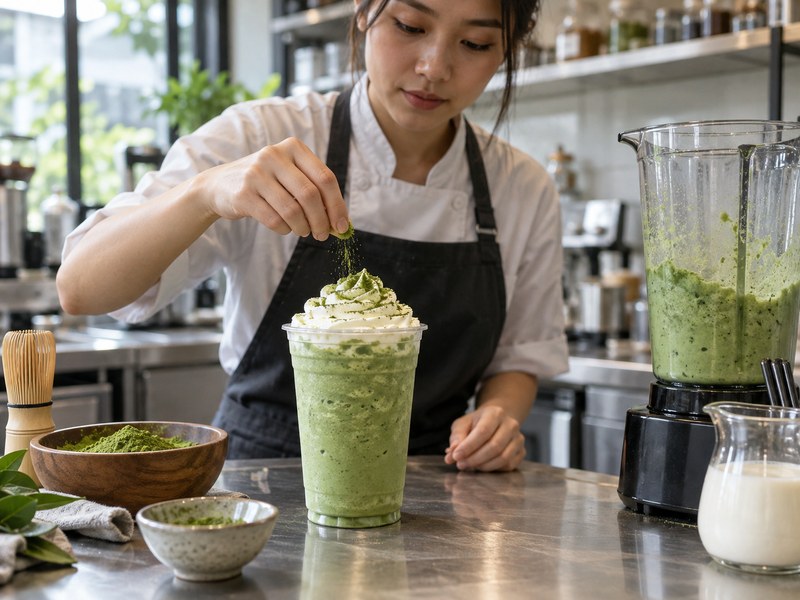
1. What is a matcha green tea frappuccino?
The defining preparation is blending matcha, liquid, ice, and often a sweetener into a cold, thick beverage. Milk is common but should be specified on the menu. Some recipes add a stabilizing base, ice cream, or topping; these are design choices, not universal requirements. Starbucks uses Frappuccino as a registered brand, so businesses should check naming rights in their market before using that term on a commercial menu. A descriptive name such as “blended matcha” may be more appropriate for an independent brand.
What should customers know before ordering?
Tell them whether the drink contains milk, added sugar, whipped topping, or coffee. Matcha itself contains caffeine; a green blended drink should not be presented as caffeine-free. A menu image also sets a texture expectation. If the drink is thin enough to look like an iced latte, customers may feel misled by a frozen-drink name. Use an actual prepared cup for photography and review the description against the approved recipe. If a premixed powder supplies sweetness or dairy, reflect that in ingredient and allergen information rather than treating the powder as pure tea.
| Product choice | What changes | Menu implication |
|---|---|---|
| Milk base | Creaminess and allergens | Name milk option |
| Water base | Lighter texture | Avoid latte language |
| Sweetened premix | Faster assembly | State sweetness and ingredients |
| Topping | Appearance and cost | Show or offer separately |
2. Which matcha powder works after blending?
Cold, sweet, creamy ingredients can mute tea flavor. Select powder by tasting it in the finished frozen recipe, then compare its plain-water character as a diagnostic. A very delicate tea may disappear. A harsh powder may force the recipe toward excess sugar. Look for a clean tea presence, acceptable color after blending, and a finish that remains pleasant as ice melts. Supplier grades are useful for narrowing samples, but they are not a substitute for a blind application test.
How should a purchasing panel compare lots?
Hold the blender, milk, ice, cup, and sweetener fixed while changing only the powder. Code samples so tasters do not see the price or grade. Score tea visibility, aroma, aftertaste, color, and texture at handoff and after ten minutes. Then calculate powder cost at the dose required for an acceptable cup. Ask for a lot-linked specification, origin information, ingredient declaration, and market-specific documents. Matcha Village’s matcha selection can enter the same trial as any other candidate; a lower quotation matters only if it produces a drink customers will reorder.
| Powder test | Observation | Action if weak |
|---|---|---|
| Tea flavor | Present after sweetness? | Adjust dose or lot |
| Finish | Rough or clean? | Compare alternative powder |
| Color | Holds through service? | Test storage and formula |
| Cost | Price at approved dose | Compare per cup |
3. What is a sensible starting formula?
For a development trial in a 400 mL cup, try 2.5 g matcha, 180 mL milk, 150 g ice, and a measured 20 g sweetener or syrup equivalent. This is a starting point rather than a finished recipe. Ice size and blender design have a large effect on the result. Some shops need a smaller liquid volume to prevent a thin drink; others need more liquid to avoid a blender that stalls. Work in weights wherever possible, especially for ice and sweetener.
How do you tune one variable at a time?
Start by fixing sweetness and choosing the texture customers expect. Adjust ice against liquid in small increments until the drink pours without separating immediately. Then taste three matcha doses at the chosen ice ratio. Finally, refine sweetness. This sequence makes the cause of each change easier to see. Taste the drink after five minutes, when some ice has melted and tea bitterness may become clearer. Record blender model, vessel size, speed, and blending time. A formula written without equipment details may fail when a second location copies it.
4. How do ice and blender settings control texture?
Ice carries the cold and much of the body. Too little yields a cold milk drink; too much leaves hard fragments or a blender that needs constant tampering. Large cubes, nugget ice, and crushed ice behave differently at the same weight. Blender speed and time also matter. Overblending can warm and thin the mix, while underblending leaves gritty ice and unbroken matcha clumps. A measured scoop of ice can drift as employees change how firmly they fill it.
What should a texture test include?
Pour each trial into the intended cup and check whether it fills to the mark without topping up with milk. Use the intended straw diameter. Record time until a visible liquid layer forms at the bottom and ask tasters whether ice crystals feel coarse. Repeat the recipe three times with different staff members. If one operator consistently gets a thicker cup, measure actual ice and blending time before changing ingredients. A stable service recipe should tolerate ordinary human variation, though it still needs a scale and clear procedure.
| Control | Record | Failure signal |
|---|---|---|
| Ice | Grams and type | Thin or icy cup |
| Liquid | Milliliters or grams | Blender stall or separation |
| Blend | Speed and seconds | Large chips or heat |
| Cup | Size and fill line | Inconsistent portion |
5. Do you need a stabilizer or blended-drink base?
A stabilizer can slow separation and improve mouthfeel, especially in high-volume service. It also adds ingredients, cost, and labeling work. A shop should define its target holding time before reaching for a base powder. Many drinks are consumed promptly, and a simple recipe may be sufficient if it remains pleasant for the normal handoff and carry period. A packaged frozen product has different stability needs from a made-to-order café drink. Do not assume a visual fix also improves flavor.
How can you evaluate a base fairly?
Compare the same formula with and without a candidate base. Measure pourability, ice crystal feel, separation at five and fifteen minutes, sweetness, and flavor after melting. Check ingredient declaration and allergen status. Some bases already contain sweetener, so reduce added syrup before comparing taste. Ask the supplier for recommended use levels and follow its handling directions during the trial. If a base solves separation but masks the tea completely, you have traded one product problem for another. Keep only ingredients that improve the drink customers actually receive.
6. How should sweetness be balanced with matcha?
Sweetness softens bitterness, yet too much makes matcha a color rather than a flavor. Start with a measured sweetener and test it in the blended drink, not in unblended milk. Cold temperature dulls sweetness perception, and melting changes the balance as the cup stands. If a premixed matcha latte powder is used, its sugar content belongs in the calculation before any extra syrup is added. Different milks also contribute varying sweetness, especially flavored plant drinks.
What does a useful sensory panel ask?
Ask tasters to identify whether tea is clear enough to name without seeing the cup. Have them note sweetness at the first sip and after ten minutes. Compare at least three sweetener levels while keeping powder dose fixed. Then check if reducing sweetness exposes a powder flaw rather than creating a better drink. A child-friendly dessert concept and an adult tea concept may need separate formulas. Do not advertise “low sugar” or similar nutrition claims from a recipe guess; calculate and review them under the rules of the sales market.
| Sweetness source | Hidden variable | Record on card |
|---|---|---|
| Syrup | Pump volume | Grams or milliliters |
| Latte premix | Sugar already blended | Dose and ingredient list |
| Flavored milk | Brand-dependent sugar | Exact product code |
| Topping | Added sweetness | Portion and default status |
7. Which milk and topping options deserve a separate recipe?
Whole dairy milk, lower-fat milk, oat drinks, and coconut drinks produce different body even at identical volumes. A simple “swap any milk” rule can change the cup’s thickness and separation. Test each option using the intended service carton and the same ice. Whipped topping adds another cold layer and changes price, allergens, and perceived sweetness. It may suit a dessert menu, but it should not compensate for a weak base drink underneath.
How should a chain manage variants?
Approve a small number of named variants, each with its own ingredient quantities. Train staff to make a plain base before adding optional topping so the underlying drink can be checked. Review milk and topping allergen information, including cross-contact in shared equipment. A blender jar used for dairy and a claimed dairy-free version needs a validated cleaning procedure. Test each variant in a lidded takeaway cup, since topping clearance and straw placement may differ from the dine-in glass. Keep photographs aligned with the version customers can actually buy.
8. How can a bar avoid waste and slow service?
Frozen drinks can tie up a blender, especially when matcha powder must be found, weighed, and mixed mid-rush. Portion dry powder ahead under appropriate storage conditions, stage clean cups and lids, and put a scale near the ice. A premeasured dry blend can reduce steps if its composition and shelf handling are controlled. Do not premix large volumes of milk and matcha casually; settling and food safety rules still apply. Design a cleaning cycle between drinks, particularly for allergen changes.
Which operating measures reveal trouble?
Time the order from start to handoff during a busy shift. Count cups that need extra liquid to make the blender move, rejected texture, and leftover mix in the jar. Any repeated “top up” hides a recipe that does not fit its blender. Weigh what remains after pouring; that loss belongs in food cost. If staff omit a sifting or blending step to keep the queue moving, simplify the procedure or change equipment rather than relying on reminders. A recipe should fit the actual station it will run on.
| Measure | Practical method | Why it matters |
|---|---|---|
| Assembly time | Stopwatch over several orders | Queue capacity |
| Jar residue | Weigh after pour | True ingredient cost |
| Remakes | Log reason | Training or formula fault |
| Cleaning time | Observe full cycle | Allergen and labor planning |
9. What should suppliers document for a frozen matcha drink?
For matcha and premixes, request a current ingredient list, lot identification, specification, origin, packaging information, and relevant testing. A premix may contain sugar, milk ingredients, gums, or flavors that affect both menu copy and allergen handling. For organic, halal, kosher, or other label claims, verify the applicable certificate’s scope and validity for the item and destination. If a supplier offers several grades, request samples linked to the quoted items. Retain the approved sample and tasting record for future deliveries.
How should a buyer write the inquiry?
Share cup size, powder or premix preference, target flavor, expected volume, packaging format, sales market, and any required certification. Ask for a quote at the tested dose and expected reorder cadence. A factory may suggest a matcha latte powder or blend if speed is the primary concern; run it against your pure-matcha formula to compare sweetness and cost honestly. Request an alternate-lot policy. The commercial question is whether a second shipment makes the same frozen drink, not whether a sample folder looks complete.
10. How can a café approve the final recipe?
Run a small controlled launch with the exact blender, ice, milk, cup, and powder lot intended for sale. Taste drinks made by several employees during a real service period. Check texture on handoff and after the customer’s likely carry time. Confirm that the price covers ingredients, waste, packaging, and labor. The final recipe card should show grams, blending order, speed, time, fill target, topping portion, and cleaning steps. Include a simple substitute rule so staff know which changes require manager approval.
What belongs in a launch file?
Keep sensory notes, cost sheet, supplier documents, a dated recipe card, training record, and photos of acceptable texture. Revisit the formula when ice type, blender, milk product, powder lot, or cup size changes. Invite staff to flag a drink that repeatedly stalls or separates; those reports are useful evidence, not disobedience. If the pilot passes, place a purchase order against the tested specification and monitor the first production lot. A matcha green tea frappuccino earns its place on a menu when flavor survives the blend and the process survives a rush.
| Approval area | Evidence |
|---|---|
| Flavor | Blind mixed-drink notes |
| Texture | Handoff and 15-minute check |
| Operations | Timed staff trial |
| Supply | Lot and ingredient file |
FAQs
Q1. Does a matcha green tea frappuccino contain coffee? Usually it does not, but the recipe decides. Matcha itself contains caffeine.
Q2. Can a café use matcha latte powder? Yes, after checking its ingredients, sweetness, allergens, and flavor in the finished drink.
Q3. Why does the drink separate? Ice melts and suspended ingredients move. Check ice-to-liquid ratio, blending method, and any base ingredient.
Q4. What matcha dose should a shop start with? A trial around 2.5 g per 400 mL cup is useful, then adjust through tasting and cost review.
Q5. Can every milk be swapped at the same volume? Test each milk separately; viscosity, sweetness, and allergen handling differ.