
Matcha tea garden nutrition is the management of nutrients available to tea bushes, checked against soil, leaf, and field evidence. Buyers often receive a fertilizer list and a bright green sample, then face a harder question: did the garden manage nutrients consistently across the blocks that supplied this lot? A practical review follows sampling methods, decisions, and harvest records. A tencha study in the Tea Research Journal found correlations between quality assessment and total nitrogen and free amino acids in its sample groups; that finding does not prescribe a fertilizer recipe.
Start with the evidence chain. Ask how a result from a named plot led to an action, and how that plot’s leaf entered the finished product.
Contents
- What does matcha tea garden nutrition include?
- Which soil tests help frame a nutrient decision?
- What can leaf testing add?
- How should nitrogen decisions be reviewed?
- Why do shade and harvest timing complicate the picture?
- How can growers watch for runoff and loss?
- What should fertilizer records show?
- How can buyers compare lots fairly?
- Which questions reveal a useful supplier program?
- What should happen when results disagree?
1. What does matcha tea garden nutrition include?
More than a bag label
Nutrition begins with soil conditions and the tea plant’s ability to take up nutrients. It also includes what a grower applies, when, where, and why. A fertilizer purchase invoice can show that material entered a business; it cannot show which block received it. A leaf analysis can describe sampled tissue; it cannot explain the whole season without a sampling protocol.
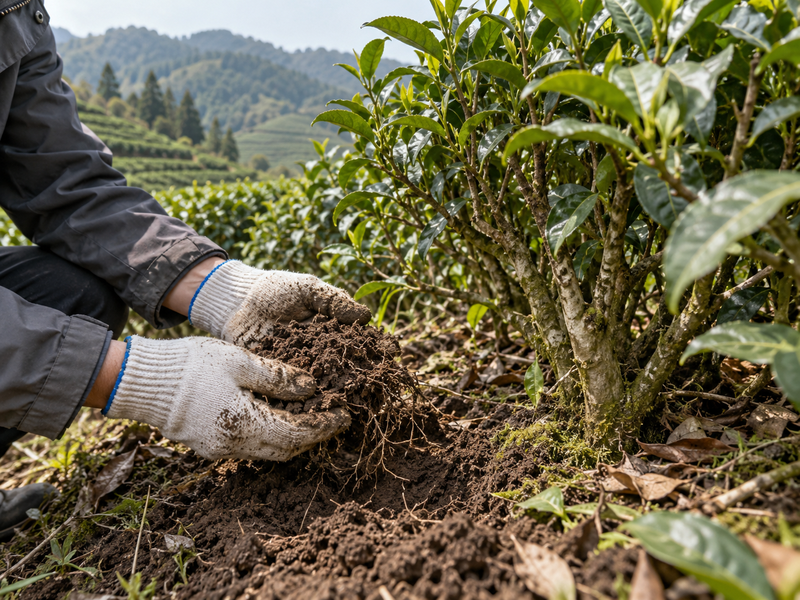
Name the unit of review. Ask for a map that separates production blocks by age, soil condition, slope, and shade practice. The supplier should explain whether its nutrition plan differs between these blocks. A buyer does not have to become the field agronomist. It can still ask for the reason behind a change and check that the action reached the intended plot.
Tea used for matcha passes through shading, picking, tencha processing, and grinding. A sensory difference in powder may begin at any of those stages. Nutrition records therefore belong beside the leaf sourcing discussion and the lot genealogy. Without that link, a green sample risks being mistaken for proof of a well-run nutrition program.
2. Which soil tests help frame a nutrient decision?
Sampling before interpretation
Ask who collected each soil sample, from which block, at what depth, and on which date. A laboratory number without those details has a narrow use. Mixing soil from a wet low corner with a dry ridge can obscure both conditions. Repeat sampling should use a comparable approach when the supplier wants to claim a trend.
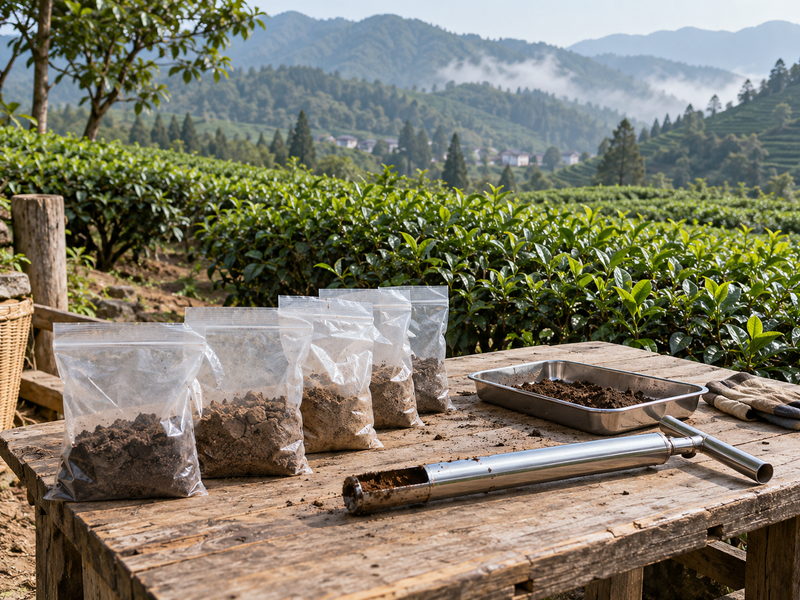
Read the context. Soil acidity, drainage, organic matter, and nutrient results need interpretation against local soil and agronomy guidance. The Japanese Ministry of Agriculture tea technology collection reflects how tea research addresses cultivation as a system. It does not turn one regional target into a global standard for every matcha garden.
A buyer can request the latest report, a sampling map, and the written response. If a result led to no application, the supplier can explain that decision. If a result led to a change, ask for the block record and next check. Dates matter: a soil test taken after a harvest cannot retroactively document conditions during that harvest.
| Soil-report item | Buyer asks | Weak substitute |
|---|---|---|
| Block and sample points | Which area does this result represent? | A site-wide average |
| Depth and date | Can later samples be compared? | An undated certificate |
| Laboratory method | Were results produced consistently? | An isolated value |
| Written interpretation | What action followed? | A generic nutrient chart |
3. What can leaf testing add?
Plant tissue as another view
Leaf testing examines material the plant produced, which can complement a soil report. Its value depends on choosing comparable leaf age, sampling time, and blocks. A young shaded shoot and an older exposed leaf may differ for reasons beyond fertilizer. The supplier should define the tissue sampled and keep that definition stable across repeated tests.
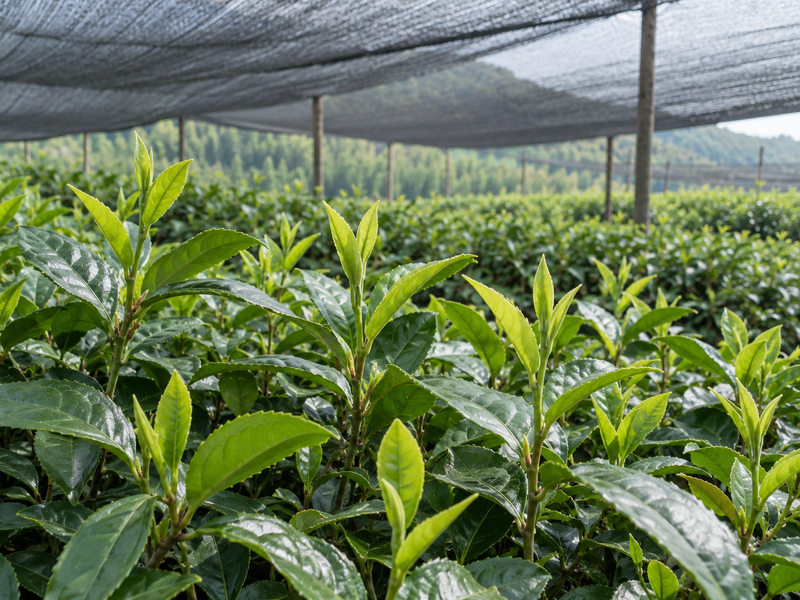
Pair the results. If soil shows available nutrient but leaves show an unexpected value, ask about moisture, root condition, sampling error, and timing before changing an application. Conversely, a leaf result that appears satisfactory does not excuse missing field records. Both tests are snapshots.
The Tea Research Journal tencha study reported positive correlations between quality and total nitrogen and free amino acids within the groups examined. That is useful background for analytical discussion, not a guarantee that adding nitrogen improves a particular lot. A buyer should compare test results with actual tencha quality, application testing, and batch history.
4. How should nitrogen decisions be reviewed?
Follow the reason, not the rate
Nitrogen influences tea growth and nitrogen-containing compounds in leaf, yet a high application rate can create cost, environmental, or balance problems. No universal rate belongs in a sourcing checklist. Ask what local advisor or field team uses to select a program, which measurements inform it, and when the team revises the plan.
Watch the sequence. A defensible record starts with block observations and test results, continues through the chosen application, then records follow-up. A schedule repeated automatically each year may be easy to file but weak at handling unusual rain, a changed shade period, or a block with poor drainage.
For a commercial buyer, the practical question is whether the program supports consistent leaf without unsupported claims. A supplier should separate measured nitrogen in sampled leaves from a marketing statement about taste. An ingredient developer can then evaluate powder in a fixed recipe while reviewing field history. That avoids asking a single nutrient number to predict the full sensory result.
| Decision point | Evidence | Buyer interpretation |
|---|---|---|
| Need identified | Soil, leaf, and field notes | Specific to a block and date |
| Application chosen | Product, method, location | Locally justified, not universal |
| Follow-up | Repeat observation or analysis | Shows whether plan changed |
5. Why do shade and harvest timing complicate the picture?
Different leaves, different context
Shade changes the growing environment before tencha harvest. Leaf maturity and picking date also change what a sample represents. A nutrient report from one point in the season should not be used as a blanket statement for every shaded leaf lot. Ask the supplier to place test dates, shade dates, and harvest dates on one timeline.
Compare matched material. If two lots differ in color, first check cultivar, shade treatment, leaf maturity, and processing route. Then inspect nutrition records for a possible contribution. The shaded cultivation guide explains the production context; a buyer still needs field records for the exact supplied lot.
Shaded blocks may also have different ground moisture and access conditions. A planned application that could not be completed under a cover should appear as an exception. Likewise, heavy rain after application deserves a note. These details give the buyer a better explanation than “premium leaf received extra fertilizer,” which reveals neither the material nor the decision.
6. How can growers watch for runoff and loss?
Look beyond the application point
Slopes, bare paths, drainage channels, and intense rain can move applied nutrients away from the intended root zone. A buyer can ask whether staff inspect vulnerable parts of the garden after rain and record any corrective work. The request is about management evidence, not a claim that every site has the same runoff risk.
Walk the route. A simple map can show where water leaves the block. Site photographs after a storm may reveal sediment movement or pooling. If the supplier changes ground cover, application placement, or timing, record the reason and the next observation. A tidy field on a calm day cannot substitute for an event record.
This matters commercially because a nutrient plan that loses material can become both unreliable and costly. It can also complicate comparisons between blocks: the amount purchased is not the amount taken up by each plant. Review use and loss separately. Ask for local environmental compliance evidence where relevant, while avoiding broad claims about sustainability from one favorable photograph.
| Field feature | What to inspect | Record worth keeping |
|---|---|---|
| Sloping row | Surface flow after rain | Date, block, photograph, action |
| Drainage outlet | Sediment or obstruction | Maintenance and follow-up |
| Application zone | Placement and soil cover | Method and exception note |
7. What should fertilizer records show?
An action tied to a block
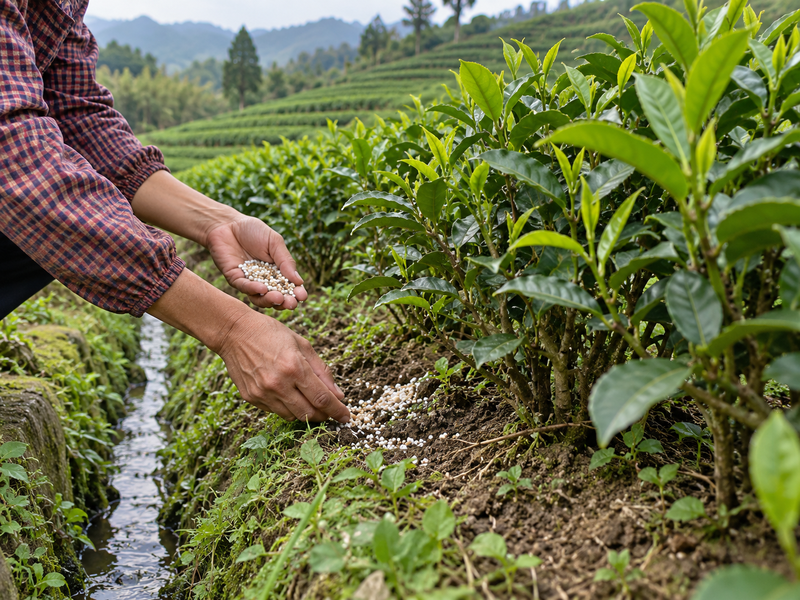
A useful log identifies the block, date, material, actual quantity with units, application method, operator, and weather or soil conditions relevant to the decision. It should also identify any canceled or delayed action. If a contractor applies material, the supplier still needs records that can be reconciled with the block map.
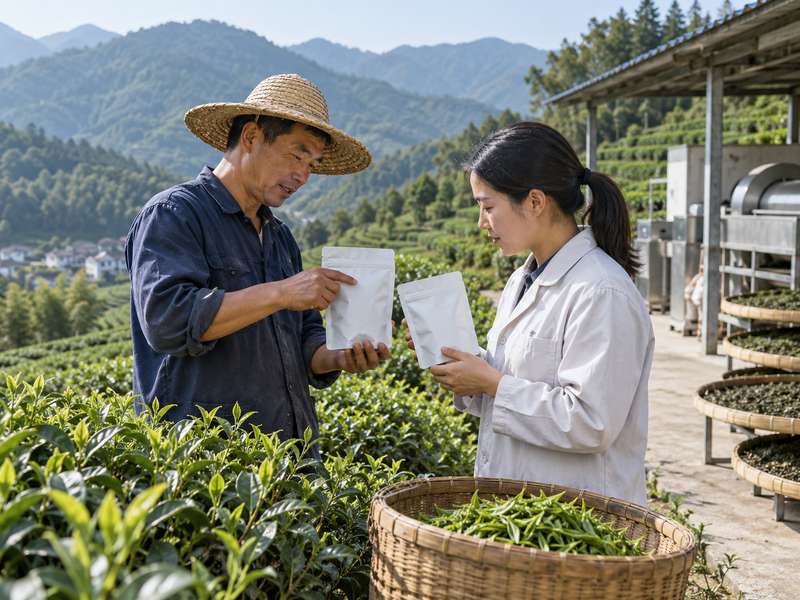
Follow one entry. Select a recent lot and request the application entries for contributing plots. Compare them with soil tests, shade dates, and harvest sheets. If the record says the whole estate received one treatment, ask how differences between blocks were handled. A buyer may accept a shared program if evidence supports it; the statement still needs a basis.
Keep analytical reports distinct from application records. One shows a measured sample, the other describes an action. File names, dates, and block codes should match across both. That makes a later complaint review possible without asking staff to reconstruct the season from memory. It also makes the next purchasing discussion more precise: was a difference in powder linked to a field event or to a later processing step?
8. How can buyers compare lots fairly?
Hold other variables steady
Compare lots from similar harvest windows and processing routes before drawing a nutrition conclusion. A new tencha processor setting or a longer leaf transport interval could affect the powder. So could leaf maturity. An application test using the same dosage, water, and viewing conditions gives a fairer comparison than two supplier photographs.
Build a comparison sheet. Record lot code, garden blocks, cultivar where known, shade window, picking date, soil and leaf test references, nutrition exceptions, and final test observations. Keep a retained sample when possible. If one lot disappoints, this sheet identifies what differed without pretending every difference has one cause.
When discussing color or flavor, use measured observations and sensory notes rather than broad grade labels. The buyer may decide that two lots are both suitable for different applications. An iced latte may hide differences visible in plain-water tasting. Testing the intended use protects the commercial decision.
| Comparison field | Keep constant where possible | If different, note |
|---|---|---|
| Harvest | Similar maturity and window | Picking date and leaf standard |
| Shade | Similar treatment | Installation and removal dates |
| Processing | Same tencha and milling route | Facility or process change |
| Application test | Same recipe and conditions | Actual dose and method |
9. Which questions reveal a useful supplier program?
Request a sample, then trace it
Ask who sets the nutrition plan, which tests they review, and how they record a decision to apply or hold material. Then ask for a redacted example from an ordinary block and an example where a result led to a changed plan. These samples show whether the supplier has a working feedback loop.
Press for the link. Can the supplier connect a test result to a named block and later harvest lot? If not, the laboratory report may be real yet irrelevant to the powder offered. Can it explain how an unusual weather event changed timing? Can it distinguish a scheduled application from one actually completed?
The best supplier response may include uncertainty. A field team can say that a leaf test prompted more sampling before any change. That is better than an immediate, unrecorded correction. Buyers should avoid rewarding false precision. A defensible program makes reasoning visible and leaves room for local agronomy judgment.
10. What should happen when results disagree?
Recheck the evidence chain
Suppose a leaf test suggests an imbalance while soil results appear ordinary. Confirm sample identity, leaf maturity, collection date, and laboratory units before revising a plan. Then review moisture, root condition, shade, and recent weather. A mismatched block code can make a sound analysis look contradictory.
Set a next action. The supplier might repeat sampling, inspect the block, consult a local agronomist, or monitor the next harvest. The buyer should document which action was chosen and when the result will be reviewed. A single unexplained discrepancy should not be recast as proof that all future lots are poor.
Matcha tea garden nutrition is most useful to buyers when it can be traced from observation to decision to leaf lot. Request one complete example before committing to a broad supply claim. Pair that evidence with application testing, and ask for missing links while the season’s records remain available.
| Mismatch | Check first | Possible next step |
|---|---|---|
| Soil and leaf disagree | IDs, timing, leaf age, units | Repeat comparable sampling |
| Lots differ despite similar tests | Shade, harvest, processing | Matched application trial |
| Application log has a gap | Operator and block records | Document exception and follow-up |
FAQ
Q1: Is a high leaf nitrogen result proof of better matcha? No. It is one measured variable; quality also depends on leaf, shade, processing, and application.
Q2: Can a buyer specify one fertilizer rate for every garden? No. Local testing and agronomy must guide any rate.
Q3: Why request both soil and leaf tests? They describe different parts of the system and can reveal questions worth investigating.
Q4: Should a fertilizer invoice count as a block record? No. It does not show where or when material was applied.
Q5: What is the simplest useful comparison? Trace two matched lots through tests, shade and harvest dates, application logs, and the same product trial.