
A matcha snickerdoodle can leave the oven flat, with cinnamon sugar melted into a patchy crust and little tea flavor in the center. A bakery should set deposit weight, spread, cooled texture, and coating pickup before choosing a powder grade. A powder trial should use full oven loads and compare cooled cookies, not raw dough.
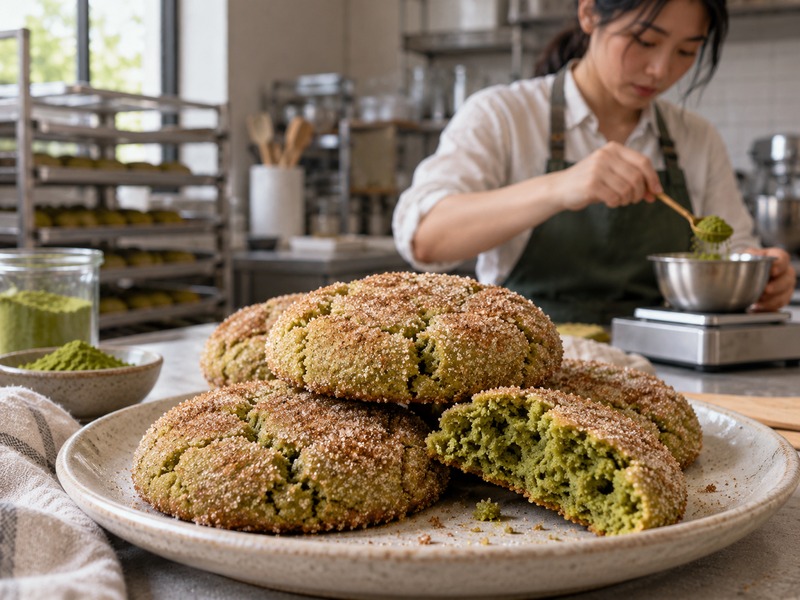
Search-intent reference: Matcha Snickerdoodles.
1. What makes a matcha snickerdoodle suitable for bakery sale?
Cookie buyers need a defined target before they compare powders. Decide if the sellable unit should bend, snap, or hold a chewy center after a full day in its pack. Note the cookie’s planned weight and diameter, plus the proportion of cinnamon coating customers should see. Those details govern flour choice, portioning, oven setup, and pack selection more directly than a decorative recipe photograph.
Cookie format specification
Spread after cooling: A snickerdoodle should retain its familiar soft center, lightly crisp edge, and tart cream of tartar note. Matcha adds green color and a mild tea bitterness; it should not erase cinnamon or create a dry, dusty finish. Decide whether the offer is a single café cookie, a multi pack for retail, or a frozen dough puck baked in stores. Each route changes target diameter and moisture loss. For a café, a warm cookie may sell on aroma. A packed cookie needs texture that survives transport and a label that can describe its tea ingredient plainly.
2. Which matcha works in a snickerdoodle dough?
A cookie dough gives matcha a challenging test: sugar softens bitterness while cinnamon can hide tea aroma. Ask for powder samples with enough quantity for full trays, then keep dough and coating constant. Bake all candidates together when possible, using marked trays rather than memory. A panel can compare cooled cookies for green interior, clean tea note, and any gritty finish without knowing each grade’s price.
Powder trial in baked dough
Cinnamon against tea: Culinary matcha is a sensible starting grade because the dough contains butter, sugar, and cinnamon. Screen any candidate for dull olive color after baking, coarse specks, or a grassy aroma that turns harsh in fat. A powder that looks vivid in water may still fade at the cookie edge. Request two practical grades, bake them at the same percentage, and taste cookies once fully cool. If cinnamon dominates, lower the coating spice before increasing tea powder; more matcha can make a cookie bitter and raise cost without improving recognition.
| Decision | Trial choice | Reason |
|---|---|---|
| Sales format | Single café cookie or packed pair | Sets pack and hold study |
| Texture target | Soft center, defined edge | Guides bake endpoint |
| Tea cue | Green crumb and clear tea note | Supports menu description |
3. How should a matcha snickerdoodle formula be built?
A snickerdoodle formula has several interacting dry ingredients. Matcha competes with flour for moisture, cream of tartar changes tang and lift, and coating sugar affects perceived sweetness. Small trials should measure spread and thickness alongside tasting. Use a plain control to show whether tea powder changed the base cookie or the oven changed both. Write down ingredient percentages before adjusting dough hydration or leavening.
Flour-basis formula setup
Flour-basis dose: Use flour as 100% in a baker’s percentage sheet. An illustrative bench range is butter 60–70%, sugar 75–85%, egg 20–30%, matcha 3–5%, cream of tartar 1–2%, baking soda around 0.5–1%, and salt near 1%. The cinnamon sugar coating sits outside that dough calculation. These figures invite a trial, not a guaranteed recipe. Matcha absorbs moisture and adds dry solids, so compare spread and chew against a plain control. If a dough cracks while rolling, check mixing and rest before adding liquid blindly.
4. What mixing and rolling sequence protects cookie quality?
Cookie mixing is easier to control when each ingredient step has a purpose. Creaming develops some air, eggs bring water and structure, and the dry blend distributes matcha and leavening. Record mixer speed and bowl scrape points. Hold a portion of mixed dough until it reaches the same floor time as the end of a shift, then compare spread. That observation may reveal a practical production limit.
Dough mixing and sugar roll
Coating pickup: Cream butter and sugar only until uniform and slightly aerated. Excess air can increase spread and make deposit weights less predictable. Blend matcha with flour before it meets wet ingredients, then scrape the bowl so green streaks do not remain. Resting dough under cover can make portioning cleaner, though the rest length needs a controlled trial. Roll equal pieces through cinnamon sugar shortly before baking. A coating applied too early can dissolve into a damp surface, leaving patchy color and weak cinnamon aroma after cooling.
| Baker’s % item | Starting range | Check |
|---|---|---|
| Matcha | 3–5% of flour | Color and bitterness |
| Cream of tartar | 1–2% of flour | Tang and spread |
| Coating | Measured separately | Pickup and surface |
5. How can a bakery scale matcha snickerdoodles?
Moving from a bench scoop to a depositor changes dough handling. Check whether inclusions or matcha clumps block the nozzle, whether dough smears at release, and whether a sugar roll can follow at line speed. Bake trays at realistic loading rather than leaving empty oven space around each sample. Measure the extreme pieces on a tray because buyers receive those too, not only the neat middle row.
Depositor and oven checks
End-of-run dough warmth: Portion weights should be checked at the depositor or scoop, not inferred from mixer output. Load trays with the spacing used during actual production; crowded trays can change edge color and center softness. Test oven zones and rack positions because matcha darkens fastest at hot edges. A frozen dough program needs its own bake window and spread check. Compare pieces from the beginning and end of a run for dough warming. If later pieces spread more, time on the floor may matter more than powder grade.
6. What should a finished cookie quality check cover?
Cookie release standards should be legible to the team that packs the batch. Give them a reference for acceptable crack pattern, edge darkness, and the amount of cinnamon visible. A cut sample shows whether the center is baked yet soft. The tasting check should happen after cooling, since a warm piece can seem softer and sweeter. Record breakage after ordinary packing rather than handling each sample delicately.
Cooled-cookie release
Cooled-center bend: Approve a reference cookie with a visible green crumb, a clear cinnamon surface, and a center that bends without tasting raw. The acceptable edge color should be stated in a photograph because dark brown can hide green entirely. Check weight, diameter, thickness, and broken pieces after normal handling. Taste cooled samples; a warm sample can mask bitterness. If a batch looks gray, inspect oven load, powder age, and packaging exposure. If it tastes chalky, inspect powder dispersion and inclusion rate before changing sugar.
| Checkpoint | Record | Reject signal |
|---|---|---|
| Deposit | Piece mass and variation | Uneven bake |
| Oven | Zone and tray position | Dark green edges |
| Release | Diameter and cooled texture | Excess spread |
7. How should wholesale cookie cost be calculated?
For a wholesale cookie, margin depends on sellable pieces per batch. A high matcha inclusion raises ingredient spend, but oversize deposits and broken pieces can cost more. Calculate a piece from measured batch output and actual pack count. Separate retail pack labor from café tray labor. If a premium powder reduces bitterness at a lower inclusion, compare total finished cost rather than powder price per kilogram.
Cost per sellable cookie
Good-cookie yield: Calculate dough mass per cookie and add the measured coating pickup. Multiply matcha grams by the actual powder price, then divide batch cost by sellable cookies after baking and breakage. Butter price and lost units may move margin more than a small matcha adjustment. Compare a larger cookie with a smaller pack format using the same yield assumptions. Include tray labor, cooling space, bag or carton, and expected stale returns. If the proposed price only works at zero rejects, the product needs another commercial pass.
8. How should matcha snickerdoodles be packed and stored?
Cookie texture drifts as moisture moves between crumb, coating, and package air. Test the chosen pouch or sleeve with actual packed product, not a loose sample in a lab container. Check whether cinnamon sugar dissolves, whether the surface becomes tacky, and whether green color fades in light. Frozen dough and baked cookies require different storage records and different instructions for the store receiving them.
Moisture and pack study
Bag humidity: Cool cookies fully before sealing; trapped steam softens the surface and may cause condensation inside a bag. A paper sleeve suits prompt café sale but does little for a longer retail route. A sealed barrier pack can slow moisture exchange, yet its suitability depends on the target texture and measured shelf life. Keep finished cookies away from strong odors and display light that can dull tea color. For frozen dough, define thaw and bake instructions separately from baked cookie storage, with lot identity carried through both routes.
| Cost line | Calculation | Owner |
|---|---|---|
| Matcha | g per sellable cookie × price/g | Purchasing |
| Waste | Batch input ÷ good units | Production |
| Pack | Material plus pack labor | Operations |
9. Which documents support a commercial cookie launch?
A cookie label starts with the approved formula, not a marketing mockup. Confirm ingredients in butter, egg product, flour, and any cinnamon blend, then check the production line for cross contact. Link each powder lot to a baked lot through the batch sheet. A trace exercise should identify which cartons used a given matcha lot without guessing from delivery dates. Packaging claims need their own substantiation.
Cookie lot and label records
Egg and dairy trace: The ingredient list normally needs wheat, egg, and milk allergen review, plus any shared line risks from coatings or inclusions. Confirm matcha identity and supplier lot on each batch sheet; a marketing name alone does not identify the powder. Record flour lot, dough mix, deposit weight checks, oven profile, cooling release, and pack code. If a claim such as organic is planned, confirm the powder and the full certification pathway for the finished cookie. Review local labeling rules before packaging is printed.
10. What should a bakery validate before placing a bulk order?
A useful bakery pilot repeats routine conditions. Give operators the batch sheet and let them mix, roll, bake, cool, and pack at the intended pace. Record adjustment requests rather than fixing each tray quietly. Buyer sign off should cover price, cookie appearance, tea flavor, and the accepted pack count. The powder order can then reference a recipe and specification that both the kitchen and supplier understand.
Normal-load bakery pilot
Two-dose tray trial: Run at least one pilot with the intended mixer, portioning method, oven load, cooling rack, and pack. Compare a plain snickerdoodle control with two matcha levels so the added powder has a clear sensory purpose. Ask sales staff whether customers can recognize the tea note without coaching. Ask production whether dough remains workable throughout the shift. Lock a powder specification only after the chosen formula meets flavor, appearance, yield, and target margin in a normal run.
| Document | Purpose | Review point |
|---|---|---|
| Powder specification | Approved grade and lot | Receiving |
| Batch sheet | Trace inputs and settings | Release |
| Label proof | Allergens and claims | Before print |
Send Matcha Village the flour-based matcha dose, target cookie diameter, cooled crumb photo, and cinnamon coating method when requesting powder samples. Ask for a grade and lot specification suited to baked dough, then compare two grades at equal dose on full trays. Purchase against the grade that meets the agreed spread, tea flavor, pack breakage, and sellable-piece cost.
FAQ
Q1: What makes a snickerdoodle different from a sugar cookie? Cream of tartar and a cinnamon sugar coating give a snickerdoodle its characteristic tang and surface.
Q2: Can matcha replace flour in the formula? Treat matcha as an added dry ingredient during trials; measure spread and texture before changing flour.
Q3: Should a bakery use ceremonial matcha? Choose by finished cookie performance and cost. A suitable culinary grade often works well in sweet dough.
Q4: Can dough be frozen before baking? Yes, after the bakery validates portion size, bake settings, spread, and lot handling from frozen dough.
Q5: How long will packed cookies last? Set the date from the finished cookie, pack, and route in a documented shelf life study.