
Matcha tea garden irrigation means managing water around tea roots while keeping excess water moving out of the field. Buyers can see a green canopy in a supplier photograph, yet that image says little about a dry spell, a flooded low row, or the records behind either event. A useful review starts with site conditions, root-zone observations, and what happened before harvest. The Washington State University tea planting guidance treats drainage and establishment as site questions; the buyer’s task is to ask how a particular garden handles them.
Start with the block. A defensible plan ties water decisions to named plots and dates. It also explains how those decisions interact with shade, picking, and leaf delivery.
Contents
- What should a buyer mean by matcha tea garden irrigation?
- How does site water availability shape the plan?
- Why must drainage be reviewed alongside irrigation?
- Which root-zone observations are worth recording?
- How does shade change water decisions?
- What changes between young plants and established bushes?
- How should growers respond to rain and dry spells?
- What belongs in an irrigation record?
- How can buyers connect water records with leaf quality?
- What questions belong in a supplier review?
1. What should a buyer mean by matcha tea garden irrigation?
A block-level water plan
For a buyer, the phrase covers four linked decisions: where water comes from, when it enters a block, whether roots can use it, and where excess water goes. A supplier who answers only with equipment names leaves out most of the story. A hose, drip line, or sprinkler cannot demonstrate that a distant block received enough water during a dry period. Nor does a damp surface prove roots were supplied.
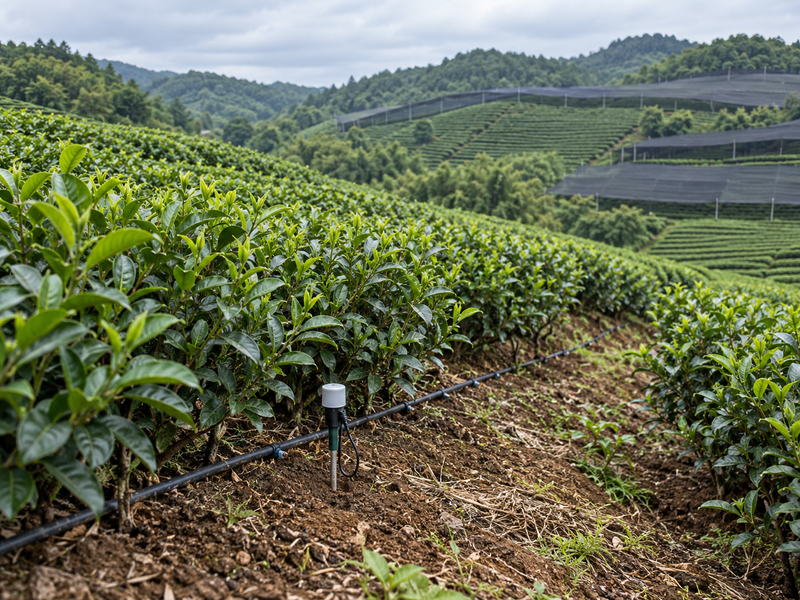
Ask for a map. It should identify shade blocks, slopes, low points, water access, and the harvest lots linked to those blocks. Then ask who checks conditions, where they check, and how a decision gets logged. A supplier may use simple field observations or instruments. Either route can work when observations are consistent and tied to action.
The purpose is not to dictate a universal watering schedule. Soil texture, rainfall, bush age, rooting depth, and local weather all change the answer. A buyer can still insist on a traceable decision process. That process is especially relevant when leaf from several plots enters one tencha run. Without block identity, a poor lot cannot be investigated back to field conditions.
2. How does site water availability shape the plan?
Supply, access, and constraints
Water availability starts before a valve opens. Ask whether the source remains usable during the part of the season that feeds shaded harvests, whether storage exists, and which blocks can actually receive water. A source with adequate annual volume may still fail during a short dry interval. A garden on uneven ground may face different access at its upper and lower rows.
Check the bottleneck. A supplier can show a field map, source description, pumping or distribution arrangements, and records of any restrictions. A buyer does not need the engineering design of every pipe. The useful question is whether a missed irrigation event can be identified and explained for the affected leaf lot.
The WSU tea planting and establishment page offers cultivation context, while local water rules and field conditions govern actual practice. If a supplier uses rainwater storage or another source, request the same evidence of availability and delivery. The name of the source alone does not establish reliability.
| Buyer question | Evidence to request | Why it matters |
|---|---|---|
| Which plots have water access? | Block map and distribution layout | Prevents a site-wide claim from hiding dry blocks |
| What happens during a dry spell? | Event log and response note | Shows whether the plan works under stress |
| Who records a missed event? | Named responsibility and exception record | Connects an interruption with affected harvests |
3. Why must drainage be reviewed alongside irrigation?
The wet end of the risk
Tea roots need a workable soil environment, not a permanently wet surface. Water can collect around roots after rain, irrigation, or both. A low row may remain saturated while an upper row dries. That difference is invisible in an average garden rainfall figure. Drainage deserves its own walk-through, particularly where paths, shade supports, or vehicle tracks channel runoff into planted ground.
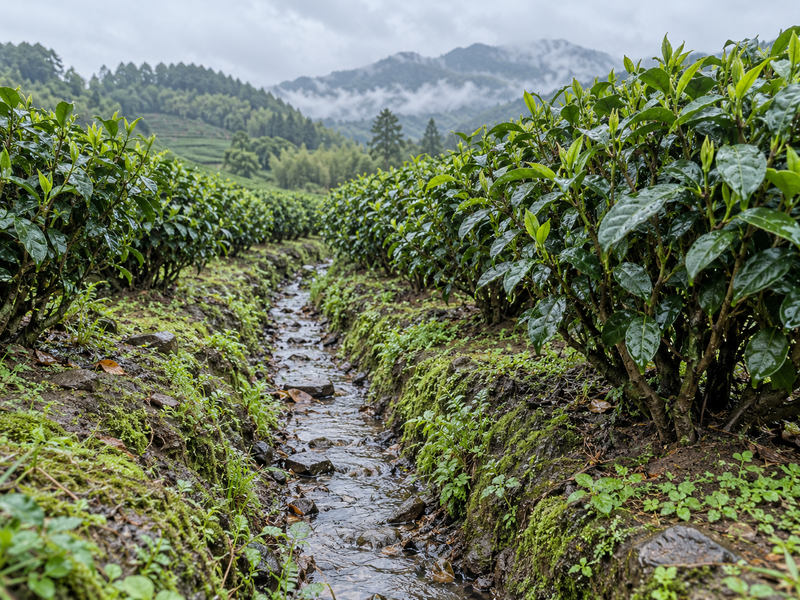
Look downhill. Ask where stormwater travels, where it can pond, and whether drainage outlets remain open before a heavy rain period. A supplier may show photographs of specific low points after rain. Pair those with maintenance entries rather than relying on tidy images taken on a dry day.
The planting guidance from WSU flags well-drained conditions as part of tea establishment. That principle supports a buyer request for drainage evidence. It does not justify a single ditch design for every site. Local soils, gradient, erosion concerns, and water rules determine appropriate measures. A supplier should be able to explain its choice without claiming every wet patch is harmless.
4. Which root-zone observations are worth recording?
Measure where the decision is made
An instrument reading has value only when its location and timing make sense. A moisture probe placed next to a drip emitter can read differently from one placed between emitters. A surface observation shortly after rain may miss a dry zone deeper in the rooting area. Ask the supplier to describe sampling locations, depth selection, and how readings are checked against visible plant or soil conditions.
Use a repeatable route. A field team can revisit marked positions in representative upper, middle, and low rows. Notes about recent rain, irrigation, shade status, and unusual conditions give each reading context. The buyer needs a method that can be repeated, not a perfect instrument claimed to speak for an entire estate.
Record both the observation and the decision it triggered. “Soil dry” without a location is weak. “Block B upper row, checked before irrigation, follow-up after application” lets a reviewer reconstruct the sequence. Soil tests, field notes, and water records answer different questions; none replaces the others.
| Observation | Record with it | Avoid this inference |
|---|---|---|
| Probe reading | Device, point, depth, date | One point represents all blocks |
| Hand soil check | Location, recent weather, observer | Surface feel proves deeper conditions |
| Visible leaf response | Time, block, photographs if useful | Leaf appearance identifies one cause |
5. How does shade change water decisions?
A changed field environment
Shading changes light, air movement, and the microclimate around a canopy. That can alter drying patterns, yet it does not give a buyer a fixed irrigation adjustment. Cover material, height, side openings, weather, and soil all matter. A shaded block should therefore have its own observations during the period relevant to tencha leaf production.
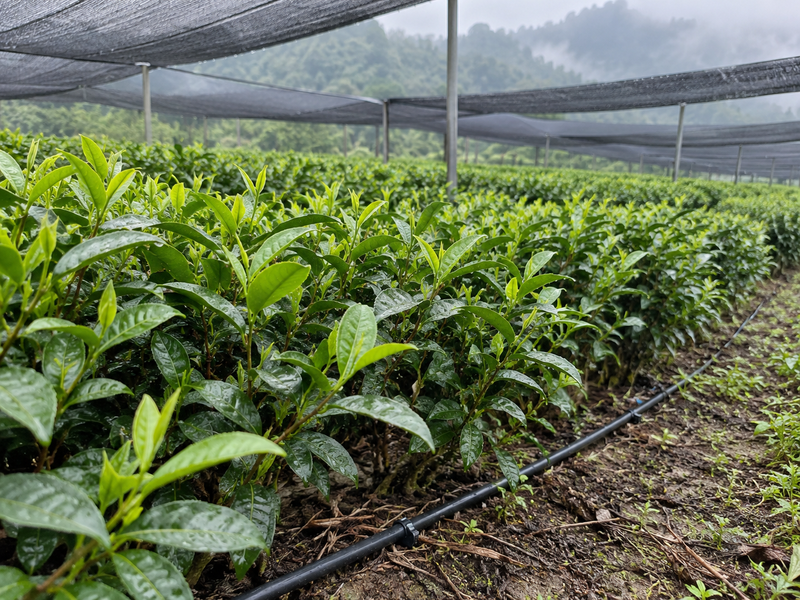
Link the calendars. Request installation and removal dates for shade structures beside rainfall and irrigation entries. If a supplier changes the cover, ask how field checks changed. A shaded and an unshaded plot can receive identical water volumes while their root zones behave differently. Equally, some plots may need no irrigation after rain; the record should explain why.
The Matcha Village guide to shaded cultivation gives the downstream context for shade-grown leaf. For sourcing, compare shade records with lot identity rather than treating “shade-grown” as a complete agronomic specification. If a supplier attributes a sensory difference solely to watering, request supporting observations from shade, harvest maturity, and processing as well.
6. What changes between young plants and established bushes?
Different roots, different questions
Young tea plants have a different rooting situation from a mature, repeatedly harvested canopy. Establishment records should show plant survival, access to water, mulch or ground-cover decisions where used, and any gaps replanted. Mature-block records should focus on the harvest surface and root-zone conditions during production. Combining both ages under one “normal schedule” hides meaningful differences.
Separate the blocks. Ask which plots are still establishing and whether any young leaf entered the supplied lot. A buyer evaluating matcha raw material usually cares most about productive blocks, but immature plantings matter to future supply planning. Drought damage or persistent wetness during establishment can affect the uniformity of later production.
WSU’s tea planting and establishment guidance is useful for framing these questions. It should not become a copied watering calendar for a different soil or climate. The supplier should explain how local staff adapt observations. A short exception log often reveals more than a polished annual schedule because it shows how the team responded when conditions changed.
| Block stage | Water question | Useful evidence |
|---|---|---|
| New planting | Are roots establishing evenly? | Survival checks and watering notes |
| Developing canopy | Are gaps and weak rows tracked? | Block map and follow-up inspections |
| Producing block | Were harvest-area conditions stable? | Root-zone and event logs linked to lot |
7. How should growers respond to rain and dry spells?
Decisions after a weather change
Rainfall totals alone can mislead. A short intense storm may run off a slope while a gentler event wets the soil. Likewise, consecutive cloudy days under shade can change drying even without rain. Ask for event-based checks after unusual weather, including the next planned irrigation decision. The record should show whether staff inspected low ground for ponding and upper ground for dryness.
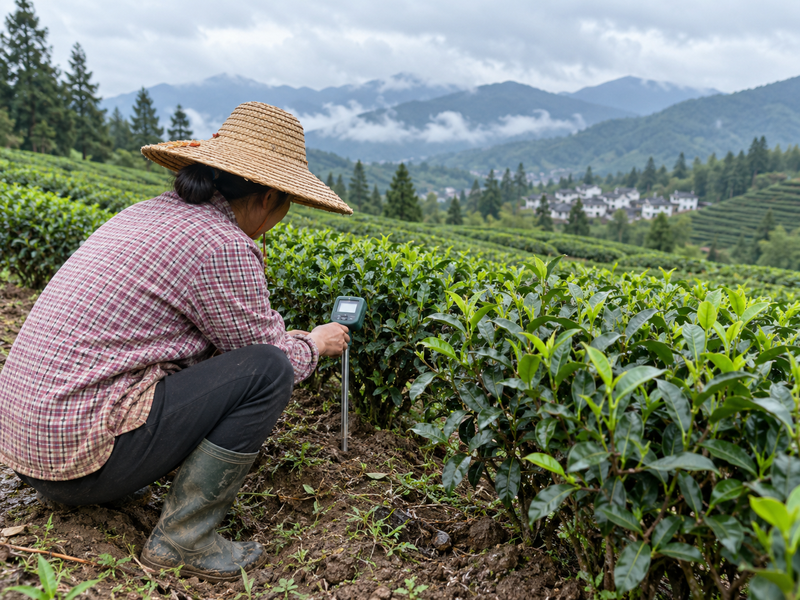
Follow the exception. For a dry spell, trace the date when concern arose, which blocks were checked, what action followed, and whether the next reading changed. For heavy rain, trace whether irrigation was paused and whether drains needed clearing. That sequence is more useful than a monthly average.
If a harvest occurred during the event, connect it with picking and leaf-delivery records. A buyer can then compare the finished powder with other lots while avoiding a single-cause explanation. Color or flavor can shift for many reasons, including leaf maturity and processing. Water records narrow the investigation; they do not diagnose the powder on their own.
8. What belongs in an irrigation record?
Make the entry auditable
A useful entry identifies the block, date, water source, method, reason, observer, and follow-up. It can also note equipment failure or a missed operation. If equipment records include runtime or flow, those figures need units and calibration context. Otherwise they can look precise while describing little about delivered water.
Keep the chain intact. The block identifier in the water log should match the shade log, harvest sheet, and leaf intake record. Consistent names beat elaborate software with mismatched labels. If several gardens supply one lot, the receiving record should show their proportions or at least the contributing block IDs. Buyers can then investigate exceptions without guessing.
Japan’s MAFF tea technology page gathers tea-related technical material. A supplier’s local practice must still be documented directly. Ask for a redacted sample record from an ordinary harvest period and another from an unusual weather period. The contrast shows whether the process survives real conditions.
| Field | Minimum useful detail | Review question |
|---|---|---|
| Block ID | Stable plot code | Can it be linked to harvest? |
| Observation | Point, date, method | Was the decision evidence-based? |
| Action | Irrigation, pause, repair, or drain work | What changed in the field? |
| Follow-up | Recheck and exception closure | Did the response work? |
9. How can buyers connect water records with leaf quality?
Compare like with like
Choose lots with similar cultivar, harvest window, shade approach, and processing route before asking whether water history affected performance. A darker powder from one lot does not prove better irrigation. Different leaf age or tencha handling could explain it. The useful comparison is a timeline: field condition, harvest, intake, processing, then laboratory and application results.
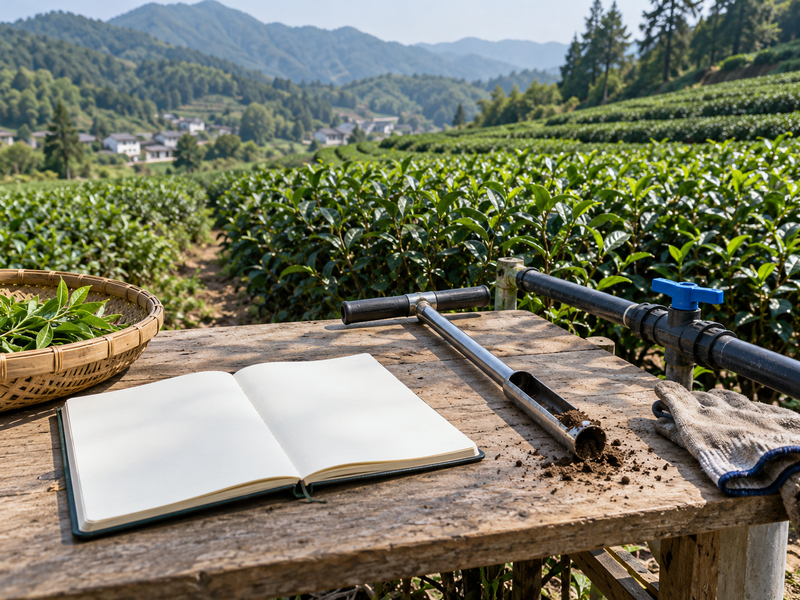
Work backward from the lot. If a beverage trial has weaker color, request the block IDs and the few weeks of relevant field records. Check whether a weather exception or irrigation repair occurred. Then compare the finished material with a retained sample using the same application test. The buyer may find no water-related signal. That negative result still helps isolate the problem.
The Matcha Village overview of the tea plant provides basic plant context. For commercial review, the key is traceability: a garden claim must survive the move from plot to fresh leaf to powder. A supplier who can show that chain gives the buyer a practical basis for follow-up when a lot differs.
10. What questions belong in a supplier review?
A short evidence request
Ask the supplier for a plot map, recent water and drainage records, weather-exception examples, shade dates, and the harvest-to-lot link. Request explanations for representative high, low, and shaded blocks. The aim is a workable sample of evidence, not an archive dump. A concise set of records often makes gaps easier to see.
Keep the response specific. “We water regularly” gives no decision rule. “Staff check marked points in Block C after rain and record any delay” can be tested. If the supplier cannot share sensitive quantities, it can still show record structure, frequency, and anonymized examples. A buyer should set acceptance criteria for completeness before reviewing results.
Matcha tea garden irrigation deserves attention because leaf quality begins in a field that changes daily. Ask for one recent lot and trace its water story through the linked documents. Then use any gap to agree on a record improvement before the next purchase, rather than prescribing an untested irrigation volume.
| Supplier question | Strong answer shows | Follow-up if missing |
|---|---|---|
| Which blocks supplied this lot? | Stable IDs on harvest and intake sheets | Request lot genealogy |
| How was watering decided? | Dated observation and action | Request an exception example |
| Where does excess water go? | Drainage map and maintenance note | Inspect low rows |
| What changed under shade? | Linked shade and water timelines | Compare shaded block records |
FAQ
Q1: Does matcha tea garden irrigation require a fixed amount of water? No. Soil, weather, plant age, and site layout change the decision. Request a local method and records.
Q2: Can a supplier photograph prove adequate irrigation? No. A photograph can show equipment or a field condition at one moment; dated block records show what happened over time.
Q3: Should buyers ask about drainage even in a dry season? Yes. Drainage design and maintenance affect how a garden responds when heavy rain returns.
Q4: Does shade automatically reduce irrigation needs? No. Shade changes the field environment, but the response depends on cover design and local conditions.
Q5: What is the most useful first document? A block map tied to harvest lots lets every later water observation be placed in context.