
A matcha tea garden audit checks whether field practice, harvest identity and leaf handoff match a supplier’s claims. Buyers often receive an attractive powder sample yet little evidence about its upstream leaf. A useful audit follows one named lot from garden block through factory receipt, asking for dated records and samples that can be checked together. That approach gives purchasing and quality teams a firmer basis for supplier approval.
Contents
- What should a matcha tea garden audit establish?
- Which garden blocks supplied the offered lot?
- How do you test a supplier’s traceability claim?
- What should shade records show?
- How should site conditions enter the review?
- What does a harvest record need to capture?
- How was fresh leaf protected on its way to processing?
- Which records deserve a closer look?
- How should buyers compare samples and documents?
- How do you close the audit and decide next steps?
1. What should a matcha tea garden audit establish?
The audit should establish a believable chain between a defined garden area, a harvest event and the offered tencha or powder lot. Start with the exact product and intended application. A food manufacturer buying an ingredient for baked goods may set different sensory thresholds from a beverage brand seeking a vivid cup. Both still need a coherent origin story backed by records. Ask the supplier to identify which material is garden-grown, which is bought from other growers and where lots can be combined. The answer may describe a mixed supply chain; the concern arises when the paperwork cannot follow it.
Set a bounded scope
Start with one lot. Select a recent shipment or retained sample, then work backward. A broad tour can show that tea grows on site, but it cannot prove which bushes supplied your sample. Japan’s agriculture ministry explains that matcha comes from grinding tencha, and that covered cultivation and tencha processing are distinct steps. Keep those steps separate in the audit. Ask who made the tencha and who milled the powder. Record any missing link as an open question rather than filling it with an assumption.
| Audit object | Evidence to request | What it can establish |
|---|---|---|
| Garden block | Map or block register | Where leaf was intended to grow |
| Harvest event | Date, block and picker or machine log | When leaf entered collection |
| Leaf intake | Receiving record and weight | What reached processing |
| Finished lot | Processing and packing records | How material was assigned a saleable identity |
2. Which garden blocks supplied the offered lot?
A block name should point to a physical place, not merely a sales grade. Compare the supplier’s block map with planted rows, access paths and any neighboring plantings. Ask how they update boundaries after replanting, leased land changes or supply from contract growers. A practical map need not be elaborate. It must let staff find the same block on another day and distinguish it from nearby blocks. If a supplier groups several small plots under one code, ask for the list of included plots and when that grouping changed.
Check the collection path
Walk the route. Follow the path fresh leaf takes from the selected block to its collection point. Note whether the route makes the claimed harvest and intake times plausible. A photo of a garden, by itself, does not date a harvest or establish lot origin. Cross-check its location against the map, then compare the date on a field log with the factory’s receipt. Where several growers deliver on the same day, ask how their leaf remains identified before any planned blend. The Matcha Village traceability guide gives related questions for following a finished lot beyond the garden.
| Map detail | Useful follow-up | Weak answer |
|---|---|---|
| Block code | Which rows does this code cover today? | “The whole garden” |
| Grower identity | Who controls the plot and field records? | Only a trader name |
| Replanting history | Did a block boundary change? | Undated map |
| Collection route | Where is leaf weighed and transferred? | No receiving point |
3. How do you test a supplier’s traceability claim?
Ask for a forward trace and a backward trace using the same lot. The backward path starts at powder packaging and ends at the garden or declared grower blocks. The forward path starts with one harvest entry and identifies every receiving, processing and packing lot that used its leaf. Dates, weights and lot codes should reconcile. A difference may have a sound explanation, such as sorting loss or a documented blend. The supplier should explain it with a contemporaneous record rather than a story prepared after your question.
Test a difficult lot
Try an exception. Choose a partial lot or a delivery that arrived alongside another grower’s leaf. Ask how the team stopped accidental mixing before weighing and processing. This exposes whether traceability exists only at final packing. The process also shows which staff own corrections when a code is entered incorrectly. An audit is not a demand for perfect handwriting; it is a test of whether a person can detect and repair a break in the chain. Record the sample code you used so your team can repeat the exercise during a later visit or supplier review.
4. What should shade records show?
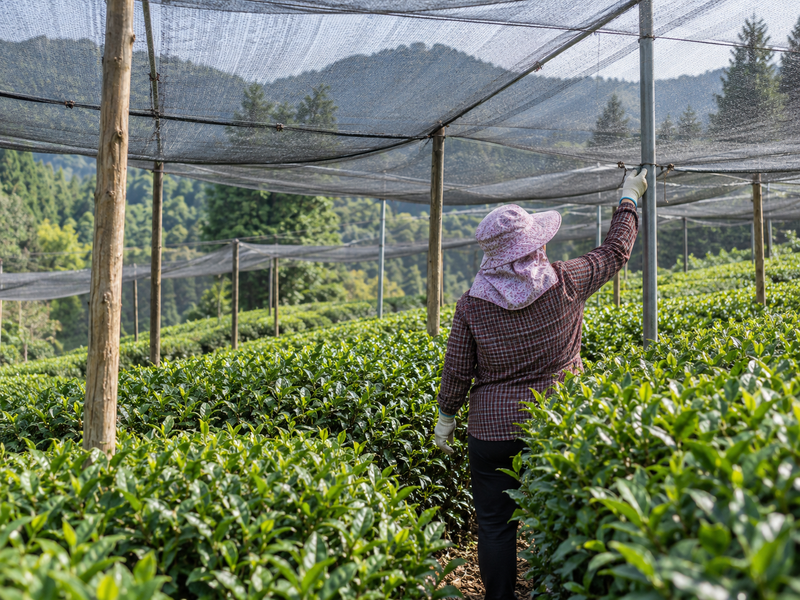
For tencha-bound leaf, ask when cover went on, which block it covered, what material was used and when cover came off. A supplier’s statement that its tea was shaded tells you little about uniformity or timing. Compare records with the harvest date. If several blocks are claimed under one schedule, ask whether their canopy stage and light exposure were actually alike. A cover may be repaired, moved or partly removed after weather damage; the record should reflect those events. Staff should be able to show how they check coverage across the block.
Read coverage against harvest
Look for the change log. The Japanese ministry’s Uji tea description explains how under-cover cultivation differs from open-air cultivation and how tencha is then steamed and dried without rolling. It does not prescribe one worldwide shade recipe. Avoid turning a single percentage or number of days into an automatic pass mark for a Chinese garden. Compare a supplier’s stated method with its own dates, local conditions and finished samples. Request separate evidence for processing, because a shade log cannot prove that leaf later became tencha.
| Shade question | Record or observation | Buyer interpretation |
|---|---|---|
| When did coverage begin? | Dated installation log | Match timing with harvest |
| Where was it applied? | Block map and field observation | Check coverage boundaries |
| Was the cover changed? | Repair or weather note | Explain uneven exposure |
| When was it removed? | Removal and picking dates | Check the sequence |
5. How should site conditions enter the review?
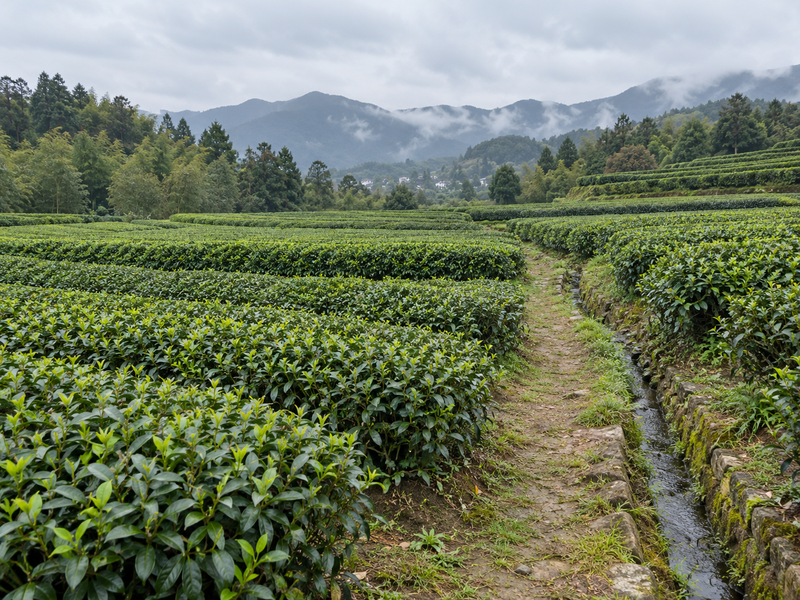
Garden conditions can explain variation between blocks and seasons. Walk a high and low area, look at drainage after rain and ask for soil testing plans where available. Do not claim that a pleasing garden view proves leaf quality. A vigorous canopy can coexist with weak harvest identification or inconsistent post-harvest handling. Site observations matter because they make records testable: a claimed drain should be visible, a replanted block should look different from a mature one and a section described as shaded should have suitable infrastructure.
Match field conditions with actions
Connect observation with a record. The ministry’s Uji tea overview describes well-drained soil and local growing conditions for that production region. It provides useful questions for a site walk, not a universal specification for every origin. Ask the supplier how it monitors waterlogging, wind damage and pest pressure on its own land. Request a dated action record for a block with a known problem. A credible supplier may have imperfect conditions and a sensible response. A flawless verbal account with no dated follow-through gives buyers less confidence.
6. What does a harvest record need to capture?
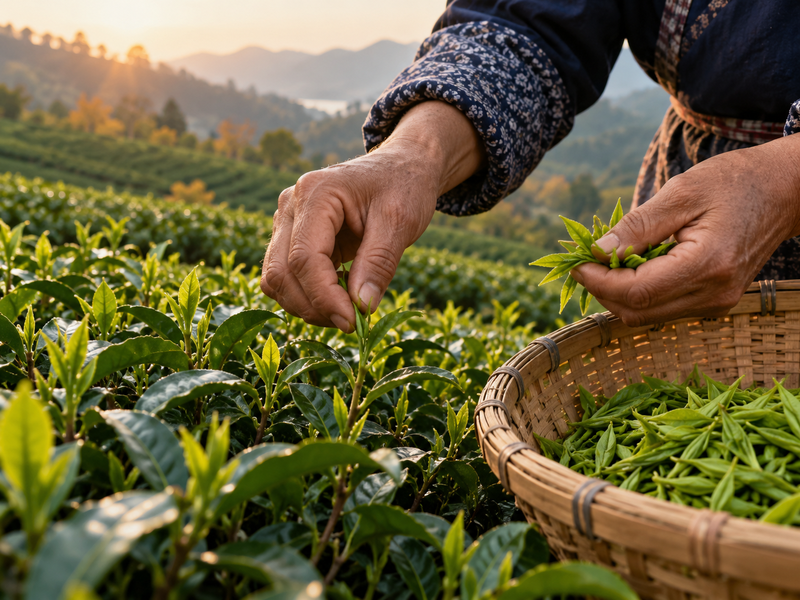
A harvest record should identify the block, date, picking method, leaf destination and person responsible for release. If the supplier uses both hand and mechanical picking, ask how it keeps these deliveries separate or records an intentional combination. Note the leaf maturity expected for the offered product and inspect a sample at collection. The Matcha Village harvest article offers background on harvest decisions; the supplier’s actual acceptance rules still need to appear in its own specification and intake checks.
Reconcile picking and receiving
Compare field and factory entries. Kenya’s government green-leaf requirements describe pre-harvest records, leaf handling, weighing, transport and factory receipt in a different tea system. Use that document as a model for questions, not as a Chinese matcha standard. Ask whether rejected or downgraded leaf appears in the log and where it went. If every delivery is recorded as perfect, investigate how the team handles a rainy pick, damaged leaves or a mixed basket. Exception records often reveal more about control than routine passes.
| Harvest field | Why it belongs | Cross-check |
|---|---|---|
| Block and grower | Establishes origin | Map and grower register |
| Picking date and window | Establishes sequence | Shade and intake logs |
| Method and leaf grade | Explains material supplied | Receiving sample |
| Weight and destination | Supports mass balance | Factory receipt |
7. How was fresh leaf protected on its way to processing?
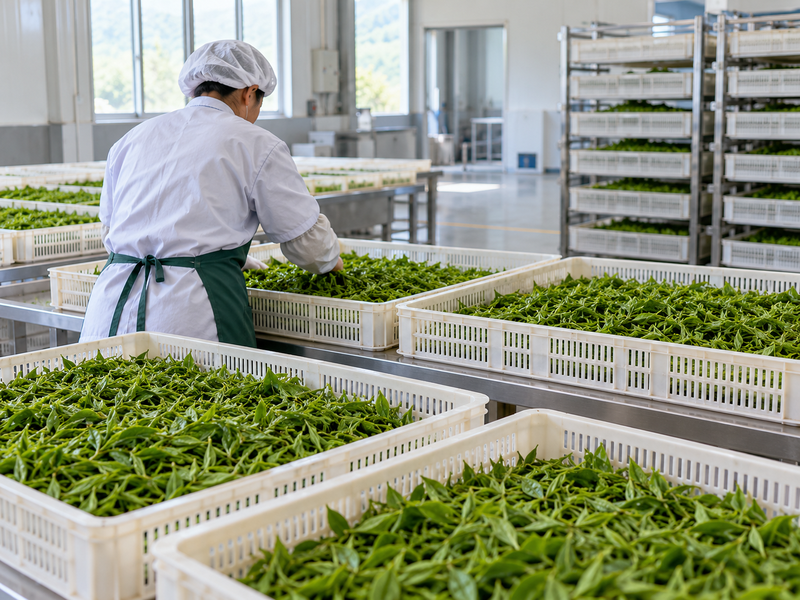
Fresh leaf can heat, bruise or become contaminated between picking and intake. Walk through the actual containers, loading point, vehicle and waiting area. Ask whether staff avoid deep compression, provide airflow and keep wet or damaged leaf apart. Then compare the stated routine with a recent delivery record, especially one made during rain or a busy harvest day. A clean demonstration with empty crates has limited value unless the same containers appear in live operations.
Review the handoff timeline
Follow the clock. Record picking end, collection, arrival, acceptance and processing start. The Kenyan green-leaf requirements explicitly address aeration, damage prevention and transport records. Their numeric time limits belong to that national system; use local process validation and your product specification for this supplier. Ask what happens when leaf waits longer than expected. A written escalation, separation and quality review is more informative than a promise that delays never occur.
| Handoff point | What to observe | Record to match |
|---|---|---|
| Field container | Airflow and leaf depth | Harvest procedure |
| Collection point | Shade, cleanliness, separation | Collection time |
| Vehicle | Load protection and routing | Dispatch log |
| Factory intake | Condition check and lot code | Receiving record |
8. Which records deserve a closer look?
Focus on records that connect separate teams. A shade crew may use block names that differ from those used by pickers. A transport note might identify a vehicle but omit the garden. A processing sheet can show a lot code without recording which fresh-leaf deliveries entered it. Each gap can sever a trace even when individual forms look tidy. Ask employees to explain the codes they use daily, then compare their explanation with written definitions. Check whether dates and corrections are legible and whether records were made near the event.
Read deviations as evidence
Seek a difficult example. Ask for a day with a repair, late delivery or rejected leaf. Review how staff recorded the deviation, who decided its disposition and whether the affected lot could still be located. Do not mistake an absence of incidents for proof of control. Paper records can work well if indexed and retrievable. Digital records can fail if operators share logins or alter entries without history. The question is whether a buyer could identify affected material quickly enough to act on a complaint or recall request, using the supplier’s own evidence.
9. How should buyers compare samples and documents?
Use a retained sample tied to the audited lot, then agree on the test plan before comparing appearance or taste. Specify whether the sample is fresh leaf, tencha or finished powder. Ask for processing dates and storage conditions because a garden audit alone cannot explain every difference in color or aroma. If you compare two suppliers, use the same preparation, water and application. In a bakery trial, include the recipe and heat exposure; for a drink, record dosage and mixing method. Otherwise, a product difference may reflect your test procedure.
Separate traceability and product testing
Pair evidence with performance. A complete trace and a passing laboratory result answer different questions. Traceability tells you where material came from and where it went. Sensory and analytical checks tell you whether the lot meets your agreed specification. Neither replaces the other. Where a supplier offers a cultivar or origin story, ask for its link to the sampled lot and avoid treating a marketing name as a test result. Keep a short decision sheet that lists the sample code, observed results, required documents and unresolved points so purchasing and quality staff see the same record.
| Buyer check | Document path | Product path |
|---|---|---|
| Identity | Block to finished-lot trace | Sealed retained sample |
| Consistency | Previous lot history | Side-by-side application test |
| Safety | Agreed testing documents | Lot-specific result |
| Change control | Revision or deviation log | Re-sample after material change |
10. How do you close the audit and decide next steps?
Close with specific findings rather than a vague pass or fail. Classify each issue by what it affects: origin identity, leaf condition, product performance or documentation. Assign an owner and due date for evidence you still need. A missing block map may call for a trace exercise; an unexplained intake gap may require a deeper lot review. If a supplier proposes corrective action, ask for the revised procedure and one completed example from a later harvest. Do not approve a process change based on a promised document alone.
Close each open question
Make the next sample count. Give the supplier your intended application, required lot documents and the exact open questions. Ask for a new sample only when it can answer a defined question. A buyer can then approve, approve with a controlled follow-up or hold a decision while evidence is gathered. For wider context, read the traceability and harvest guides before writing a supplier questionnaire. A good audit ends with a trace you can repeat, a product you can test and a clear owner for every exception.
FAQ
Q1: Is a garden visit enough to verify matcha origin? No. Match the block visit with dated harvest, intake, processing and packing records for a named lot.
Q2: Does a shade photo prove that leaf became matcha? No. It shows a possible field practice. You still need the harvest identity and tencha processing path.
Q3: Should every garden use the same shade schedule? No. Review a supplier’s documented method against its site conditions, harvest date and resulting material.
Q4: Can a supplier buy leaf from outside growers? Yes, if grower identity and lot separation remain clear and meet your purchase specification.
Q5: What should trigger a follow-up audit? An unresolved origin gap, unexplained material mixing, repeated intake exceptions or a change in garden and processing sources.