
Knowing how to transport matcha whisks matters whenever a café moves its station to an event or a retailer ships a set to a customer. Fine bamboo tines can be crushed by a loose lid, while a damp head may be trapped inside protective packaging after service. The solution is a repeatable pack, unpack, and inspection routine built around the whisk’s actual shape. This guide covers dry tools, protected heads, receiving checks, and return trips. Follow the maker’s care instructions and the food-handling rules that apply to any tools used for drinks.
Contents
- 1. What can damage a whisk during transport?
- 2. Should a whisk be dry before packing?
- 3. What kind of case protects bamboo tines?
- 4. How should a pop-up team pack its tools?
- 5. How should retail sets be shipped?
- 6. What should happen when tools arrive?
- 7. How should a whisk travel home after service?
- 8. What changes for air travel and long routes?
- 9. How can teams test packaging before scale?
- 10. What belongs on a transport checklist?
1. What can damage a whisk during transport?
Protect the head from pressure and trapped moisture
A chasen’s thin tines are its working end. If a heavy bowl shifts onto the head, a tine can bend or split before anyone opens the box. A loose whisk may also rub against a spoon or lid. Moisture is a different problem: a clean but damp head enclosed for a long trip can arrive in poor condition. Packaging must address pressure and tool condition before closing. A case that fits a dry chasen may be a bad place for one just rinsed after an event.
The Japanese Decor care article discusses maintaining a bamboo whisk’s shape and dryness. Apply those principles to transport rather than treating a protective case as permission to pack any condition of tool. Check the box from the whisk’s point of view: where can the head move, which surface might press a tine, and what happens if the carton is turned upside down? Keep the handle restrained without squeezing the head. Record damaged deliveries so you can tell whether the problem is packing, handling, or product quality.
2. Should a whisk be dry before packing?
Make drying a separate step, not an assumption
For storage or a closed transport case, pack a bamboo whisk only after it has been cleaned and dried according to its maker’s instructions. A few droplets hidden inside the head can be easy to miss if staff only touch the handle. Inspect tines under good light and check the holder or drying surface as well. Do not blot aggressively with a rough cloth or press the head into a towel to speed the process. Give it sufficient open-air time under your approved utensil procedure before placing it in enclosed packaging.
An event may end before every tool has dried. Plan a separate return route for used tools that follows local food-handling requirements and avoids crushing them; finish cleaning and drying at the approved facility before long-term storage. Do not mark a closed case “ready for next service” merely because the whisk was rinsed. A simple clean/dry/packed status card helps when one person closes the booth and another opens the next day. The Ippodo chasen care guidance provides maker-level context on rinsing and drying bamboo. Your exact procedure must suit the tool and operating location.
| Tool state | Transport decision | Next step |
|---|---|---|
| Clean and fully dry | Pack in approved protective case | Mark ready stock |
| Clean but still damp | Keep apart under approved procedure | Dry before closed storage |
| Used, awaiting cleaning | Keep separate from clean stock | Follow venue and local rules |
| Damaged or uncertain | Do not use as reserve | Inspect and record |
3. What kind of case protects bamboo tines?
Fit the model rather than the product category
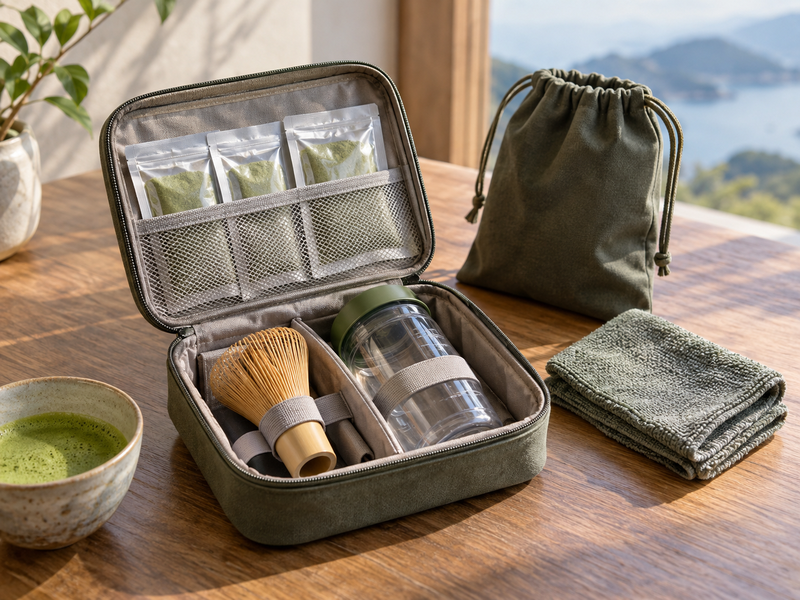
Choose a rigid or semi-rigid solution that prevents pressure on the head and limits movement of the handle. Some travel cases fit a particular chasen shape; another model with a wider head may be crushed by the same case. Test the actual production whisk and any holder included in a retail kit. The case should close without forcing tines inward. Shake the packed case gently in several orientations to check whether the whisk strikes a wall. If it does, adjust the support around the handle or replace the case.
A plastic sleeve, paper carton, fitted insert, or hard case can play a role, depending on route and outer packaging. None is automatically safe. Avoid loose fill that enters the fine tine spaces and is difficult to remove. Keep printed care instructions away from direct pressure on the head. If the whisk maker supplies a protective tube, ask whether it is intended for shipping, dry storage, or both. Name case dimensions and the approved whisk model so substitutions get tested before shipment.
4. How should a pop-up team pack its tools?
Separate clean reserve, active gear, and returns
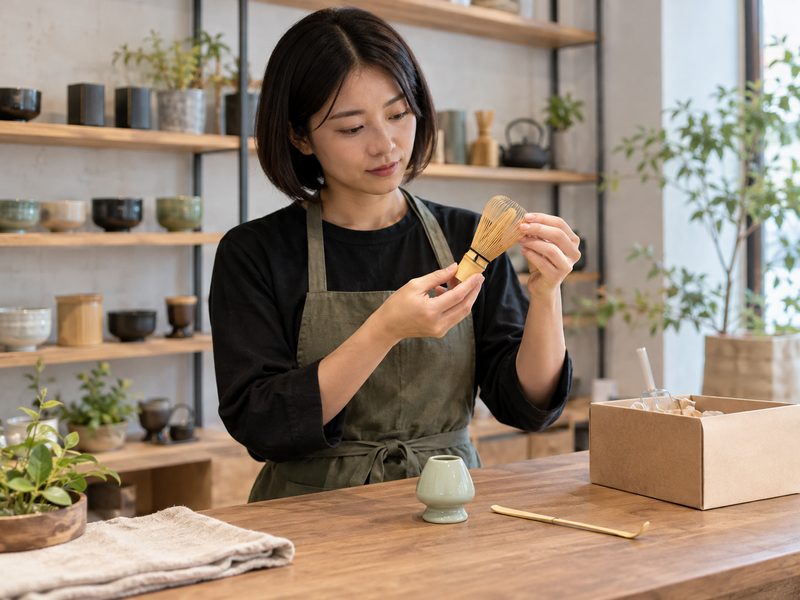
For an event, create three labeled groups before loading: service-ready whisks, bowls and holders, and a contained area for tools that may return used or damaged. Wrap bowls so they cannot migrate into a whisk case. Keep the whisk cases near the top of a crate or inside a protected compartment, away from heavy water containers and ice. Make the inventory list match the actual number of service stations, plus inspected spares. A staff member should be able to open the clean kit without touching the return kit.
Pack a photograph of the intended station layout or store it with the setup instructions. At the venue, count tools as they come out of their cases and inspect the heads before service. If a crate has been dropped or crushed, treat its contents as suspect until checked. Do not place unpacked whisks on an unclean event table while searching for the bowls. Bring approved cleaning and drying arrangements, not just extra tools. A pop-up plan fails when it protects the outward trip but gives staff nowhere suitable to place a rinsed whisk after the first drink.
| Crate group | Contents | Keep separate from |
|---|---|---|
| Clean whisk kit | Dry protected whisks and spares | Used utensils |
| Fragile ceramics | Bowls and holders with padding | Whisk heads |
| Service supplies | Measured recipes and approved cleaning items | Dry powder stock |
| Return area | Used or damaged tools, clearly marked | Ready reserve |
5. How should retail sets be shipped?
Secure every component as a complete kit
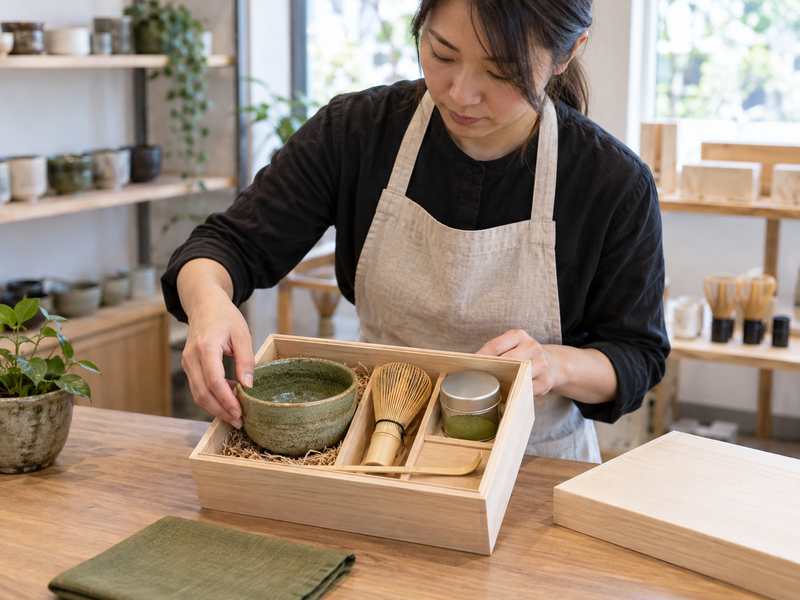
A matcha set often includes a bowl, scoop, whisk, and holder. The bowl’s weight makes it the principal threat to the whisk if an insert loosens in transit. Use a fitted insert or separate inner compartments, then an outer carton appropriate for the route. Test the box upside down and on its sides. The whisk head should not become the part that stops another component from moving. Include care instructions that tell the buyer how to unpack and store the chasen without bending its tines.
For a wholesale shipment, inspect representative packed units from production, not only a hand-built prototype. Check whether the insert still grips after normal assembly and whether cartons remain protective when stacked as intended. Document the packing sequence with photographs. If a retailer requests a different gift box, run a new test even if the whisk SKU is unchanged. Matcha Village may discuss utensil or gift-set bundles alongside its powder products; verify the actual accessory source, packaging specification, and responsibilities before placing manufacturing claims on a listing.

6. What should happen when tools arrive?
Inspect before the first drink or sale
Open the transport case carefully and check the whisk under good light. Look for split or crushed tines, a loose binding, visible residue, and signs of trapped moisture. Compare it with the approved sample. A head can look acceptable from above while a bent inner tine hides near the handle, so rotate it gently without squeezing. Keep suspect units separate until a manager decides whether they can be used. If a customer shipment is damaged, record packaging condition as well as the whisk itself before discarding the carton.
The receiving check should also confirm that the correct whisk model and care card arrived. A substituted head may not fit the included holder or the café’s bowl. If several units in one carton share the same defect, pause that lot and contact the supplier with photographs and order details. Do not use the event spare pool to hide an inbound quality problem. For a pop-up, inspect the transport case again before repacking; a cracked case may fail on the return route even if its whisk survived outward travel.
| Arrival observation | Action | Record |
|---|---|---|
| Sound, dry, correct model | Release to clean stock | Quantity received |
| Bent or split tines | Hold from service | Photo and carton condition |
| Dampness in closed case | Hold and investigate | Packing date and route |
| Wrong accessory fit | Stop kit assembly | Model and component IDs |
7. How should a whisk travel home after service?
Make the return trip a defined workflow
The end of an event is often rushed. Someone may rinse a whisk, shut it in its travel tube, and load it beneath a box of bowls. Prevent that by assigning a closing role and a return sequence. Count whisks, inspect for breakage, separate clean reserve from used tools, and follow the venue’s approved utensil-cleaning process. If tools require further drying or cleaning at another facility, transport them under that facility’s food-handling procedure and keep them identified as not ready for service. A closed dry-stock case should never be used to disguise an unfinished step.
At the home café or warehouse, unpack and process return tools promptly. Do not let a crate sit closed until the next event. Check the holders too, since a dirty or broken holder can damage an otherwise sound whisk. Record retirements and replenish the clean kit before putting it away. The T2 chasen care article discusses careful handling and storage; use it as background while the local cleaning SOP controls what happens after a commercial event.
8. What changes for air travel and long routes?
Plan for handling you cannot observe
On a long route, a case may be turned repeatedly, stacked beneath heavier luggage, or exposed to different temperatures and humidity. You cannot supervise every transfer, so the packed whisk must remain protected in any normal orientation. Use an outer container that resists compression and an inner fit that keeps the handle from sliding. Marking a carton “fragile” can help communication, but packaging still needs to do the work. For checked baggage or freight, place the whisk kit away from hard objects that can shift.
Check carrier rules for any liquids, cleaning supplies, or accompanying equipment separately; do not treat a whisk guide as a travel regulation. For international retail shipments, confirm packaging and labeling requirements with your logistics provider and destination market. Hold back a packed sample and photograph the assembly method so a receiving team can compare it with arrival condition. If repeated long-route damage appears, change the internal support before adding more warning labels. The goal is a dry, intact head that still fits its holder and performs the approved recipe when unpacked.
| Route factor | Packaging response | Receiving check |
|---|---|---|
| Multiple orientations | Restrict handle movement | Head clearance after arrival |
| Compression | Stronger outer carton or case | Crushed corner or insert |
| Long enclosed time | Pack only fully dry tools | Moisture or odor |
| Mixed heavy gear | Separate compartments | Contact marks and tine damage |
9. How can teams test packaging before scale?
Trial actual packed units and inspect the result
Build several complete kits using the same materials and assembly steps planned for production. Check that the whisk head has clearance and no part presses on its tines. Then run ordinary handling trials appropriate to the route: turning the box, carrying it, loading it with other kits, and a shipment to a test destination where possible. Record the condition before and after. Do not invent a certified drop-test result from a casual office experiment; use a qualified packaging service if formal validation is required.
Ask the receiving person to unpack without special coaching. Watch whether they pull the whisk by its head, misplace the care card, or cannot tell where the holder belongs. A packaging design should protect the product and make correct unpacking easy. Test replacement inserts or substitute gift boxes again, even if the previous version worked. Keep photographs, component specifications, and damage observations with the purchasing file. That record lets a retailer distinguish a one-off courier incident from a weakness repeated across shipments.
10. What belongs on a transport checklist?
Give each handoff a clear owner
The checklist should name the whisk model and quantity, dry and clean status, case or insert, separate ceramic packing, spare count, and person who signs off. Add arrival inspection, tool release, and a return plan for used or damaged stock. For retail, include the care card and carton specification. For pop-ups, include a cleaning point and place for tools that are not ready for reuse. Keep the form short enough that staff complete it while loading a real crate, not hours later from memory.
Review damage reports after each event or shipping batch. If heads fail on arrival, inspect packing and route. If problems occur after service, improve cleaning, drying, or return handling. Keep an approved sample for comparison and tell suppliers exactly which model and protection passed testing. An importer or café can ask Matcha Village about matcha powder and matching utensil or gift-set options, while verifying the actual whisk source and packaging details. A good transport plan ends with an intact, inspected tool ready for the next recipe, not merely a delivered carton.
| Handoff | Confirm | Owner |
|---|---|---|
| Pack | Dry, clean, sound, protected | Packer |
| Dispatch | Correct quantity and kit ID | Shipping lead |
| Receive | Head, case and model pass | Receiver |
| Return | Used stock separated and processed | Event lead |
The matcha travel kit guide covers packing choices for the rest of a pop-up tea station.
FAQ
Q1. Can I pack a freshly rinsed chasen in its travel tube? Let it dry under the maker’s guidance and your approved procedure before closed storage. Plan a separate path for tools awaiting that step.
Q2. Is a cardboard gift box enough protection? Only if its internal structure keeps every component from pressing or rubbing against the whisk head through normal handling.
Q3. Should a ceramic whisk holder travel with the whisk? It can, but pack it so its weight cannot strike the head. Check that the holder fits the model at arrival.
Q4. What if a delivery has several bent whisks? Hold the affected lot, photograph the tools and packaging, then contact the supplier before releasing units for service or sale.
Q5. How many whisks should a pop-up take? Start with the number of simultaneous stations and add inspected spares based on event length, expected volume, and replacement access.
Pack a dry tool and verify it at arrival
Use a fitted case for each clean, dry whisk, keep heavy components away from the head, and inspect the tool whenever responsibility changes hands. Give the return trip its own procedure. Those steps make a fragile chasen a manageable part of café events and retail fulfillment.